
Mónica Arellano

Content Editor at ArchDaily Mexico. Architect by UNAM (2018). Her interests focus on exploring the relationship of the body with architecture through dance. She has collaborated with different international choreographers who explore dance and architecture as an event. Twitter / Instagram: @monicarellano_

BROWSE ALL FROM THIS AUTHOR HERE

Mexico City Implements Nighttime Transportation System: Nochebús Insurgentes

Mexico City Implements Nighttime Transportation System: Nochebús Insurgentes - Image 1 of 4Mexico City Implements Nighttime Transportation System: Nochebús Insurgentes - Image 2 of 4Mexico City Implements Nighttime Transportation System: Nochebús Insurgentes - Image 3 of 4Mexico City Implements Nighttime Transportation System: Nochebús Insurgentes - Image 4 of 4Mexico City Implements Nighttime Transportation System: Nochebús Insurgentes - More Images+ 2

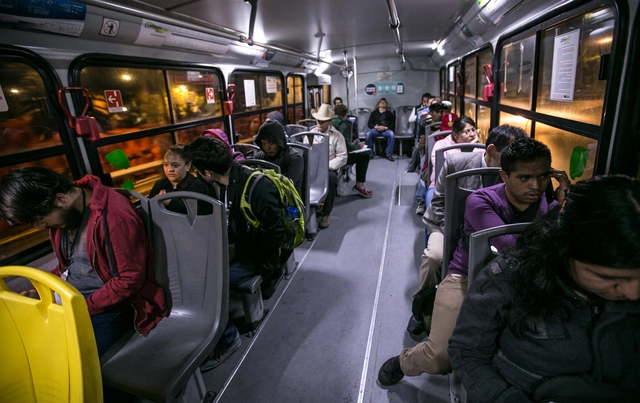
Can you imagine arriving at a bus stop in the early hours of the morning—after a party, work, or school—and knowing the exact minute your public transit will arrive? Cities like London, New York, Madrid, and Melbourne have successfully implemented night transit systems with fixed schedules, yielding various financial and safety benefits for residents while boosting tourism and encouraging sustainable mobility. What would happen if this system were applied to the second-largest avenue in the Americas, after Buenos Aires' Avenida 9 de Julio? 

Mexico City already has a night transit service: the Nochebús. With 11 routes operating between midnight and 5:00 a.m., it serves late-shift workers, night-lifers, and others needing late-night transportation. However, the service faces several challenges, many of which stem from uncertainty around arrival times—largely due to a much lower frequency than daytime public transit. 

Dance collective breaks boundaries, dancing through architecture

Subscriber Access | 

What do dance and architecture have in common? It is difficult to explain how our experience of dance is stored in our bodily memory, yet our core recollection of a performance is often inseparable from the architectural space in which it unfolded. While the dance itself may be the focus, the venue remains integral to the experience. Ultimately, as we explore how cities and urban spaces are conceived and created, both dance and architecture serve as fundamental coordinates.

Unsurprisingly, many choreographers are exploring the intersection of these two disciplines. These works explore how our bodies navigate the built environment. This is far from a purely theoretical pursuit; instead, it engages specific communities and cultural groups through embodied movement. In the words of philosopher Marina Garcés: “The body no longer confines us to a single place, but instead integrates into and becomes part of the environment of every place. It is the zero point from which we can experience all space, enriching ourselves both materially and spiritually.”

"Proyecta" will compile the work of contemporary Mexican architects.

    Proyecta is an exhibition centered on the very essence of professional architectural practice: the act of designing, giving way to creation, conceiving forms, and thereby conveying the ideas, thoughts, and ideals inherent to the authors of the designs. Each project tells a story from its inception, reconciling formal ideals with the specific requirements of each work. Often, the best projects may remain on the drawing board, be archived, or be realized only after undergoing transformations as part of the materialization process, always susceptible to modification due to the impact of the circumstances of their historical moment. In this way, the exhibition creates a space for new creative explorations toward the design of a new city.

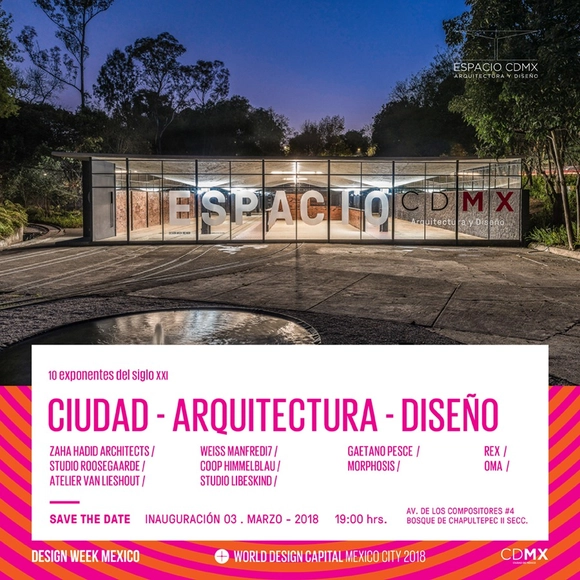
    Opening of "10 Exponents of the 21st Century: City, Architecture, and Design"

      ESPACIO CDMX will launch its activities with the exhibition "10 Exponents of the 21st Century: City, Architecture, and Design," which will showcase works by renowned figures in design, architecture, and urbanism:

      World Design Capital CDMX 2018: International Design Forum

        The World Design Capital CDMX 2018 program will kick off with the International Design Forum, taking place on March 5 and 6 at the Palacio de Bellas Artes, under the theme "The Future of Our Cities: A Social Approach to the Challenges of the First Urban Century."

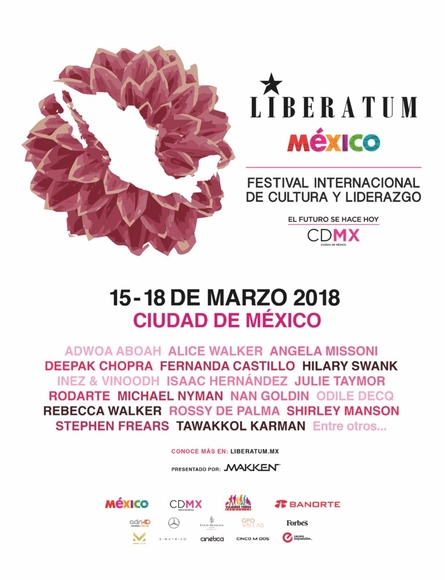
        Liberatum: International Festival of Culture and Leadership 2018

          Liberatum is a multidisciplinary cultural organization that promotes artistic and creative innovation, connecting the world's greatest minds through festivals, summits, documentaries, films, and stimulating, inspiring content.

          "The INFONAVIT Summit" will bring together housing finance experts from May 2 to 3.

            Colectivo Tomate presents: Ciudad Mural Villahermosa

              Colectivo Tomate is a civil organization based in Puebla, composed of citizens from across the country, that seeks to inspire people to take action for transformation, facilitate the discovery of their power to participate actively, and unite and strengthen their community. We aim to mobilize transformative energy.

              Utopia: From Fiction to the Feasible

                This exhibition invites architects, urban planners, designers, and multidisciplinary creative teams to submit proposals focused on improving the environment and quality of life in our capital. Participation in the exhibition is open via a public call for project submissions or by direct invitation from the curatorial committee. Proposals may consist of unrealizable utopian concepts that are purely fictional, or feasible solutions to concrete challenges with real-world application potential. The projects' narrative covers a wide range of themes, including housing, public space, mobility, the environment, heritage preservation, neighborhood revitalization, and urban infrastructure. They address the architect's mission beyond merely building objects, instead integrating a responsibility toward a sustainable environment that builds better communities, based on the principle that good design is holistic.

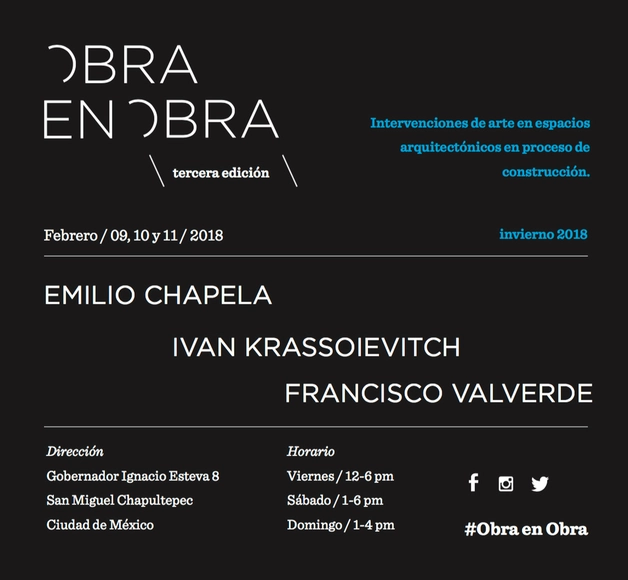
                Work in Progress: Third Edition

                  During the most important week of the contemporary art calendar in Mexico City, Obra en Obra is located at Gobernador Ignacio Esteva 8, in the San Miguel Chapultepec neighborhood, next to the Kurimanzutto Gallery, one of the most renowned contemporary art galleries in the country.

                  The Venice Biennale 2023

                  The Venice Biennale 2023 - Imagem 1 de 4

                    La Bienal de Venecia 23 is an occurrence born of chance. It serves as a pretext to present the ideas of young architects in Mexico within an exhibition space located on Venecia Street, in the Juárez neighborhood.

                    Eager to establish a relationship of sincerity and frankness between the viewer and the exhibited material, the first edition of La Bienal de Venecia 23 presents

                    La planta arquitectónica (The Architectural Plan/Plant). Intervened photosynthetic beings that serve as a vehicle for architectural proposals. Living plants, green plants, architectural plants—plants that invite us to reflect on the discipline through the noble pre-existence offered by nature.

                    3rd International Congress on Sustainable Collective Housing

                    3rd International Congress on Sustainable Collective Housing - Image 3 of 4

                      After the Garden: 50 Years of ITESO Architecture Alumni

                        For ITESO, the Jesuit University in Guadalajara, architecture is its flagship program, thanks to the impact of its students, faculty, and alumni in our city, our country, and the world, as well as the university's enrollment statistics. The responsibility inherent in these facts is not only historical but lived. As architects from the Jesuit University, we are committed and passionate about our causes, a product of a tradition passed down since the day of its founding with architect Enrique Nafarrate.

                        Official Corona Renderer Certification

                        • Title

                          Certificación Oficial Corona Renderer
                        • Type

                          Fondos concursables, becas, cupos y premios
                        • Organizers

                        • Registration Deadline

                          October 05, 2018 01:01 AM
                        • Submission Deadline

                          October 05, 2018 01:01 AM
                        • Venue

                          Hotel Sevilla Palace Reforma
                        • Address

                          Av. Paseo de la Reforma #105, Col. Tabacalera C.P. 06030
                        • Price

                          6,000

                        Render Training is a professional development program designed to help you build skills in architectural visualization, product visualization, and 3D design. The tools we will use throughout the process are designed to streamline your workflow, enabling you to achieve stunning, high-impact results.

                        Enter our Instagram contest and attend the ADMX anniversary party!

                        This month, we continue to celebrate the 6th anniversary of ArchDaily in Mexico, an achievement made possible by the hard work of our team, as well as the relationship we have built over the years with the local architectural community and our readers.

                        With that in mind, we decided to celebrate this year with a competition that engages our community. We want to see your favorite works in Mexico—whether classic or contemporary—and what better platform than Instagram to view them through your eyes?

                        Cultural and Community Centers: 12 Examples in Mexico Connecting with their Environment

                        Subscriber Access | 

                        Cultural and Community Centers: 12 Examples in Mexico Connecting with their Environment - Image 1 of 4Cultural and Community Centers: 12 Examples in Mexico Connecting with their Environment - Image 2 of 4Cultural and Community Centers: 12 Examples in Mexico Connecting with their Environment - Image 3 of 4Cultural and Community Centers: 12 Examples in Mexico Connecting with their Environment - Image 4 of 4Cultural and Community Centers: 12 Examples in Mexico Connecting with their Environment - More Images+ 14

                        The architecture of cultural centers in Mexico has gained relevance in recent years. There has been a growing interest in providing spaces for recreation and education, transforming them into urban landmarks that attract visitors from all over the country year after year.

                        Architecture in Mexico: Projects Using Stone

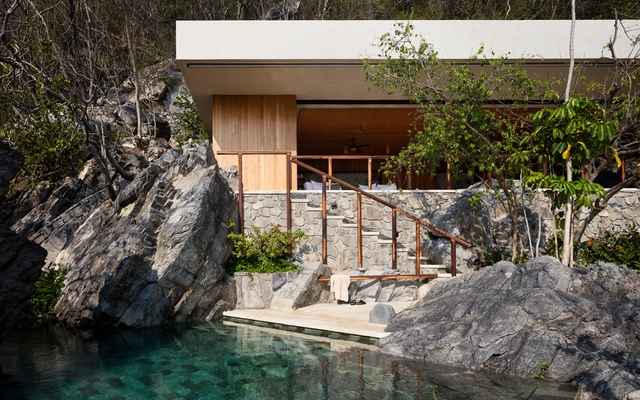
                        Due to their aesthetic, sustainable, durable, and resistant qualities, stone materials have accompanied the disciplines of architecture and engineering since their origins. As is known, in Mexico, stone has been a fundamental element in pre-Hispanic constructions where experimentation was done with vaults, ashlars, masonry, etc.

                        However, the industrialization of this material, the perfection of techniques, and experimentation with its various applications have allowed buildings erected today to continue using it in different ways and various regions of the country, specifically in wooded areas. For this reason, we have compiled a selection of projects that include houses, haciendas, hotels, restaurants, and terraces to continue inspiring you.

                        Architecture in Mexico: Projects Using Stone - More Images+ 30

                        The Architectural Heritage of the Valley of Mexico Through the Eyes of Santiago Arau

                        Subscriber Access | 

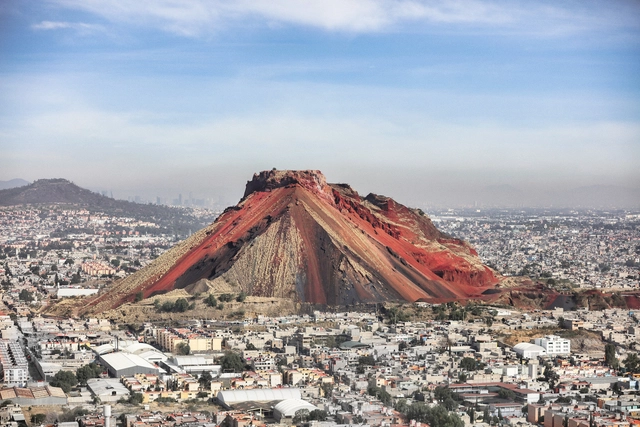
                        The heritage of Mexico City is extremely rich and diverse due to a long history that overlays like layers above the urban fabric since pre-Hispanic times. Currently, it is one of the largest cities in the world, and its heritage is reflected in its architecture, museums, historical sites, cultural traditions, protected sites, gastronomy, and much more. This chronology has been evidenced through various historical records. However, contemporary recording is essential in moments where we are writing history immediately with different digital tools.