Content Editor at ArchDaily Mexico. Architect by UNAM (2018). Her interests focus on exploring the relationship of the body with architecture through dance. She has collaborated with different international choreographers who explore dance and architecture as an event. Twitter / Instagram: @monicarellano_
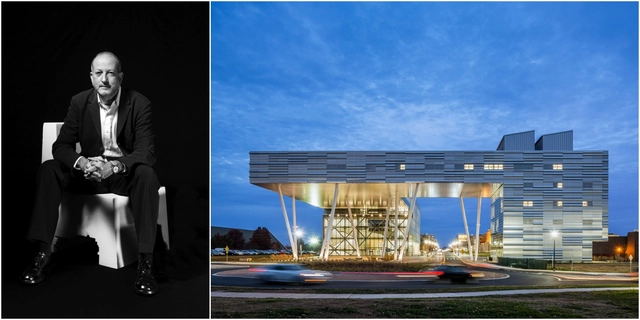
The Instituto Superior de Arquitectura y Diseño (ISAD) in Chihuahua, Mexico, has announced the appointment of Julio Gaeta as its new Director, effective November 1 of this year.
Founded in 1895 as an international art exhibition, the Venice Biennale is currently one of the most prestigious cultural events, aiming to promote contemporary art through events and exhibitions across various disciplines, including visual arts, cinema, dance, music, and theater. The International Art Exhibition and the International Architecture Exhibition alternate every two years. Since 1998, these exhibitions have been organized around three main pillars:
Around 90 countries participate in this exhibition with national pavilions displaying each nation's most outstanding works. The Biennale presents awards in the following categories:
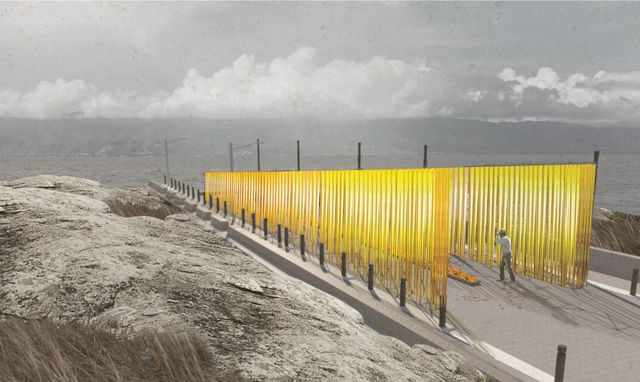
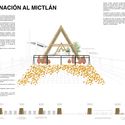
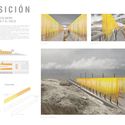
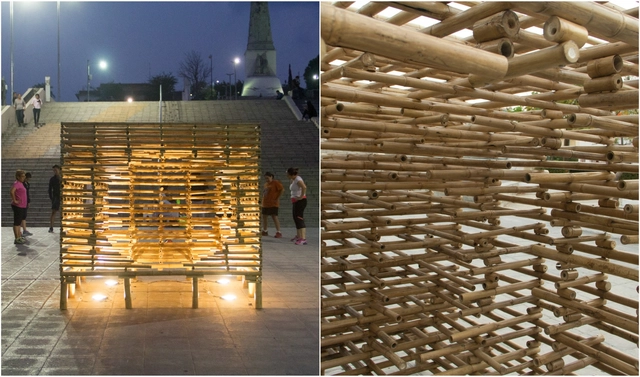
The Urban Space Intervention Competition was created to establish a tradition of developing innovative ideas on contemporary themes through temporary installations in the city of Tuxtla Gutiérrez, Mexico, as part of the Provincia Festival in April 2018.
The initiative aims to offer local residents, domestic visitors, and foreign tourists opportunities for new experiences and ways of viewing and reflecting on their daily surroundings. It also challenges designers to move beyond purely formal and aesthetic concerns, prompting them to address urban social realities and consider how the city itself can help achieve the program's objectives.
CEMEX has announced the Mexican winners of the 2018 CEMEX Building Award across its various categories, including Affordable Housing, Residential Housing, Building, Collective Space, and Infrastructure. This year's winners include projects from across Mexico, with each entry evaluated on comprehensive sustainability, architectural solution, structural solution, and construction process. Read on to discover the winning projects of this edition.
Eleven years ago, ArchDaily was born with a mission in mind: to democratize architectural information around the world and empower our readers to foster inclusive discussions that positively transform our cities. By providing inspiration, knowledge, and tools to the architects currently facing the challenge of designing the future, we hope to help improve the quality of life of those who inhabit our world's urban centers.
At the ArchDaily Mexico offices, August 3rd is a special day:
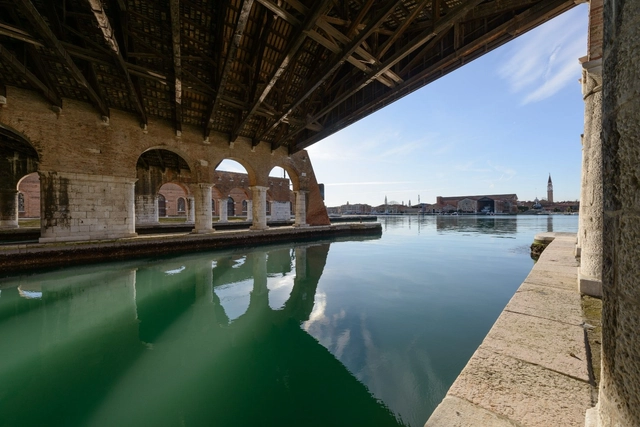
This week concluded the series of meetings and conferences convened by the Venice Biennale to introduce Freespace, curated by artistic directors Yvonne Farrell and Shelley McNamara. Venice, Paris, Berlin, and New York. The Irish architects presented the list of 71 participants making up the curatorial proposal, which features five Latin American participants: Elemental (Chile), Rozana Montiel Estudio de Arquitectura (Mexico), Barclay & Crousse (Peru), Carla Juaçaba (Brazil), and Paulo Mendes da Rocha (Brazil).
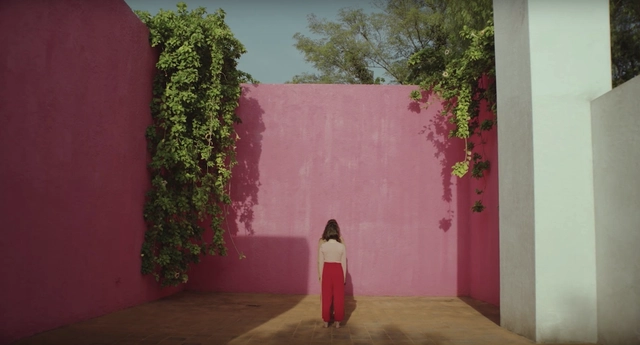
Andrés Arochi directed a video that portrays dancing bodies experiencing the space of the Luis Barragán House and Studio, a site in Mexico City famous for the introspective quality of its gardens and the characteristic mysticism of the Mexican architect. Regarding the video Dancing through the Architecture of Luis Barragán, Arochi comments:
This is not the first time that iconic works of architecture have served as a stage for dancing bodies; there is seemingly an intrinsic connection between these two art forms. Exercises like this remind us that architecture is not merely an assembly of concrete, steel, and glass ready to shelter its users, but rather a series of actions harboring a collection of breaths, moments, and movements that give meaning to a place, as Spanish philosopher Marina Garcés writes:
We interviewed Gabriela Etchegaray (curator) and Jorge Ambrosi (exhibition designer) about the participation of the Mexican Pavilion in the 16th International Architecture Exhibition at the Venice Biennale. They describe the geographical, imaginary, and cultural weight of Mexican architecture; responding to the theme of Freespace—proposed by the Biennale's Artistic Directors, Irish architects Yvonne Farrell and Shelley McNamara—this pavilion grounds the connections expressed in the interaction with the intangible and the incorporation of cultural heritage into architecture.
One of the world's most renowned architecture festivals, the World Architecture Festival (WAF), has announced the finalists for its eleventh edition, taking place in Amsterdam, Netherlands, from November 28 to 30. The World Architecture Festival is dedicated to celebrating, sharing, and inspiring outstanding architecture. It is the only architecture event where keynote speeches from the industry's most influential figures coincide with live presentations from over 500 award finalists, global networking opportunities, and an international product exhibition.
Mexican architecture continues to make a strong showing on the global stage, which is why we present the complete list of projects in Mexico nominated for the 2018 World Architecture Festival awards, ranging from cultural, healthcare, housing, and residential projects to mixed-use developments. Read on to discover the projects.
The renowned architecture firm Zaha Hadid Architects has announced its first exhibition in Latin America, which will take place at the Museo Universitario de Arte Contemporáneo (MUAC) on the campus of the Universidad Nacional Autónoma de México (UNAM). The exhibition, titled Design as Second Nature, will showcase several projects by architect Zaha Hadid through models, audiovisual materials, paintings, and photographs, exploring the creative process of her practice and highlighting the importance and complexity of design as the central axis connecting form and construction in her work.
Mexican architect Enrique Norten will receive the Fine Arts Medal in Architecture, the highest honor awarded by the National Institute of Fine Arts (INBA) to individuals who have made outstanding contributions to Mexico's art and culture. With this award, the Institute celebrates his career and his contributions to the country's culture.
Born in Mexico City on February 27, 1954, Norten was drawn to the world of design and determined to pursue creative work early on. At the age of 20, he began his architecture studies at the Universidad Iberoamericana.
Instagram is an image-sharing application that is increasingly woven into our daily lexicon; currently, Instagram has around 800 million monthly active users. This speaks volumes about the exponential growth of this social network, of which we are big fans, and where we strive to bring you daily news and the most important architectural works from Mexico and the world. By the way, are you already following us on our @ArchdailyMx account?
Instagram is not a new tool for us, as we know that Instagram must be part of every architect's design process in the millennial era. Furthermore, we have organized various contests, such as the one for our fifth anniversary in Mexico. We are eager to maintain a much more direct relationship with our readers and to learn what inspires you, allowing us to continue creating content tailored to your interests. Therefore, starting today, we are launching several interactive activities to stay closer in touch with you.
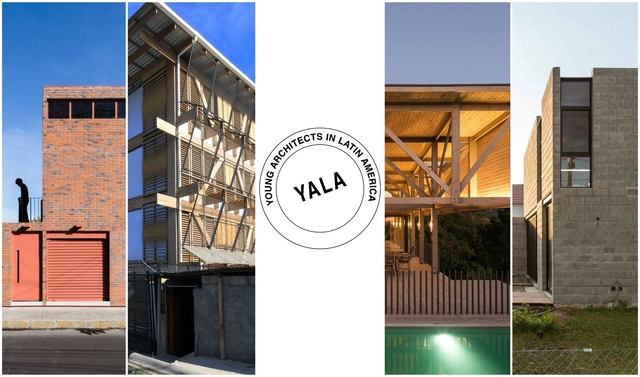
This new competition, titled 'Young Architects in Latin America,' is one of the collateral events of the 16th Venice Architecture Biennale in 2018. It is organized by CA'ASI following the success of previous editions, such as 'New Chinese Architects' in 2010, 'Young Arab Architects' in 2012, and 'Young Architects in Africa' in 2014.
A few months ago, the call for entries was opened to young architects from Latin America, offering them an opportunity to establish a presence on the global architectural scene. The jury met in Paris in late March to announce the finalist projects, which will be invited to present their work in Venice as part of the 16th Architecture Biennale.
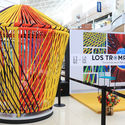
Héctor Esrawe and Ignacio Cadena are two internationally recognized Mexican designers working at E + C, an interdisciplinary design studio in Mexico City that promotes Mexican design and culture. In 2015, they created an installation exhibited at Discovery Green, Houston's prominent urban park, which occupied a section called the Sarofim Picnic Lawn and has since been presented twice in US cities.
The temporary installation, titled 'Los Trompos,' consists of large-scale, colorful elements inspired by a classic Mexican toy. Currently on display at the Galerías Atizapán shopping center in Ciudad López Mateos, Mexico, from May 24 to June 17, it will subsequently travel to Galerías Vallarta and Galerías Tlaxcala.
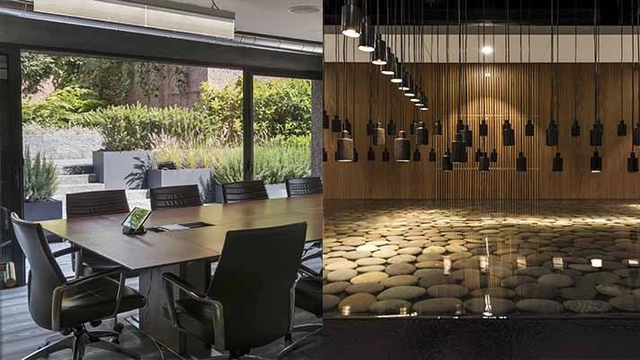
MRD designed Corporativo Santa Fe, a renovation proposal for a five-story office building covering an area of 490 square meters. Built in 2016, the project was led by Antonio Morodo Díaz in collaboration with Sergio Macotela Baca.
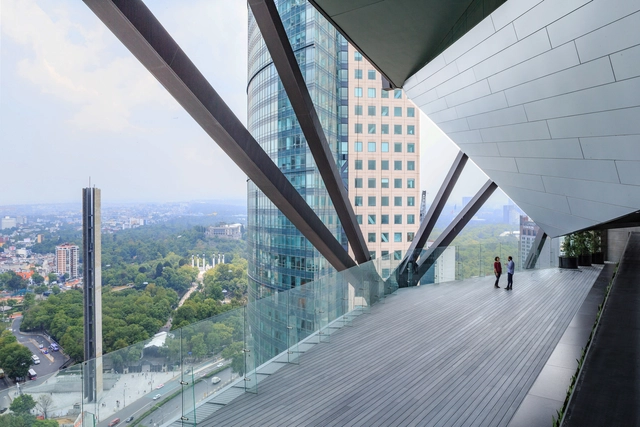
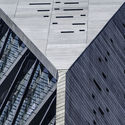
The IHA is considered the world's most important architectural prize for high-rises. It is aimed at architects and developers whose buildings are at least 100 meters tall and were completed in the last two years. The jury consists of architects, structural engineers, real estate experts, and architecture critics. They evaluate the nominated projects based on the following criteria: future-oriented design, functionality, innovative construction technology, integration into the urban context, development schemes, sustainability, and cost-effectiveness. This year, the five finalists chosen from 36 nominees across 15 countries have finally been announced; among them is Torre Reforma, designed by Benjamín Romano.
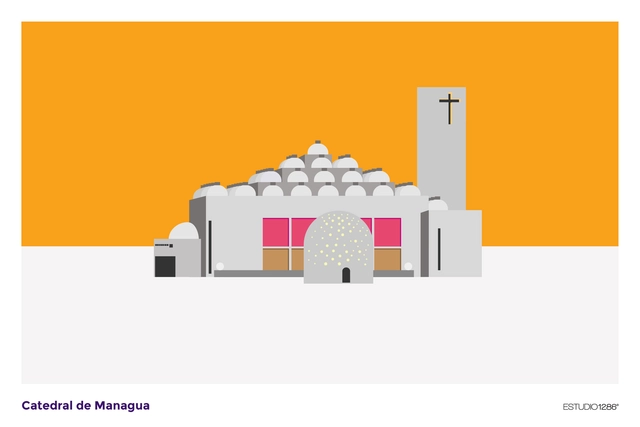
In September 2018, the Managua Cathedral in Nicaragua, designed by renowned Mexican architect Ricardo Legorreta, celebrated its 25th anniversary. To commemorate and promote this milestone, ESTUDIO1286 created a series of illustrations of the last cathedral of the 20th century.








_17.23.29.jpg?1527546271&format=webp&width=640&height=580)



.jpg?1538155856&format=webp&width=640&height=580)

.jpg?1538159899)

.jpg?1538155856)