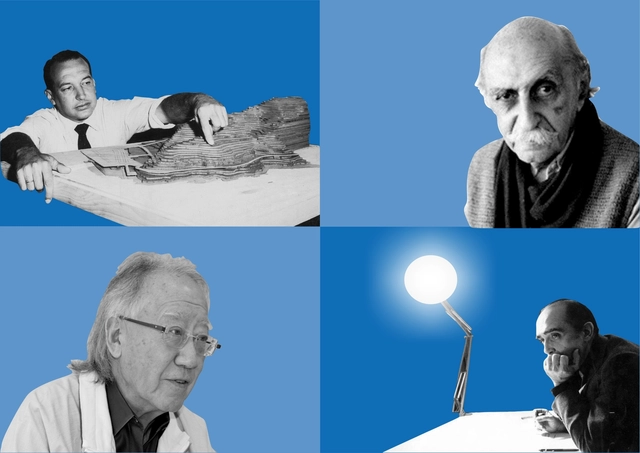
Today, July 25, Sérgio Ferro celebrates his 80th birthday. Born in Curitiba, he graduated in Architecture and Urbanism from the University of São Paulo (FAU-USP) in 1962, where he was invited by João Batista Vilanova Artigas to join the faculty between 1962 and 1970, teaching Art History. In academia, he also taught at the University of Brasília (UnB) from 1969 to 1970. A multidisciplinary intellectual, architecture is only one of his many facets; he is also an accomplished visual artist.
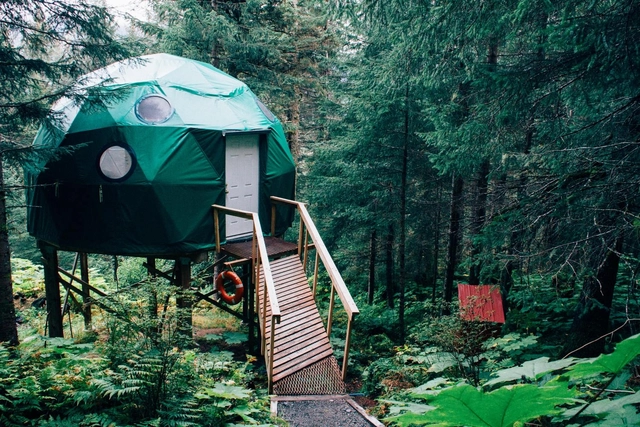
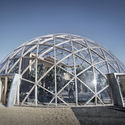
It is highly unlikely that you made it through architecture school without seeing or even helping to build a geodesic dome. These structures are defined by a mesh composed of a network of polygons—usually steel, wood, or bamboo triangles—that, when materialized in three dimensions, form spaces. By connecting the edges (struts) and rendering the structure three-dimensional, this model achieves strength and structural lightness through the uniform distribution of its dead load to the ground. From a technical and structural standpoint, this dome is composed of a series of similar struts that form a hemispherical surface based on triangles. Within this complex composition, strength and lightness are achieved through the uniform distribution of forces.
Today, August 17, is National Historical Heritage Day, a date that honors the efforts to preserve assets of cultural, historical, and artistic significance across Brazil. This date coincides with the birth of historian and journalist Rodrigo Mello Franco de Andrade, who played a crucial role in founding the National Institute of Historic and Artistic Heritage (IPHAN). Established in 1937, IPHAN is the agency responsible for promoting and organizing the preservation of Brazil's National Cultural Heritage, aiming to “protect and promote the country's cultural assets, ensuring their endurance and enjoyment for present and future generations.” [1]
Frequently used in residential design as an extension of the roof slab, eaves have shed their modest dimensions and traditional role of simply protecting outer walls from rain. Today, they are being reinvented to create new living spaces, such as verandas, which seem to reinterpret the historic alpendre bandeirista and extend the interiors, blurring the boundaries between inside and out.
Marked by refinement and purity of design, Portuguese architecture historically maintains a sharp relationship between the built object and the territory in which it is situated.
Names like Álvaro Siza Vieira, Eduardo Souto de Moura, and Fernando Távora remain the primary references when considering Portuguese architectural production. However, beyond these great masters, a group of young firms established over the last ten years has demonstrated strength and relevance in shaping this new output. In this landscape, new attributes are emphasized: an aesthetic and constructive sensibility rooted in modern minimalism—yet questioned and renewed in accordance with contemporary social and philosophical parameters; the merging of hybrid fields, from art and product design to architecture and urbanism; and an increasingly collaborative process based on collective ideas.
Just as architectural elements—floors, walls, and ceilings—shape and define built space, plant elements are also capable of shaping open spaces across large, medium, and small scales, from parks to residential gardens, acting as spatial structure. According to Benedito Abbud, "Landscape design is the only artistic expression that engages all five human senses. While architecture, painting, sculpture, and other visual arts rely heavily on sight alone, landscape design also engages smell, hearing, taste, and touch, providing a rich sensory experience by combining the most diverse and comprehensive perceptual experiences. The more a garden can stimulate all the senses, the better it fulfills its role."
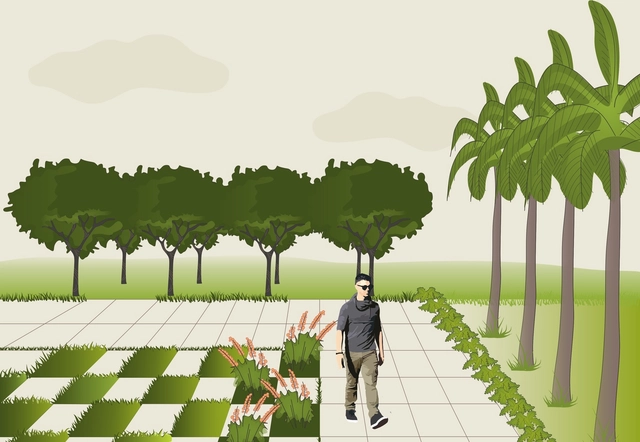
To offer practical insights for landscape design projects, we have published a series of articles on the topic. In the first post, we discussed planes, clearings, and tree layouts, while the second covered trees, shrubs, grass, and groundcovers in open spaces. In this article, we will focus on shrubs, grasses, groundcovers, and paving.
It is inevitable that heavy, static structures come to mind when we think of architecture. However, columns, beams, and slabs are by no means the only elements that define it.
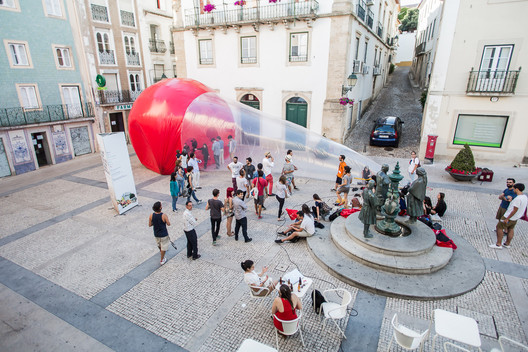
Pneumatic architecture is characterized by lightweight, flexible materials supported on fixed bases. Due to their lightweight nature, these structures cannot support themselves on their own; instead, they span openings through the injection of air. In other words, they are structures shaped by pneumatic membranes inflated by air systems that operate much like a hot-air balloon or historic zeppelins filled with a gas less dense than air. These systems fall into two main categories: those supported by internal air pressure and those stiffened by it.
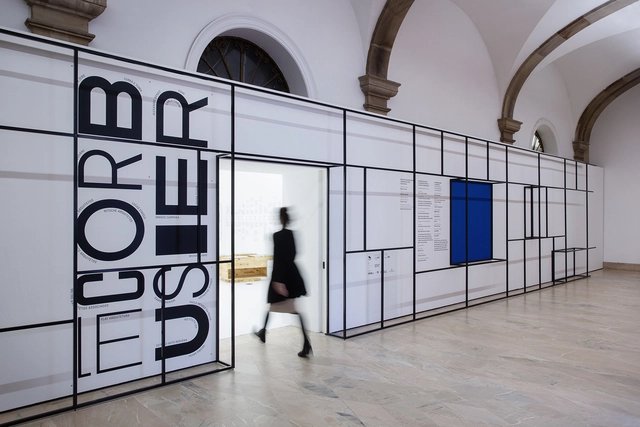
Opened last Saturday (16) at the Museu da Casa Brasileira in São Paulo, the exhibition “Experimenting Le Corbusier – Contemporary interpretations of modernism”—curated by Pierre Colnet and Hadrien Lelong of design publisher Cremme, with exhibition design by the São Paulo-based office MNMA Studio—seeks to foster a reflection on the implications of the Franco-Swiss architect's work for the architectural, urban, ideological, and social development of Brazilian modernism.
Featuring 20 guest artists—architects, designers, and visual artists—who developed various works and research based on the canons of the architect's work, the exhibition seeks to operate through the “transdisciplinarity of art,” as noted by Mariana Schmidt, the partner-architect responsible for the exhibition design.
Opened in August 2017 and setting attendance records, Sesc 24 de Maio—the second-to-last branch of the network to open, succeeded by Sesc Avenida Paulista—was designed by Paulo Mendes da Rocha in partnership with the office MMBB Arquitetos, who retrofitted a former department store, remodeling its interior spaces within the existing structure and creating a new central structure to support the rooftop swimming pool.
A few months ago, architect Filipe Vasconcelos shared his digital collages with us, exploring the similarities between architecture and objects. He creates scenes in which buildings are recontextualized in situations completely removed from their original contexts and uses.
2018 was a busy year for ArchDaily Brasil. We had the opportunity to publish a wide range of content—articles, news, and projects—specially curated for you, our daily reader. Beyond our platform, our Instagram account served as a daily hub for sharing content through stories, IGTV, and, above all, the dozens of photographs shared each week.
With nearly 150,000 followers on our Brazilian profile (@archdailybr) who follow us daily and show their support for the best architectural photography of projects by Brazilian and Portuguese architects, we decided to put together a year-end roundup of the 15 most-liked photos. Check out the list below!
We have finally reached the last day of 2018, a year marked by a series of architectural trends, novel proposals presented in competitions, biennials, and architecture fairs, and above all, punctuated by a sea of projects reflecting the concerns of architects proposing new directions for the discipline. Now, after 365 days of many surprises for the world of architecture, it is time to celebrate and give thanks for another year—and what better way to welcome 2019 than to the sound of great music? With this in mind, our editorial team has curated a special selection: featuring the moving sounds of Coldplay and John Lennon, festive beats from Bruno Mars and Alok, and Brazilian classics by Elis Regina and João Gilberto.
In any profession, it is common for children to follow in their parents' footsteps, motivated by the environment they grew up in and inspired by a passion for the craft. Architecture is no exception. Growing up surrounded by sketches, floor plans, and coffee seems to spark the desire to pursue the same career.
In celebration of Father's Day, observed in Brazil this coming Sunday, August 12, we have compiled a list of architects who followed in their fathers' footsteps. Read on below:
In the constant ebb and flow of those moving through the city of São Paulo, you have likely noticed the distinctive graphic pattern repeated across various sidewalks. The classic pattern behind the modules that graphically form the map of the state of São Paulo was created in 1966 by architect and artist Mirthes dos Santos Pinto. It all began in the 1960s when then-mayor João Vicente Faria Lima launched a competition to design the city's new pavement. Mirthes, who at the time worked as a drafter for the São Paulo Municipal Works Department, created a stylized map of the State of São Paulo. Using square modules of black and white geometric tiles, the design alternated between solid colors and diagonally split tiles to create a continuous pattern.
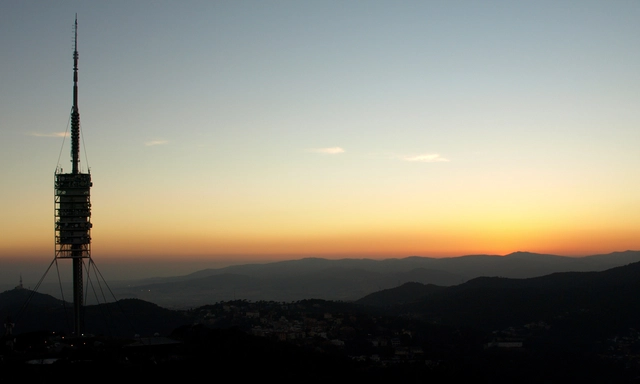
For optimal and wider propagation of TV and radio frequencies, antennas must be positioned in strategic and, above all, elevated locations. When the local topography is unfavorable, the construction of broadcasting towers and masts becomes essential. Yet, beyond serving a crucial function, these structures stand as visual landmarks, offering an extraordinary opportunity to transform urban infrastructure into pieces of unique aesthetic value. Renowned architects and their teams have designed radio and television towers that marry rigorous structural engineering with the plastic inventiveness of their chosen design solutions. We have selected a brief collection of television and radio transmission towers. See them below:
Media and technology have been revolutionizing content creation across diverse niches, and architecture is no exception. YouTube channels, television shows, and specialized playlists on architecture and urbanism are just a few examples. Over the last few years, however, podcasts have emerged as a powerful alternative. Unlike other media, podcasts are an audio-only format shared across a wide range of platforms—from specialized websites to blogs. Today, there are countless listening options available, both Brazilian (as listed below) and international, as previously published by ArchDaily.
Finding specialized podcasts can be a daunting task. To help, we have gathered a list of nine Brazilian podcast channels for you to listen to. Put on your headphones and check them out:
Today, it is estimated that in Brazil alone, 30 million tons of waste are deposited annually in landfills, with São Paulo alone sending 14,000 tons of solid waste to these sites every day. [1] Unsurprisingly, landfills occupy vast tracts of land that continue to expand, posing a critical challenge for nearly every city. But what can be done once landfills reach capacity and close? Is it possible to breathe new life into these mountains of waste? What are the possibilities and necessary precautions?
Over the past two decades, digital technologies have been changing the way we use and relate to spaces—especially public ones—which are increasingly mediated by networks and devices that allow us to position ourselves in new ways. In May of this year, during the global week of events for Museum Day, promoted by the International Council of Museums (ICOM), the theme Hyperconnected museums: New approaches, new publics was adopted as the motto for the 2018 edition's debate series. This initiative aimed to discuss the relationship between museums as institutions and society through the lens of digital connectivity, both in terms of physical space organization and interaction with the public.
In the wake of the debates held in museums worldwide, it became clear that institutions are increasingly focused on building a network with their audience, a feat made possible through technology. Indeed, conceiving an exhibition, as well as the museum as an object within the urban environment, also means imagining the possibilities for audience interaction. This makes it inevitable to compare how viewers used to relate to artworks with how this dynamic has shifted in the so-called “Selfie Era.”

._Via_Arquivo_Arq.jpg?1540388028 "Conjunto Nacional / David Libeskind. Image © Revista Acrópole n° 238 (CC BY-NC-ND 4.0). Via Arquivo Arq")

.jpg?1546264461&format=webp&width=640&height=580)