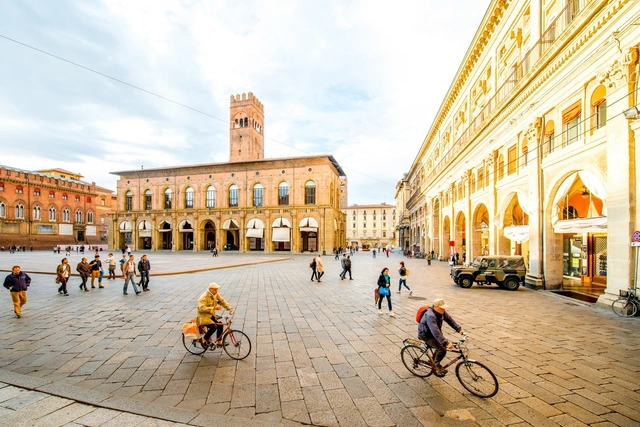
One of Italy's most important culinary hubs, Bologna is aiming to encourage its residents to adopt cycling, public transit, or simply walking as their primary means of transportation—leaving their cars at home. To achieve this, the city has launched an incentive program.
Projeto Tercer Sonido, Madri, Espanha. Image Cortesia de CicloVivo
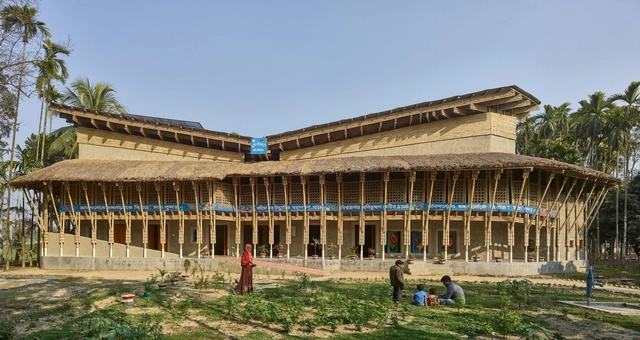
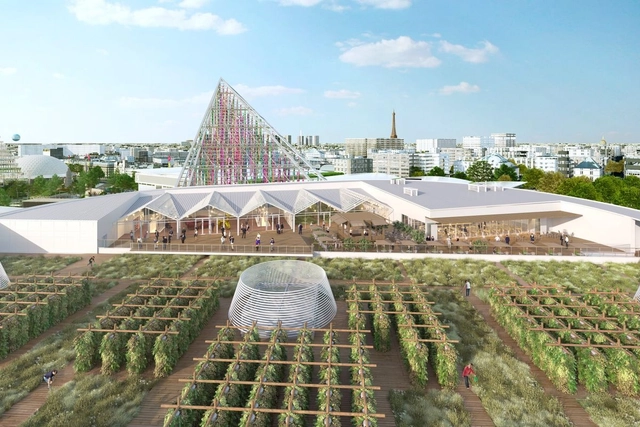
C40 Cities, a global coalition of cities, launched a competition to select the best solutions for transforming underutilized urban spaces into resilient, carbon-neutral developments. Named Reinventing Cities, the competition selected 15 innovative ideas poised to "reinvent" the future of cities.

Since 2017, the extraction and sale of asbestos has been banned in Brazil by the Supreme Federal Court (STF). However, this ruling did not prevent the state of Goiás from authorizing the extraction of chrysotile asbestos last Tuesday (16). The law stipulates that the extracted material must be used exclusively for export.
An adequate system would be capable of collecting, storing, and treating all rainwater. Courtesy of CicloVivo
Cities that absorb rainwater and allow it to follow its natural course. It should be simple, yet we chose to channel our waterways, preventing nature from doing its part: absorbing and purifying. For Chinese architect Kongjian Yu, this is the key to solving one of the greatest challenges facing contemporary major urban centers: flooding.
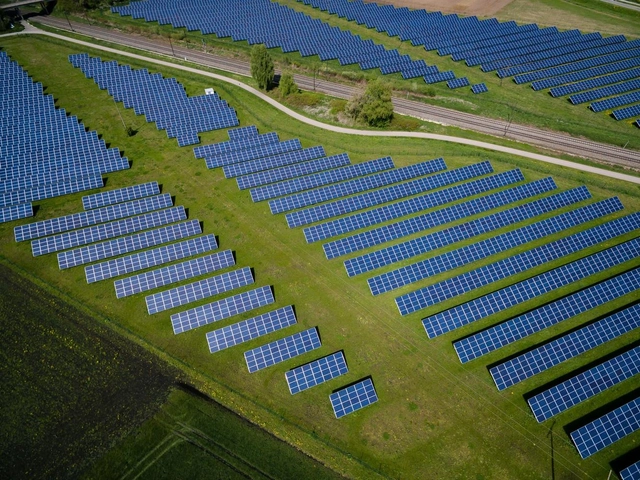
Encouraging households to adopt solar power generation is essential for a cleaner future, but investing in large-scale solar applications is what will truly shift the needle toward net-zero emissions. This is revealed by a new study from the Royal Melbourne Institute of Technology (RMIT University) in Australia.
Geospatial researchers used the city of Bendigo, in the state of Victoria, to conduct the case study. They estimated the solar electricity generated over a year in the city, which has 17,000 residential solar panels. In comparison, the study evaluates the solar potential of 21 government-owned airports across Australia.
On August 30 of this year, a new speed limit of 30 kilometers per hour came into effect in Paris, France. Making streets safer, quieter, and less polluted are among the measure's goals. While it may seem too slow to many, the initiative has been paved gradually. The 30 km/h limit already applied to about 60% of Paris and now extends to cover almost the entire city. In addition, Paris has been implementing measures to restrict car use on certain streets for several years, while simultaneously expanding pedestrian-only zones.
According to the International Council for Research and Innovation in Building and Construction (CIB), the construction industry is the largest consumer of natural resources. To minimize environmental impacts, the concept of sustainable construction has emerged, employing techniques that ensure greater efficiency and responsibility from the beginning to the end of a project.
The first consideration is the layout of the rooms, as each space has an ideal location based on the local climate. “The layout of rooms in a residence can establish baseline conditions for comfort or discomfort. It is the role of the architectural design, through the organization of the floor plan, to ensure the appropriate level of sunlight and natural ventilation for each space,” states the free sustainable renovation guide published by the Ministry of the Environment.
Recycled plastic bike path in the Chapultepec Forest Park in Mexico City. Courtesy of CicloVivo
A modular, prefabricated bike lane was recently inaugurated in Chapultepec Forest Park, Mexico City. Made from post-consumer plastic waste, its smart design also provides drainage and rainwater storage.
The plastics repurposed for the construction of the bike lane would otherwise have been discarded or incinerated. Another advantage is that if the material wears down, it can be recycled again, creating a circular life cycle.
On World Environment Day, celebrated on June 5, the mayor of Rio de Janeiro, Eduardo Paes, launched the Sustainable Development and Climate Action Plan. The document will guide the municipal administration's environmental goals for the coming decades. Among the proposals is the adoption of solely electric buses on municipal routes.
Electric mobility in Brazil, particularly in public transportation, is still in its infancy. There are promising solutions, such as the solar-powered electric buses developed in Ceará and in Florianópolis, but the adoption of these technologies remains highly localized.
Cortesia de Manoj Patel Design Studio, via CicloVivo
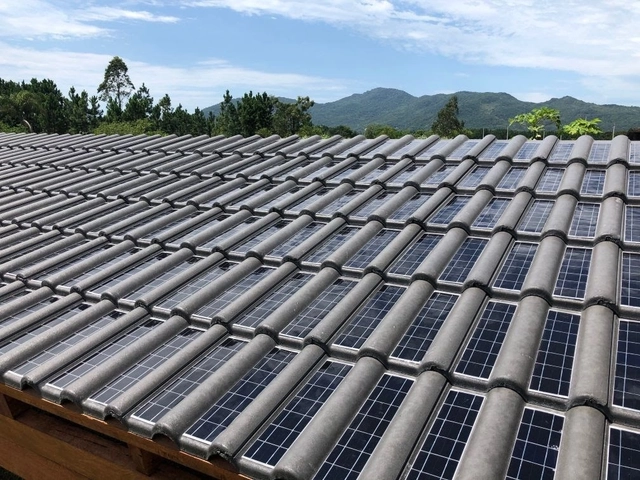
Indian architecture firm Manoj Patel Design Studio has designed several award-winning projects that make creative use of clay roof tiles. In one of them, named Ridge Clay Roof Tile Plantation, a vertical garden was created using these tiles.
The composting system can be built with various materials. Photo: Paulo H.Carvalho | Agência Brasília
The average Brazilian generates nearly one kilogram of waste per day, according to a survey by Selurb (National Union of Urban Cleaning Companies). Meanwhile, according to Abrelpe (Brazilian Association of Public Cleaning and Special Waste Companies), organic waste represents half of the total urban waste generated in Brazil every year. This is waste that could be repurposed for composting, biodigestion, and/or energy production, but is instead sent to landfills—where it contaminates the soil and produces polluting gases.
The small sovereign state of Luxembourg has a population of about 560,000. However, its vehicle count is disproportionate to its size: 662 for every thousand people, according to The New York Times. This represents the highest car-to-population ratio in the entire European Union. To address this issue, Prime Minister Xavier Bettel, reelected for a second term, promised free public transit for all residents.
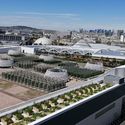
The definition of a dream home has been updated—at least for those passionate about minimalism and sustainability who discover the home of Martin Freney and Zoe. Located in Adelaide, Australia, the residence was built by the couple inspired by Earthship, a sustainable architecture movement based on reusing materials to minimize environmental impact.
Google has launched the Environmental Insights Explorer tool to provide users with access to data and technology that can contribute to the transition toward a lower-carbon world. The information is primarily based on data already available on Google Maps.
The goal is to enable cities worldwide to calculate their greenhouse gas (GHG) inventories to facilitate climate action planning. “The inventory can help prioritize investments in the areas of greatest impact, as it highlights key emission sources or hotspots and can be used as a baseline to measure progress,” the company states on the tool's website.
Lisbon city counsil almost unanimously approved the proposal of free public transport for young people up to 18 years old, higher education students up to 23 years old and people over 65 years old.
This free pass, which should encourage the use of public transport, is valid for residents of the city. The decision was announced by the mayor Carlos Moedas.
When it comes to sustainability, the Netherlands has always been at the forefront. In recent news, Zwolle, one of the country's "greenest cities," implemented the world's first bicycle lane composed of post-consumer waste that would normally be discarded or incinerated.
To create the material, Zwolle used old, plastic bottles, festival beer cups, cosmetic packaging, and plastic furniture. Still, in the pilot phase, the bike path contains 70% recycled plastic in its 30-meter pathway. Although, the city hopes to create a bike path made entirely of recycled plastic in the future.