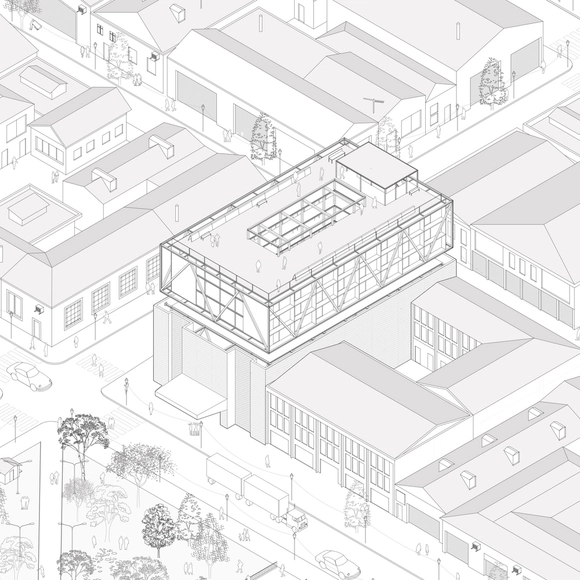
Centered on the theme “Integrated Housing, Sustainable Communities,” the 2020 CAP Steel Design Competition for Students has recognized projects that promote the understanding of steel as a material, research into its vast potential, its technologies, and its multiple uses and applications in construction, developed within an appropriate architectural and structural framework.
Out of 26 preliminary projects submitted by 15 different universities, first place went to a team of students from Universidad Andrés Bello (Santiago), while second place went to students from Universidad Católica de Chile, and third place to students from Universidad Austral.
A glance at the portfolio of Miguel De Guzmán and Rocío Romero reveals a duo that successfully captures the breadth of architectural spaces while conveying the underlying concepts. Together, they founded the Madrid- and New York-based photography and film studio Imagen Subliminal , documenting the latest developments in global architecture to allow viewers to experience the energy and creativity driving these projects.
On World Photography Day, we spoke with the duo about the evolution of their work and the role photography plays in both the current and future architectural landscape.
We may still have a long way to go when it comes to addressing the diversity of flora and fauna in urban habitats, yet it is incredible how fast, easy—and even fun—the architecture that makes this possible can be.
In practice, how are we promoting spaces for animals and plants in our cities?
You have only to look at Miguel De Guzmán and Rocío Romero's portfolio to know that the duo have succeeded in capturing a wide array of panoramas and sharing the ideas attached to them. Through their Madrid and New York based photography and film studio, Imagen Subliminal, document the latest happenings in the world of architecture in an effort to give their audience a taste of the energy and creativity that drives it.
We sat down with the duo in honor World Photography Day, where they shared how their work has changed through the years and photography's contemporary and future role in architecture.
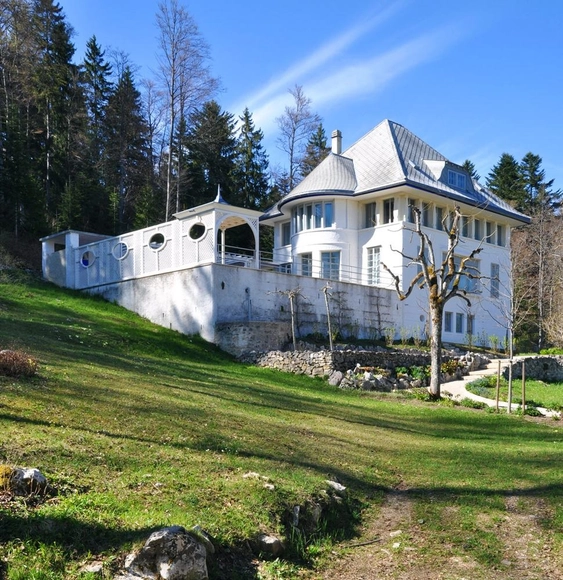
In 1912 Le Corbusier was already experimenting with some ideas on the Jeanneret-Perret house, known as "Maison Blanche," which eventually paved the way for the modern way of living.
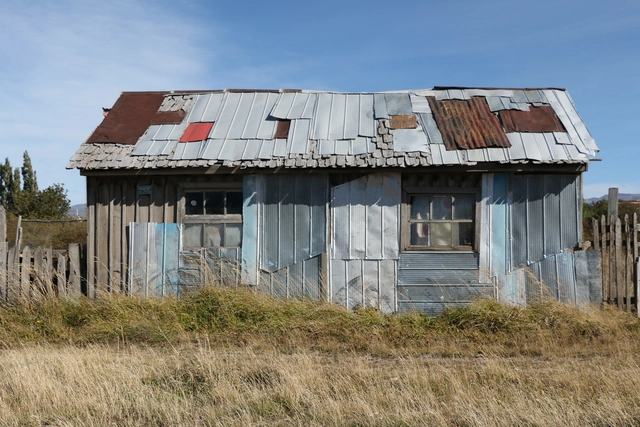
Fundación ProCultura is a non-profit organization founded in 2009, built on the conviction of being a people-focused institution where identity and cultural and natural heritage serve as the cornerstones of sustainable development, well-being, and mental health. Since then, through a multidisciplinary team, it has sought to generate development opportunities in isolated territories, strengthening the social fabric and enhancing the well-being of communities.
Lorena Pérez, an architect from the Catholic University of Chile with a Master's in Historic Preservation from Columbia University and a professor in the Master in Cultural Heritage program at UC, is the current director of architecture at the organization. In this interview, she discusses their approach and the challenges they face when addressing heritage and a sense of belonging in remote areas.
Colombian artist and architect Santiago Pradilla captured my interest through his many passionate pursuits—he has dedicated as much of his life to traveling to and working within small, rural communities and as he has to producing architecture that tells the rich history of Colombian cities.
We discussed the relationship between academia, auto-construction, and rural living as well as the exploration of other artistic disciplines. We even breached the topic of the importance of heritage and projections about the direction of Colombian architecture.
Guallart Architects has won the international competition for the design of a mixed-use community in Xiong'an, China, defining an urban model that merges the traditional European urban blocks, the Chinese modern towers, and the productive farming landscape.
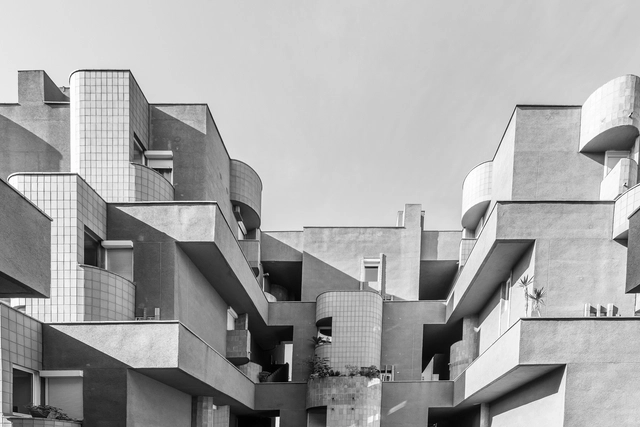
Rodolfo Lagos shared a series of photographs capturing the Brutalist architecture of Barcelona, illustrating how the movement has evolved in this iconic city.
While public awareness and regulations on how to reduce, reuse, and recycle municipal solid waste (MSW) on a daily basis have gained momentum, this is not yet the case for construction and demolition waste (CDW). This waste is primarily generated from the development of new projects; the rehabilitation, repair, and retrofitting of existing buildings; and site preparation and demolition processes, spanning from the scale of a single house to an entire city. This represents not only the loss of a massive volume of concrete, brick, steel, and manufactured products, but also the missed opportunity to salvage historic relics.
We want to offer our readers the opportunity to openly share their opinions and experiences regarding the recycling of this waste. If we were all fully aware of the environmental impact generated by the extraction, production, and commercialization of materials—only for them to ultimately end up as trash—would it change the way we design? Would our practices change?
In the following interview, we delve into his inspirations and ways of incorporating these new technologies, while also discussing his projections for the future of timber in Chile.
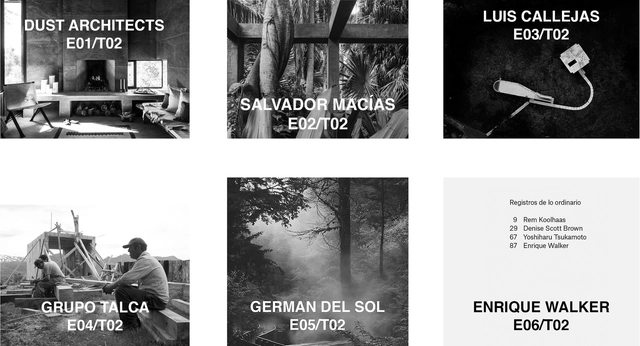
Nicolas Norero presents a new season of his podcast, continuing his conversations on identity, memory, and ways of life. In this edition, the featured guests are Dust Architects, Salvador Macías, Luis Callejas, Grupo Talca, Germán del Sol, and Enrique Walker.
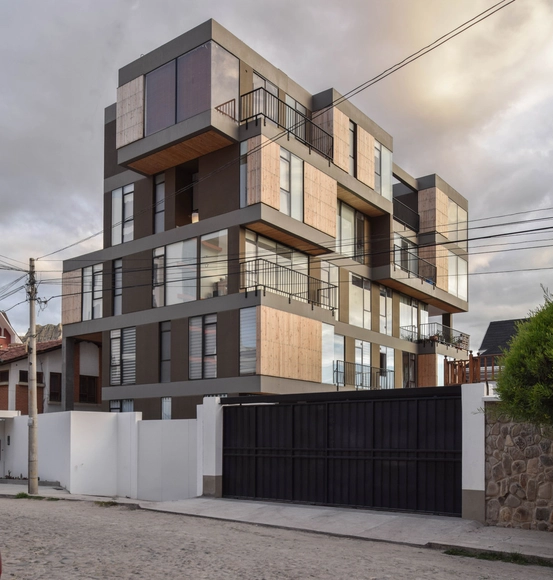
Edificio Isabel - arquitecto Christian Dávila. Image Cortesía de Bienal Internacional de Arquitectura de Santa Cruz
From July 20 to 27, the first virtual edition of the 7th Santa Cruz International Biennial of Architecture (BASC) took place. Organized by the Santa Cruz Association of Architects, the event was an effort to reflect on the “Return to Origins”; that is, bringing to the table the importance of an introspective review of the essence of space and cities from a global perspective, yet connected to local knowledge.
On the final day of the event, the first-place winners and honorable mentions for each of the five BASC 2020 categories were announced. Discover all the winners below.
The 2020 FAD Awards, one of the most important architecture accolades on the Iberian Peninsula, have announced the winning projects of their latest edition.