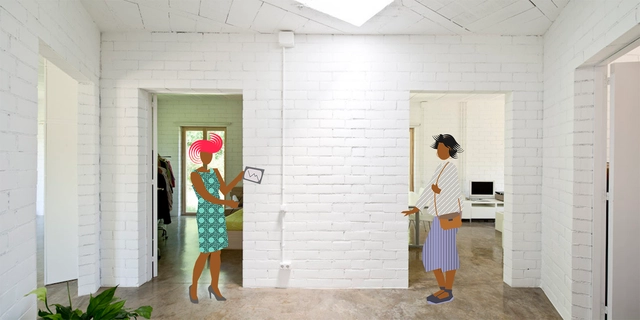
Have you ever had to convince your friends or family that an exposed brick wall can be more appealing than a plastered, white-painted one? Or that exposed building systems can offer significant advantages when it comes to maintenance? Do we connect better with a smooth backdrop for hanging art than with the textures of exposed materials?
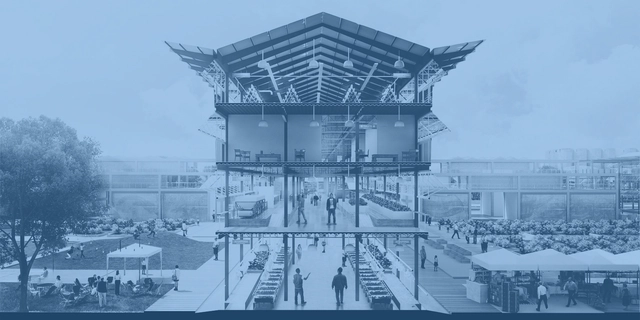
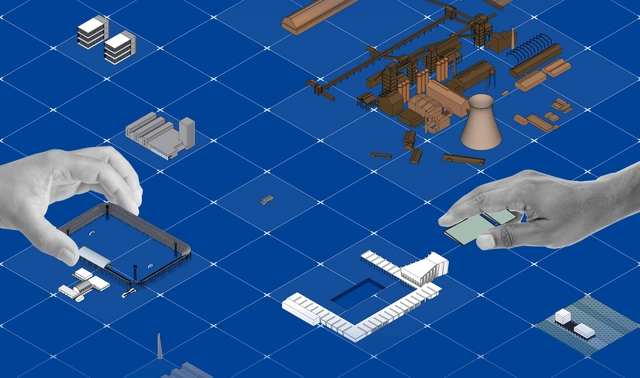
Gonzalo Nicolau. Image adapted from the project 'HABANA PUERTO DE COMIDAS' (Habana Food Port). Published in The 10 Best Thesis Projects Designed by Architecture Students in Argentina 2017
We believe that the creative output of universities in Central America and the Caribbean is immense yet often overlooked. Therefore, we feel it is essential to launch a call for submissions to showcase the best graduation projects coming out of these institutions.
Academic proposals can be profound intellectual and critical works. This call aims to prevent them from remaining tucked away, gathering dust on shelves, and losing the opportunity to spark real change in our cities and in how we live and think.
If you believe your 2019 graduation project is compelling enough to be featured on our site, and that your hard work deserves recognition from the wider community, do not hesitate to submit it using the form at the end of this article.
A glance at the portfolio of Miguel De Guzmán and Rocío Romero reveals a duo that successfully captures the breadth of architectural spaces while conveying the underlying concepts. Together, they founded the Madrid- and New York-based photography and film studio Imagen Subliminal , documenting the latest developments in global architecture to allow viewers to experience the energy and creativity driving these projects.
On World Photography Day, we spoke with the duo about the evolution of their work and the role photography plays in both the current and future architectural landscape.
Last week we announced the 15 finalist projects for the Building of the Year 2020 award (Obra del Año), which since 2008 has celebrated the best built architecture in Latin America and Spain, calling on our expert jury—that is, you, the readers—to choose your favorite completed buildings.
Today, the day has come to announce the winners of ODA2020.
La Parleta is a project by the Ecuadorian architecture and construction collective EseColectivo, which gathers "highly valuable reflections, anecdotes, and experiences surrounding the profession." Below, we share some of their thoughts alongside their fourth episode, "Post-Apocalyptic Architecture."
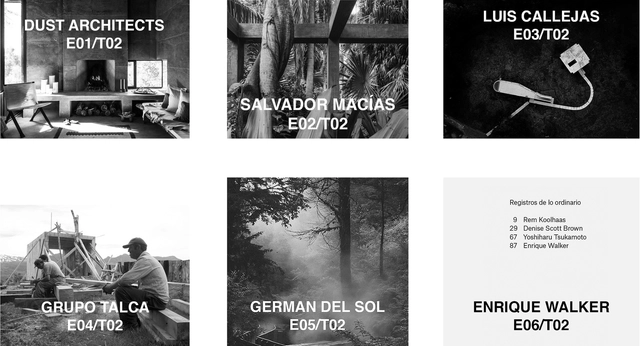
Nicolas Norero presents a new season of his podcast, continuing his conversations on identity, memory, and ways of life. In this edition, the featured guests are Dust Architects, Salvador Macías, Luis Callejas, Grupo Talca, Germán del Sol, and Enrique Walker.
Centered on the theme “Integrated Housing, Sustainable Communities,” the 2020 CAP Steel Design Competition for Students has recognized projects that promote the understanding of steel as a material, research into its vast potential, its technologies, and its multiple uses and applications in construction, developed within an appropriate architectural and structural framework.
Out of 26 preliminary projects submitted by 15 different universities, first place went to a team of students from Universidad Andrés Bello (Santiago), while second place went to students from Universidad Católica de Chile, and third place to students from Universidad Austral.
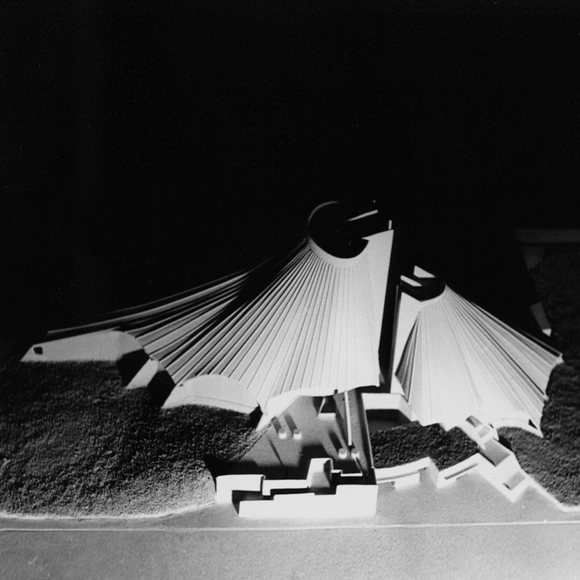
Nearly sixty years ago, Flora Manteola, Javier Sánchez Gómez, Justo Solsona, Carlos Libedinsky, and Antonio Diaz envisioned a building with a capacity of 3,000,000 books and 500,000 magazines and newspapers for the National Library of Argentina preliminary design competition. Their proposal for a "large metal tent" would ultimately take second place to the concrete glyptodont by Clorindo Testa, Bullrich, and Cazzaniga that stands today.
From its inception, the proposal "prompted sensitivity toward new formal and structural directions," as noted in the jury's critique. In 2015, this design was featured in the exhibition Latin America in Construction, and today its original model and blueprints are in the official collection of the Museum of Modern Art (MoMA) in New York.
Below, we revisit the project through the words of Justo Solsona:
Chilean architect and urban planner Germán Bannen, renowned for his work in the municipality of Providencia, is thoroughly examined in a new documentary by visual artist Gabriel Del Favero and journalist Ana Rodríguez. La ciudad de Germán Bannen traces the key milestones of his projects—such as the design and construction of Nueva Providencia Avenue—through a compilation of photographs, plans, archival footage, lectures, architectural drawings, and a dozen interviews.
To showcase the valuable output of various Argentine universities, we held our open call for the fourth consecutive year, inviting our Argentine readers to submit their graduation projects.
“Architects, not Architecture” has decided to open its archive to help us navigate the global lockdown, serving as a source of inspiration and entertainment for the architectural community. It features a selection of the best talks from their 35 past events, previously unreleased to the public—including Tatiana Bilbao, Peter Cook, Richard Rogers, Massimiliano Fuksas, Kim Herforth Nielsen, Ben van Berkel, Anupama Kundoo, Sadie Morgan, Dan Stubbergaard, Manuelle Gautrand, and Kjetil Thorsen.
Each week, ArchDaily will share one of the full talks that “Architects, not Architecture” is publishing daily on its website as part of its "new event": Home Edition 2020 (www.architectsnotarchitecture.com).
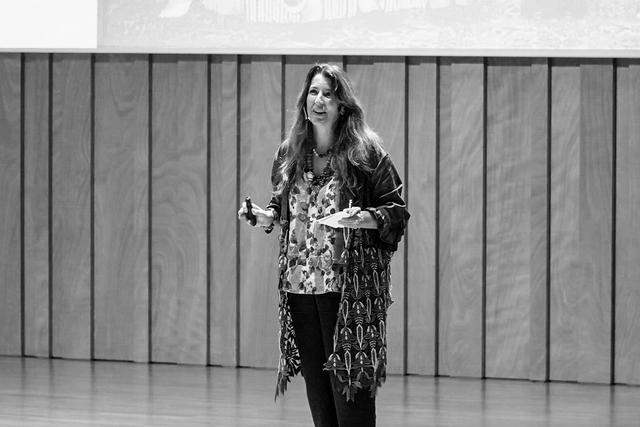
As an exclusive, Plataforma Arquitectura is presenting one of the talks in Spanish. Below is the presentation by architect Benedetta Tagliabue.
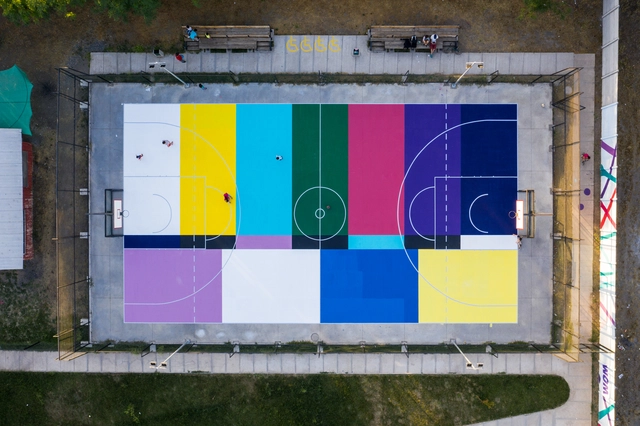
“Apaga la tele” por la artista Coni Lars. Ubicada en la comuna de Requinoa. Image Cortesía de Metro21
"Art at the service and disposal of the people"—this is the primary goal of Metro21, a Chilean urban art gallery dedicated to exhibiting works and managing projects for artists working in public space.
"De cancha en cancha" (From Court to Court) is their initiative to reclaim shared spaces that have fallen into disuse and disrepair across many of the country's localities—a common outcome of a lack of long-term upkeep.
Flores & Prats, in collaboration with Ouest Architecture, have won first place in the competition to renovate the Ancien Théâtre des Variétés in Brussels, Belgium. The project addresses the transformation of the former theater into an international laboratory for artistic creation, conceived as an open and inclusive public space.
Are artists connected to the territory and the community?
Todo por la Praxis presents their project Monumento Residencia, an active research initiative addressing the space of artistic residencies and the resident's engagement with their context.
Fundación ProCultura is a non-profit organization founded in 2009, built on the conviction of being a people-focused institution where identity and cultural and natural heritage serve as the cornerstones of sustainable development, well-being, and mental health. Since then, through a multidisciplinary team, it has sought to generate development opportunities in isolated territories, strengthening the social fabric and enhancing the well-being of communities.
Lorena Pérez, an architect from the Catholic University of Chile with a Master's in Historic Preservation from Columbia University and a professor in the Master in Cultural Heritage program at UC, is the current director of architecture at the organization. In this interview, she discusses their approach and the challenges they face when addressing heritage and a sense of belonging in remote areas.
The 2020 FAD Awards, one of the most prestigious architecture accolades on the Iberian Peninsula, has announced the finalist projects for its latest edition.
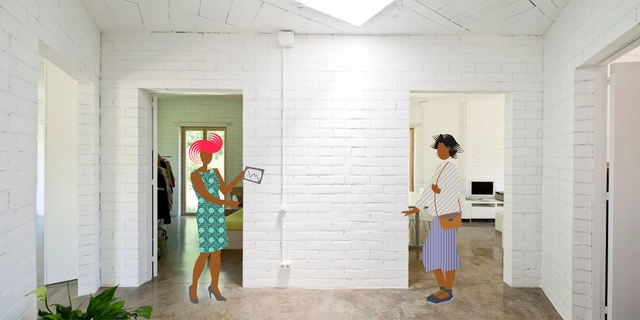
Have you ever had to convince your friends or family that an exposed brick wall can be more interesting than a plastered surface painted white? Or that exposed building systems can offer major advantages when it comes to maintenance? These are recurring scenarios in the professional lives of architects and design firms.
Chiloé is a production by Glaciar Films, directed by Diego Breit and David Guzmán, consisting of five episodes that showcase the architectural identity of the Chilean island and its key figures. Architects, carpenters, artisans, and residents weave together a narrative charting the island’s building history and how it now faces imminent change and the adoption of modern paradigms.



8206_Photo_·_Javier_de_Paz_Garcia-2.jpg?1581686810&format=webp&width=640&height=580)