English: Architect from the Faculty of Architecture, Design and Urban Planning of the University of Buenos Aires (FADU-UBA). Collaborator at ArchDaily. Her interests involve projecting and thinking about urban planning and architecture from people. Born and raised in Buenos Aires, Argentina. Instagram: @agustinainiguez_
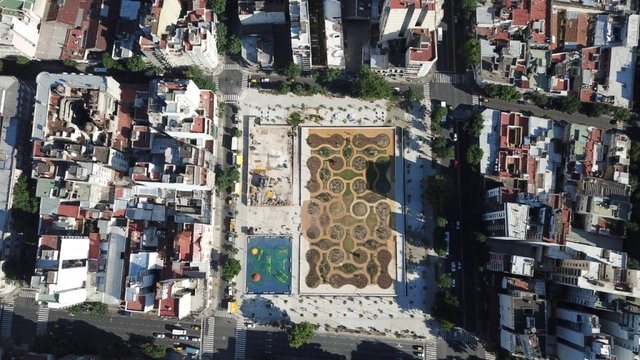
Aerial view of Manzana 66 in the Balvanera neighborhood. Autonomous City of Buenos Aires, Argentina. Image via Gobierno de Ciudad Autónoma de Buenos Aires under License CC BY 2.5 AR
Located in the Balvanera neighborhood of Buenos Aires, Manzana 66 is an example of community resistance and collective action. Its name originates from its designation in the Buenos Aires City Land Registry; the block is bounded by Belgrano and Jujuy Avenues, and Moreno and Catamarca Streets. This section of the city was a point of contention for several years, having been initially demolished to build an indoor arena for music events, destroying housing from the 1920s and displacing its residents.
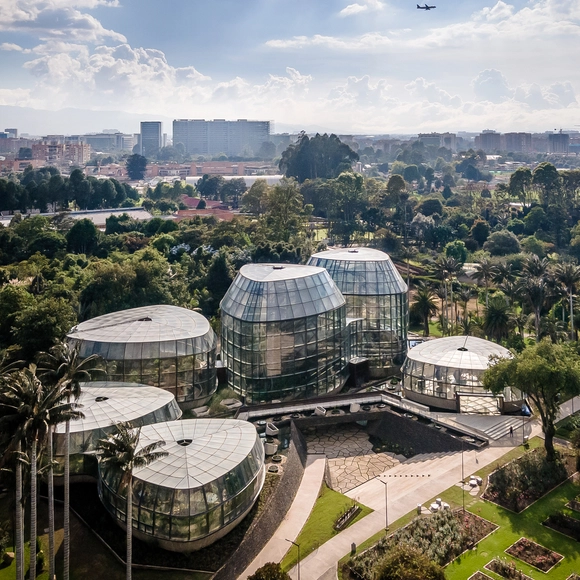
Tropicario. Image via Congreso Colombiano de Arquitectura y Urbanismo
The winners of the Award for Excellence in Sustainable Architecture were announced during the closing of the 37th Colombian Congress of Architecture and Urbanism.
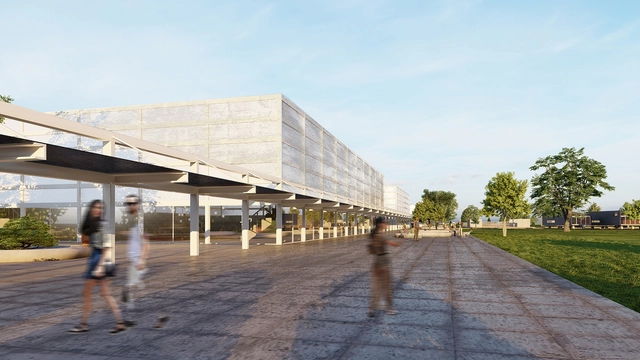
The FAU Student Ideas Competition was held with the objective of developing the site of Club Atlético Ever Ready, located in the city of Dolores, Buenos Aires province, Argentina. The competition focused on proposals for a Master Plan to consolidate the 8-hectare site as a sports complex. First prize was awarded to Arch. Gabriel De León, Pedro Sansogni, Santiago Sosa, and Renzo Guagnini Drews.
The jury consisted of Nicolás Frontini representing Club Ever Ready, Arch. Carolina Helenas Pintos for the Municipality of Dolores, Arch. Silvana Noelia Paul for the Alumni Association, Solange Hoyos for the Student Body, and Dr. Arch. Juan Carlos Etulain for the Faculty Association. Explore the project below.
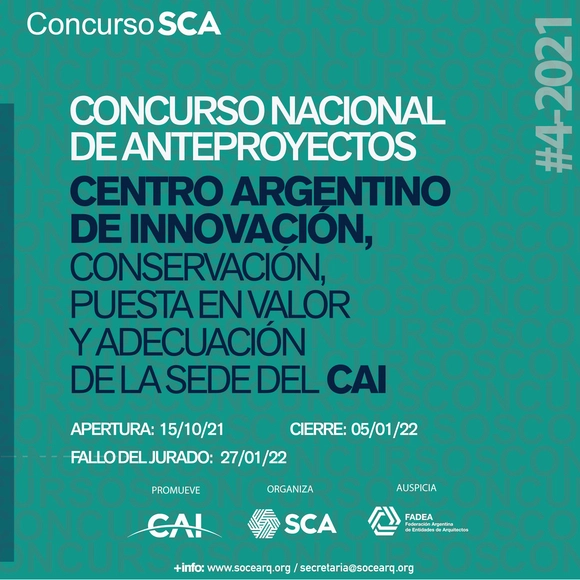
Organized by the Sociedad Central de Arquitectos (SCA) and promoted by the Centro Argentino de Ingenieros (CAI), the call for entries is now open for the binding National Preliminary Design Competition for the Argentine Center for Innovation, Conservation, Valorization, and Adaptation of the CAI headquarters, located at Cerrito 1250 – Av. 9 de Julio – in the heart of the Autonomous City of Buenos Aires.
Organized by the Jujuy Architects' Association and promoted by the provincial Ministry of Infrastructure, Public Services, Land, and Housing, the call for entries is now open for a competition of ideas regarding the future of the current penitentiary unit in the Gorriti neighborhood of San Salvador de Jujuy, which is set to be relocated to the town of Chalicán in the southeast of the Argentine province.
Videos
Solución estructural Termomuro. Image Cortesía de Melón Hormigones
In the quest to find innovative solutions to achieve carbon neutrality in construction, identifying, addressing, and managing emissions is of vital importance. Doing so enables a deeper understanding and analysis of each stage of the production process and the life cycle of materials. Optimizing construction processes, minimizing fossil fuel use, adopting renewable energy, and recovering recycled materials are just some of the many strategies available to advance this transformation. Melón has taken the initiative to develop a Product Carbon Footprint calculator to deliver more sustainable products and construction solutions, actively contributing to the fight against climate change.
For millennia, clay has been the foundation of walls, facades, and claddings. There is likely no other human-made material with as extensive a history as the brick. Its enduring presence in architecture is explained not only by its technical attributes but also by its social impact, construction efficiency, and deep-seated cultural role in how cities are built.
In Chile, the brick-making tradition has historically shaped residential development, becoming a material associated with stability, permanence, and security for families. Against this backdrop, Cerámica Santiago celebrates 45 years in business, establishing itself as a leading national benchmark in the development of ceramic building products, driven by a vision that recognizes the social role of housing in the country's urban development. Since its inception, the company has sought to integrate traditional ceramic craftsmanship with modern industrial processes, innovative design, and evolving technical demands.
Videos
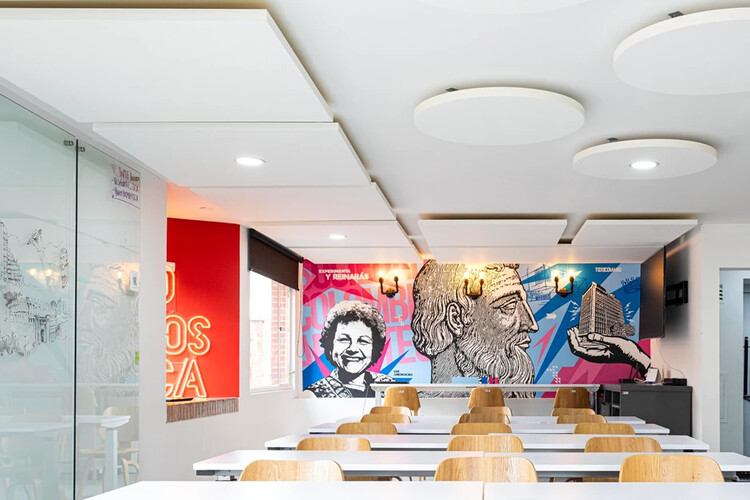
Ecophon Solo™ Square. Image Cortesía de Volcan
Beyond their aesthetics, materiality, or installation methods, the role of ceilings in contemporary architecture is no longer limited to hiding building structures or internal building systems. By providing functional benefits such as acoustic absorption, thermal insulation, energy efficiency, fire protection, integrated lighting, and ease of maintenance, different ceiling layouts combine flexibility and versatility to meet the diverse needs and uses of their occupants. Offices, restaurants, clinics, retail shops, and other interior spaces take center stage through the use of ceilings designed with clear intentions and narratives.
In an era of shifting paradigms, contemporary hospitality architecture is rethinking the adoption of new technologies, the incorporation of sustainability and energy efficiency principles, as well as the personalization of user experiences. Redefining the design of both interior and exterior hotel spaces, these projects integrate everything from region-specific climate design strategies to the use of recycled materials and bioclimatic design, all aimed at minimizing environmental impact.
Since 2016, the Patronato Cultural del Perú has been responsible for producing and organizing the Peruvian Pavilion at the Venice Architecture Biennale, promoting and representing the works and projects that reflect the country's architectural landscape.
What design strategies or new technologies can be integrated into architectural design without compromising the environment? In recent years, renewable energy has been gaining significant momentum worldwide, and photovoltaic solar energy is one of many showing exponential growth.
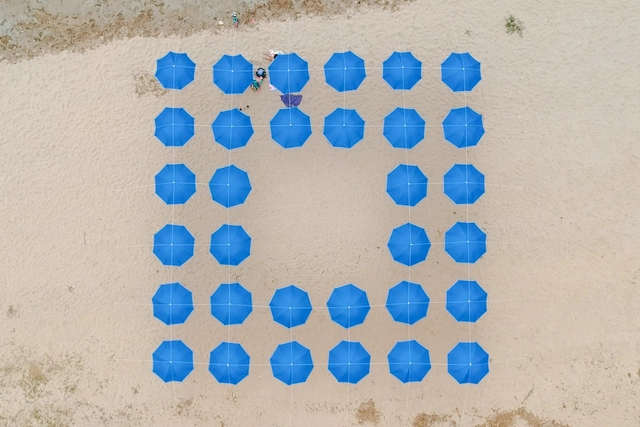
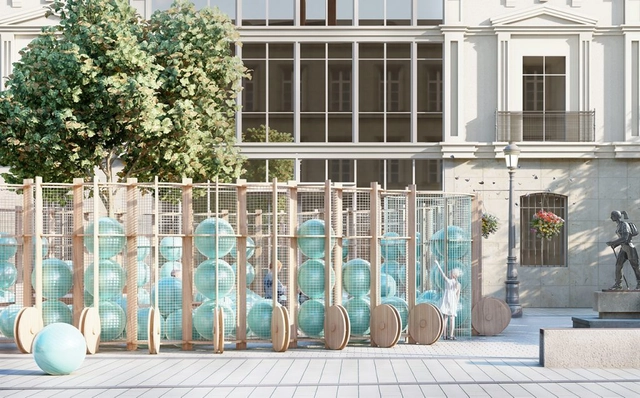
As part of the FUGAZ Greater Concepción Urban Interventions Festival, a team comprising Álvaro Parraguez, Beatriz Harriet, Bárbara Schumacher, Josefa Acevedo, and Luis Cambiaso developed an installation at the Villarrica coastal resort in Dichato (Concepción, Chile) that won the 2022 Ephemeral Installations Competition. The competition called for an ephemeral installation to serve as a functional venue for the festival, accommodating various daytime performances and activities across dance, theater, music, and other disciplines.
Located in Argentina, approximately 56 km (35 miles) southeast of the Autonomous City of Buenos Aires, stands the city of La Plata, founded on November 19, 1882, as the capital of the Province of Buenos Aires. As the product of the country's most ambitious urban and architectural undertaking, La Plata was conceived as a forward-looking city—one of the first in the world designed in accordance with the new principles of urban hygiene and rational construction generated by 19th-century scientific advancements. Furthermore, the city was showcased at the 1889 Paris Exposition Universelle, the grand exhibition celebrating the centennial of the French Revolution.
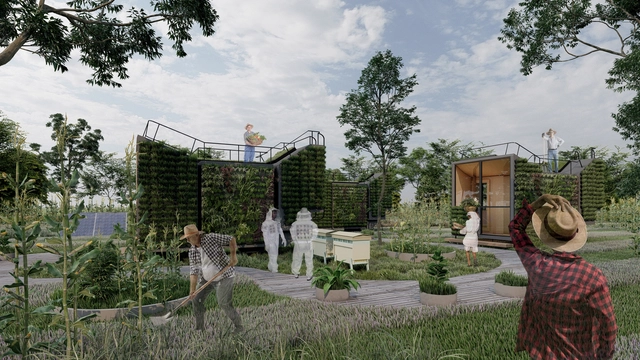
Habitat X is part of an ongoing research initiative developed over more than 12 years, led by Argentine architect Alejandro Borrachia, involving over 100 professors, students, and graduates from the University of Morón – School of Architecture and Design (UM-ESAD) alongside multidisciplinary actors and strategic partners from both the private and public sectors. Focusing on theoretical inquiry and the physical realization of a series of prototypes, the project engages with a specific program based on contemporary societal concerns and needs, connecting with processes, hypotheses, and case studies that spark unprecedented disciplinary shifts.
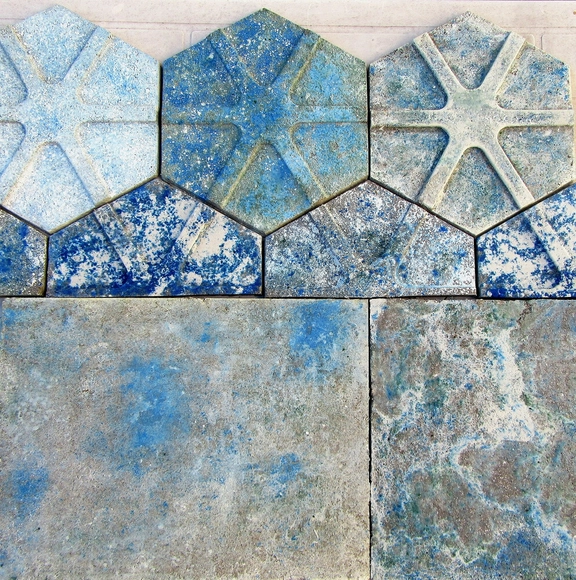
Placas hexagonales. Image Cortesía de Susana Caruso
This research on cultivable components as a replacement for petroleum derivatives in products used to manufacture materials from waste is carried out within a UBACyT Project directed by architect Marta Yajnes, within the framework of the Centro Experimental de la Producción (CEP) of the School of Architecture, Design, and Urbanism at the University of Buenos Aires.
PUL — Piscina Urbana de Logroño / meii estudio (Elvira Carrión, Jose Mª Mateo), Clara Torregrosa, Gabriel Millán / España. Image Cortesía de Festival Concéntrico
From April 27 to May 2, 2023, the Logroño International Festival of Architecture and Design, Concéntrico 09, will take place. Year after year, the festival reflects on the urban environment and cities through architectural and design proposals including installations, exhibitions, meetings, workshops, and other activities. This edition has announced the winners of the open calls for city installations, as well as the selected practices for the European Cities Ahead program and the new award from the Mayor's Office of Medellín.
The International Contemporary Art Fair of Spain, ARCOmadrid, is taking place at IFEMA, Madrid, through February 26, 2023. As one of the main platforms for the contemporary art market, the 42nd edition of the fair features the program "The Mediterranean: A Round Sea," which involves the art scenes of the countries surrounding this sea. It is curated by Marina Fokidis and features advisory support from Bouchra Khalili, Hila Peleg, and Pedro G. Romero.
“Construyendo y rompiendo techos” / Laia Ollé Ramos - Instituto Gabriel Ferrater i Soler de Reus. Image Cortesía de Fundación Mies van der Rohe
To mark International Women's Day, the high school research projects awarded the Lilly Reich Grant for Equality in Architecture were presented at the historic Barcelona Pavilion, designed by Mies van der Rohe and Lilly Reich for the 1929 Barcelona International Exposition. In addition, the call for applications for the new 2023/2024 edition has been opened.