Peripheria Films shares a documentary that explores "the exploitation of territory, the private occupation of public space, the representation and construction of identity through postcards and souvenirs, the conversion of architectural heritage into a product and the city into a brand, and the touristification of historic centers."
Articles
At the Expense of the Sun: a documentary on the exploitation of coastal territory for tourism in Spain
https://www.archdaily.com/1123586/at-the-expense-of-the-sun-a-documentary-on-the-exploitation-of-coastal-territory-for-tourism-in-spainFabian Dejtiar
10 Podcasts on Environmental Issues in Brazil
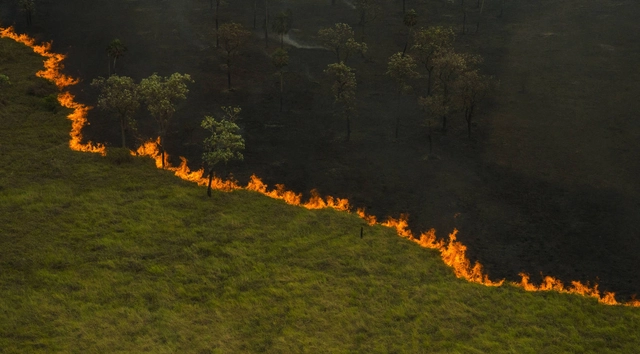
Podcasts are a relatively recent medium in Brazil, but they are on the rise and growing rapidly in popularity. A survey by the Deezer platform showed that podcast consumption in Brazil grew by 67% in 2019. Far from a passing fad, this format is being used for entertainment, information, and even as a pedagogical resource for educators.
Among the wide variety of topics available, many shows have fostered debates about the environment, especially regarding the Amazon—considered one of humanity's most valuable natural heritages and the largest natural reserve on the planet.
.jpg?1600432189 "© Shutterstock")


https://www.archdaily.com/1123591/10-podcasts-on-environmental-issues-in-brazilPortal Aprendiz
The reinvention of the ordinary and everyday life

Having lost their sense of purpose, cities are searching for new meanings. Today we rely on digital social networks to access common goods like culture, leisure, and meaningful encounters—but how can we leverage technology to enable the right to the city during a pandemic? We are witnessing a global slowdown in urban development: the emptying of cities in India, the urban exodus in France, and a return to smaller towns and rural areas where there is lower population density and a higher quality of life. What is the city if not the promise of access to the commons it offers?
https://www.archdaily.com/1123578/the-reinvention-of-the-ordinary-and-everyday-lifeMarcella Arruda
The Santa Cruz International Biennial of Architecture 2020 Opens Virtually
The 2020 Santa Cruz International Architecture Biennial opens today. Organized by the Colegio de Arquitectos de Santa Cruz, the academic event will run in an entirely virtual format from July 20 to 27.
https://www.archdaily.com/1123598/the-santa-cruz-international-biennial-of-architecture-2020-opens-virtuallyFabian Dejtiar
The Best Graduation Projects by Architecture Students in Uruguay 2020
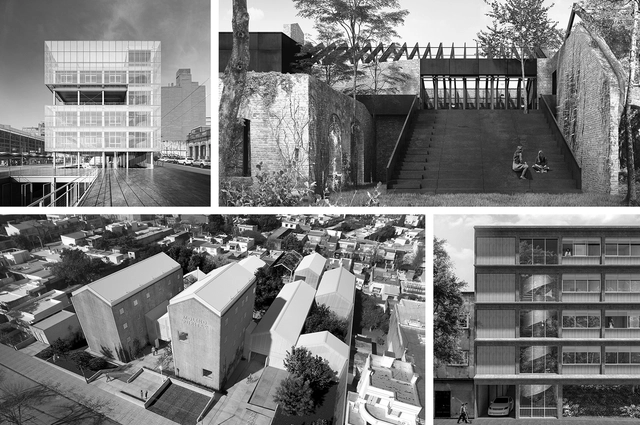
To showcase Uruguay's valuable academic output, we launched an open call inviting readers in the country to submit their final thesis projects.
Out of a total of 65 submissions, the editorial team—comprising Fabian Dejtiar (Managing Editor of ArchDaily en Español); Mónica Arellano (Editor, ArchDaily México); Santiago Baraya (Editor, ArchDaily Colombia); and Belén Maiztegui (Editor, ArchDaily Argentina)—selected six. The highlighted projects are those that addressed specific challenges, their chosen form, and their representation through critical, austere, and efficient thinking. We valued proposals that not only delivered the best possible architecture through a simple design suited to its context, program, and users, but also paid close attention to human scale, mediation, and new ways of approaching architecture in cities.
Explore the selected projects below.
https://www.archdaily.com/1123735/the-best-graduation-projects-by-architecture-students-in-uruguay-2020Fabian Dejtiar
Architectural Representation: The Key to Transforming the Character of Contemporary Architecture

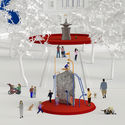
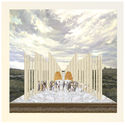
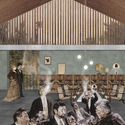
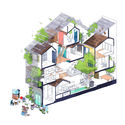

Throughout the history of architecture, representation has always played a vital role; it is the very birthplace of a project. Over time, prominent architects have stood out precisely because of their style of representation. Examples include Viollet-Le-Duc, whose drawing style brought to light the restoration of several historic buildings in Europe, and Le Corbusier, whose famous sketches were anything but beautiful yet managed to convey the essence of his projects.
https://www.archdaily.com/1123745/architectural-representation-the-key-to-transforming-the-character-of-contemporary-architectureIñaki Busteros
Horizontal Monuments: a participatory intervention in Guadalajara, Mexico

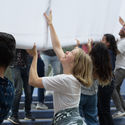
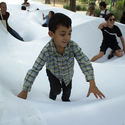
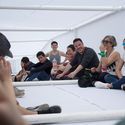
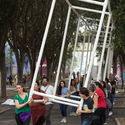

Horizontal Monuments is a participatory intervention carried out at Plaza Juárez in Guadalajara, Mexico. The project began with the construction of a 1:1 scale replica of the obelisk located in the plaza, placed on the ground and shifting its materiality, turning this monument into a malleable and accessible object. This shift sparked a central question: what should be done with it? This question triggered a series of discussions that transformed into actions; students and local community members gathered to give voice and form to the ideas emerging from the transformation of the object. The work was conceived as an educational project to imagine alternative models of monuments capable of addressing the demands and possibilities of specific sites. Its development led to a series of collective actions described below.
https://www.archdaily.com/1123752/horizontal-monuments-a-participatory-intervention-in-guadalajara-mexicoArchDaily Team
C de Confinament: Streaming Architecture Lecture Series
Students from the Barcelona School of Architecture are organizing a live-streamed architecture lecture series, featuring both local and international guests, to reflect on quarantine, confinement, freedom, repression, and viruses.
https://www.archdaily.com/1123756/c-de-confinament-streaming-architecture-lecture-seriesFabian Dejtiar
Visualizing Intangible Elements: Diagrammatic Structures and Comfort Analysis
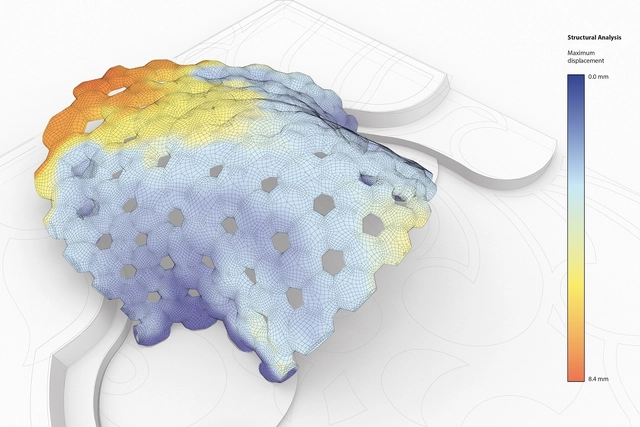
When we think of architectural visualization, sketches, drawings, and 3D renderings usually come to mind. This association is natural, as "visualization" is typically equated with imagining a project before it is built—whether to validate aesthetic and functional decisions or to communicate concepts to clients unfamiliar with technical drawings. However, beyond superficial elements like materials, layouts, textures, and colors, architects must also address highly technical, invisible factors that directly impact a building's performance.
https://www.archdaily.com/1123763/visualizing-intangible-elements-diagrammatic-structures-and-comfort-analysisEduardo Souza
City of Insects: The Thin Boundaries Between Humans and Nature

We may still have a long way to go when it comes to addressing the diversity of flora and fauna in urban habitats, yet it is incredible how fast, easy—and even fun—the architecture that makes this possible can be.
In practice, how are we promoting spaces for animals and plants in our cities?
https://www.archdaily.com/1123755/city-of-insects-the-thin-boundaries-between-humans-and-natureFabian Dejtiar
Climate Care: Digital Archive for an Urban Practices Curriculum
Climate Care – A Curriculum for Urban Practice was a 10-day public program curated by Gilly Karjevsky and Rosario Talevi for the Floating University in Berlin. Climate Care explored the correlations between the environment, urban practices, and education, constructively addressing not only environmental climate challenges but also scrutinizing the complex social, political, and economic climates that surround us today.
https://www.archdaily.com/1123728/climate-care-digital-archive-for-an-urban-practices-curriculumFabian Dejtiar
A Guide to Solar Tiles and Their Use
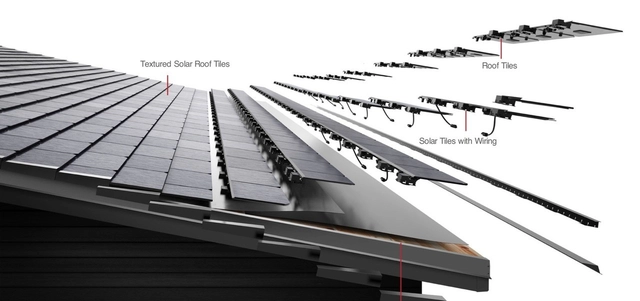
Solar tiles work on the same principle as the photovoltaic panels widely used in architecture. The main difference lies in their installation: while photovoltaic panels are mounted on top of an existing roof, solar tiles are integrated into the roof structure from the very beginning, replacing conventional roof tiles.
These tiles are composed of photovoltaic cells. When they absorb sunlight, they generate an electric field that provides electricity to the building's interior. Each tile is connected by cables to a power distribution board.
https://www.archdaily.com/1123736/a-guide-to-solar-tiles-and-their-useAudrey Migliani
57Uno: Strategies for the Design of Sustainable Social Housing in Colombia

The following article proposes rethinking architecture in social housing in Colombia. Natalia Carrero Rojas and Pablo González delve into the subject as educators and through their practice 57Uno, where they constantly balance high-quality housing with real estate viability.
https://www.archdaily.com/1123726/57uno-strategies-for-the-design-of-sustainable-social-housing-in-colombiaNatalia Carrero Rojas y Pablo González
Concrete Houses in Peru: 10 Contemporary Homes That Use Concrete as Structure and Finish


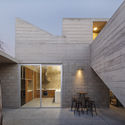
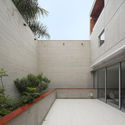

In the architecture of Peru, concrete took center stage during the development of the Modern Movement. In pursuit of a new urban geography, many architects set out to renew their architectural languages. As a result, new concrete buildings—residential, office, and commercial towers—began to emerge across the city, leaving behind the Neocolonial and Republican styles that had long characterized Lima's architecture. Today, the structural advantages, versatility, expressiveness, and aesthetic value of concrete continue to make it a preferred choice for many architects, keeping exploration around the material highly relevant.
https://www.archdaily.com/1123631/concrete-houses-in-peru-10-contemporary-homes-that-use-concrete-as-structure-and-finishBelén Maiztegui
Three bathrooms, three dances: experiments of the body in architecture
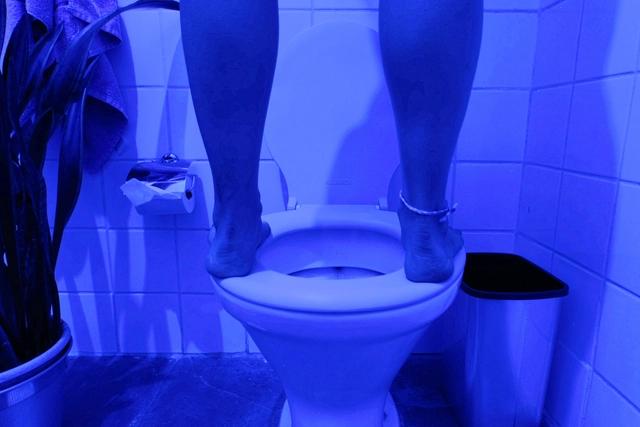
This article is an excerpt originally published in Revista Cadernos de Pesquisa #7 of the Associação Escola da Cidade. It stems from the final graduation project “Three Bathrooms, Three Dances” by Manuella Ferreira Leboreiro, completed at Escola da Cidade in 2018, under the supervision of Professor Yuri Fomim Quevedo. This essay was also featured in the selection of works exhibited at CCSP as part of the 12th International Architecture Biennale of São Paulo.
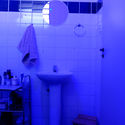
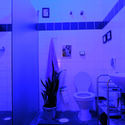
It is 12:11 PM on November 7 (2018). An "S" on the door indicates who this bathroom is supposedly for. I am in a bathroom located in a small building designed in the 1950s by Vilanova Artigas, the Brazilian modernist architect, in the Santa Cecília neighborhood. This is my second time inside, and to me, it is still a space slowly revealing itself. At first, what really caught my attention was the almost-purple blue cast by the blacklight, which tints every tone in the room toward that color. It brings a deep sense of serenity during the day.



https://www.archdaily.com/1123632/three-bathrooms-three-dances-experiments-of-the-body-in-architectureManuella Ferreira Leboreiro
Public Space in Informal Settlements: A Collective Construction of Social Space


Originally published as "El espacio público en asentamientos de origen informal: una construcción colectiva del espacio social" in the third edition of Revista CLEA —an annual publication of the Latin American Coordinator of Architecture Students (CLEA)—, this article argues that the most important aspect of public space is the opportunity it offers to build ourselves as citizens.
The production and meaning of public space in informal settlements are driven by the people who inhabit them. Consequently, the process of forming the concept of publicness is forged from the moment of occupying a void that lacks municipal services (Hernández, 2011). This stems from the fundamental need for shelter, which shapes this void through housing as the primary objective of the individual.
https://www.archdaily.com/1123643/public-space-in-informal-settlements-a-collective-construction-of-social-spaceHenry Arévalo Banoy
Architecture for Early Childhood Education: Kindergartens and Preschools in Colombia

One thing that unites all human beings is that during the first years of our lives, we absorb our surroundings to develop as we grow. Consequently, education plays an irreplaceably important role. In early childhood, however, learning differs from more theoretical methods, as young children assimilate knowledge through continuous experience, developing their motor skills and their sense of dimension and space in relation to their own scale and body.
https://www.archdaily.com/1123648/architecture-for-early-childhood-education-kindergartens-and-preschools-in-colombiaSantiago Baraya
Houses with Stone in Argentina: Stone Materials as an Expressive Resource

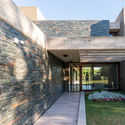
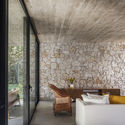
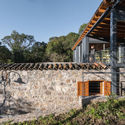
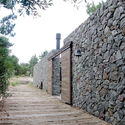

Historically, stone materials have offered ancient cultures the ability to build robust structures by interlocking stones of various shapes and sizes. The simplicity of the technique and its ability to deliver efficient, durable results have sustained the transmission of this construction method over time, enabling multiple contemporary architectural variations and reinterpretations.
https://www.archdaily.com/1123655/houses-with-stone-in-argentina-stone-materials-as-an-expressive-resourceBelén Maiztegui
Minimum Housing Area: Who Determines the Smallest Permitted Spaces in Latin America?
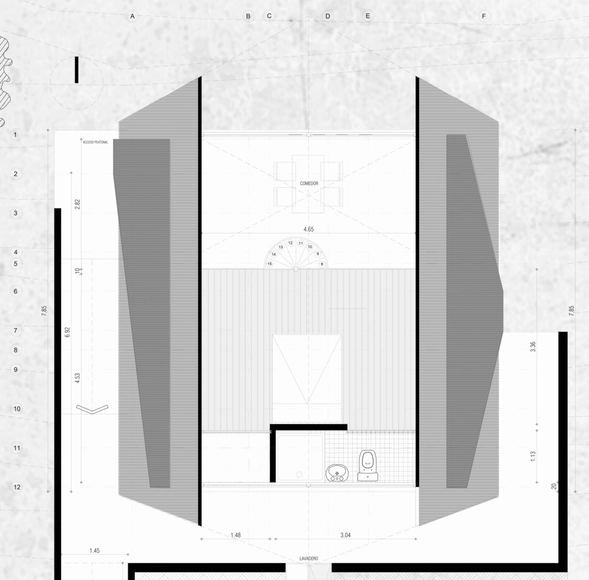
Cultural customs may vary infinitely across countries, but family life always brings celebrations and conflicts, regardless of origin. The pandemic has magnified these dynamics, particularly the challenges of sharing the same spaces for extended periods. What is the minimum square footage allowed in Latin American countries? Is this area truly sufficient?
https://www.archdaily.com/1123626/minimum-housing-area-who-determines-the-smallest-permitted-spaces-in-latin-americaSantiago Baraya
Country Houses: Repurposing Rural Architecture in Argentina
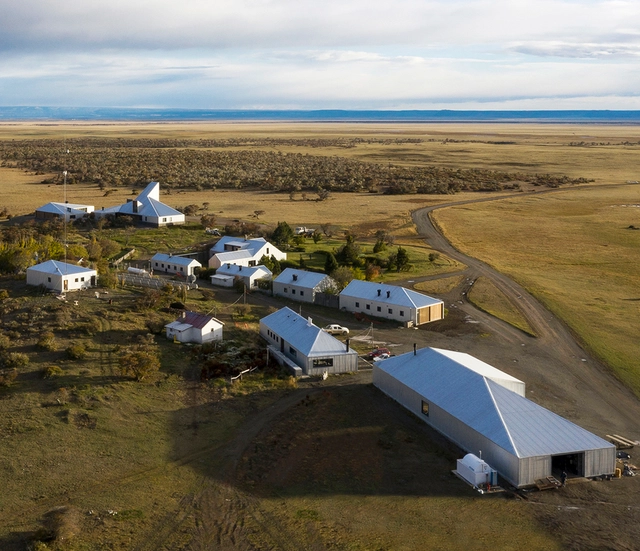
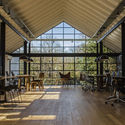
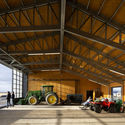
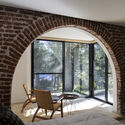
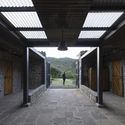

In Latin American countries, the most common method for distinguishing rural areas from urban spaces is based on analyzing the number of residents in a given zone, classifying as "rural" any locality with a population under 2,000. In these contexts, low density and scattered development typically allow the natural landscape to predominate over the built environment.
https://www.archdaily.com/1123642/country-houses-repurposing-rural-architecture-in-argentinaBelén Maiztegui
Water, mining, and exodus: the landscape consequences of extractive activities in northern Chile

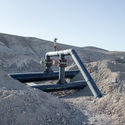

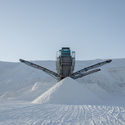


La serie titulada Agua, minería y éxodo forma parte de una investigación visual llevada adelante por el fotógrafo Marcos Zegers que explora las tensiones culturales y las alteraciones territoriales derivadas de las actividades mineras y extractivas en el desierto de Atacama.
https://www.archdaily.com/1123639/water-mining-and-exodus-the-landscape-consequences-of-extractive-activities-in-northern-chileBelén Maiztegui
Lucila Aguilar: "I traveled to find new ways to design and discovered that bamboo is the most sustainable material"
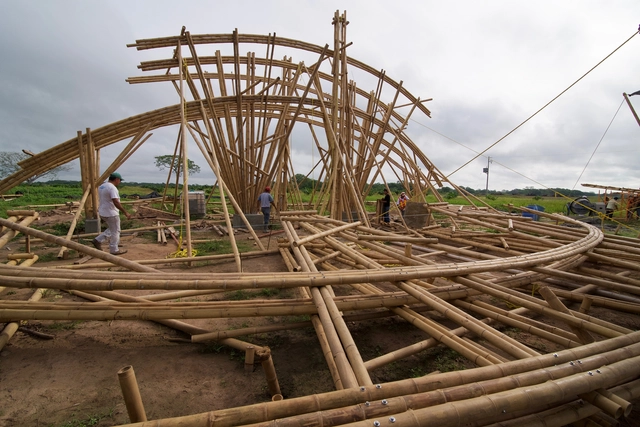
Bamboo is a building material that has been used since antiquity in various structures, demonstrating its superiority over modern materials like plastic and steel due to its myriad benefits—not to mention an incomparable aesthetic appeal that has positioned it as one of today's leading architectural trends.
https://www.archdaily.com/1123771/lucila-aguilar-i-traveled-to-find-new-ways-to-design-and-discovered-that-bamboo-is-the-most-sustainable-materialMónica Arellano
Belo Monte Hydroelectric Power Plant: the deterritorialization of the riverine people of the Xingu River
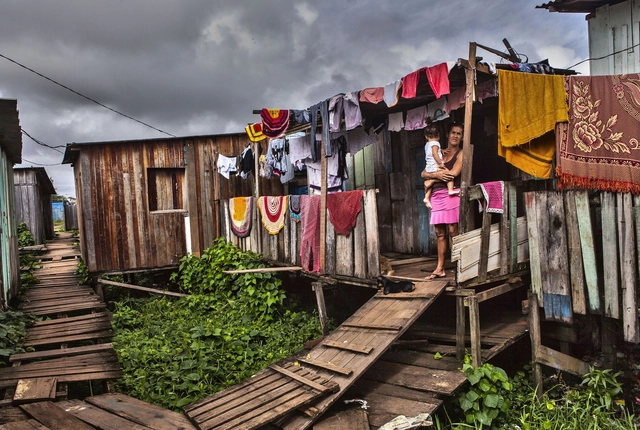
The Belo Monte Hydroelectric Power Plant, the fourth largest hydroelectric plant in the world and 100% Brazilian-owned, was inaugurated in November 2019 in the Xingu River basin, in northern Pará. The project, operated by the Norte Energia S.A. Consortium, was part of the PAC (Growth Acceleration Program)—a federal government initiative established in 2007 aimed at implementing large infrastructure projects to boost national development, mirroring past initiatives.
https://www.archdaily.com/1123774/belo-monte-hydroelectric-power-plant-the-deterritorialization-of-the-riverine-people-of-the-xingu-riverBruna Ribeiro Alves e Maytê Tosta Coelho
7 Spaces in Plan to Understand Wine Production in Mexico
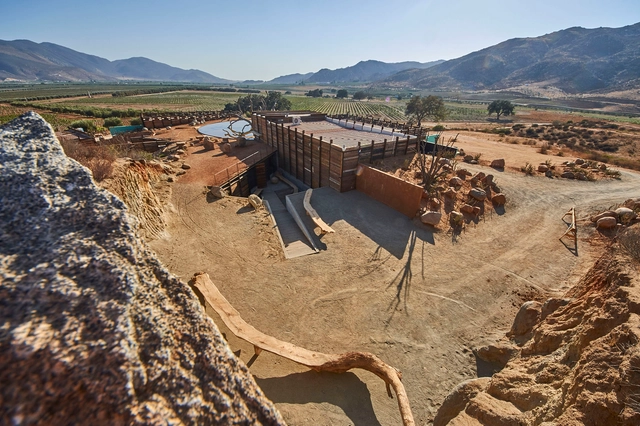


Given its diverse climate and geography, Mexico's wine production has steadily gained recognition in states such as Aguascalientes, Baja California, Baja California Sur, Chihuahua, Coahuila, Durango, Guanajuato, Nuevo León, Puebla, Querétaro, Sonora, and Zacatecas. In these regions, vineyards are increasingly in the spotlight, alongside wine festivals and curated experiences that offer visitors an immersive look into the various stages of production.
https://www.archdaily.com/1123770/7-spaces-in-plan-to-understand-wine-production-in-mexicoMónica Arellano