Since the beginning of the pandemic in Brazil, there has been much debate regarding its impacts on different territories and social groups. This is crucial for both identifying the best ways to prevent the spread of the disease and protecting those who are most vulnerable. However, the way information and data have been released does not help analyze the territorial impacts and spatial spread of the pandemic, which also hinders efforts to address it.
In the city of São Paulo, the scale of analysis for the pandemic is still the district level, which corresponds to massive portions of the territory with populations larger than many medium-sized cities. This oversimplified view ignores the territorial heterogeneities and inequalities within the city. As we have previously pointed out, the territorial dimension is unfortunately not being properly considered, giving rise to a simplified and even stigmatized reading, such as the claim that “where there are favelas, there is a pandemic.”
The construction sector, particularly the building industry, is one of the largest consumers of natural resources and is responsible for significant environmental impacts and CO2 emissions, according to data from the United Nations Environment Programme. According to data from the organization C40 Cities, buildings are one of the primary sources of greenhouse gas (GHG) emissions in cities, meaning there is substantial room to reduce these emissions—with CO2 being the primary GHG. Data from the National Energy Balance (MME, 2019) indicates that residential, public, and commercial buildings in Brazil consumed over 40% of all electricity produced in the country in 2018.
Even before the new president of IPHAN was appointed in May 2020, guest professors Silvana Rubino and Alfredo Manevy spoke about the various challenges and contradictions guiding cultural policy in Brazil during a discussion at Escola da Cidade on June 5, 2019. Part of the course *Seminar on Contemporary Culture and Reality*, then coordinated by Professor José Guilherme Pereira Leite, the talk took the dissolution of the Ministry of Culture (MinC) as its starting point to discuss its repercussions, particularly in the fields of architecture and urbanism.
What is your idea of landscape? Landscape Architecture—a field of knowledge adjacent to architecture and urbanism—is often translated into Portuguese as landscaping (paisagismo), a term many resist because it fails to capture the discipline's true complexity. We suspect this discomfort stems from a common architectural tradition in Brazil that views the landscape as a purely designed, static entity.
The air humidity is famous, reaching mercilessly low levels for anyone who has never visited a desert. Trees with twisted trunks, thick bark, and fuzzy leaves rise from the soil, attempting to defy gravity, but they contort in such a way that it is as if the heat were pushing them back toward the ground. The red earth is omnipresent, adding a touch of drama to every corner, as if the searing temperature whipped the land until it bled. Here in the *cerrado*, there is none of the density of a damp, dark jungle—like some menacing forest out of a Jack London novel, or an immemorial witness in a trance, as seen in a Joseph Conrad novella.
A faucet is a mechanical valve used to regulate (release or block) the flow of a fluid (usually water) from plumbing. While turning on a faucet seems almost mundane today, we rarely think about the vast knowledge and technology required to provide water at any given moment with a simple movement of the hand. Yet, between intake, treatment, and distribution to a kitchen or bathroom, water travels a complex path.
Sheet metal is characterized by an excellent strength-to-weight ratio, meaning it performs exceptionally well under heavy loads despite being lightweight and slender. Because of this, bookshelves made from sheet metal offer impressive storage capacity and have become increasingly popular in apartment design.
Renovations of Brazilian modernist buildings prompt a necessary debate on how to preserve and what best practices to employ when intervening in architectural heritage. The challenges of this type of intervention are immense. These projects must be approached with great care to maintain respect for their historical significance, preserving key elements of their composition while simultaneously updating the building to meet contemporary and client demands.
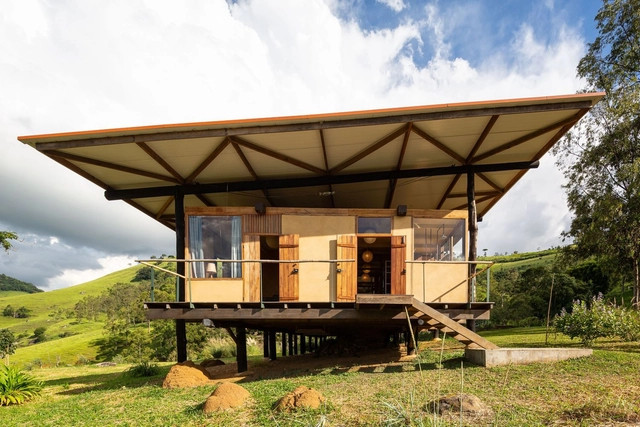
In recent years, metal roofing has increasingly gained ground in architectural projects, from the industrial to the residential scale, especially when there is a need to lighten structural loads or span large distances. In residential architecture, this solution offers a viable alternative to traditional ceramic tiles due to its low cost, rapid installation, and the wide variety of types and models available on the market.
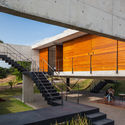
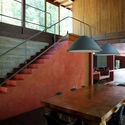
Certain acclaimed architectural works are recognized by details or specific elements designed with such care and inventiveness that they become the immediate reference that comes to mind when we think of these projects.
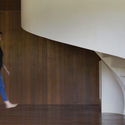
One such element that frequently takes center stage is the staircase. This is evident in classics like Lina Bo Bardi's Solar do Unhão, featuring a singular wooden staircase that organizes the entire open space and defines the scale of the structure, or the iconic helical staircase of the Itamaraty Palace, designed by Oscar Niemeyer with the precise curves that characterize his work.
Despite UNESCO's recognition of specific world heritage sites, some are in constant danger of disappearing due to natural phenomena like earthquakes and human factors such as urbanization. By definition, these landmarks are significant to human history, embodying characteristics that reflect the core values of various civilizations. However, many have never been experienced firsthand by a large portion of the global population.
Universities are environments defined by the intrinsic relationship between teaching, research, and outreach. As multidisciplinary institutions responsible for cultivating and disseminating knowledge, the various facilities that make up a university not only translate (directly or indirectly) the principles of education, research, and outreach into physical space, but also serve as the stage for the multifaceted dynamics and activities that shape campus life.
The Cruel Pedagogy of the Virus – The pandemic has a tragic power of revelation. It exposes a series of paradoxes that were previously obscured or underestimated. In this sense, like any moment of crisis, it carries an educational dimension. Undoubtedly, given so many deaths—many of them preventable—this is a "cruel pedagogy of the virus," in the words of Portuguese sociologist Boaventura de Sousa Santos. Amidst the suffering, debates and proposals have proliferated through livestreams, articles, reports, petitions, research papers, action agendas, guides, denunciations, solidarity networks, and even self-governance initiatives in semi-abandoned peripheries. These discussions focus particularly on the Brazilian tragedy, which combines multiple crises tied to structural issues (such as inequality and racism) with a mounting crisis of reason—or simple common sense—shaping a macabre landscape of social regression, hatred, obscurantism, and genocide.
https://www.archdaily.com/1124284/architectures-of-distance-what-the-pandemic-can-reveal-about-architecture-and-urbanism-educationMariana Wilderom e Pedro Fiori Arantes
The way you experience the city, the urban infrastructure provided in the areas you frequent, and even the job opportunities that come your way are all, to some extent, shaped by the color of your skin. These themes unfold across multiple layers to discuss racial segregation in the urban environment in the seminar "The City and Racial Subjection," organized in 2018 by the Laboratory of Race and Urban Space Studies (Labraça) at FAUUSP.
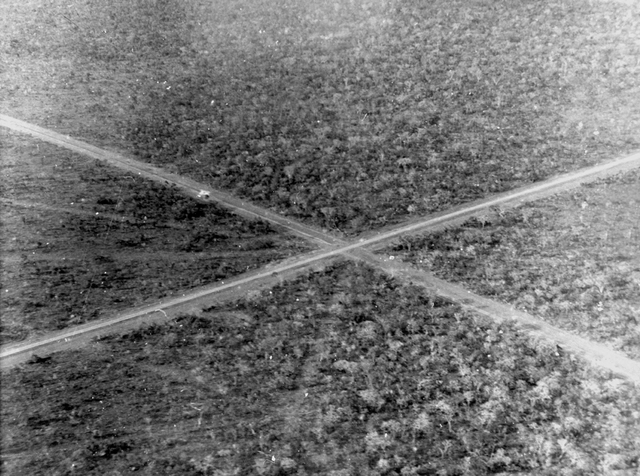
Opening of the road axes that define the Plano Piloto of Brasília, ground zero of the new capital, in 1957. As Lúcio Costa described in the descriptive memorial of the Plano Piloto, the city was born from “a gesture that was still pioneering in spirit, in the style of the colonial tradition. [...] Two axes crossing at right angles, that is, the very sign of the cross.” Mario Fontenelle/ Arquivo Público do Distrito Federal – ArPDF
As it celebrates its 60th anniversary, Brasília has an opportunity to draw inspiration from the anti-racist and anti-colonial movements worldwide that have challenged the monumentality of official history, confronting the memorialization of colonialism within its own urban landscape. Rather than celebratory events that reiterate official narratives, marking the city as a *bandeirante* milestone of national modernity, we should pause—a pause moreover imposed by the pandemic—to reflect on how certain memories are eternalized while others are erased, and thus trace new memorial cartographies onto the urban fabric of the capital.
During the pandemic, major cities became some of the most vulnerable environments; moreover, the global health crisis validated remote work and called into question the necessity of living in dense urban centers. Consequently, the urban exodus is likely to remain a constant theme in the near future, sparking major discussions within the fields of architecture and urban planning on how to manage this shift.
Cyclists on a metropolitan street. Photo by Adrian Williams, via Unsplash
Twenty-first-century urbanism will be marked by an increase in both the number and scale of global megacities—urban agglomerations with over 10 million inhabitants, according to the UN—alongside a geographical shift. By 2100, African metropolises such as Lagos (Nigeria) and Kinshasa (Democratic Republic of the Congo) are projected to exceed 80 million residents. The rise of these new, larger metropolises, especially in Africa and Asia, compounded by the urgent need to address the ongoing climate crisis, demands immediate changes in the discourse surrounding urban mobility.
While the architecture and construction industry has been advancing in new fields for years, it remains one of the most lagging in terms of automation and efficiency. And indeed, while many of these innovations never progress past the experimental stage, we face a sobering reality: the sector is one of the largest producers of pollutants and waste worldwide. How can we reverse this trend?
Movable doors, windows, and panels operate through various mechanisms that determine not only how they open and close, but also their classification and terminology. Among the array of systems used for operable architectural elements—ranging from the simplest to the most ingenious—the mechanism found in folding or bifold doors and windows is frequently adopted to blend aesthetics and functionality.
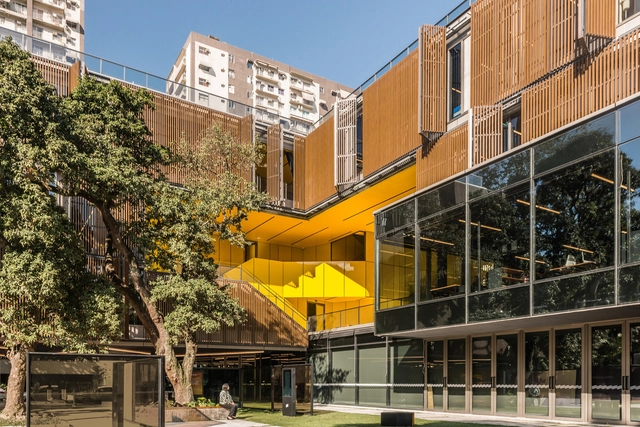
The interfaces establishing the relationship between inside and outside in architectural design play a fundamental role in reinforcing or denying the potential degrees of this connection. To this end, a central factor in facade design is the opacity of its materials, which can create vastly different conditions regarding light, views, and atmospheric quality within a space. Translucent materials and elements offer a compelling strategy for mediating between interior and exterior. They evoke a diaphanous, ethereal effect, introducing a touch of mystery through surfaces that allow light to filter through while obscuring any sharp, distinct images for the observer.
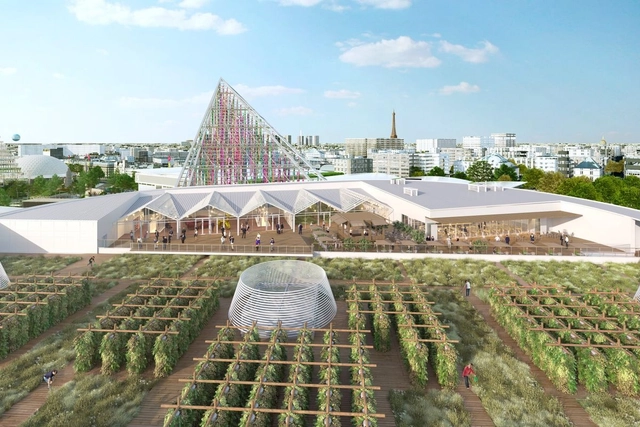
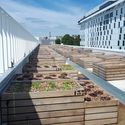
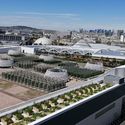
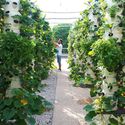
Visualization of the urban farm in Paris. Image courtesy of the developers
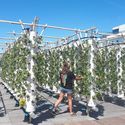
While modern metropolises have verticalized our way of life, creative solutions are continually emerging to reclaim and redefine urban space. Rooftops are already widely used for events and leisure, and now, growing plants and crops on them is becoming increasingly common. In Paris, a massive 14,000 m² urban farm has just opened on a building's rooftop. Although cultivation does not yet cover the entire area, once fully completed, it will be considered the largest in Europe and, perhaps, the world.
In architecture, when designing physical and tangible spaces, ephemeral and intangible aspects are essential considerations in the design process. One of the most important elements in this regard is natural light, which is crucial for ensuring comfort, quality of life, and health for its occupants.
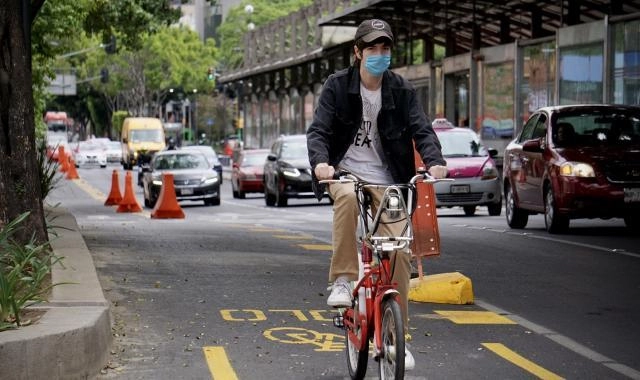
Mexico City implemented 40 km of temporary bike lanes on Insurgientes Avenue, one of the longest in the world. Photo: Manuel Solá Pacheco/SEMOVI
Cities have been implementing temporary bike lanes to enable safe commuting during the COVID-19 pandemic and prevent public transit users from switching to cars and motorcycles. Gradually, this practice is gaining ground across Latin America, including Brazil. This represents a golden opportunity to boost bicycle urban mobility—but to succeed, emergency interventions must incorporate road safety best practices.
https://www.archdaily.com/1124271/temporary-bike-lanes-the-response-of-five-cities-in-brazil-and-latin-america-to-covid-19Andressa Ribeiro e Fernando Corrêa




















_11.44.10.jpg?1595963269&format=webp&width=640&height=580)




_11.44.10.jpg?1595963269)