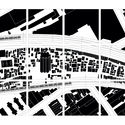
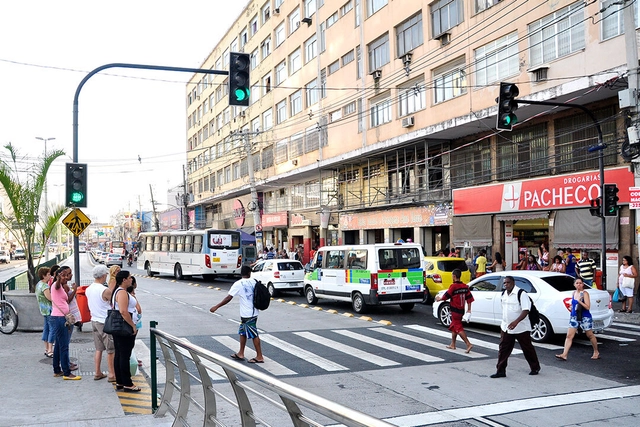
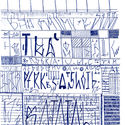
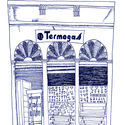
Have you ever thought about walking? This is the question that GUIAPÉ SP — a guide presented here through an essay — asks its readers. From the cover on, it proposes walking through the city of São Paulo, charting a route that strategically passes through places where arriving on foot is precisely the point, revealing overlooked details, people, and urban life. This guide was not made for sightseeing, but rather to take its readers on a journey. Within its pages, the route and the sidewalks are not merely paths leading to destinations; they are part of the journey itself.
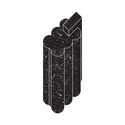
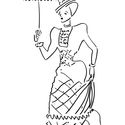
The representation of women in the buildings and sidewalks of São Paulo's streets. Source: Jornal Estado de São Paulo, July 6, 1958. Reinterpretation by Beatriz Hubner
The study of architecture and its relationship to daily life and gender has prompted researchers to seek new sources and expand the analysis of their ideas and achievements. This essay explores the female presence in urban spaces through fragments of daily life gathered from columns, news reports, and advertisements published in the newspaper *O Estado de São Paulo*.
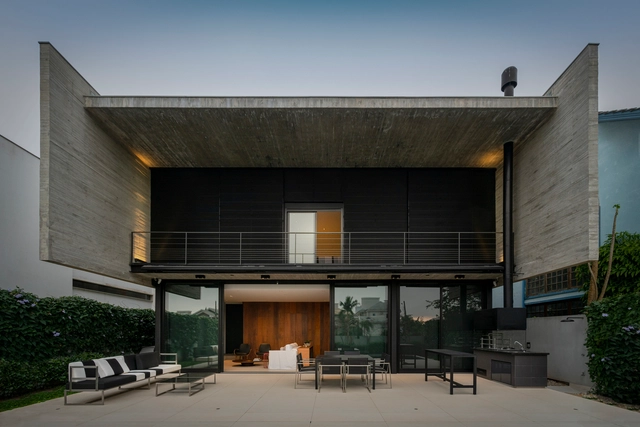
Blind walls are known as the side walls of a building, typically designed to run along neighboring constructions. Even in buildings with more generous side setbacks that allow for door and window openings, these walls can be kept as large, continuous surfaces, creating a blank facade.
In this context, exposed concrete walls—which leverage the material's texture without requiring additional finishes—can be used as aesthetic elements in the building's formal composition. As part of the Brazilian Houses series, we present 10 residences featuring concrete blind walls below:
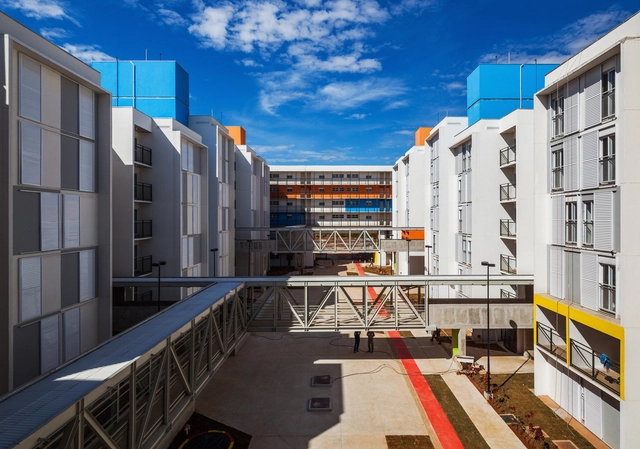
Criticism of the most common models of social housing (HIS) in Brazil is quite frequent. Indeed, these critiques are generally well-founded, given the architectural and urbanistic deficiencies of most completed developments—particularly those built in areas far from urban centers, which deny residents their right to the city.
There are, however, successful examples: projects built on the premises of access to urban infrastructure, connectivity with the immediate surroundings, construction efficiency, environmental comfort, and healthy living conditions inside the housing units. Below, we have compiled six examples of social housing—designed by Biselli Katchborian Arquitetos, Jirau Arquitetura, MMBB Arquitetos, H+F Arquitetos, Boldarini Arquitetura e Urbanismo, and Vigliecca & Associados—that offer compelling solutions to such a complex and delicate program.
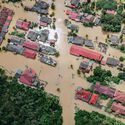
Children playing in the flooding of the Pinheiros River – near the Ceagesp area (Companhia de Entrepostos e Armazéns Gerais de São Paulo) – west zone of the city. Photo: Eduardo Anizelli for Folhapress. Modified by the author
As one of the largest and most populous cities in the world, São Paulo has accumulated over the years a complex web of relationships between its territory and its inhabitants. By fostering and fueling various interests, the city quickly became a major hub, gaining prominence on the national stage. However, the metropolis increasingly reveals a widening gap between its social classes, compounded by the recurring chaos of traffic gridlock and seasonal flooding—the results of poor urban planning that serves the interests of a select few at the expense of the city's overall health.
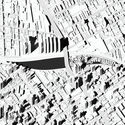
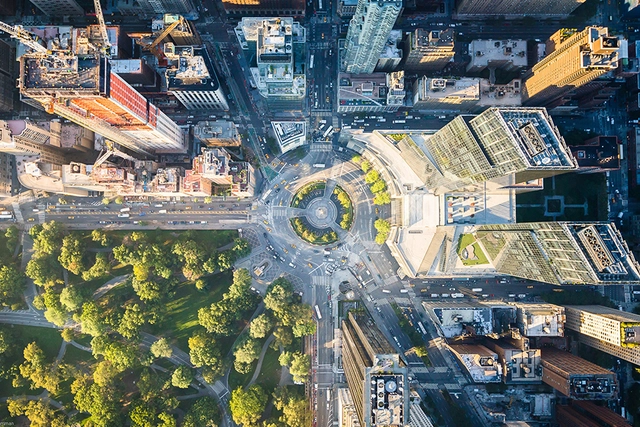
Paul Romer, a Nobel laureate in economics, believes that a key factor in the success of urban agglomerations is a clear definition of public and private space before the construction of a neighborhood or city begins.
The author illustrates the success of this strategy with a classic case: the New York street grid. Long before Manhattan Island was physically developed with streets or buildings, the Commissioners' Plan was established in 1807, outlining the gridiron of public and private spaces that would define the city's future.
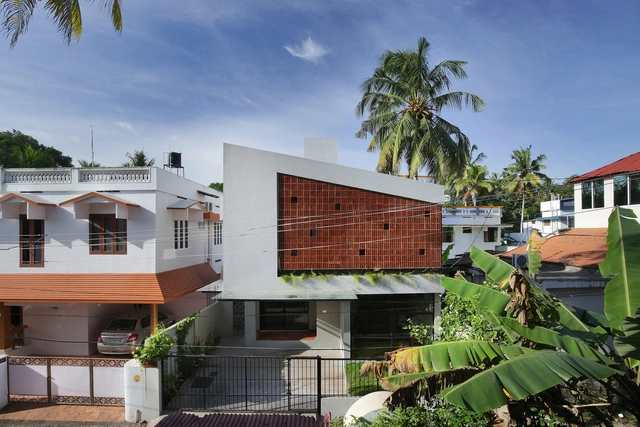
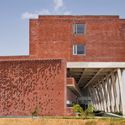
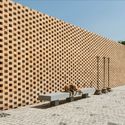
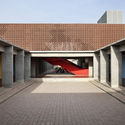
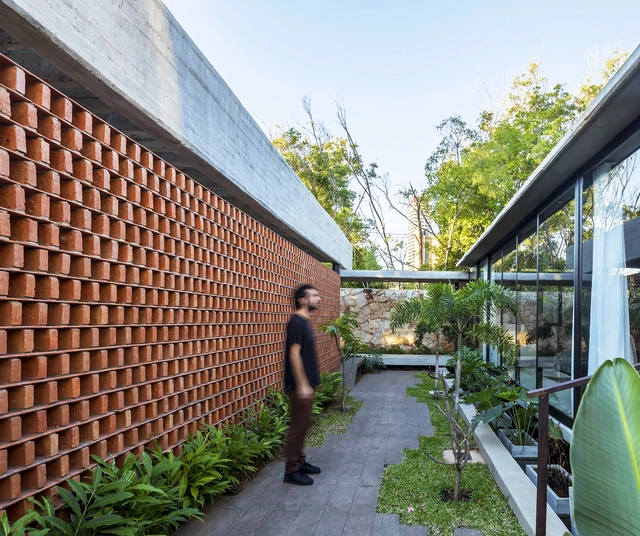
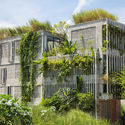
The orientation and sizing of voids are critical variables when proposing perforated screens on building facades. Analyzing local conditions is fundamental to the performance of this type of solution, which is particularly welcome in countries with high temperatures, such as India. Although its climatic diversity makes generalization difficult, summer temperatures can exceed 40°C across most of the country, demanding specific architectural strategies to mitigate heat and humidity inside buildings.
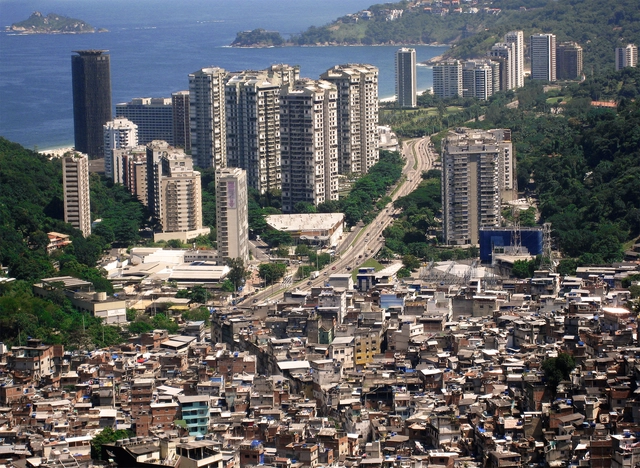
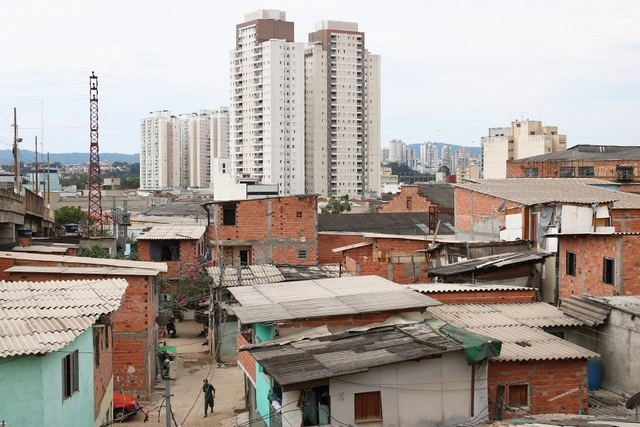
Rocinha Favela, Rio de Janeiro. Photo by: AHLN, via VisualHunt.com / CC BY
This coming Saturday, October 31, marks World Cities Day, an observance established by the United Nations in 2015 as part of the annual “Urban October” initiative. This celebration aims to foster international interest in global urbanization, enhance cooperation among countries to address urbanization challenges, and contribute to sustainable urban development worldwide.
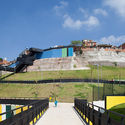
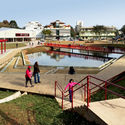
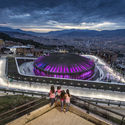
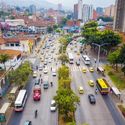
Yet, while the word “city” generically denotes an “agglomeration of people within a defined geographical area,” in practice we know that each of these settlements is shaped by highly unique developmental and cultural factors. With this in mind, we are using this global celebration of cities to focus on our own reality, highlighting the challenges currently faced by Latin American cities.
Azulik Residence. Courtesy of Roth Architecture, via O Futuro das Coisas
Decolonize. You have probably heard this word before, but if you have no idea what it means, you might guess it has something to do with colonization. We Brazilians know all too well what colonization is: we were a colony of Portugal for many years, we speak Portuguese, we eat salted cod at Easter, and we are, for the most part, Catholic because of it.
To understand the word "decolonize," however, is to recognize that colonization brought not only linguistic, religious, and culinary heritages, but also involved widespread exploitation: cultures were erased, local leaders were killed, riches were stolen, and memories were destroyed.
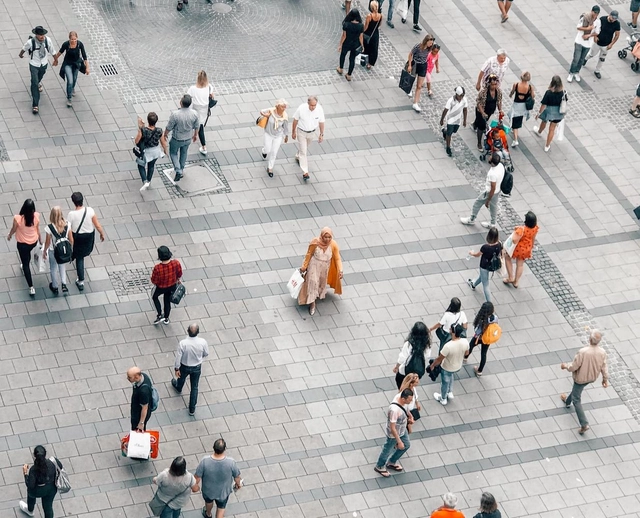
A recently published study by the Institute for Transportation and Development Policy (ITDP) reveals the world's best cities for those looking to avoid driving to access basic services, such as schools and healthcare centers, alongside pedestrian access to other amenities.
Among the top-ranked cities for pedestrians are London, Paris, Hong Kong, and Bogotá. More than a thousand cities were evaluated based on the access they offer to those who need to find goods and services relying solely on their own feet. According to the report, US cities are among the least pedestrian-friendly, due to their urban sprawl.
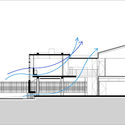
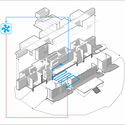
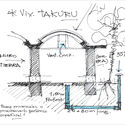
Located in the central region of South America, Paraguay features a wide variety of geographical conditions, with diverse landscapes and resources. Generally, the territory is characterized by **high humidity** and **mild temperatures** that prevail year-round, with hot, rainy summers and mild winters. Under these conditions, cooling indoor spaces is highly critical, making passive ventilation systems a key consideration during the early stages of design.
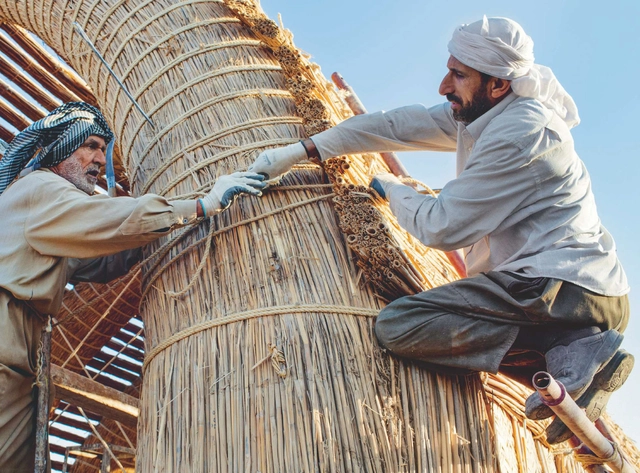
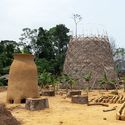
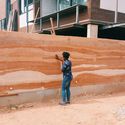
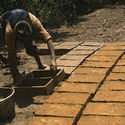
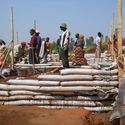
As concerns grow regarding the consequences of human activity on a global scale, the search for lower-impact environmental alternatives across various fields has also become more common. In civil construction—a sector where buildings alone account for 33% of global energy consumption and 39% of greenhouse gas emissions—practices such as bioconstruction point toward a different approach, addressing human needs in a way that is inseparable from nature.
Generally speaking, bioconstruction is understood as the design of sustainable environments using low-impact materials and building techniques, taking into account parameters such as adaptability to local conditions and waste management.
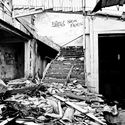
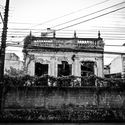
The abandoned city is a classic suspense setting, a place of terror and degeneration, a stimulating blend of danger and freedom. An ambience that ambiguously incites both repulsion and curiosity. A dark, hidden, and marginal space that seems to mourn, in its haunting silence, the void left by those who once lived there. Among its fragments scattered across the floor, fear, discovery, and the inevitable nostalgia for a past that is not necessarily one's own recreate stories of abandonment. Spaces that once had names, dates, and functions, now slowly decomposing in the solitude of the present.
In the book “Quarto de Despejo – Diário de Uma Favelada” (published in English as Child of the Dark), Carolina Maria de Jesus recounts, in poetic and dramatic everyday language, the harsh reality of life as a waste picker living in the former Canindé favela in São Paulo, which at the time had about 50,000 residents.
Published in 1960, her text is considered a milestone in Black women's writing in Brazil and has been translated into more than thirteen languages. Carolina's entries offer a unique perspective on the extremely precarious living conditions of a favela resident in late-1950s Brazil—a narrative previously ignored or simply unknown to the general public, let alone to policymakers.
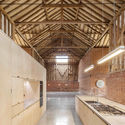
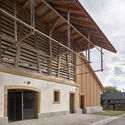
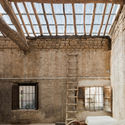
The barn, closely related in nature to silos and sheds, is an essential building typology in rural and agricultural landscapes. Featuring highly simple and functional design solutions, barns serve specifically as storage spaces for large volumes of livestock feed and are commonly characterized by high ceilings, generous spans, and relative spatial flexibility, protecting hay and grain from the sun, rain, moisture, and animals.
"The world is highly polarized." This is a phrase we have all heard recently. While this is an undeniable fact, there have been times when the planet was just as, if not more, polarized than it is today. In particular, the period between the end of World War II and the early 1990s was marked by intense tension between the capitalist and socialist blocs, leaving deep marks on many countries and societies. The dismantling of the latter, symbolically represented by the fall of the Berlin Wall, dissipated the tension but did not eradicate communism, which remains the political system in several countries today.
There are currently six countries under a communist regime: China, North Korea, Cuba, Laos, Vietnam, and Transnistria. Despite differences in their economic systems—China, for example, has an economy considered mixed by some experts, with regions regulated by a capitalist market system—these countries also clearly present social, cultural, and geographical particularities that are reflected in their cities and architecture.
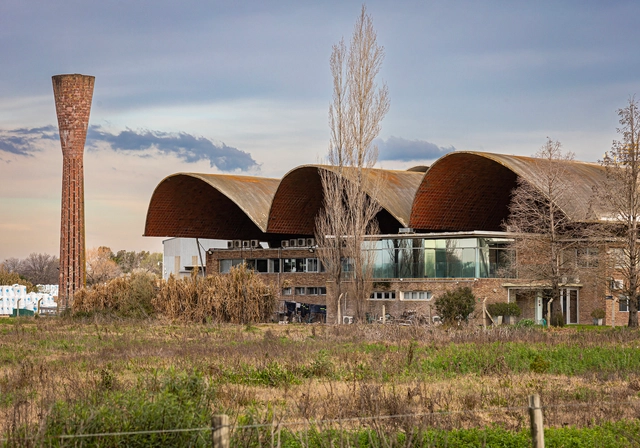
Far beyond the technical knowledge of his engineering background, Eladio Dieste (1917-2000) developed a rare architectural sensibility. He was a pioneer and master of reinforced masonry—essentially a relatively thin "shell" system in which ceramic blocks are compressed, steel bars are tensioned, and concrete binds the assembly together. Structural strength is enhanced through the design of complex spatial geometries that respond precisely to applied loads, thereby minimizing material use. This allows large spans and cantilevers to be achieved, while elegantly transferring loads to the ground.
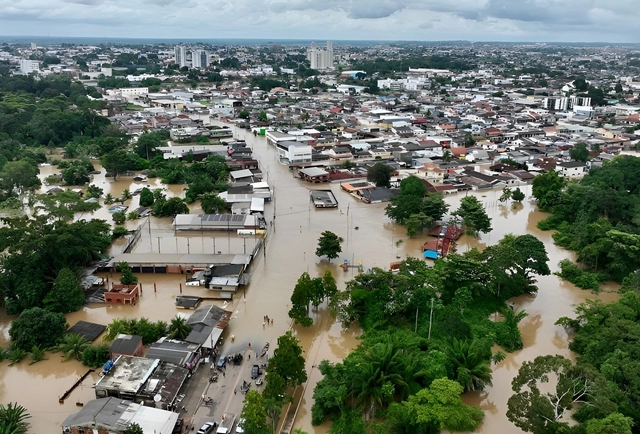
Situation in Rio Branco, capital of Acre. Photo: Pedro Devani | Secom
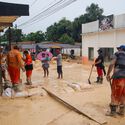
When heavy rains are forecast for their areas, 64% of Brazilians feel afraid. For 76% of those surveyed, cities are unprepared to face heavy rains, storms, or flooding. The data comes from a first-of-its-kind survey conducted by the Boticário Group Foundation for Nature Protection, in cooperation with UNESCO in Brazil, and with support from the National Association of Municipalities and the Environment (ANAMMA) and the Urban Bioconnection Alliance. The full results of the study will be presented on December 2 during the 28th UN Climate Change Conference, COP28, taking place in Dubai, United Arab Emirates.
Former Vila Mariana Slaughterhouse. Arte/Cidade 1: The City Without Windows. Photographer: Nelson Kon
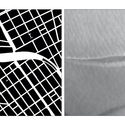
The urban structure of São Paulo was shaped by its topography. With its predominantly rugged terrain, railways were laid along the flat floodplains and river terraces, where they could be developed along routes better suited to their physical limitations.
The train—a machine slicing through cities and overcoming natural landscape obstacles at speeds of sixty kilometers per hour—was the invention that collapsed geographic distances. This connection-making tool, born of the Industrial Revolution, enabled a productive chain across its various stops by transporting manufactured goods and tons of moving machinery.
Not necessarily small-scale, but rather targeted and strategic, urban acupuncture interventions are quick to execute, reversible, and often low-cost. The practice has established itself as a viable alternative to urban transformations that require lengthy, bureaucratic processes—both in decision-making and execution—which often exclude residents from the various stages of project development.
In an effort to bolster public care and personal hygiene services for the unhoused population, the Ministry of Human Rights and Citizenship (MDHC) has established the Street Support Points Program (PAR). The initiative aims to provide public spaces and facilities managed in partnership with civil society organizations.
https://www.archdaily.com/1136316/street-support-points-program-promoting-care-and-hygiene-for-the-homeless-populationArchDaily Team
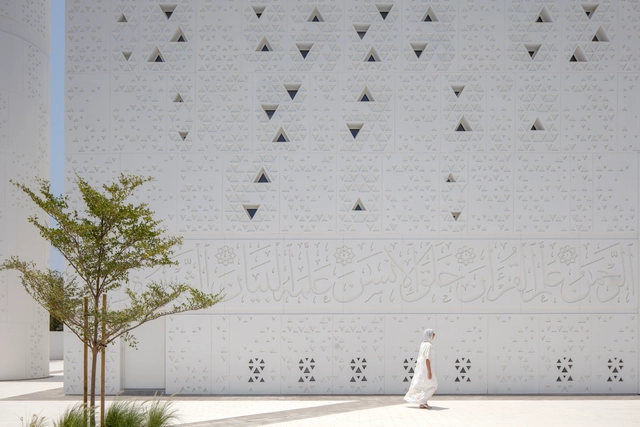
Mohammed Abdulkhaliq Gargash Mosque, Dubai, 2021. Image: Gerry O´Leary
There are and have always been inspiring women architects, urban planners, and policymakers. However, worldwide, the built environment professions—and their upper echelons in particular—remain heavily male-dominated, more so than other fields like education or healthcare.
Today, 64% of architecture graduates in Brazil are women. In engineering, there has been a 42% increase in women registered with CREA since 2016. Yet, how is this reflected in Brazilian society? Globally, progress is even slower: only 40% of architects are women, with very few in leadership roles.
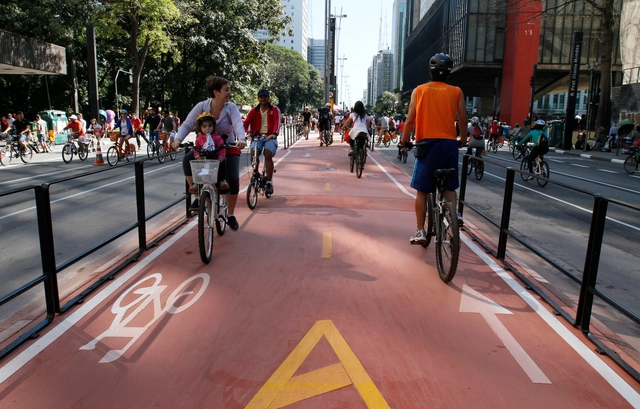
Avenida Paulista bike lane. Image: Prefeitura de São Paulo
The study titled Prioritize Active Transportation by Bicycle!, published by the Center for Metropolitan Studies (CEM)—a research center at the Faculty of Philosophy, Languages and Literature, and Human Sciences (FFLCH) of the University of São Paulo—presents an analytical planning tool for São Paulo's cycling network, comparing the current scenario with future planning through the lens of inequality.
Journalist Flávio Soares, a master's student at USP's Polytechnic School (Poli), a member of the CEM research team, and one of the paper's authors, explains the key factors analyzed for the construction of bike lanes and cycle tracks in cities.
On the 6th, Rio de Janeiro Mayor Eduardo Paes requested CET-Rio, the municipal traffic management agency in the capital, to adjust the speed limits along the waterfront roads. This measure is of paramount importance given that, according to City Hall, more than 600 people lost their lives in traffic crashes in Rio last year, with over 60% resulting from pedestrians being struck by vehicles.
https://www.archdaily.com/1136075/understand-why-rio-de-janeiro-needs-safer-streetsITDP Brasil




.jpg?1603305439&format=webp&width=640&height=580)

.jpg?1603305439)
.jpg?1603380819 "Morro do Elefante House / 24 7 Arquitetura. Image: © Pedro Kok")
.jpg?1603380788 "Ilhas House / Arquitetura Nacional. Image: © Cristiano Bauce")




.jpg?1603381280 "Sobrados Novo Jardim / Jirau Arquitetura. Photo © Antonio Preggo")

























.jpg?1605191876&format=webp&width=640&height=580)
.jpg?1605191876)

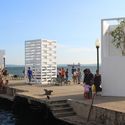
.jpg?1605296730 "Xige Estate Winery / Udopartners + Saussure Architects. Image © Feng Shao")