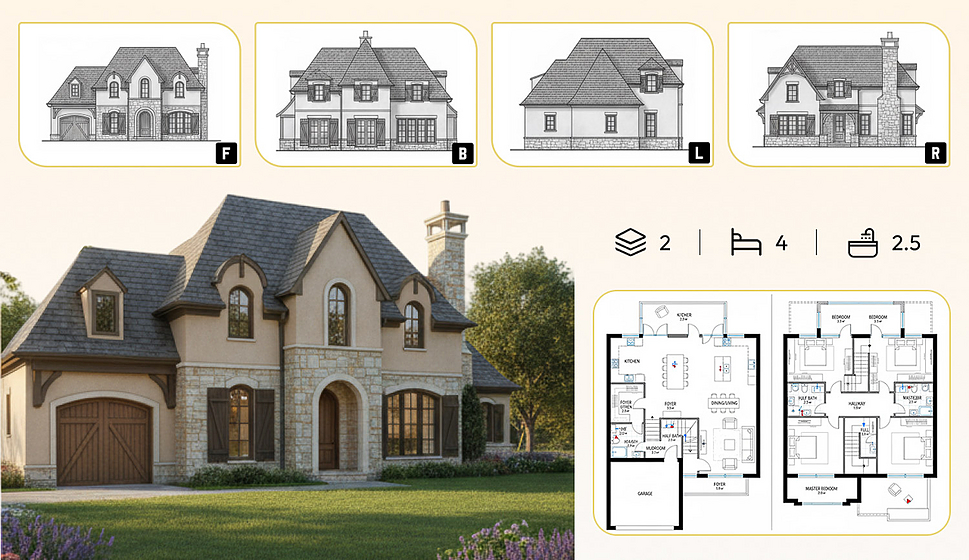
This guide covers a workflow that moves from project parameters to generated floor plans, 3D perspective views, exterior design exploration, and site context visualization, using AI tools in place of preliminary CAD and rendering work.
This guide covers a workflow that moves from project parameters to generated floor plans, 3D perspective views, exterior design exploration, and site context visualization, using AI tools in place of preliminary CAD and rendering work.

We invite you to participate in the 2025 ArchDaily Brasil Building of the Year Award. Now in its ninth edition, we charge our readers with the responsibility of recognizing and rewarding the projects that have made the greatest impact on the profession. By voting, you become part of an unbiased network of judges, recognizing the most relevant projects built in Portuguese-speaking countries over the past year. Only a few days remain until the end of the nomination stage, which will select the 15 finalists for the 2025 ArchDaily Brasil Building of the Year Award.
Registered users can vote for their favorite project once per day. The nomination stage closes on April 1 at 11:59 PM (Brasília time, GMT-3).

Historically, architecture is a discipline that for many years was a male-dominated territory, until in 1939, María Luisa Dehesa became the first Mexican female architect. Yet, despite the perception that gender parity has been achieved in the education of architects in Mexico, the concept of masculinity (which can be exercised by both men and women) continues to permeate architecture. This is reflected in design processes, in the figure of the "unreachable architect," in a sense of competitiveness, in hierarchical structures, and, in the most unfortunate cases, in the notion that women design interiors while men design *real* architecture.

This article is part of our new Opinion section, a format for argument-driven essays on critical questions shaping our field.
Before architecture students become authors of space, they are subjected to one. For years, they work inside a building that teaches without announcing itself as a teacher. It organizes their exhaustion, their ambition, their visibility, their solitude, their friendships, their sense of scale, and their relationship to judgment. Long before a student can articulate a position on architecture, the school has already offered one in its implicit built environment.
This is not to suggest that buildings determine architects. The influence is slower and less complete than that. A school building operates more like a hidden curriculum: a spatial discipline that works alongside faculty, syllabi, institutional culture, and student life. It teaches through access and obstruction, program adjacencies, daylight exposures, and scale. It produces habits of attention before it produces explicit beliefs.
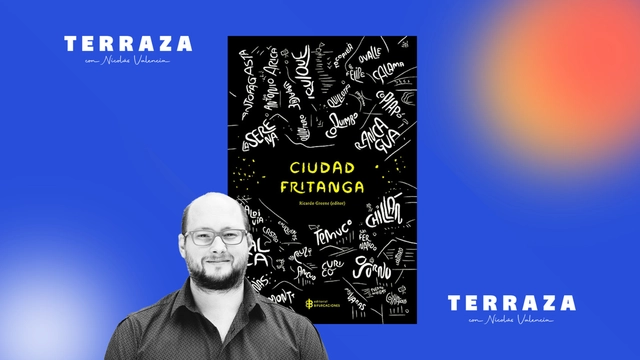
This week on the TERRAZA podcast, Nicolás Valencia speaks with Chilean sociologist and Universidad San Sebastián academic Ricardo Greene, editor of the landmark book "Ciudad Fritanga," published by Editorial Bifurcaciones in 2014.
"Ciudad Fritanga" compiles 34 chronicles of non-metropolitan Chilean cities like Arica, Talca, and Punta Arenas through the lens of poets, artists, and writers such as Lina Meruane, Jorge Baradit, Marcelo Mellado, and María José Navia.
"When people write about cities, they write about London, Berlin, and New York. That is the urban chronicle. However, non-metropolitan cities are also cities," Greene comments in this interview.
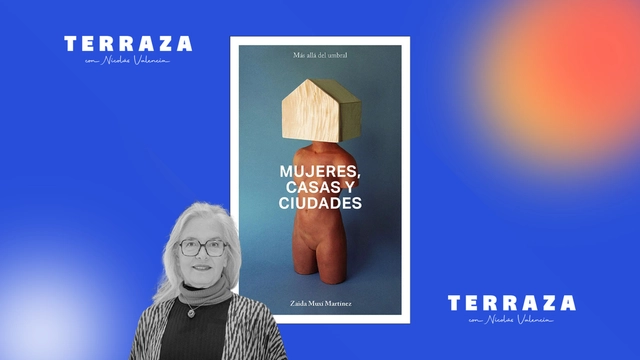
This week on the TERRAZA podcast, Nicolás Valencia speaks with Argentine-Spanish architect Zaida Muxí, author of the book “Mujeres, casas y ciudades” (Women, Houses, and Cities), published by dpr-Barcelona in 2018.
In “Mujeres, casas y ciudades”, Muxí proposes rewriting the history of architecture and urbanism by incorporating the contributions of the many women who have been silenced in mainstream historical accounts.
“If we want to play by market rules, housing will never be a right,” Muxí posits in this interview.
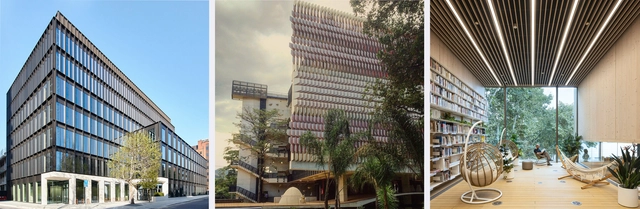
The rise of sustainability and the circular economy is transforming the construction industry, driving a growing demand for new specialized roles. Positions such as sustainability managers or circular economy consultants are becoming increasingly common in contemporary projects.
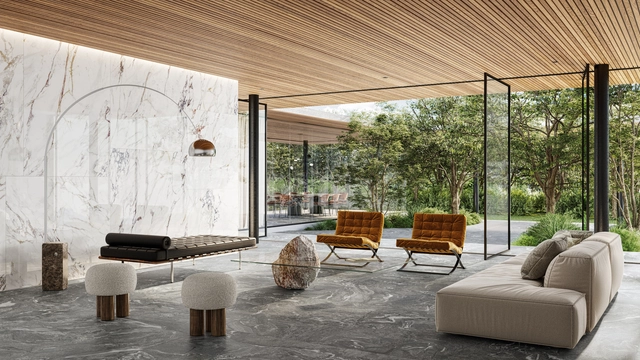
In 2024, the evolution of porcelain tiles has elevated the tactile experience to a new level, transforming them into true works of art. Produced with mineral texture printing technology, the collections feature striking reliefs in dimensions of 120 x 120 cm, 100 x 200 cm, 120 x 250 cm, 160 x 160 cm, and 160 x 320 cm, designed to awaken all the senses. Behind this advancement is Roca Brasil Cerámica, part of the Mexican LAMOSA Group, leading the Roca Cerâmica and Incepa brands.
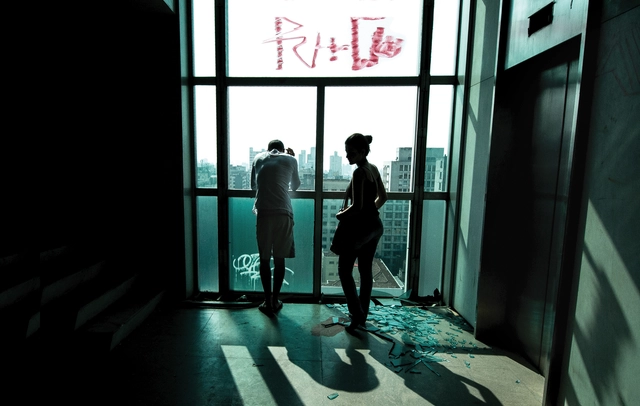
"Drinking Caracu is drinking health." This is what read on the massive blank wall of a building in downtown São Paulo on the morning of May 1, 2018. Hidden for decades, the advertisement for the famous beer brand now loomed before a massive heap of concrete, twisted metal, and shattered glass. This was the rubble to which the iconic Wilton Paes de Almeida Building had been reduced—a modernist landmark designed by architect Roger Zmekhol and the subject of the documentary Skin of Glass, directed by his daughter, Denise Zmekhol.
The film transcends traditional architectural documentation by blending a personal narrative with the political complexities of contemporary Brazil, a country shaped by deep inequalities and erased memories. At the heart of the story is the building itself, considered a landmark of Brazilian modern architecture, which collapsed in 2018 after a tragic fire.
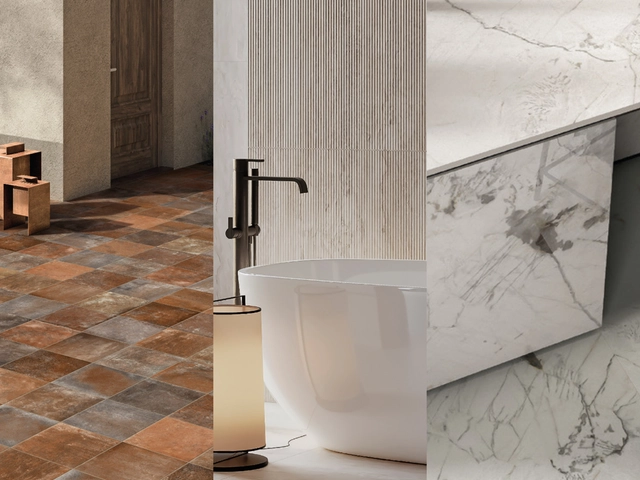
Stone and marble continue to establish themselves as essential materials in architecture and design, for both interiors and exteriors worldwide. CHC offers a curated selection designed to create spaces with a timeless, elegant character. Discover how to incorporate marble and stone into your projects to add a touch of modern style.

Choosing between vinyl and laminate flooring is no longer necessary, as resilient hybrid flooring combines the best features of both materials. Kiwi is a natural flooring made of 80% wood, utilizing a premium impregnation technology that makes it 100% waterproof. This product features 80% wood, while the remaining 20% is composed of plant-based resins. Consequently, it is 100% PVC-free, making it an entirely eco-friendly choice.
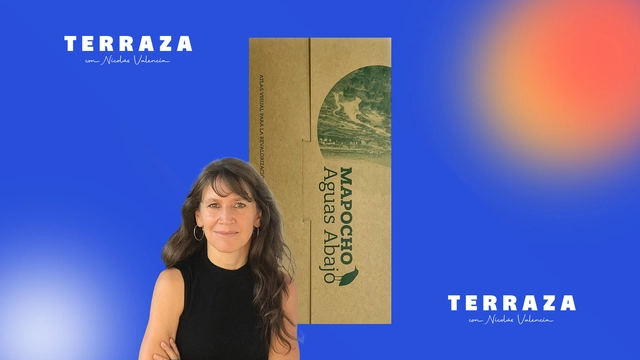
On this week's episode of the TERRAZA podcast, Nicolás Valencia speaks with Chilean architect Sandra Iturriaga about the book Mapocho Aguas Abajo (Ediciones ARQ), a publication developed by the Mapocho 42K Lab at the Pontificia Universidad Católica de Chile that proposes revaluing the heritage and landscape of the downstream stretch of the Mapocho River in Santiago, Chile.
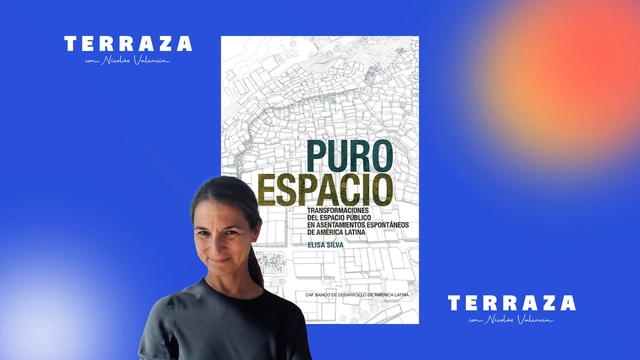
This week on the TERRAZA podcast, Nicolás Valencia talks with Venezuelan-American architect Elisa Silva about her book, "Pure Space: Public Space Transformations in Latin American Spontaneous Settlements" (Actar Publishers), an analysis of a series of public space interventions in communities across Mexico, Colombia, Venezuela, Brazil, Argentina, Peru, and Chile.
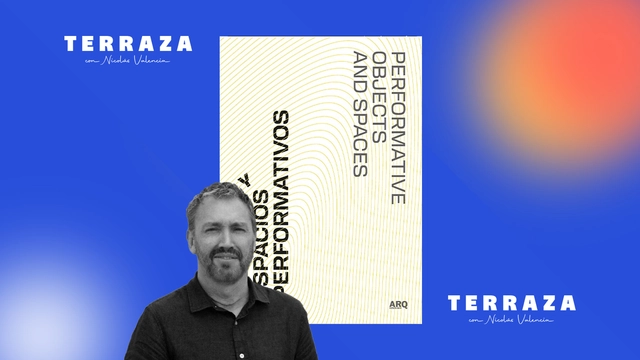
Nicolás Valencia talks this week on the TERRAZA podcast with Chilean architect Rodrigo Tisi about his book Objetos y espacios performativos (Ediciones ARQ), research that examines key moments to observe, explain, and establish the possibilities of certain performance practices in academia and creative environments.
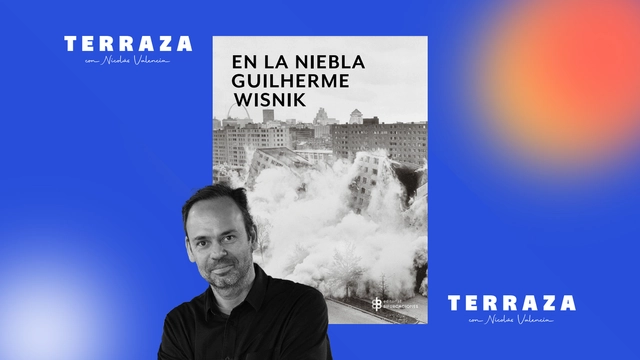
This week on the TERRAZA podcast, Nicolás Valencia talks with Brazilian architect and critic Guilherme Wisnik about his book En la niebla (Editorial Bifurcaciones), a series of essays where fog serves as a metaphor for the state of uncertainty in today's world, weaving together contemporary debates on space, art, and politics.
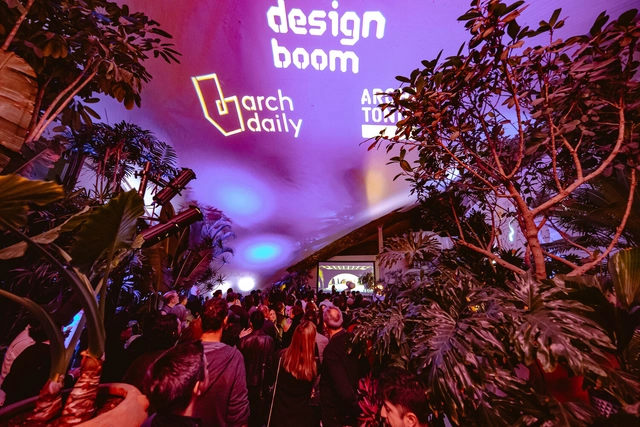
On Thursday, November 17, Mexico City hosted the tenth-anniversary celebration of ArchDaily México, the local edition of the world's most visited architecture website. The exclusive event was held at “Lago/Algo,” a project conceived to recover and redefine the iconic building known as "Restaurante Lago"—originally opened on October 24, 1964, designed by architect Alfonso Ramírez Ponce, renovated first by Javier Sordo Madaleno in 1998, and most recently by Naso in 2021—giving it a new purpose that challenges us to rethink our relationship with private space, public space, and the Chapultepec Forest.
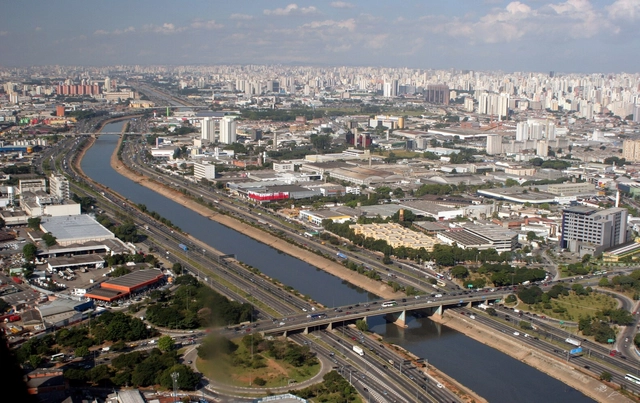
Swimming in the Tietê. Although many people did so until the 1930s — when the river was already polluted, though much less than today, and swimming and rowing competitions were held even along the stretch within the São Paulo capital —, no one believes this will be possible in the coming years. Cleaning the river, however, is a feasible ambition, provided we understand that there are various gradations within the category of “clean.”
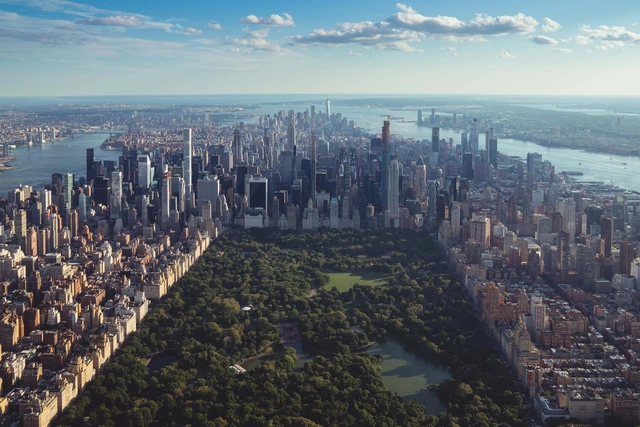
For two hundred years, New York City has been the largest metropolis in the United States and continues to outpace its competitors. The city is one of the oldest and most prosperous in the country. Its metropolitan area produces goods and services equivalent in monetary terms to half of Brazil's total GDP. Its urban structure, productive capacity, and high per capita income reflect its privileged global standing. One of the keys to understanding its rise lies in the very beginning of its history and its long developmental path. In 1624, the land of Manhattan Island was purchased from the indigenous Lenape people by Dutchman Peter Minuit of the Dutch West India Company, who founded New Amsterdam. The island is an extensive, flat 59-square-kilometer area situated at the mouth of the Hudson and East rivers. The bay allowed large ships to anchor and offered a strategic, easily defensible position.
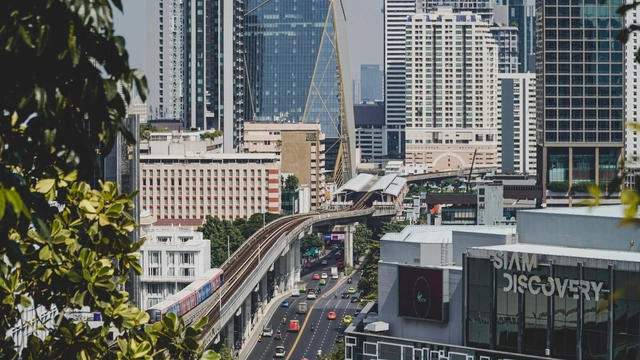
Cities occupy just 3% of the Earth's land surface, yet they account for most of the world's energy consumption and carbon emissions. Many are also highly vulnerable to climate change and natural disasters due to their high population densities and interconnected infrastructure. To prevent the worst impacts of climate change—including human, social, and economic losses—making cities more resilient and prepared for a changing climate is crucial. Yet, recent studies indicate we are still far from achieving this.
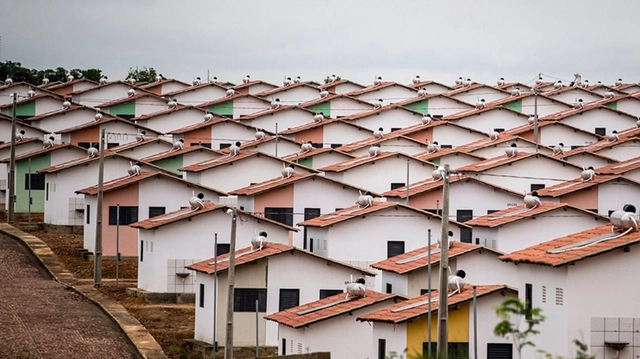
Among the updates to the new Minha Casa, Minha Vida (MCMV) program, recently launched by the Brazilian Federal Government, is the inclusion of a "housing improvement" modality. This is a necessary addition, as it addresses historically underserved populations—precisely those most vulnerable to the increasingly frequent and severe impacts of climate change. A new path toward sustainable, equitable, inclusive, and low-carbon development must be established. This transition depends not only on access to quality housing, but also on infrastructure and public services.
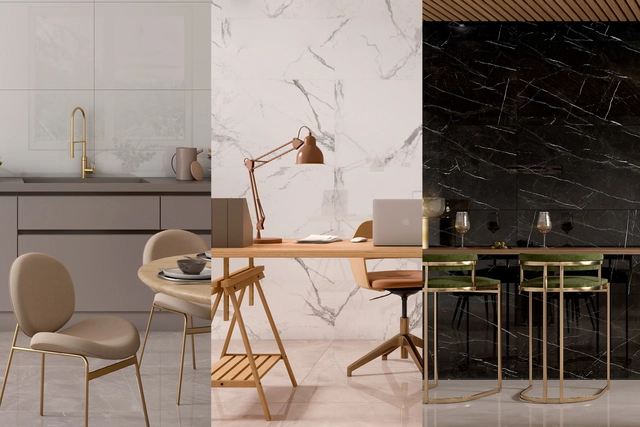
Spatial perception is the cognitive ability to process visual information related to the position, movement, size, and shape of objects in space. According to Auguste Perret in his work "Contribution to a Theory of Architecture," architecture can influence this perception by delimiting, closing, and enclosing space. When this cognitive capacity interacts with architecture, our brain interprets and processes visual information to determine whether a space feels visually expansive or confined. In interior spaces, certain elements can decisively influence our perception of space, such as color, furniture dimensions, and the materials that comprise it. The latter are particularly important, as their use under specific conditions can alter our spatial perception and the way we experience space, depending on their texture and format.
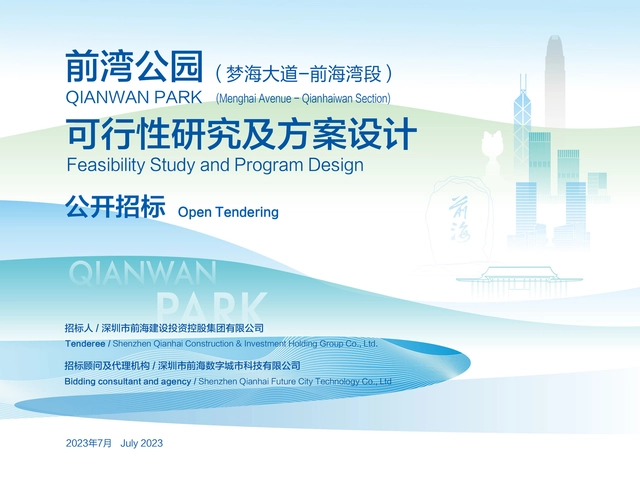
Project Name
Feasibility Study and Schematic Design for Qianwan Park (Menghai Boulevard to Qianhai Bay Section)
Project Location
Qianhai Shenzhen-Hong Kong Modern Service Industry Cooperation Zone, Shenzhen, Guangdong Province
Tendering Platform
Shenzhen Public Resources Trading Center

The Integrated Permanent Site Construction Project of the Shenzhen Medical Academy of Research and Translation (SMART) and Shenzhen Bay Laboratory (SZBL) is located in the northeastern sector of the Science and Education Integration Cluster in Guangming Science City, Guangming District, Shenzhen. Tasked with the core mission of establishing a comprehensive national science center in the Greater Bay Area, the project will establish a strategic scientific and technological institution integrating basic research, clinical research, full-chain industrial translation, and technical innovation in the biomedical field, supporting Shenzhen's development into a pioneering demonstration hub for medical and life sciences innovation.
The Integrated Permanent Site Construction Project of the Shenzhen Medical Academy of Research and Translation (SMART) & Shenzhen Bay Laboratory (SZBL) is located in the northeastern sector of the Science and Education Integration Cluster within Guangming Science City, Guangming District, Shenzhen. Carrying the core mission of establishing a comprehensive national science center in the Greater Bay Area, the project aims to develop strategic scientific and technological institutions that integrate basic research, clinical research, full-chain industrial translation, and technical innovation in the biomedical and life sciences fields, supporting Shenzhen's development into a pioneering demonstration hub for medical and life sciences innovation.
The tender for the schematic design and preliminary architectural design of Bid Section II of the Integrated Permanent Site Construction Project of the Shenzhen Medical Academy of Research and Translation and Shenzhen Bay Laboratory is about to commence, with the official tender announcement to be released shortly. The tenderee is the Engineering Design Management Center of the Bureau of Public Works of Shenzhen Municipality. Pre-registration and expressions of interest are now open to design teams worldwide.
Tenders for the schematic design and preliminary architectural design of the Integrated Permanent Site Construction Project of the Shenzhen Medical Academy of Research and Translation & Shenzhen Bay Laboratory (Bid Section II) will launch soon, with the official tender announcements to be released shortly. The tenderee is the Engineering Design Management Center of the Bureau of Public Works of Shenzhen Municipality. Pre-registration is now open to design teams from around the globe.
Tender Project: Shenzhen Medical Academy of Research and Translation and Shenzhen Bay Laboratory Integrated Permanent Site Construction Project Design Bid Section II
Project Name: Design for the Integrated Permanent Site Construction of the Shenzhen Medical Academy of Research and Translation & Shenzhen Bay Laboratory (Bid Section II)
Project Location: Northeastern sector of the Science and Education Integration Cluster in Guangming Science City; situated at the northeastern gateway of Shenzhen, adjacent to Sun Yat-sen University (Shenzhen Campus) and Shenzhen Institute of Advanced Technology.
Project Location: Northeastern sector of the Science and Education Integration Cluster in Guangming Science City; at the northeastern gateway of Shenzhen; adjacent to Sun Yat-sen University (Shenzhen Campus) and Shenzhen Institute of Advanced Technology
Pre-registration Deadline: June 4, 2023, 17:00 (Beijing Time)
Pre-registration Deadline: 17:00, June 4, 2023
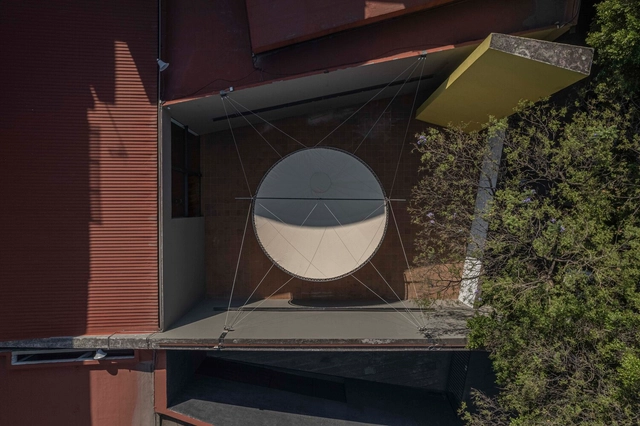
“The golden rule of our times is to adapt; one shouldn't fight against reality,” said Mathias Goeritz. More than sixty years later, TIEMPO CERO arrives at the Museo Experimental El Eco to prompt a reflection on the Anthropocene and tangential resistance. Based on Gabriela Carrillo’s curatorial proposal, the pavilion's open call targeted urgent futures in the face of time and the environmental crisis, alongside a playful dimension to reflect on “how we spend time” or “how time passes.”

December 2019 marked the first COVID-19 case. By December 2022, the era of strict "Class A control for Category B infectious diseases" officially drew to a close.
Over the past year, stripping away our professional titles, we were simply individuals in endless PCR testing lines, participants in digital group-buying threads, and residents confined behind barricades and seals. We endured scorching heatwaves, grappled with political depression and existential dread, relied on ibuprofen to get by, and ultimately stood as witnesses to a turbulent, fast-shifting chapter of history.
In the world of architecture, this past year was defined by adversity: a generation of pioneering elders passed away during the harsh winter; outstanding design fees went uncollected; architects faced widespread unemployment; firms went bankrupt and dissolved; and university architecture programs struggled to fill their enrollment quotas. Day after day, we oscillated between burning out and checking out, caught in a perpetual cycle of anxiety.
Though some wounds remain unhealed, no one ever promised us an easy era. At this chaotic threshold, all we can do is persist in doing what we believe is right. Every architect is striving to address the challenges of our time through design—pioneering more open spatial concepts, mitigating climate change through sustainable architecture, and leveraging professional expertise to instill spaces with a sense of hope.
Over the past year, ArchDaily has published 4,669 built projects, 2,160 thematic articles, 323 competition announcements, and 258 exhibition listings. Focusing on platform expansion and fresh content, we also embarked on a series of historic firsts:
Thus, ArchDaily’s keywords for 2023 are: Embarking on a Grand Journey, Scaling New Heights
We aim to foster more dialogue, gathering the insights and collective strength of global designers to make our voices heard!
For too long, the focus has lingered solely on the spectacular “moments” of completed buildings, overlooking the countless days and nights poured into them by architects, contractors, and material suppliers. From the initial conceptual sketches to the final working drawings, and from selecting the perfect materials to the meticulous coordination on-site to ensure flawless execution—ArchDaily takes you behind the scenes of today's most successful architectural projects.
The Story Behind Ascent, the World's Tallest Mass Timber Building
Who Does Architecture Serve Today?
What Defines a Children’s Museum?
Challenging the Impossible: How Architectural Design Drives Technological Innovation
Foster + Partners on DJI Sky City: 8 High-Tech Metrics Revealing the Construction Process
The World's Largest Hybrid Timber Structure: Construction Report on the Swatch & Omega Campus
Step Inside the 'Golden Leaf' Hall with Sou Fujimoto | ArchDaily on the Road
More is More: When the Barcelona Pavilion Meets Timber
More Than Just Tallest Skyscrapers: Dubai's Ultimate Construction Museum
As a responsible design medium, we strive to be more than a mere showcase of projects. Through deliberate curation and thoughtful editorial planning, we voice our stance, prompting architects, industry practitioners, and society at large to reflect on systemic challenges in order to foster a healthier, more progressive industry.
What Challenges is Architectural Design Facing Today?
What Defines Good Interior Design?
In the Era of Urban Regeneration, How Do Pritzker Laureates Respond?
What are the Criteria for Architectural Awards?
22 Projects, 11 Interior Design Styles
Stop Demolition, Start Deconstruction
The Past and Future of Floating Cities
The First 'Disrupt' Architecture Business Symposium: A Gathering of Industry Giants
Winners Announced: 2022 ArchDaily Best New Practices
Best Architectural Collaborations of 2021
What is the Real Purpose of Architectural Biennials?
How Can Educational Spaces Express Equality?
How to Design Gender-Neutral Restrooms
As the world adapts to living alongside COVID-19 and combating urban heatwaves, our dwelling patterns are undergoing a profound evolution. Today's homes must seamlessly balance living, working, and leisure. Consequently, designing greener, healthier, and more human-centric residences and lifestyles remains our enduring focus.
How to Cool Down Our Cities?
Chinese Housing and Lifestyles
Is Modularity the Future of Healthcare? OMA Reveals 'Al Daayan' in Qatar
Living on High: Why Are We Drawn to Altitudes and Rooftops?
Has the Garden Become a Privilege?
How to Design Housing on Complex, Constrained Urban Lots?
Can Everyday Workers Enjoy Green Spaces?
Working from Home: How to Design Transition Spaces?
9 Strategies for Healthier Living in Buildings and Cities
How to Design a Sustainable Home Life
Toward Green Capitalism
How Are World Cup Stadiums Cooled?
Can 3D Printing Reshape the Residential Construction Market?
How Real Estate Giants Shape the Development of New York City
Is Co-Living the Future of Real Estate?
What is the Future of the House?