Paseo de Plátanos Orientales. Image Cortesía de Cynthia Marimán Ramos - Roberto Astete
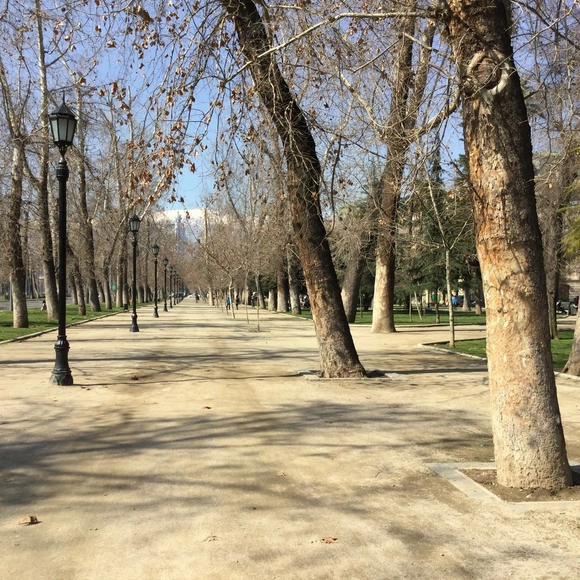
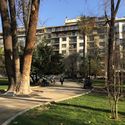
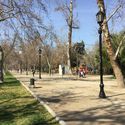
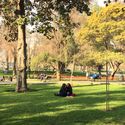
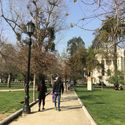
Established in 1900 following a 19-hectare afforestation effort spearheaded by the Ministry of Public Works and the Intendency of Santiago, Parque Forestal is located on the northern edge of the city's historic center, making it one of Santiago's first linear parks.
Designed by French landscape architect George Dubois, the project revitalized the surrounding urban edges, successfully integrating the Mapocho River and its previously chaotic banks, while providing the city with a new green lung for urban recreation.
Opened in August 2017 and setting attendance records, Sesc 24 de Maio—the second-to-last branch of the network to open, succeeded by Sesc Avenida Paulista—was designed by Paulo Mendes da Rocha in partnership with the office MMBB Arquitetos, who retrofitted a former department store, remodeling its interior spaces within the existing structure and creating a new central structure to support the rooftop swimming pool.
From the Fundación Arquia Blog, architect Raúl García García invites us to explore the creative process of Álvaro Siza—one of the leading figures of 20th and early 21st-century architecture—through his sketches.
https://www.archdaily.com/1113968/alvaro-siza-the-draftsman-of-dreamsRaúl García García
As the annual graduation season arrives worldwide, we recognize that among the various ways to learn architecture, nothing is more direct than a hands-on design-build project. It offers a firsthand look at how different materials form structures, how those structures respond to compression and tension, and how the process of construction shapes the final outcome. In recent years, architecture schools have increasingly embraced opportunities for students to build, producing work that ranges from small-scale temporary interventions and pavilions to permanent structures, each with its own unique character.
To demonstrate that exceptional architecture can emerge from an educational environment, ArchDaily has issued an open call for student work for four consecutive years, inviting submissions of student-built projects completed over the past year. ArchDaily’s four localized platforms—English, Chinese, Spanish, and Portuguese—are now accepting submissions for our fourth annual selection of the "Best Student Design-Build Projects," which will be featured and shared with our global audience.
https://www.archdaily.com/1113969/global-call-outstanding-student-build-projectsJoanna Wong
Following the election, the new government has already begun to announce several changes to its ministries. Among these is the elimination of the Ministry of Cities. In an effort to prompt discussion and prevent this dissolution, a petition has been organized and can be signed here.
Fotografia de Gustavo Neves da Rocha Filho (1954). Image Cortesia de IAB - SP
The IAB played a key initial role in consolidating the profession of architects and urban planners as an autonomous activity from engineering back in the 1940s and 1950s. It was organized as a representative institution, a voluntary association of architects, and a platform for the field's public policies. This applied both to guiding legitimate practices concerning the built environment, the landscape, and the city, and to educating both architects and society about an activity so fundamental to citizenship. Action across these diverse areas began with support for the regulation of architecture as a profession in Brazil (the creation of Crea/Confea in 1933), followed by the organization of the 1945 congress, and, in the case of São Paulo, support for the founding of the Faculty of Architecture and Urban Planning of the University of São Paulo (FAUUSP) in 1948.
Pontificia Universidad Católica de Chile [Flickr]: Lo Contador, CC BY-SA 2.0. ImageFaculty of Architecture, Design and Urban Studies of the Pontificia Universidad Católica de Chile
América Economía magazine has published its most recent ranking of Chilean universities, just a few months ahead of the upcoming 2019 higher education admission process. In addition to the general evaluation—in which the Universidad de Chile remains in first place for the fourth consecutive year—the publication features the specific ranking of the 16 "most in-demand or highly regarded and prestigious" programs in Chile, including Architecture.
With our commitment to providing the most comprehensive information for university applicants, in this article we share the ranking of the best universities to study Architecture in Chile. This list includes technical data on average admission scores, faculty specialization levels, annual tuition costs and variations, and first-year post-graduation employability rates, among other key metrics.
Dibujo en Torre de Donamaría. Image Cortesía de Premio Rafael Manzano
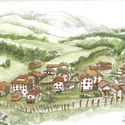
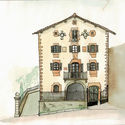
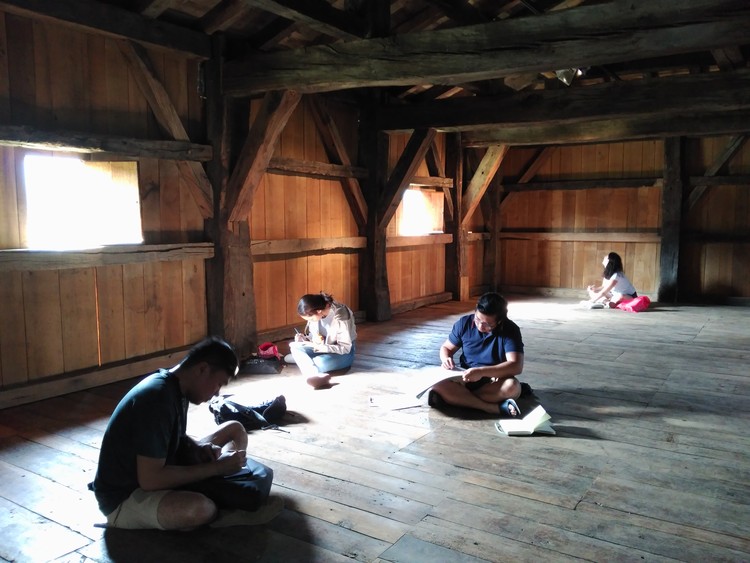
Organized by INTBAU and the Rafael Manzano Prize for New Traditional Architecture, the most recent edition of the Summer School of Traditional Architecture focused its work on the Baztan Valley (Navarre, Spain). The program studied traditional construction, architecture, and urban planning to produce a manual for conservation and new traditional construction in the area. In addition, hand drawing and building surveys were the primary activities carried out by the participating students.
Although the scope of work extended to the entire Baztan Valley, the bulk of the study was carried out in Amaiur, the town that hosted the group during those two weeks. Articulated around the branch of the Camino de Santiago that passes through it, the town's urban layout is structured almost as a linear development. Along this axis, the richness, diversity, and versatility of its architectural tradition unfold, presenting a showcase of solutions from different eras that have adapted to multiple trends and functions without ever losing their essence. Accordingly, the study examined the architecture of the town center in its entirety, from fine details to the broader urban structure.
After analyzing 94 projects by undergraduate students from 20 architecture schools across 8 regions in Chile, the jury of the 2018 Arquitectura Caliente Competition has announced the winning projects of its latest edition.
These projects span the entire country and encompass diverse typologies, ranging from urban planning to student housing, as well as landscape designs and structural emergency initiatives.
Below, we present the award-winning third-year projects:
ARCA / Belén Salvatierra. Image Cortesía de Arquitectura Caliente
After reviewing 94 undergraduate student projects from 20 architecture schools across 8 regions of Chile, the jury of the Concurso Arquitectura Caliente 2018 has announced the winning projects of its latest edition.
The submissions span the entire country and cover diverse typologies, ranging from urban planning and student housing to landscape designs and structural emergency initiatives.
Below, we present the award-winning second-year projects:
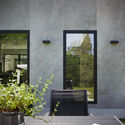
Porcelain tile is a ceramic material composed of clay and other rock minerals, characterized by negligible water absorption. In other words, a ceramic material can be classified as porcelain tile if its water absorption rate is below 0.5%. Manufactured from a finely atomized mixture of clays, feldspars, feldspathic sands, and sometimes kaolin, phyllites, and coloring additives, porcelain tile can be installed on interior and exterior surfaces, including floors, walls, facades, and, in some cases, ceilings.
Its high resistance to wear and breakage, minimal maintenance, and vast diversity of finishes, colors, and formats make it an excellent material for use throughout almost an entire architectural project, from furniture to exterior cladding. Below, find everything you need to know to incorporate porcelain tile into your designs, based on the comprehensive information shared by CHC.
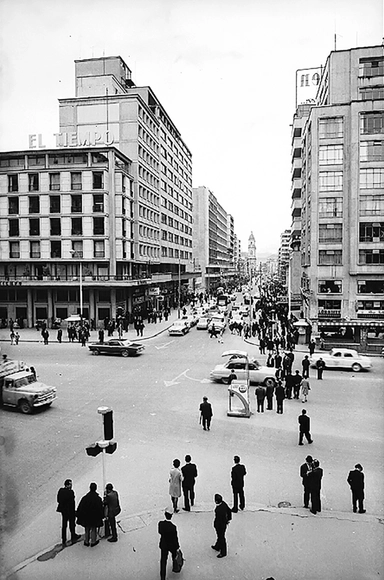
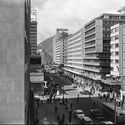
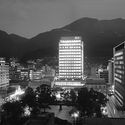
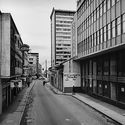
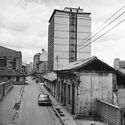
The modernization of Bogotá between 1940 and 1970, captured in urban and architectural photographic essays, has been documented in various books, magazines, and photobooks of the era, as well as in images from the city's public and private archives. These photographs reveal a deliberate, and even critical, approach to how modern architecture reconfigured city centers, bringing new buildings and urban spaces into relation with the existing cityscape.
When analyzing the impact of street photography, it is essential to discuss Leo Matiz, Armando Matiz and Hernán Díaz. These three photographers captured the people, events, and daily urban life of Bogotá. From their extensive bodies of work, we have selected shots of streets, plazas, intersections, and representative buildings—both iconic and anonymous spaces that, through photography, anchor modern heritage in the collective memory, with architecture and urban spaces taking center stage.
The Architectural League of New York is an independent architecture forum that aims to "stimulate thinking and debate about the critical design and architectural issues of our time." Each year, through the 'Emerging Voices' competition, they recognize the work of various North American architectural practices with the potential to positively influence how architecture is conceptualized and built across the continent.
This year marks the bicentennial of the Battle of Maipú, the decisive clash that secured Chile's independence. 1818 also marks the vow made by Chilean liberator Bernardo O'Higgins to erect a votive temple in honor of the Virgin of Carmen, Chile's patron saint, to whom local troops prayed for the victory that ultimately freed them from the Spanish Empire.
Historically, most social housing programs have focused on constructing new housing units. However, according to urban planning and housing specialist Elisabete França, this approach is often detrimental to the social development of low- and middle-income citizens.
https://www.archdaily.com/1114122/lessons-for-brazil-cities-that-developed-with-good-social-housing-projectsAndré Nunes e Daliane Nogueira
Projections for the urban world have been updated. In May, the United Nations released a new edition of the World Urbanization Prospects, a report that takes an in-depth look at the planet's urban centers, concluding that 68% of the world's population will live in cities by 2050. This estimate is 2% higher than the previous study published in 2014, which is part of the series produced by the United Nations Department of Economic and Social Affairs (DESA).
It is another freezing night in Chucuito, and in the restaurant where all the participants of the XV TSL Puno are dining, Jhony Chaves—better known as "El Gato"—tells us stories about impossible places, like Cerro de Pasco, a Peruvian mining settlement even higher, colder, and harsher than Chucuito. He then recalls a village lost in the Peruvian jungle that can only be reached by boat, where the mosquitoes seem as large as birds. Next, he jumps to describing Andean villages that flood and freeze almost year-round, until the weather finally gives a few months of respite to the families who live there simply in houses made of mud.
As El Gato goes through his inventory of Peruvian towns, it is impossible not to think of the magical realism of Macondo. Is all of this real? Indeed, it fits perfectly that this is also a concept coined decades ago, before García Márquez, by a European, for whom his own continent's nature had been entirely domesticated. Of course, Latin America remains a landscape, and our great victory is that we manage to live within it, despite nature and its disasters. Thus, the villages El Gato evokes bring a certain comfort to our shared table, even as the cold and altitude threaten to take their toll on us. "It could be worse," we think before spooning the steaming soup in front of us.
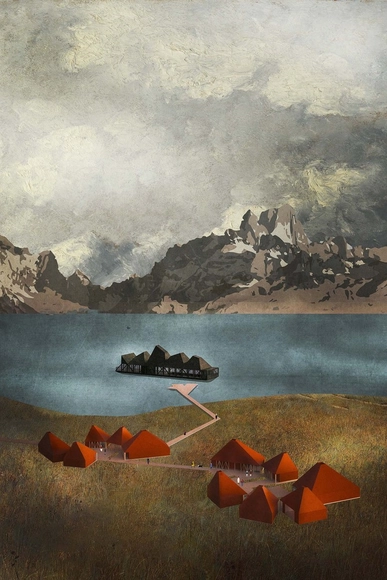
How, then, can we intervene and propose public space in rural, predominantly Aymara settlements like Chucuito, where nature constantly reminds us that it is the main protagonist?
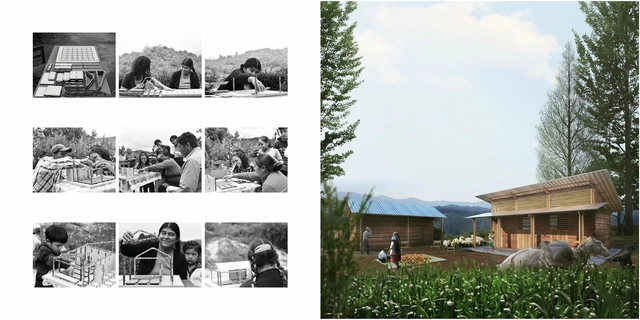
Until a few years ago, childbirth was the leading cause of death for women in the municipality of Tenejapa, located in the Highlands region of Chiapas (Los Altos de Chiapas). Faced with this situation, coupled with a lack of medical services in the region, traditional midwives from 22 communities joined forces to combat the issue. They formed the “Un solo corazón A.C.” Midwives Network, an organization that has succeeded in reducing maternal and infant mortality rates to zero while attending 98% of births in the area.
Through the Urban Development Corporation (EDU) and the Colombian Society of Architects (SCA), last November Medellín launched an international call for proposals to design a space for memory and reflection on the period between 1983 and 1994 at the site of the demolished Monaco Building, the former residence of drug lord Pablo Escobar.
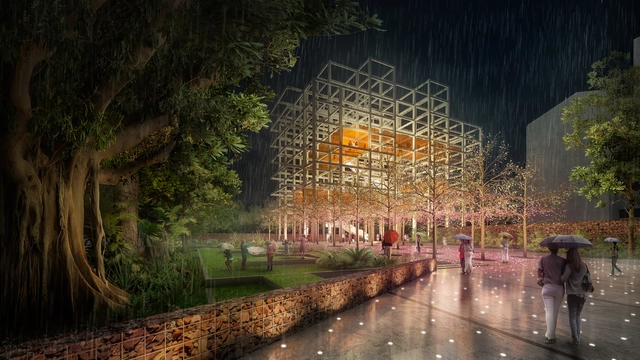
Here, we present the proposal by Taller Síntesis, which outlines a new way of telling history through space, inviting reflection on the past while honoring the lives of the victims of drug trafficking. According to the designers, "over time, this building has become a tourist destination for visitors arriving in Medellín who want to learn about the figure behind television shows that fail to faithfully reflect the reality of this era of drug trafficking."
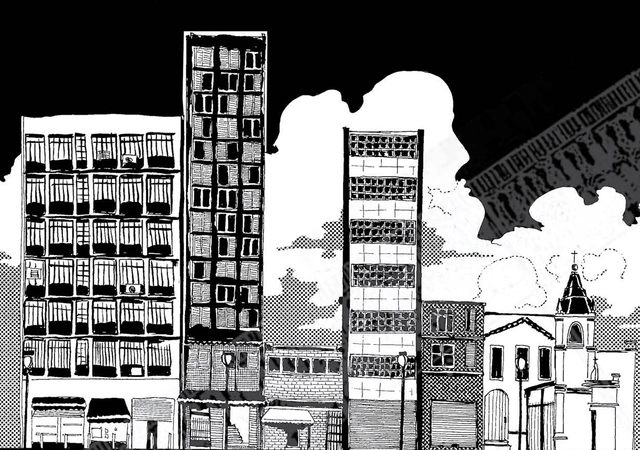
Indivisível (Indivisible) is the title of the graphic novel created by Marília Marz as her final thesis project at Escola da Cidade – Faculty of Architecture and Urbanism. The project aims to identify and analyze the narrative possibilities intrinsic to the architectural and urban elements of the Liberdade neighborhood in São Paulo across two distinct historical periods.
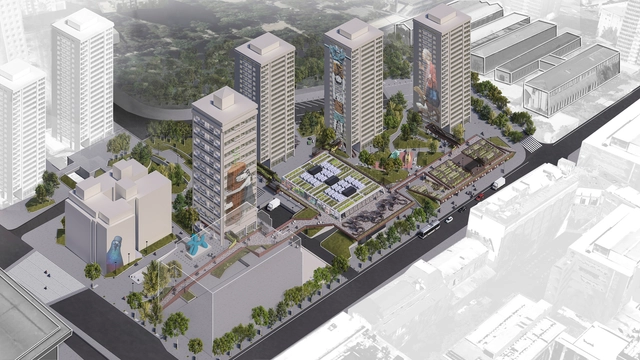
The Ensamble San Borja proposal was awarded second place in the Pasarelas San Borja competition in Chile. The main objective of the competition was to recognize "the best urban design ideas that help define intervention criteria and generate proposals for the San Borja Neighborhood."
According to the authors, the second-place winning proposal aims to create "a living space that mutates according to needs and adapts to demands."
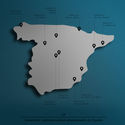
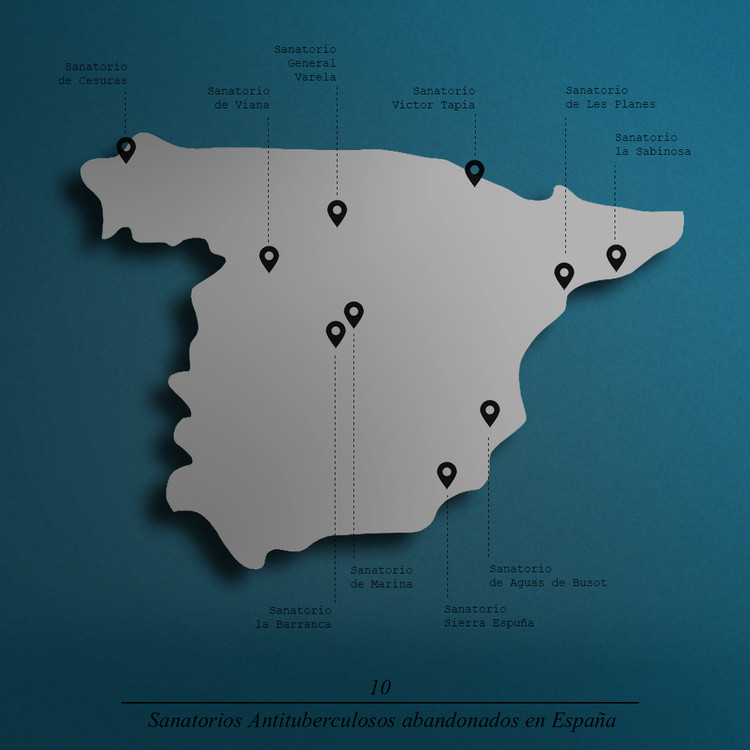
Ubicación de los 10 sanatorios en España. Image Cortesía de Javier García Librero
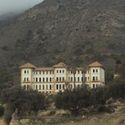
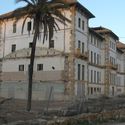
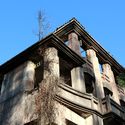
On December 13, 1943, a law established the regulatory framework for the National Antituberculosis Board (Patronato Nacional Antituberculoso), created to combat and help eradicate tuberculosis—one of the worst diseases afflicting Spanish and global populations during the 20th century. "The National Antituberculosis Board is dedicated to preventing the spread of a disease that represents the leading cause of mortality in Spain, as well as the most significant threat to the race," the text of the law began.
Following the end of the Civil War in 1939, the situation in Spain and for its population was precarious. This was reflected in the country falling behind other Western nations in its number of tuberculosis sanatoriums. Indeed, in 1934, with only 66 sanatoriums, Spain had the lowest ratio of facilities per capita in Europe—one for every 357,000 inhabitants.
In late November, we published the winners of the second call for Colombian graduation projects—also known as undergraduate theses—for which we received 70 submissions from 14 cities and 29 universities. Ultimately, nine projects advanced through three rounds of evaluation, standing out for addressing pressing issues, conducting in-depth research, and raising challenges in both urban and rural contexts, just as in 2016.
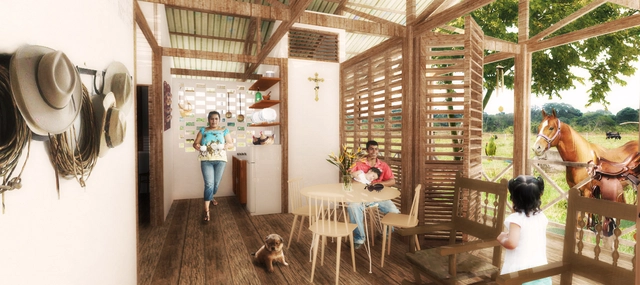
Here, we take an in-depth look at Sustainable Rural Settlement Model in Yopal, Casanare, a proposal selected for the 2017 edition of Archiprix International and developed by Daniel Vanegas and Tatiana Cantor, both graduates of the Universidad Piloto de Colombia.
PERSA SANTA ROSA / Santiago. Image Cortesía de OH! Stgo 2018
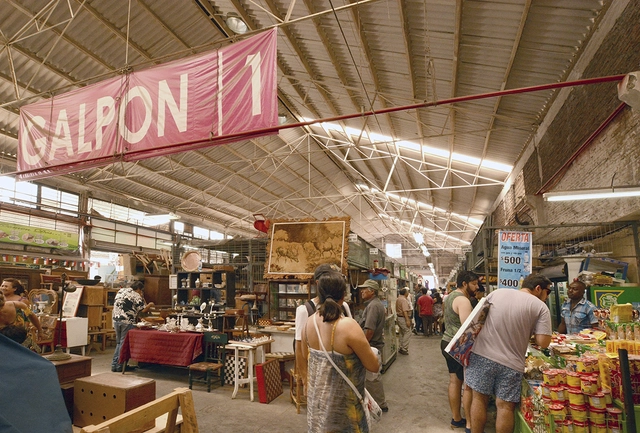
Between September 8 and 9, the annual Open House architecture festival—which began in London and is now held in more than 40 cities worldwide—will host its second edition in Santiago, Chile.
Aimed at anyone interested in exploring the city's architecture and urban design under the slogan "TENGO GANAS DE CONOCER SANTIAGO" (I Want to Get to Know Santiago), this free, weekend-long open-door festival offers access to spaces normally closed to the public or hidden within the city, showcasing their outstanding architectural, engineering, environmental, urban, social, and cultural value.



_(1).jpg?1539273048&format=webp&width=640&height=580)









.jpg?1527695634&format=webp&width=640&height=580)