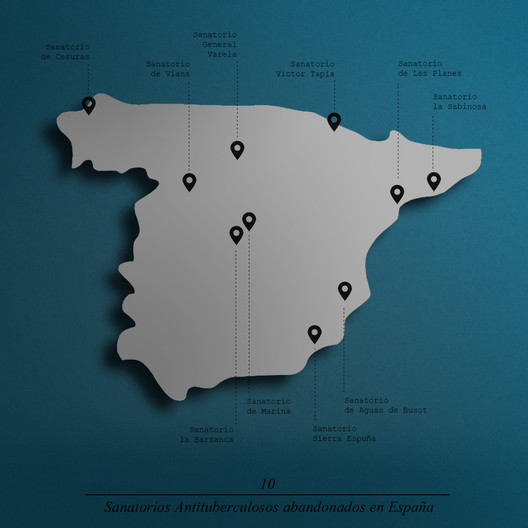
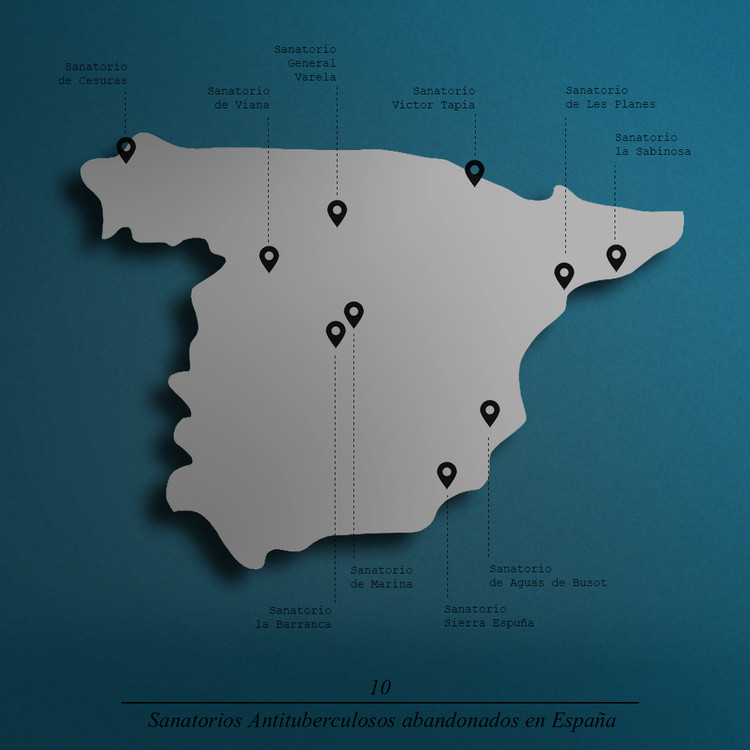
On December 13, 1943, a law established the regulatory framework for the National Antituberculosis Board (Patronato Nacional Antituberculoso), created to combat and help eradicate tuberculosis—one of the worst diseases afflicting Spanish and global populations during the 20th century. "The National Antituberculosis Board is dedicated to preventing the spread of a disease that represents the leading cause of mortality in Spain, as well as the most significant threat to the race," the text of the law began.
Following the end of the Civil War in 1939, the situation in Spain and for its population was precarious. This was reflected in the country falling behind other Western nations in its number of tuberculosis sanatoriums. Indeed, in 1934, with only 66 sanatoriums, Spain had the lowest ratio of facilities per capita in Europe—one for every 357,000 inhabitants.




.jpg?1540928605 "The tuberculosis sanatoriums that saved Spain")


.jpg?1540928924 "The tuberculosis sanatoriums that saved Spain")


.jpg?1540932109 "The tuberculosis sanatoriums that saved Spain")


