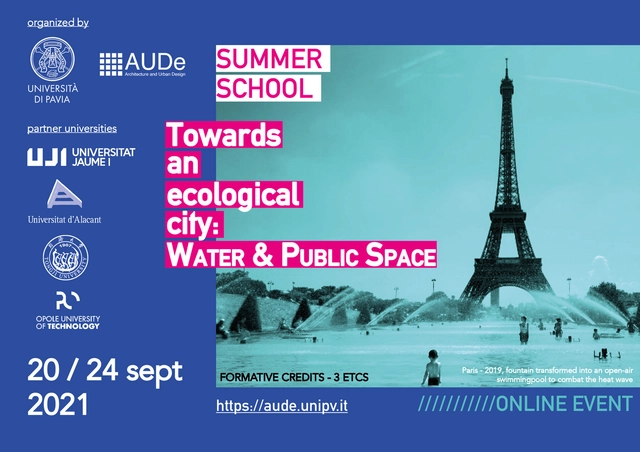
The Pontificia Universidad Católica del Ecuador Sede Ibarra invites you to participate in the seventh edition of the EARQ International Congress: "Diversity and Convergence in Public Space," taking place from July 26 to 30, 2021. The event will be held in a virtual format via a specialized online platform.
How can we design to meet today’s demand for parking in our city, while designing in enough flexibility to adapt to how we might get around in five- or ten-years’ time? We invite you to tour an innovative new building in East Village: a parkade that is designed to adapt to different uses over time.
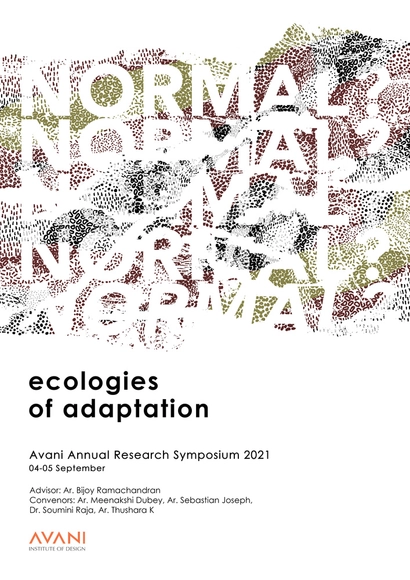
Avani Annual Research Symposium 2021 Advisor: Ar. Bijoy Ramachandran Convenors: Ar. Meenakshi Dubey, Ar. Sebastian Joseph, Dr. Soumini R, and Ar. Thushara K
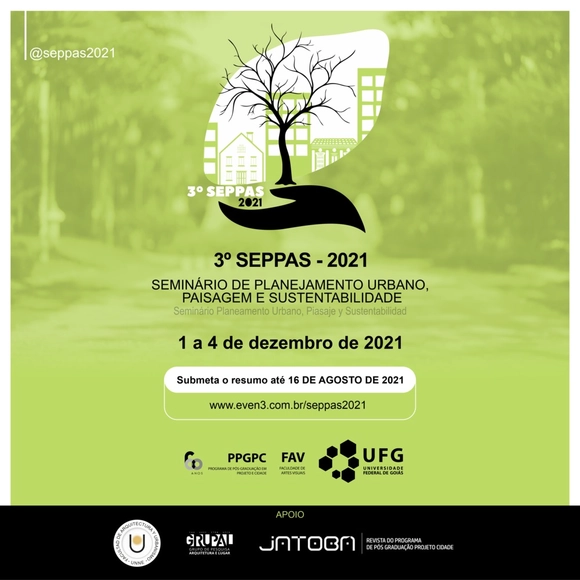
SEPPAS 2021 Event, submit your paper by August 16th.
Now in its third edition, SEPPAS will take place from December 1 to 4, 2021. The event will be held entirely online, featuring lectures and debates with professors, researchers, academics, renowned professionals, and members of the public across various fields of expertise. The event is organized by the Graduate Program in Project and City at the Faculty of Visual Arts of the Federal University of Goiás, with support from the Universidad Nacional del Nordeste (Argentina), the Grupal.UFCG research group, and Revista Jatobá.
7th INTERNATIONAL FORUM ON ARCHITECTURAL HERITAGE BRAZIL-PORTUGAL All worlds - The Heritage that unites us
Roundtable discussion with Igor de Vetyemy, architect, urban planner, and President of IAB-RJ, regarding the film he directed about architect Marcos Konder Netto.
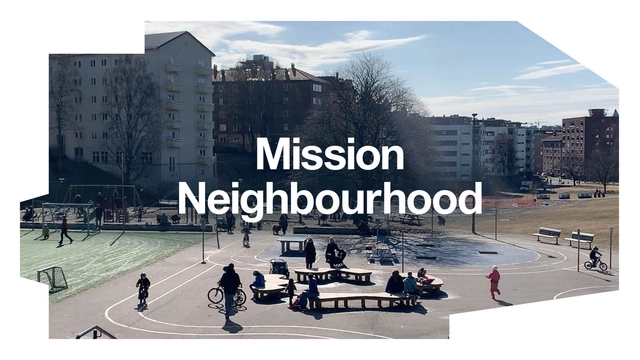
The Nordic Neighbourhood Thinking Camp is a Nordic arena to share experiences, reflections and ideas about neighborhood development and strategic urbanism.
Combining presentations from acclaimed Nordic urban practitioners and thinkers, focused workshops, symposiums and social gatherings, the camp goes beyond the celebratory pitches. The ambition is to help foster ideas and bring forward practices that make a difference in terms of social and environmental sustainability.
At the dawn of photography the city could only be recorded as a virtually empty stage by a camera lens too slow to fix for posterity the vitality of urban life. Even before the new art of photography – literally writing with light – was announced in 1839 in Paris, the City of Light, Daguerre had pioneered street photography by capturing a view of the Boulevard du Temple through the double aperture of his window and his camera lens. This first urban daguerreotype. captured perfectly the city’s architecture, but this man soon to be famous for portraiture left us scarcely a trace of the bustling traffic of that spring 1838 morning, all human presence was vanquished, save a blurry pair of men, a shoe shiner and a customer, who remained still long enough to be captured as a smudge on the otherwise pristine scene. By the end of the century the camera was able to capture motion even below the threshold of human perception, making it a tool for the scientific study of human and animal locomotion.
https://www.archdaily.com/964563/limia-erieta-attalis-latest-photograph-exhibitionAlessio Assonitis & Barry Bergdoll
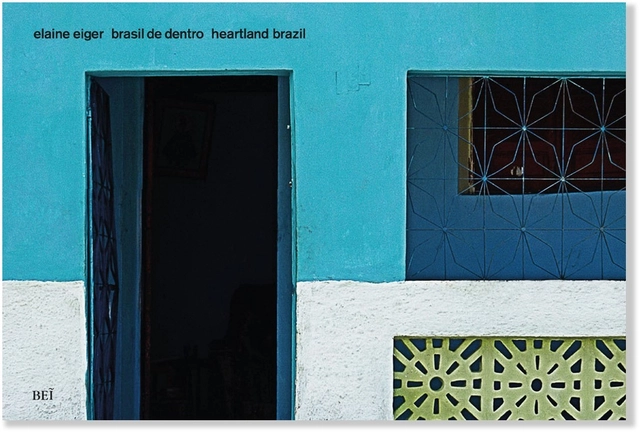
On July 6 at 7:00 PM, the book "Brasil de dentro – Heartland Brazil" by photographer Elaine Eiger will be launched. The event will feature a discussion with the author and guests Adélia Borges, José Marconi Bezerra de Souza, and Fernando Serapião.
MOVYT has created a tool to support, among other things, the design of Mobility Plans that municipalities must implement under the new Public Space Contribution Law. The launch will take place on Thursday, July 8, at 10:00 AM via our digital platforms, where participants will be able to download the cards for free.
Terra. It’s the 6th edition of the Triennale for 2022. It will take place between October and December 2022, chief-curated by Cristina Veríssimo and Diogo Burnay. “Terra explores how new paradigms are changing our ways of place-making in a globalised Planet. Terra addresses how climate cha(lle)nges, pressure on resources and socioeconomic and environmental inequities are profoundly intertwined”.
Installation 1:1 The Charcoal Cabin designed by Aulets. Photo by Laura Stamer
The exhibition With Love from Spain in Aalborg, Denmark, is a collaboration between Utzon Center and the Aarhus School of Architecture. It is based on the research project “Escandinavia - Architectural dialogues between Denmark and Spain”, which investigates the fortunate parallelisms, influences and translations between Nordic and Spanish architectural cultures. The origin of this long-term affinity is to be found in the significant interest that Spanish architects had in Nordic architecture, extensively focused on its Modern Masters: Alvar Aalto, Erik Gunnar Asplund, Sigurd Lewerentz, Sverre Fehn, Arne Jacobsen, and Jørn Utzon.
The disruptive impact of Industry 4.0 is spreading across all fields of knowledge, changing and transforming how we interact with objects and people. Although the effects of this revolution are not yet as noticeable in the field of Cultural Heritage, it is safe to assume that current and future experiments and applications will lead the fields of preservation, conservation, management, and appreciation of Cultural Heritage toward new and unexpected horizons.
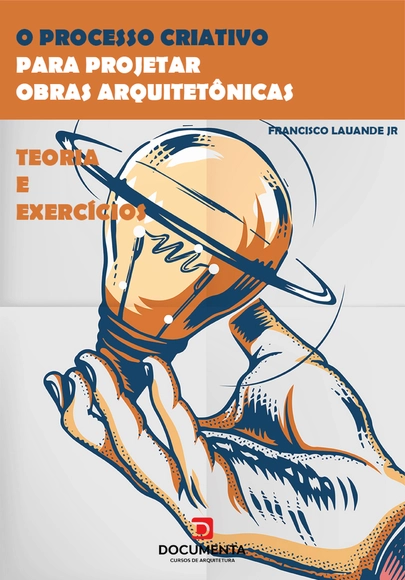
With architectural education and students in mind, this book teaches the creative process for designing architectural works.
Every creative activity requires a work method combined with talent. Due to shortcomings in education, students do not always receive the necessary didactics from their design professors to develop a design method capable of enabling them to address any level of complexity in a given project. Available software (2D and 3D) is merely a tool for developing and/or presenting ideas. Creativity, therefore, remains an essential factor and a key differentiator for architecture professionals in the job market.
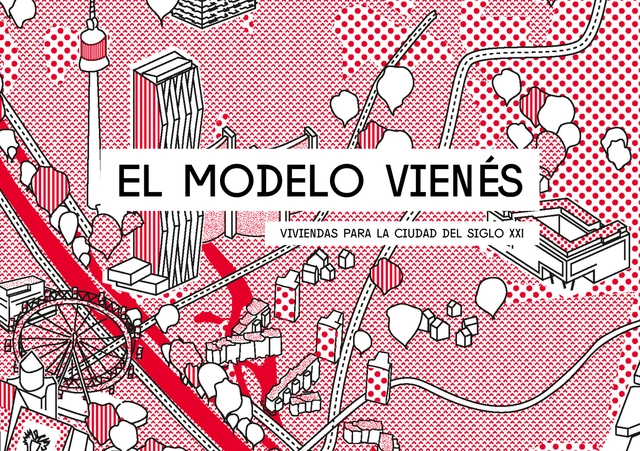
To mark the opening of the exhibition, architects Bettina Götz and Richard Manahl of the Austrian firm ARTEC, along with architect and Professor of Architectural Theory and History Josep Maria Montaner, will deliver an inaugural talk on Thursday, July 15, at 5:00 PM, followed by an open discussion with the speakers.
“1972 | Cities for Downtown Santiago” is a curatorial cycle by barco, produced in collaboration with Uruguayan researcher and architect Carolina Tobler. It seeks to develop and critically examine a significant episode in Chilean architecture that marks the end of a specific way of thinking about and creating the city: the 1972 Competition for the Remodeling of Downtown Santiago. The cycle includes a physical exhibition, three virtual conversations, and an academic workshop held within the UC Master of Urban Project program.