We invite you to participate in the 2025 ArchDaily Brasil Building of the Year Award. Now in its ninth edition, we charge our readers with the responsibility of recognizing and rewarding the projects that have made the greatest impact on the profession. By voting, you become part of an unbiased network of judges, recognizing the most relevant projects built in Portuguese-speaking countries over the past year. Only a few days remain until the end of the nomination stage, which will select the 15 finalists for the 2025 ArchDaily Brasil Building of the Year Award.
Registered users can vote for their favorite project once per day. The nomination stage closes on April 1 at 11:59 PM (Brasília time, GMT-3).
https://www.archdaily.com/1140930/last-days-to-vote-for-the-finalists-of-the-2025-archdaily-brasil-building-of-the-year-awardArchDaily Team
A week ago, we announced the 15 finalists for the ArchDaily en Español Obra del Año Award, which celebrates the best architecture in Latin America and Spain, inviting our readers to act as a jury and select their favorite projects from those published throughout the year. Today, the time has finally come to reveal the winners of the 2025 Obra del Año Award.
https://www.archdaily.com/1140928/discover-the-winning-projects-of-archdaily-en-espanols-2025-building-of-the-year-awardArchDaily Team
In a year defined by physical distancing, social media has taken on an even greater role in how we connect and stay informed. Our Instagram accounts have surpassed all previous reach records, bringing our audience the very best of what we publish on our website: projects, articles, interviews, and news from the architectural world, inspiring new ideas and tools for a better future for our cities.
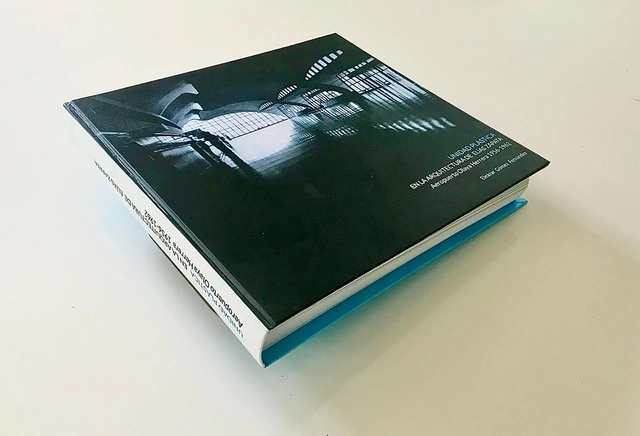
Carátula tesis. Image Cortesía de Eleázar Gómez Fernández
Every architecture school has its canonical local landmarks. For students in Colombia, one of the most easily recognized is the Olaya Herrera Airport in Medellín by Elías Zapata Sierra, an undeniable yet understudied icon. Architect Eleázar Gómez Fernández (Universidad Nacional de Colombia) presents this master's thesis, published in the Digital Library of the Universidad Nacional de Colombia.
On Friday, September 25, the first Digital Event organized by ArchDaily took place, sponsored by Crest and Panel Rey for the Mérida-based architectural community. During the event, David Basulto (founder of ArchDaily) and Vanessa Vielma (Director of ArchDaily Mexico) gave a talk on the platform's history and shared relevant data specific to this context.
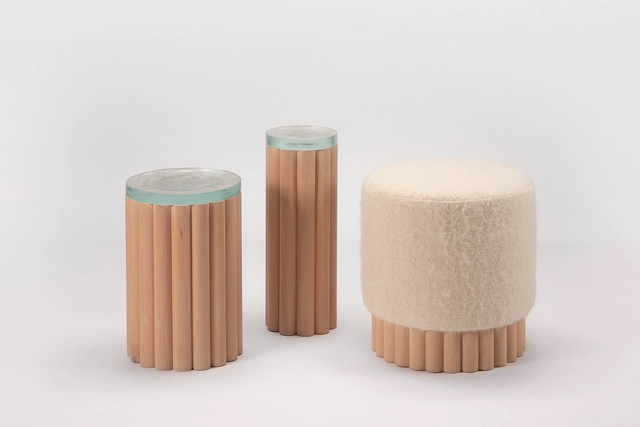
PECA design studio—led by Mexican architect Caterina Moretti—launches its new collection titled "Loto," crafted from beech wood, fused glass, and wool. It features two side tables with tops made of recycled glass fused in Tlaquepaque—providing the transparency needed to appreciate the interior of the pieces—and a pouf upholstered in sheep's wool woven on a backstrap loom in San Juan Chamula, in the Chiapas Highlands, which leaves a minimal portion of its wooden base exposed to highlight the contrast between the two textures.
As part of an initiative by architects and urban planners to mark the 50th anniversary of the founding of Cancun in Quintana Roo, Mexico, two comics have been released to portray the history of Cancun's Foundational Zone. Created by Pablo Landa of Landa + Martínez and David 'El Dee' Espinosa, this work explains the origins of the city's urban layout, as well as the history behind Cancun's Foundational Zone, to help understand its sustainable, pedestrian-friendly origins that promote community life.
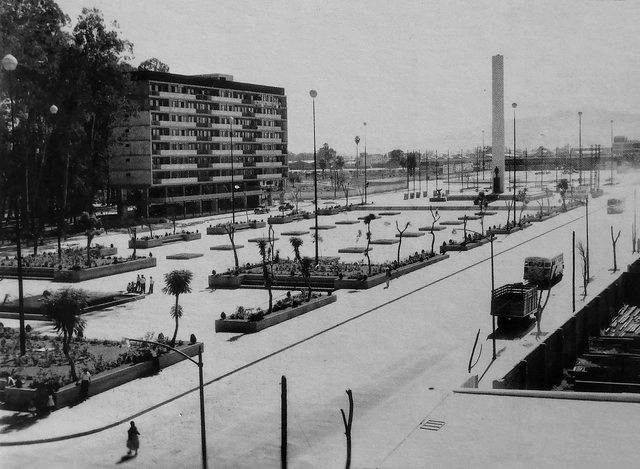
The moniker of having “built half the city” is often an exaggeration when discussing architects with a large volume of work. However, in the case of Julio de la Peña, the claim is not so far-fetched. This is true not only because of the sheer number of his projects, but also due to how iconic they are for Guadalajara.
COVID-19 will likely change the way we live and work for an extended period. In this landscape, organizations have been seeking short-, medium-, and long-term solutions to guarantee their staff a safe return to work. Protecting the health of employees exposed to contact in the workplace requires implementing biosecurity strategies, social distancing, occupancy limits, cleaning, and disinfection. This article explores preventive measures recommended by HID Global, based on the application of identification technologies.
With the emergence of COVID-19, we have had to adapt to living differently than we were used to, which has been directly reflected in our working style. Where and how do we work today? A large portion of the workforce has transitioned to working from home, where feasible. While comfortable for many, for others it has meant a radical shift, bringing new spatial and resource requirements. For architects, engineers, builders, and contractors, this challenge has been particularly complex, as much of their work involves handling large, high-cost devices.
In this article, we present 3 innovative solutions that replace the traditional, bulky plotter, allowing us to print in large formats from our own homes.
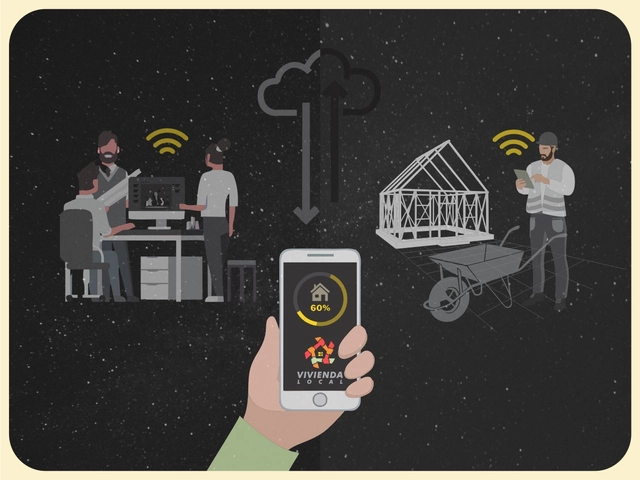
The NGO Vivienda Local, which works through collaborative self-construction in Chile, has launched a website to monitor the progress and stages of its active projects. The platform is designed to streamline operations and enhance communication between the architects using this methodology and the self-building families.
https://www.archdaily.com/1124131/local-housing-a-web-platform-for-assisted-collaborative-self-construction-projectsArchDaily Team
It appears that the humanitarian crisis has triggered a myriad of actions, rarely seen under normal circumstances, where human life, health, and the economy are prioritized equally. As urban activities grind to a halt, we once again isolate and alienate ourselves; yet, this situation feels strangely familiar. Almost seamlessly, we turn our lives over to technology, detaching ourselves from the physical conditions of our existence to make quarantine more bearable within spaces of telecommuting, virtual classes, chats, and social networks.
https://www.archdaily.com/1124100/architecture-of-a-crisis-the-pandemic-and-virtual-spacesJulián Jerez V.
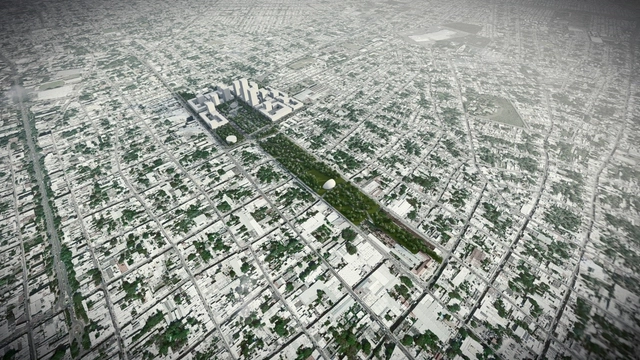
The ECOM Rosario (Metropolitan Coordination Agency) is a voluntary association of municipalities and communes, an institutional space for the planning, coordination, and promotion of public policies with regional impact, organized on the basis of a strategic partnership among 26 localities. It is essentially an organ for driving the formulation, development, and execution of projects at a metropolitan scale, established with the goal of supporting balanced and integrated territorial development in the Metropolitan Area of Rosario (AMR), Argentina.
Videos
"Ya no estoy aquí" dirigida por Fernando Frías. Image Cortesía de Netflix
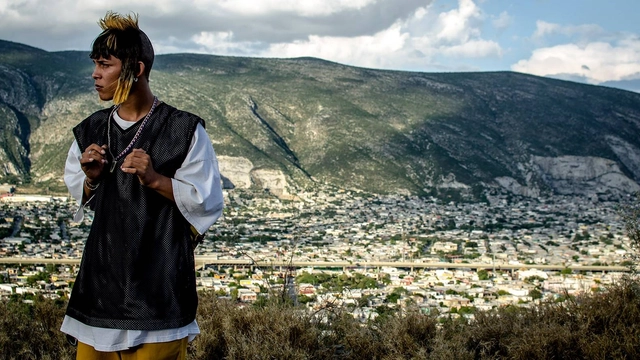
Directed by Mexican filmmaker Fernando Frías and winner of the Morelia International Film Festival, “I’m No Longer Here” (“Ya no estoy aquí”) is a film that has been widely discussed across various disciplines. It highlights the specific values and struggles of a territory while transcending borders to showcase the most human and global aspects of our shared world.
Despite UNESCO's recognition of specific World Heritage sites, many of them remain in constant danger of disappearing due to natural phenomena like earthquakes and human factors such as urbanization. By definition, these landmarks are vital to human history, possessing characteristics that reflect the deepest values of diverse civilizations. Nevertheless, much of the global population has never experienced them in person.
Architectural academia is becoming increasingly aware of the contemporary and territorial challenges facing local communities. Universidad del Norte presents this series of six thesis projects by its students, exploring the coastal region of northern Colombia through architectural recycling, regeneration, and urban renewal.
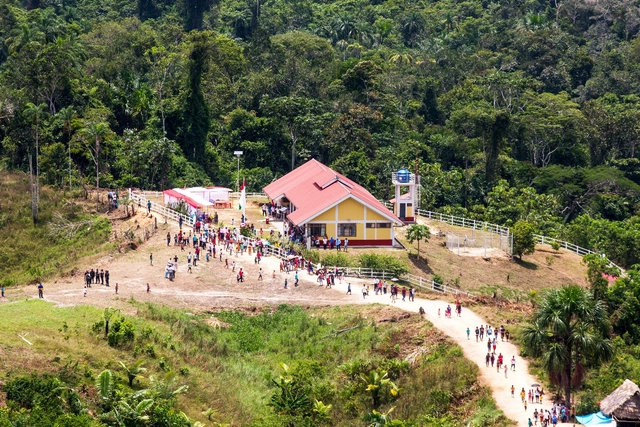
This article by Cristian Yarasca Aybar was originally published in the 11th issue of revista rita_ under the title "El problema de la distancia: las plataformas multisectoriales “tambos” como una oportunidad proyectual sistemática para el territorio rural peruano" [The Problem of Distance: "Tambo" Multisectoral Platforms as a Systematic Project-Design Opportunity for the Peruvian Rural Territory]. The research aims to identify the design potential of the "National Tambo Program" in Peru from a systematic vision of the national territory.
TEN Arquitectos is an architectural firm based in Mexico City, New York, and Miami, founded by Mexican architect Enrique Norten. With 33 years of experience designing from a global perspective, the practice brings a consistent international sensitivity to every new space it creates. This body of work has been recognized with numerous national and international awards, including the Mies van der Rohe Award for Latin American Architecture, honors from the national American Institute of Architects (AIA) and various US chapters, Architectural Record, Architect Magazine, Architizer, and Biennials in Mexico, Argentina, and Ecuador, as well as the Royal Institute of British Architects (RIBA), among others.


.jpg?1601431851 "© Taller Estilo Arquitectura")
.jpg?1601431998 "© Estudio 360")













_11.44.10.jpg?1595954667&format=webp&width=640&height=580)


_11.44.10.jpg?1595954667)


.jpg?1591798247 "2000 Ocean. Image © TEN Arquitectos")