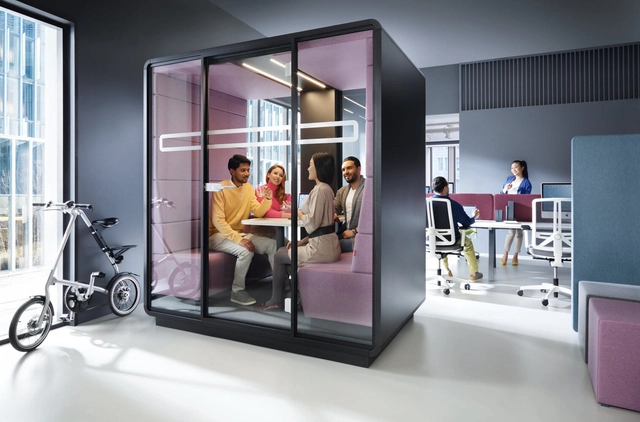
The theorization of the workplace has become a global discourse, spanning research on new spatial trends, experiments in hybrid models, the digital revolution and its impact on productivity, workplace wellness, and the elusive balance between life and work. Yet, as a New York Times article on the digital workplace notes, while this theoretical debate has spanned decades, successful implementation remains in its infancy. Propelled by the rise of tech giants like Slack and Zoom, alongside the global disruptions of recent years, our working patterns have fundamentally shifted. We have seemingly adapted to remote work, often forgetting the efficiency of physical presence and the nuanced connection of face-to-face interaction. As “digital distraction” increasingly permeates our daily lives, this is a challenge we must confront when rethinking the design of the physical office.
Can our work, then, be fully digitized and done remotely?