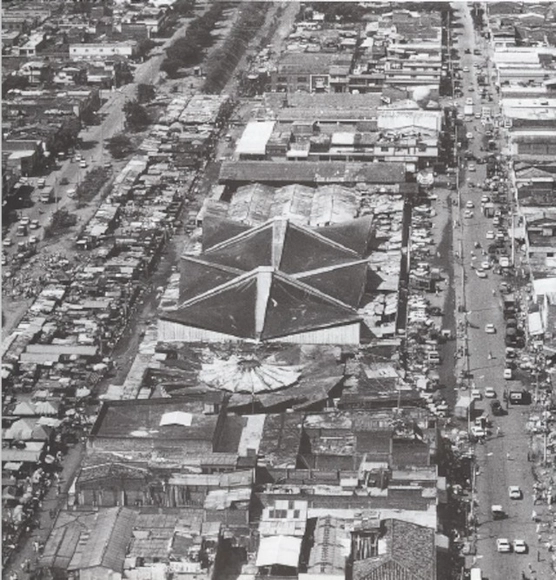
Medina, Gloria. Felix Candela in Colombia: The Santa Helena Market, Cali. BITÁCORA ARQUITECTURA Number 9, 2003. National Autonomous University of Mexico, Mexico City, p. 20.
This is an international call for consulting firms to submit expressions of interest for the development and formulation of the Special Management and Protection Plan (PEMP) for the Santa Elena Market in Santiago de Cali, Colombia. The market is the largest structure designed by Félix Candela in South America and is a designated municipal Cultural Interest Asset.
The Colombian Society of Architects is launching the 2021 Award for Excellence in Sustainable Architecture – Vidrio Andino. This award was established to recognize Colombian projects that have excelled in the field of sustainable construction. The award seeks to promote sustainability in architecture by recognizing the collaborative efforts of designers, developers, and builders in creating projects that combine construction quality with architectural design, innovation, material selection, and positive environmental and social impact.
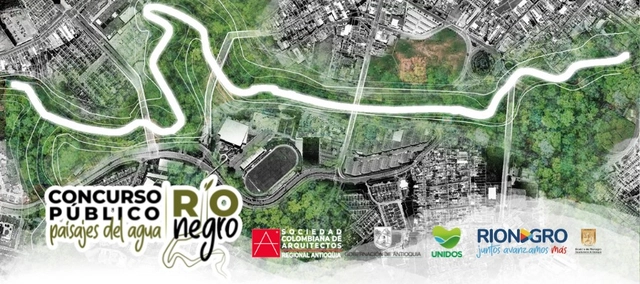
The National Public Competition for the Basic Scheme and Preliminary Urban, Landscape, and Architectural Design for the Río Negro Park, "Water Landscapes" (Paisajes del Agua), in the Municipality of Rionegro, Antioquia, is now open. The objective is to collect and evaluate, through an open national competition format, proposals from Colombian architecture professionals—whether individuals or legal entities—who wish to submit their urban, landscape, and architectural design projects for the urban section designated for the Río Negro Linear Park.
Patio. Encuentro de Intervenciones Efímeras, in collaboration with the National System of Art Creators of the Federal Ministry of Culture, the Ministry of Culture of the State of Puebla, Museos Puebla, the Municipal Institute of Art and Culture of Puebla, the Municipal Ministry of Economy and Tourism of Puebla, and the Office of the Historic Center and Cultural Heritage of the Municipality of Puebla, invites graphic, visual, and multidisciplinary artists, as well as architects—both established and emerging—to participate in the third edition of Patio Efímero.
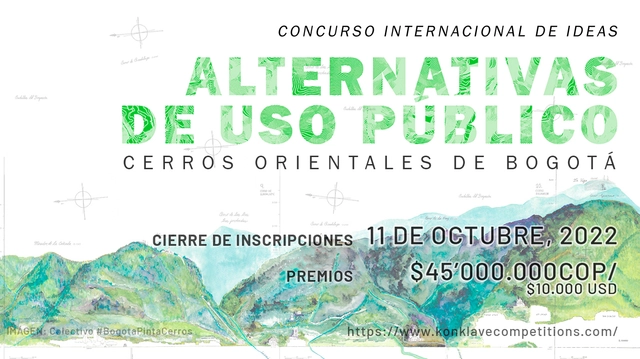
With the goal of reflecting on the relationship between the natural wealth of Bogotá's Eastern Hills and the city's dynamics, the call for entries for the International Ideas Competition: Public Use Alternatives is now open.
Patio. Encuentro de Intervenciones Efímeras, in collaboration with the National System of Art Creators of the Federal Ministry of Culture, the Ministry of Culture of the State of Puebla, Museos Puebla, the Municipal Institute of Art and Culture of Puebla, the Municipal Secretariat of Economy and Tourism of Puebla, and the Office of the Historic Center and Cultural Heritage of the Municipality of Puebla, invites artists from various disciplines, students, teachers, researchers, and the interested public to submit research for the third edition of Patio Académico.
Aiming to create a space for debate, presentation, and reflection on academic research in architecture, UDEP will host the third edition of the Latin American Congress of Architectural Research (CLIA 2022) in August 2022.
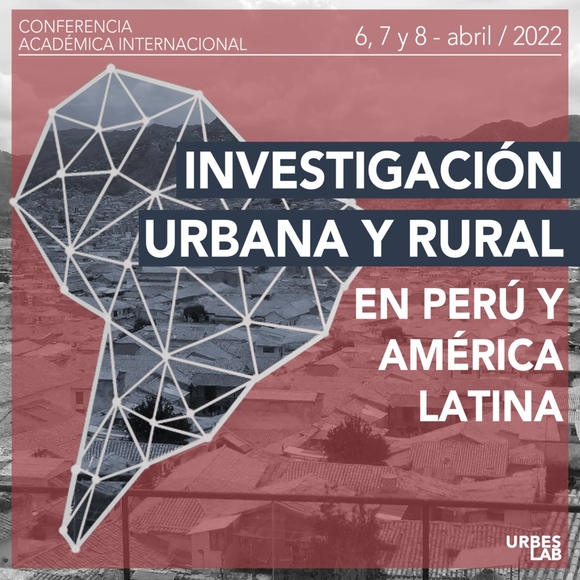
Conferencia Académica “Investigación urbana y rural en Perú y América Latina. Avances, retos y perspectivas”. Image Cortesía de URBES-LAB
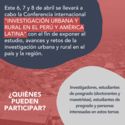
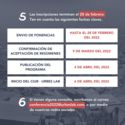
From April 6 to 8, 2022, URBES-LAB—a multidisciplinary research center dedicated to the analysis and debate of the challenges surrounding the production of urban space in Peru and Latin America—will host the international academic conference "Urban and Rural Research in Peru and Latin America: Progress, Challenges, and Perspectives." The event aims to highlight the advancements and challenges within urban and rural research across the region.
Nariño is undoubtedly the gateway from the Andean universe to the rest of Colombia; it is here that the Inca Trail—Qhapac Ñan—begins, which connected these territories to the Inca Empire or Tahuantinsuyo. Through the mountain junction known as the "Nudo de los Pastos," trade, arts, culinary traditions, customs, and ultimately all the elements that nourish the country's rich multicultural variety have permeated the region. Today, the Pan-American Highway serves as the immediate mobility link for thousands of people traveling to and from South America, carrying their productive, emotional, or recreational interests across a territory clearly integrated by a shared landscape in all its dimensions. The city of Pasto is a fascinating and essential stop along this route.
The Pintuco – SCA Antioquia Scholarship is a program for architects and designers in Colombia and across Latin America who are interested in enhancing the spatial quality of residential spaces through interior design. The scholarship covers 100% of the tuition for the SCA-Antioquia interior architecture diploma program.
The submission period for the curatorial competition for the International Union of Architects (UIA) World Congress of Architects in Barcelona 2026 opened on June 28.
Project Name: Open Tender for Schematic Design of Shenzhen Polytechnic (Shenshan Campus, Phase I) Project Location: Chishi Town, Shenshan Special Cooperation Zone Application Deadline: 17:00, May 6, 2023
https://www.archdaily.com/1094104/call-for-proposals-open-design-competition-for-the-shenzhen-polytechnic-shenshan-campus-phase-i韩爽 - HAN Shuang
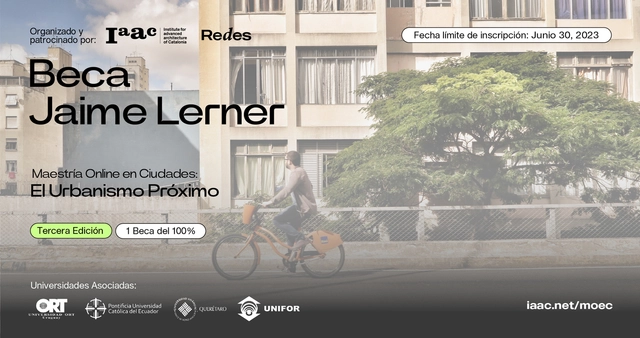
Following the success of the first two editions of the "Jaime Lerner Scholarship," IAAC, in collaboration with Redes, is launching the third edition. This year, the scholarship is open to professionals from all Latin American countries to study our Online Master in Cities: The Next Urbanism for the 2023/2024 academic year. Through this initiative, IAAC reinforces its commitment to supporting young architects in their efforts to specialize and contribute effectively to improving the cities in their respective countries.
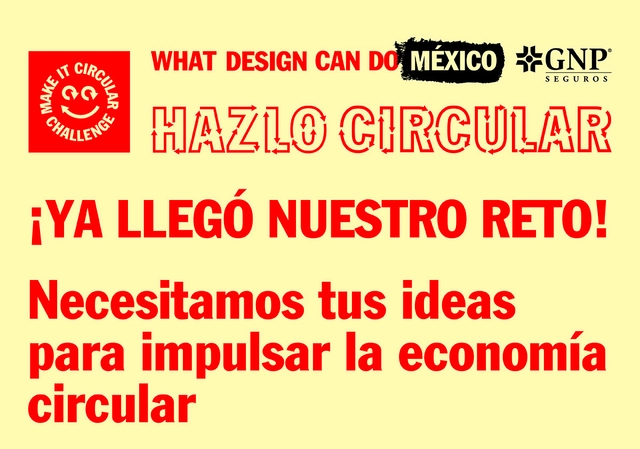
As part of the activities taking place during the What Design Can Do festival, the Make It Circular Challenge has been launched, with a deadline of January 31. The challenge seeks proposals in the categories of "What We Eat," "What We Wear," "What We Buy," "How We Package," or "How We Build" to help address the devastating effects of overconsumption, waste, and climate change. The Make It Circular Challenge awards a prize of 10,000 euros for the development of circular design projects that help combat the climate crisis in a creative way.
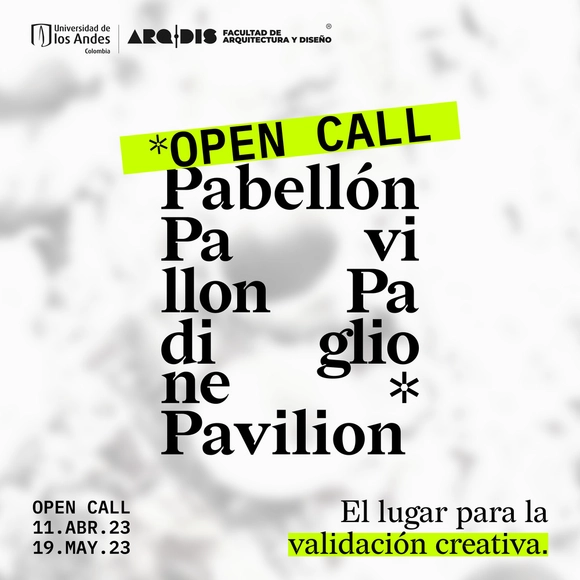
2023 Pavilion - Faculty of Architecture and Design at the Universidad de los Andes
The Faculty of Architecture and Design at Universidad de los Andes announces the open call for Pabellón 2023, a three-day international conference (October 11–13, 2023). This open call seeks projects in various formats that capture the current state of creative practice, informed by plural perspectives as diverse as the world to which architecture and design respond. Submit your project by May 19, 2023, in one of the following formats: Transmedia, Performance, Exhibition, or Presentation, and receive academic validation.
Airzone, a leader in the manufacturing of HVAC control systems, has launched the inaugural "Airzone Awards 2023" to support its commitment to innovation, sustainability, and young talent. These awards are dedicated to promoting university projects that prioritize energy efficiency. The inaugural edition will recognize the best Bachelor's or Master's theses based on their contribution to energy efficiency and sustainability in building design.
The Urban Housing and Habitat Practices Platform (UHPH) is calling for entries for the 2023 UHPH Inspiring Practices Competition. The competition seeks to identify policies, plans, programs, projects, initiatives, and sustainable and technological solutions in the housing and habitat sector developed in Latin America and the Caribbean. These entries should leverage innovation and collaboration to help combat inequalities in urban settlements in the face of the climate crisis and its effects.
"Traducciones: la utopía y el vacío performativo", seleccionado entre los mejores proyectos de estudiantes del 2021. Image Cortesía de Juan Manuel Sandoval Perdomo
The academic output of architecture in Ibero-America is vast and valuable; therefore, we believe it is necessary to launch a new call for entries to showcase the best final degree projects that have emerged from these programs.
The Latin American Master in Architecture [MLA] is a postgraduate program that provides students with advanced disciplinary training in the study and application of contemporary design methodologies, tailored to Latin American environmental and cultural conditions, while seeking an emancipatory and sustainable vision of architecture.
Call for Papers: Between the Ephemeral and the Enduring, Dearq Journal
Architectural production is inherently linked to time, whether through the intent to endure or through a planned duration. However, the permanence of buildings is limited: elements wear out, are repaired, and are transformed, while users change their activities, integrate unexpected uses, and adapt spaces to their evolving needs. Similarly, projects with a set duration can extend their utility, travel to new spaces with updated programs, and generate new transactions. Even more paradigmatically, projects and construction are often carried out according to the rhythms of the community rather than a fixed schedule.
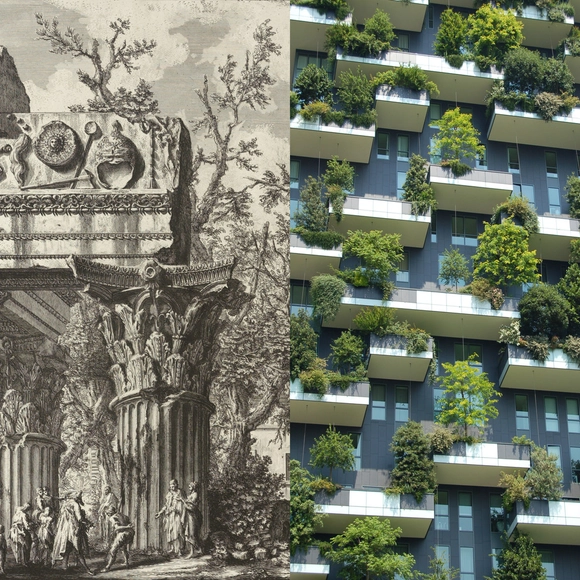
Caption: Veduta with the Temple of Jove. Giovanni Battista Piranesi. 1750–1758; Bosco Verticale. Boeri Studio. 2014. Creative Commons CC0 1.0 Universal Public Domain Dedication.
Architecture, as an act of human cultural artifice, has historically maintained an indissoluble relationship with Nature—as a site, enclave, environment, material, or mirror of the habitat for communal life, and as a factor of language. Both the symbolic tradition—monument, tomb, idol—and the typological tradition—temple, hut, theater, palace—form the basis of the elemental corpus of Vitruvian formulation. Whatever the artifact to be built, the natural condition is unavoidable. Fire, water, earth, and air—the elements that compose the universe according to ancient philosophy—are, in turn, constitutive of architectural thought. However, arrogance, success, or disruption over pre-existing conditions have dominated human behavior toward Nature. The current state of extreme intervention on the Earth as a planet, on geography as a foundation, on climate as a resource, or on the atmosphere as a domain, demands a critical review of the diverse perspectives that architecture has adopted according to historical, political, and cultural contingencies and their consequences on lifestyles.
.jpg?1644323726&format=webp&width=640&height=580)