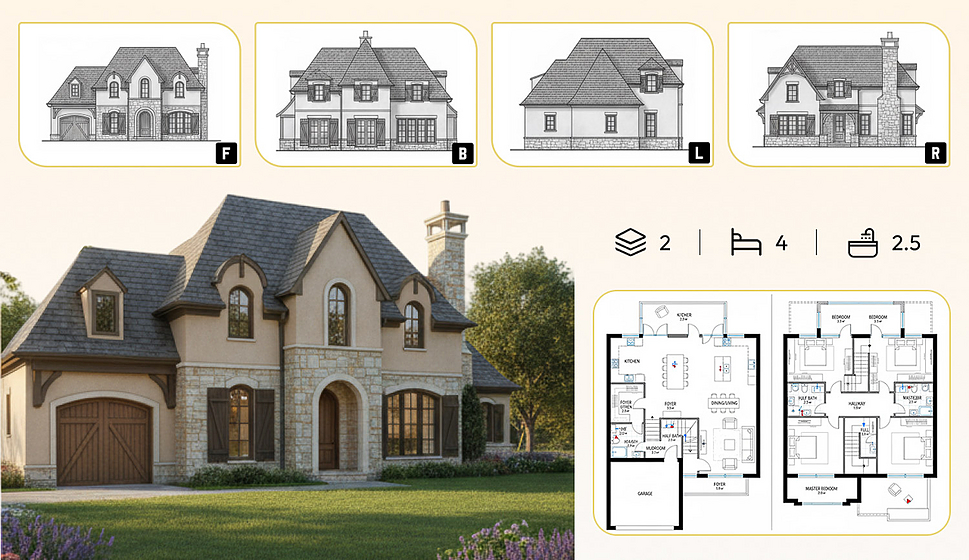
This guide covers a workflow that moves from project parameters to generated floor plans, 3D perspective views, exterior design exploration, and site context visualization, using AI tools in place of preliminary CAD and rendering work.
This guide covers a workflow that moves from project parameters to generated floor plans, 3D perspective views, exterior design exploration, and site context visualization, using AI tools in place of preliminary CAD and rendering work.
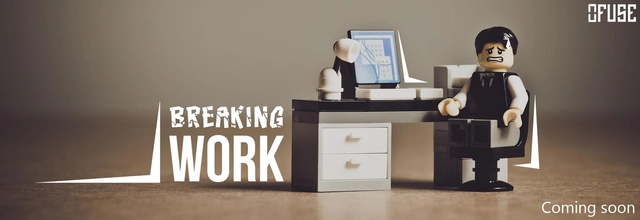
Work has always been changing when we think in terms of productivity, efficiency or just the ambiance. Looking back, we’ve come really far of how we used to earn a living. Right from industrial ages when work was merely paper, to now organizations that demand collaboration - management - creativity. Which leads to present where people look beyond jobs, and desire fun offices that keep their morale & mood up. With the fast-pacing growth in technology and architectural fields, where do we see ourselves in a couple of decades?
Mumbai stands as the wealthiest city in India and is well-known for its diverse culture and is considered a melting pot of several cultures and communities. Traffic congestion remains a major apprehension despite the progress in technological fields concerning public transportation. With a present population of over 21 million, the city generates more than 17 million trips in a day. Majority of Mumbaikars depend on local trains and buses as their means of egress.

Radical Innovation, an annual competition that calls for the best and brightest innovative concept ideas in the hospitality sphere, announces the opening of its 2018 edition. Both professionals and students alike are encouraged to submit their concepts online at radicalinnovationaward.com through April 1st.
This is a call for Works of art and design that are also devices for manifesting, registering, materializing, manipulating, or visualizing the quality, movement, properties, or “spirit” of air in, around, and through buildings.
![Call for Submissions / 2018 Summer [IN]STITUTE in Environmental Design - Featured Image](https://snoopy.archdaily.com/images/archdaily/media/images/5a9d/9db2/f197/ccf8/6c00/012c/slideshow/open-uri20180305-14309-k3t69r.jpg?1520278953&format=webp&width=640&height=580)
UC Berkeley's College of Environmental Design is now accepting applications for the 2018 Summer [IN]STITUTE in Environmental Design!

Design:
In today’s crowded world, the aspect of finding comfortable seating in a public arena is a major part of one’s daily activities. A comfortable seating in public helps one relax and reduce fatigue. This social activity, however, may vary with each individual and the kind of space he/she occupies. Most importantly, the nature of the seat ought to cater to every individual irrespective of their age, size or gender.

This summer school is concerned with the application of decision supports system based on Geographic Information Systems in the urban planning process which is essentially concerned with the overall development of an area with regards to design, environmental aspects of development, transportation and more.
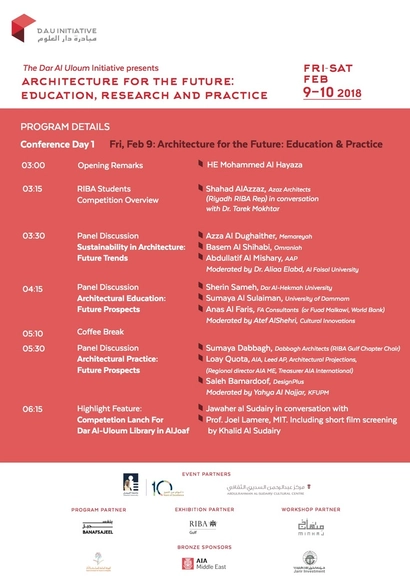
The primary objective of the Al Jouf International Public Library Redesign Competition is to update the library’s function, use of space and design, in order to create an environment that accommodates for modern cultural flow and activity. The initiative aims to rethink the library’s function and transform its interiors from an outdated storage space for books, into an open, flexible, energy efficient and sustainable community center.

Summary:
The aim of the “dancing” competition is to develop design proposals for the nightclub typology, intended as a place to experience entertainment in relation to music: listen, perform, dance.
The participants are asked to create innovative and unconventional projects on this theme, questioning the very basis of the notion of a club.
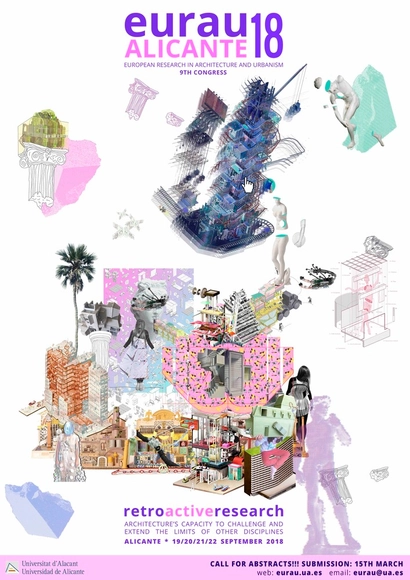
Symposium EURAU18 alicante
European Research in Architecture and Urbanism
Description: Retroactive Research: Architecture's capacity to challenge and extend the limits of other disciplines.
Topics:
Critical pedagogies, Ecological policies, Material practices, Urban metamaps, European urbanization, Citizen-centric smart cities, Sustainable multi-functional landscapes

New York is the emblematic city of professional progress, great ambitions and large corporations. A place where the idea of success in society is pursued although in many cases it is accompanied by long working hours. People spend a third of the day or more in workspaces and most offices were designed to increase productivity regardless of the spatial quality or well-being of employees.
Radical Innovation, an annual competition that calls for the best and brightest innovative concept ideas in the hospitality sphere, announces the opening of its 2018 edition. Both professionals and students alike are encouraged to submit their concepts online December 15th through April 1st.

Call for Young Architects:
The ARCASIA Travel Prize in Architecture is the travel and research scholarship given to Young Architects of ARCASIA (40 years and under) who are members of the architect institute of their country. The prize aims to promote research in selected fields of study, encourage cross-border education as well as foster cultural exchange between nations and institutes. Sponsored by NS Bluescope (Thailand), this year is the third year of the ARCASIA Travel Prize.
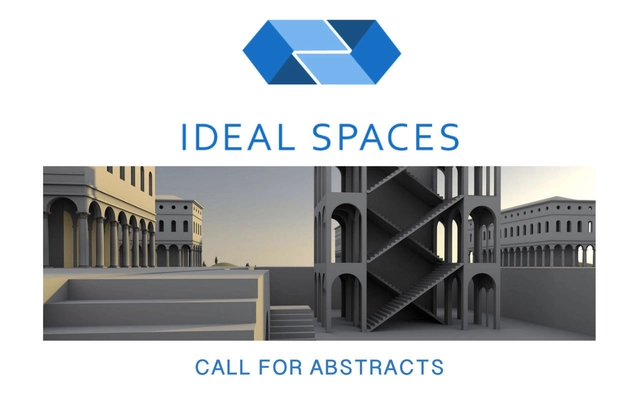
Symposium: “Artificial Natures”
Venice Biennale for Architecture, 2018
27 - 29 May 2018
Palazzo Rossini, Venice, Italy
Artificial Natures
The topic for this year’s symposium is Artificial Natures, ranging from classical ones, such as parks and ideal cities, to garden cities, to new “natural “ environments like social media spaces as new public place. The symposium will take place as a combination of short panels and workgroups. The general questions are:

It is an Architecture competition, completely free, addressed to the student of the Polytechnic of Turin, which allows them to put into practice their acquired knowledge in their studies.

Abstract
Call me Architecture. I am a product of a way of thinking. Over the years, I have presented myself as a dream of civilizations. I have found myself layered endlessly, while my contemporaries have evolved into rather noteworthy images of their primitive selves. Although I am interpreted differently in many a space and time, I may mean the same. I see myself as an instrument to elucidate problems. My nature of debates may have changed and my discipline altered, but I have existed with one and only one purpose: to serve. I remember and I do reflect.

VOLUME 39: FOUNDATIONS & DISRUPTIONS

ARCASIA TRAVEL PRIZE 2018:
KUMIKI

Arquia Social is calling for proposals for the design of a toy to be gifted to hospitalized children, with the goal of making their hospital stay more bearable through play and fostering a more positive mood.
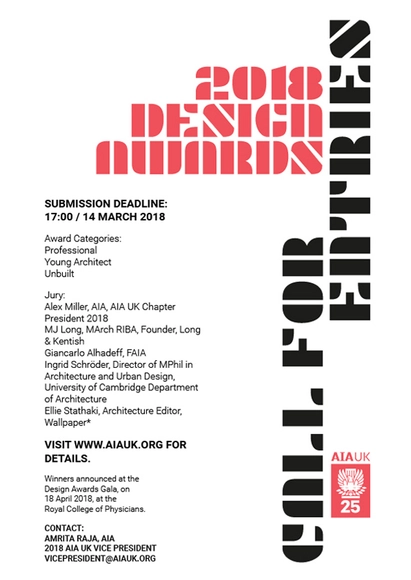
2018 AIA UK Design Awards Call for Submissions
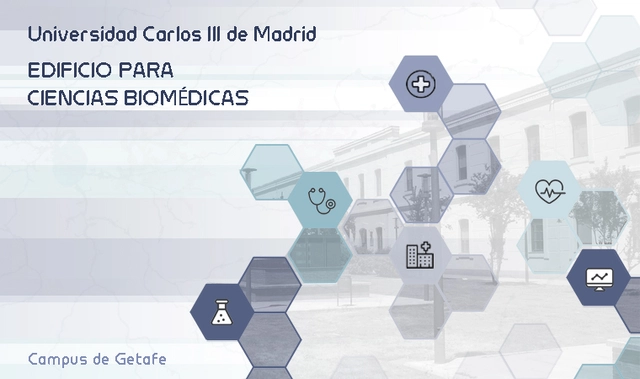
The purpose of this competition is to select the best proposal for the construction of a Biomedical Sciences building at the Getafe Campus of the Carlos III University of Madrid.
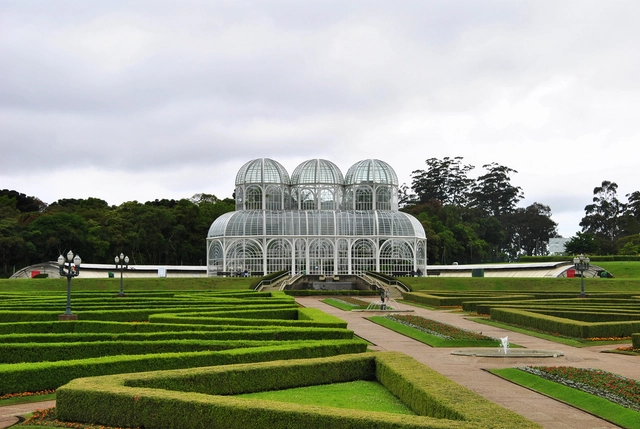
A Pavilion with a Greenhouse for a Botanical Park is the theme for the 11th edition of the Architecture Student Competition, a project promoted by the Brazilian Center for Steel Construction (CBCA). The theme is inspired by the United Nations 2030 Agenda for Sustainable Development, which aims to protect forests and combat desertification. Interested teams must register by July 25 and consist of a minimum of two and a maximum of four students. Each group must be advised by a professor from the same school or university and may also include a co-advisor.

Future Campus – University College Dublin International Design Competition focuses on enhancing and enlivening University College Dublin’s (UCD’s) extensive campus. This competition – the first stage of which closes at 14:00 BST on Monday 26 March 2018 – is seeking an outstanding integrated multidisciplinary team for two much-needed design initiatives.
.gif?1519072215)
As part of the extended programme of WORK, BODY, LEISURE, the theme of this year Dutch Pavilion at the Venice Biennale, The Institute of Patent Infringement is concerned with the existing legal infrastructure that allows ‘Big Tech’ a strangle-hold on questions surrounding automation, both today and in the future.