The 4th call for entries for the AADIPA European Award for Architectural Heritage Intervention, aimed at professionals involved in architectural heritage, opened for online registration on Monday, December 17, 2018, and will remain open until April 5, 2019.
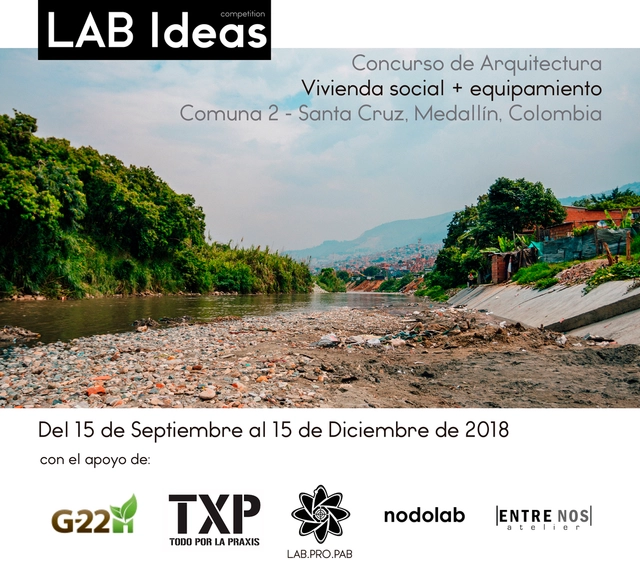
In the 1990s, Medellín was known as one of the most dangerous cities in the world due to a series of economic, social, and violent issues driven largely by drug trafficking and conflicts between communist guerrillas and paramilitary groups. Fortunately, today, things have changed. Thanks to the collaborative and comprehensive work of planners, urban designers, and policymakers, Medellín has taken a major step forward in reclaiming previously neglected areas of the city. The city has become a true laboratory for urban innovation and transformation, driven by sustained planning processes, inclusive policies that encourage participation, and successful institutional innovation schemes.
Radefoundation and the Madanfo Project are launching the "Timeabu Kindergarten" architecture competition, an ideas competition aimed at creating a space where young children in Timeabu, Ghana, can attend classes.
Architects and architecture students from Latin America and Europe are invited to participate in the "Hotel Zen Lighthouse" Ideas Competition, to be developed on the shores of Lake Valle de Bravo, Mexico. The competition aims to encourage the preservation of natural resources.
Architects and architecture students from Latin America and Europe are invited to participate in the "Zen Lighthouse Hotel" Ideas Competition, to be developed on the shores of Lake Valle de Bravo, Mexico. The competition aims to encourage the preservation of natural resources. For more information, please consult the competition guidelines.
For the second consecutive year, MUTEK MX is officially launching its open call for artistic proposals for its 17th Edition, which will take place from November 23 to 29, 2020.
REDBAAL, meeting the expectations of Latin American architects and following five successful editions, is now accepting entries for the Sixth Edition of the Oscar Niemeyer Award for Latin American Architecture—the ON Grand Prize—which will be presented on October 2 of this year at the Buenos Aires International Architecture Biennial. The best of architectural production, already recognized at prestigious Latin American Biennials, will take center stage in this international competition, which serves as the "Biennial of Biennials" for Latin American architecture. We continue to bring together our professionals and their outstanding work, which reflects diverse realities while serving as the result of highly valuable collective social efforts.
CICOP Chile invites architects who graduated between October 1, 2023, and December 31, 2025, from any school of architecture in the Latin American countries where the International Federation of CICOP Centers has active national representation—Argentina, Bolivia, Brazil, Costa Rica, Chile, Mexico, Paraguay, Peru, and Uruguay—to participate in the CICOP Chile 2026 Award. Eligible submissions include Thesis Projects or Final Degree Projects developed with a focus on interventions in buildings, building complexes, or areas of heritage value, regardless of whether they are protected by national regulations. The CICOP Chile Award aims to foster the visibility and dissemination of Thesis Projects and Final Degree Projects that involve the intervention of heritage properties or areas, thereby contributing to their enhancement. Furthermore, the award seeks to identify and highlight the best proposals developed in this field in recent years, promoting academic interest in projects and research centered on the conservation of architectural heritage.
This competition, promoted by CAF—Development Bank of Latin America and the Caribbean—and the Pan-American Federation of Associations of Architects, seeks to promote innovative architectural proposals in line with the state of the art in the field of education, using an approach centered on student learning.
The Faculty of Architecture and Design at the Universidad de los Andes and the construction firm Prodesa S.A. have been working together since 2005 to promote quality housing in Colombia. This shared interest led to the creation of the Housing Observatory, a space for reviewing, discussing, and evaluating urban and rural housing projects built nationwide.
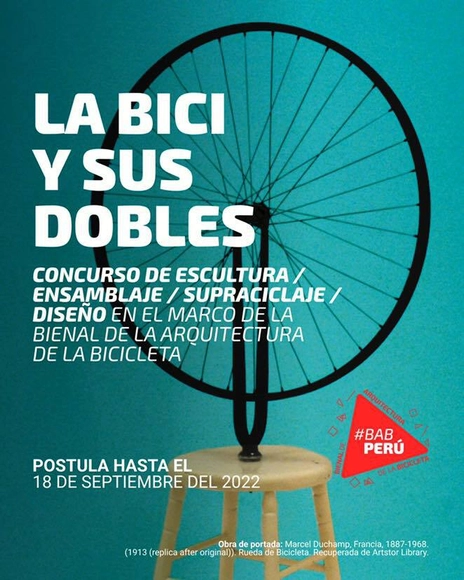
"The Bicycle and its Doubles" competition. Enter now!
Are you a creative person who enjoys designing objects? Registration for the "The Bicycle and its Doubles" competition is open until September 18, with finalists to be featured in the Bicycle Architecture Biennale (BAB).
This call seeks to recognize built architectural works, regardless of scale, that address contemporary societal issues. Special consideration will be given to projects that demonstrate a positive impact on urban and rural spaces through improvements and innovations in housing, infrastructure, public space, social integration, and environmental sustainability, in alignment with the core concepts of the XIV BIAU.
Publications that disseminate new knowledge related to the themes addressed in the 14th BIAU in the fields of architecture, urbanism, and territory will be awarded. The prize recognizes two types of media: • Books (both printed and digital) • Periodicals: Magazines, newspapers, or fanzines (both printed and digital). In this case, the periodical should be registered only once, specifying the issues published during the 2024–2025 period.
An honorary award recognizing the professional trajectory of Ibero-American individuals or collectives who have made significant contributions to the field of Ibero-American architecture and urbanism.
We are honored to announce the 2025 IBRAMEM Architecture and Wood Design Award, which aims to establish itself as a significant catalyst for the development of creative, high-quality projects, structures, products, and objects within the fields of Architecture, Urbanism, Engineering, and Wood Design in Brazil and across Latin America.
AREA (Asociación para la Reflexión Estratégica acerca de la Arquitectura) invites submissions for the ninth Bienal de Arquitectura Latinoamericana (BAL) 2025, which aims to highlight the work of emerging Latin American architects. As in previous editions, BAL seeks to showcase the work of emerging professionals in Spain, thereby fostering their professional reach both here and in their home countries. BAL 2025 will take place in Pamplona over the course of one week. The program will feature a variety of events linked to different geographic regions, including exhibitions, lectures, and roundtables that offer a global overview of the current state of Latin American architecture.
GENfadu is an open call organized by the Communications Secretariat of the Faculty of Architecture, Design, and Urbanism (FADU) at the University of Buenos Aires (UBA). The initiative aims to recognize, showcase, and highlight the work of a generation of architect-educators within the faculty through a publication.
Josefina Hidalgo. The tattoo as a mark on the skin.
The International Youth Organization for Ibero-America (OIJ) is launching the #DesdeMiCuarto photography call, inviting young people across Ibero-America to share how they are experiencing the exceptional circumstances brought on by the COVID-19 pandemic from the intimacy and privacy of their own homes.
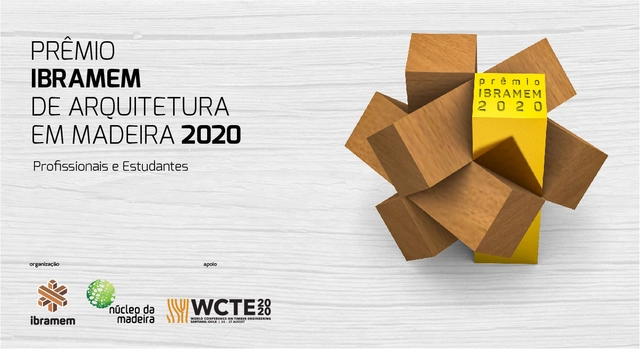
2020 IBRAMEM Timber Architecture Award for Professionals and Students
We are honored to announce the 2020 IBRAMEM Timber Architecture Award, which aims to establish itself as a powerful tool for encouraging creative, high-quality projects in architecture, urbanism, engineering, and design using timber in Brazil and across Latin America.
Call for essays and graphic narratives reflecting on the architecture, engineering, and/or spaces that no longer exist in Mexico City, in commemoration of the 500th anniversary of the fall of Mexico-Tenochtitlan.
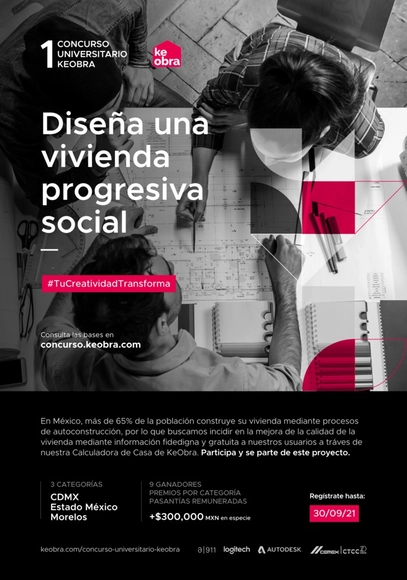
Image created by KeObra for the competition's promotional campaign
The competition seeks progressive housing projects to be integrated into the KeObra Calculator, providing estimated budgets, material lists, estimated construction timelines, and the necessary plans to begin construction.
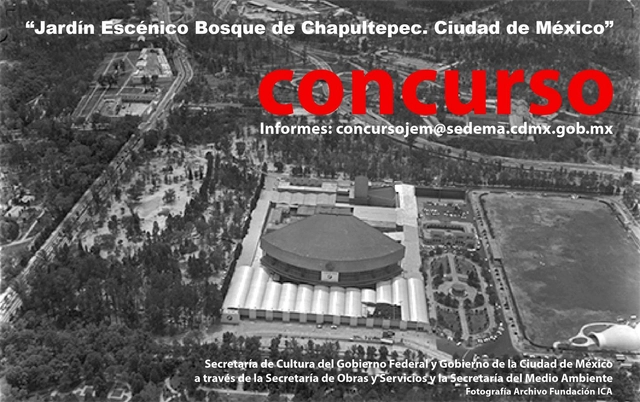
The "Scenic Garden and Pavilion" ideas competition aims primarily to reorganize and comprehensively recover the area known as the "ecological parking lot," facilitating the integration of the Centro Cultural del Bosque (CCB) into the Chapultepec Forest itself. In other words, the project seeks a design that incorporates reforestation, architecture, and landscape for this territory—currently a parking lot—which must be reintegrated into the urban forest and contribute to strengthening the performing arts ecosystem represented by the CCB. The project includes the design of a Scenic Pavilion as a permanent space featuring non-intrusive, harmonious architecture that blends with the forest environment, creating an interconnection point between the performing arts ecosystem and the visual arts ecosystem toward the Zoo and the Museum of Modern Art.
The intervention will take place on properties owned by the CAAITBA (Social Security Fund for Surveyors, Architects, Engineers, and Technicians of the Province of Buenos Aires), located in the town of Mar Azul, in the Municipality of Villa Gesell, commonly known as the "Engineers' Campground."










![PALIMPSEST. Erased City [1521-2021] - Featured Image](https://snoopy.archdaily.com/images/archdaily/media/images/60b8/d926/f91c/81c7/3600/0003/slideshow/open-uri20210603-17096-1mj0ff7.jpg?1622726943&format=webp&width=640&height=580)