This article was originally published by Metropolis Magazine as "Good-bye Grand Structures: The Small-Scale Civic Architecture of Today."
The city hall of my current hometown, Scottsdale, Arizona, gives no hint of any sort of civic function to the boulevard on which it sits. You enter it from the parking lot in back. The only reason I have been there was as part of a team presenting our credentials in a design selection process. My other dealings with government have been online, via mail, or at suburban locations where I have gone to handle such matters as smog tests. I vote by mail.
The big push in American local, state, and federal government is to take everything possible online and off-site and to make whatever remains as minimal and anonymous as possible. The actual operations of government have long taken place in back rooms where politicians and bureaucrats have done the real work. Yet they were often encased in grand structures that gave us a sense of identity and pride in our government while also serving as open sites where we could encounter our civic agents and one another. As a result, we live with a heritage of civic monuments that proclaim our investment in deliberation and democracy, but we build very few, if any, such structures today. Instead, we are looking to get rid of whatever relics of such a history of civic architecture we can—the governor of Illinois would like to sell the James R. Thompson Center, designed by Helmut Jahn in 1982–85, and only the specificity of the grand classical edifices that predate that Postmodern monument prevents other politicians from trying the same. Civic buildings cost money to build and maintain, and their formal spaces sit empty most of the time.






.jpg?1470992306 "Vara Pavilion / Pezo von Ellrichshausen. Image © Laurian Ghinitoiu")
.jpg?1471021982 "Vara Pavilion / Pezo von Ellrichshausen. Image © Laurian Ghinitoiu")
.jpg?1471021974 "Vara Pavilion / Pezo von Ellrichshausen. Image © Laurian Ghinitoiu")
.jpg?1470992306)
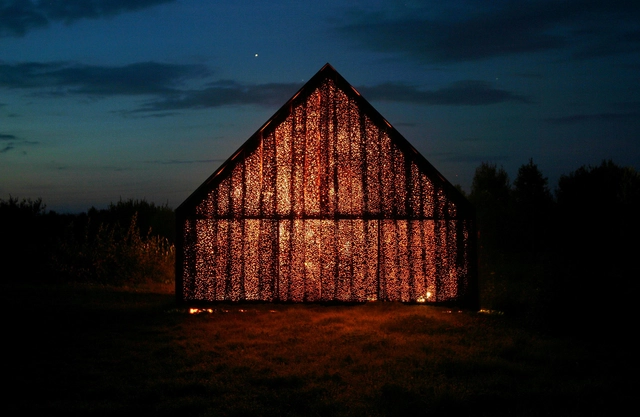
.jpg?1470952641 "Theater Mercury, Moscow, 2006. Image © Marco Zanta")
.jpg?1470952609 "Molochny Lane residential building, Moscow, 2003. Image © Yuri PALMIN")








.jpg?1470428172)

.jpg?1470319449 "Srygley Office Building. Image © Timothy Hursley")