Registration is now open for the 7th edition of the Saint-Gobain Architecture Award – Sustainable Habitat. Professionals and students may submit their architectural projects until November 11 via the website www.premiosaintgobain.com.br
Romullo Baratto is an architect with a PhD from FAUUSP and Managing Editor of ArchDaily. He previously coordinated the editorial team of the 11th São Paulo Architecture Biennial and served as Managing Editor of ArchDaily Brasil, where he led the platform to win the FNA Award—the first time the honor was granted to a media outlet. He collaborated on the editing of the book "Concrete Jungle", published by gestalten, and has curated architecture exhibitions in Brazil, Chile, Denmark, and Italy, as well as delivered lectures and moderated debates in Spain, the United States, and Portugal. His doctoral thesis investigates the urban landscapes of São Paulo through cinema. His work spans academic research and editorial practice, communicating architecture through texts, interviews, lectures, curatorship, and photography. Follow him on Instagram @romullobf.
Registration is now open for the 7th edition of the Saint-Gobain Architecture Award – Sustainable Habitat. Professionals and students may submit their architectural projects until November 11 via the website www.premiosaintgobain.com.br
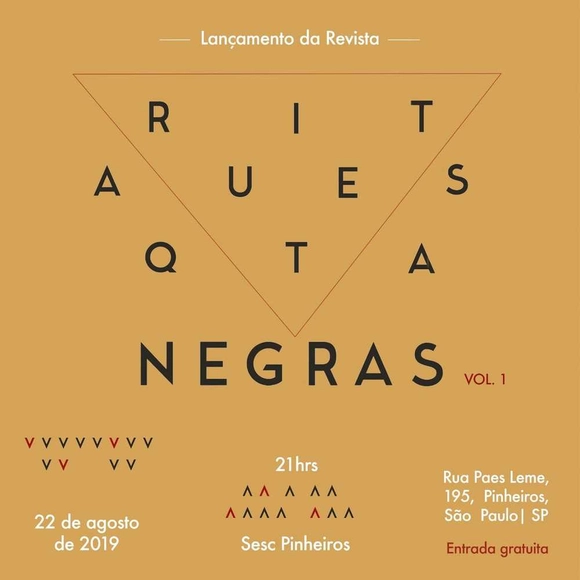
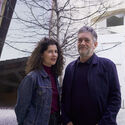
The Arquitetas Negras project emerged from the need to provide visibility to the work of Black Brazilian architects. By mapping the production of these professionals, the project is building a platform for both research and the hiring of architectural services across Brazil.
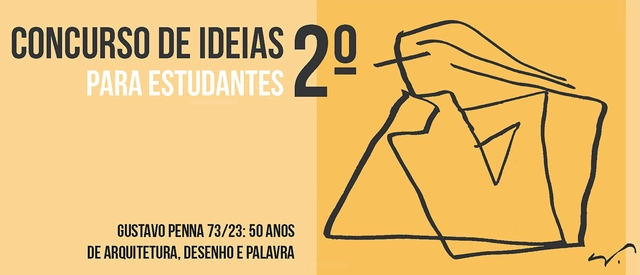
Registration is now open for the 2nd Student Ideas Competition of the Gustavo Penna 73/23 Project. In its second edition, the competition seeks to recognize the best architectural and urban design concept aimed at requalifying and redefining Praça da República and its surroundings in the heart of São Paulo, addressing local demands for the appropriation of public space, the harmonious integration of various public transport modes, and improved quality of life.
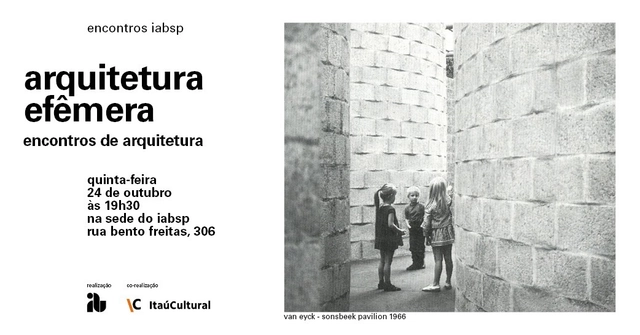
The third “Architecture Encounters” will address the theme of ephemeral architecture and public space interventions. Considering the expanding roles of architects and urban planners, this meeting aims to discuss short-term projects that impact the daily lives of the population over a brief period.
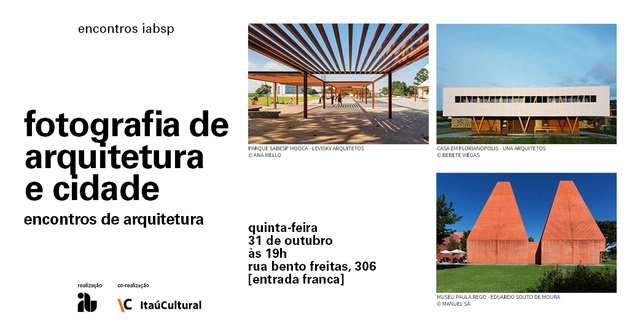
The fourth edition of the "Encontros de Arquitetura" (Architecture Encounters) will address the theme of architectural and urban photography, aiming to debate the ways in which space is represented through photography. Drawing on the contributions of each participant, the discussion will explore how differing perspectives and technical approaches result in unique narratives of the built environment.

The 12th International Architecture Biennial of São Paulo, on view at the Centro Cultural São Paulo through December 8, features the "Black São Paulo Walking Tour" in its program. The tour seeks to recover Black histories embedded throughout the city—in the center and adjacent neighborhoods—along a 3.5-kilometer route that begins at Praça da Liberdade 238 (near the Liberdade Metro station) and concludes approximately three hours later at Praça da República.

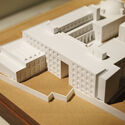
The 4th {CURA} Award continues the initiative of hosting ideas competitions centered on themes aligned with current discussions in architecture, urbanism, and society, with a focus on contemporary Brazil. For the 4th {CURA} Award, the competition theme is: Museum of Democracy.

In Brazil, little is known about the reality of Paraguay, a country with a rich culture, beautiful landscapes, and a population of approximately 6.5 million people who speak its two official languages: Spanish and Guarani.
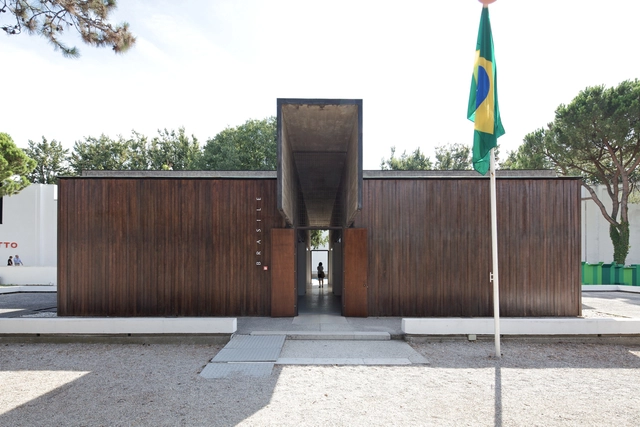
"The history of architecture is incomplete. Not wrong, but incomplete," said Lesley Lokko when announcing The Laboratory of the Future, the theme of the 2023 Venice Architecture Biennale. Echoing the curator's statement, a new study published by Studio Autonoma, led by Paulo Tavares, reveals deep disparities in representation within the Brazilian pavilion at the world's largest architecture event.
Titled Historical Census of the Brazilian Pavilion at the Venice Architecture Biennale (1980-2021), the study reveals a significant discrepancy in the profile of curators and participants over these three decades, with a predominance of white men from Brazil's Southeast region, particularly from São Paulo.
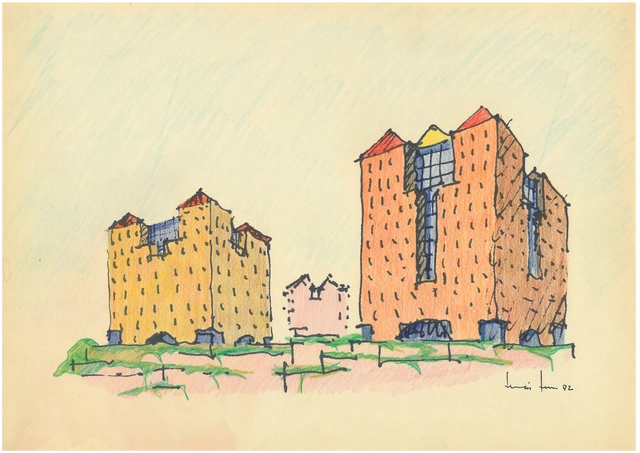
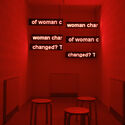
What has architecture done for democracy in Portugal—and what has the democratic era done for Portuguese architecture? These are the questions guiding the exhibition O que faz falta. 50 anos de arquitetura portuguesa em democracia [What is Needed: 50 Years of Portuguese Architecture in Democracy], organized by Casa da Arquitectura, which celebrates the fifty years since the 1974 Carnation Revolution.
Curated by Jorge Figueira with co-curator Ana Neiva, the exhibition highlights the intimate relationship between architecture and the democratic regime in Portugal, exploring how Portuguese architects contributed to democratic consolidation by transforming the country's public and private spaces over five decades.
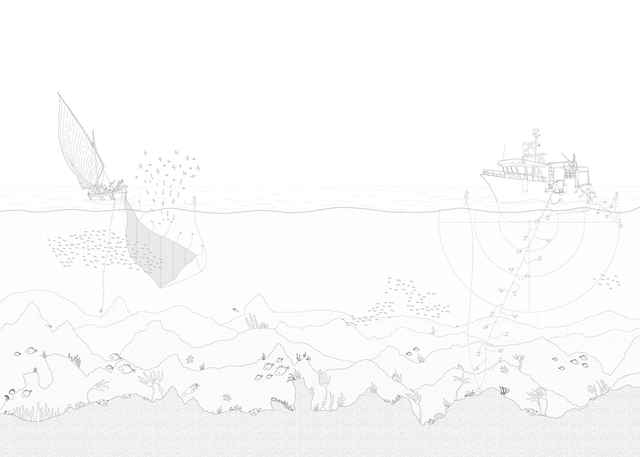
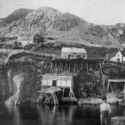
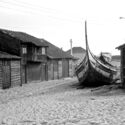
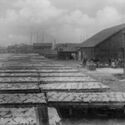
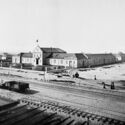
What can a cod offer to architecture? Or rather, what lessons about the environment and human settlements can we learn from the history of fishing? This unlikely question lies at the heart of the book Arquitetura do Bacalhau, by André Tavares and Diego Inglez de Souza, published by Dafne Editora and recently released in Brazil.
In the following interview, we speak with Tavares about the infrastructures linked to cod fishing and their relationship with territory, labor, and architectural production. Through an original approach—connecting architecture, ecology, fish physiology, and industrial history—, the authors propose a reading of the built environment anchored in the ecosystems that sustain it. Far from being a nostalgic look at the past, the research points to the urgency of rethinking architecture in the context of ongoing environmental transformations, showing how human constructions shape and are shaped by natural marine ecosystems.

We are pleased to announce the finalist projects for the ArchDaily Brasil 2025 Building of the Year Award. Following two weeks of nominations, the projects that received the most votes were selected from hundreds of works built in Portuguese-speaking countries. Our jury, comprised of thousands of readers, once again played a fundamental role in curating this selection, resulting in a shortlist of 15 remarkable projects.
From today until April 9 at 11:59 PM (GMT-3), you can vote once a day for the finalists—exemplary representations of contemporary Lusophone architecture. The winners will be announced on April 10.

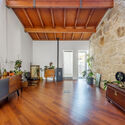
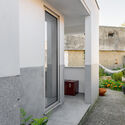
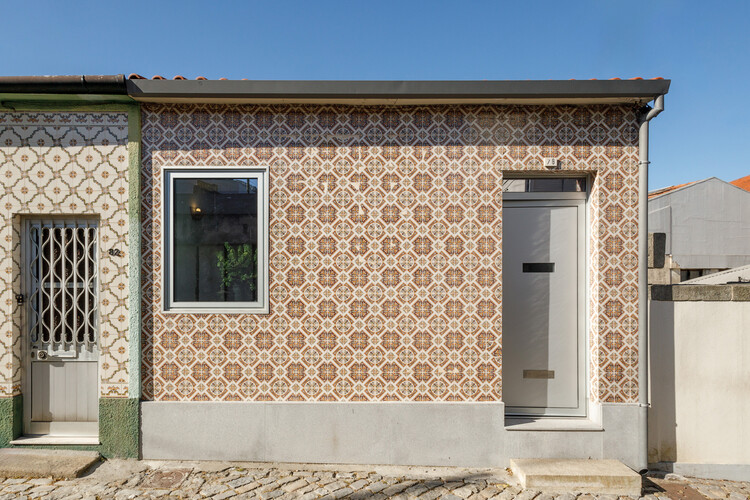
At the heart of a historic and compressed urban fabric, where time seems to settle into granite walls, ceramic roof tiles, and the tile mosaics that paint facades with memory, a narrow and deep townhouse is given a new lease on life. Casa do Carriçal—a renovation of a typical 19th-century row house lot in Porto—proposes more than a simple spatial update. It is an exercise in listening, an attempt to reconcile past and present without rigid hierarchies, revealing the transformative power of everyday architecture.
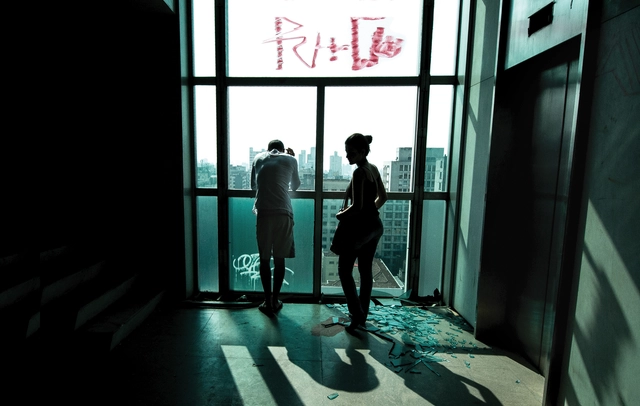
"Drinking Caracu is drinking health." This is what read on the massive blank wall of a building in downtown São Paulo on the morning of May 1, 2018. Hidden for decades, the advertisement for the famous beer brand now loomed before a massive heap of concrete, twisted metal, and shattered glass. This was the rubble to which the iconic Wilton Paes de Almeida Building had been reduced—a modernist landmark designed by architect Roger Zmekhol and the subject of the documentary Skin of Glass, directed by his daughter, Denise Zmekhol.
The film transcends traditional architectural documentation by blending a personal narrative with the political complexities of contemporary Brazil, a country shaped by deep inequalities and erased memories. At the heart of the story is the building itself, considered a landmark of Brazilian modern architecture, which collapsed in 2018 after a tragic fire.
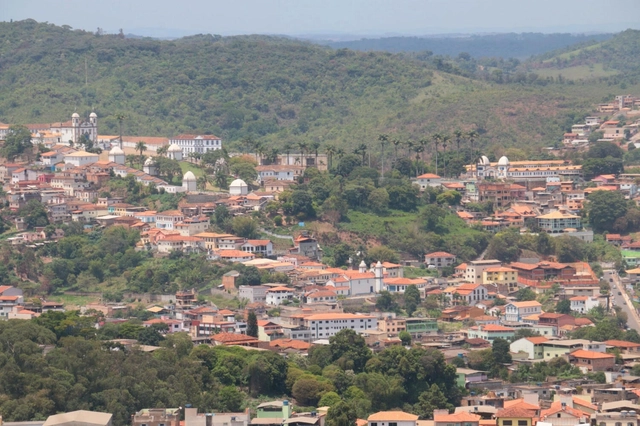
The residents of the historic city of Congonhas (MG) are invited to plan their future and participate in the development of the National Urban Development Policy through the Municipal Conference of Cities, scheduled for Saturday, June 29, at the City Council.
Designed to welcome input from different sectors of Congonhas' society, the Municipal Conference will address solutions to make the city even more inclusive, democratic, sustainable, and socially just.

Every twelve years, the banks of the Ganges at Prayagraj become one of the largest cities on Earth — and then disappear. The Maha Kumbh Mela draws over 400 million pilgrims across six weeks, requiring the construction of a full urban infrastructure: pontoon bridges, field hospitals, kilometers of temporary roads, a grid of tent cities visible from space. When the festival ends, it is dismantled entirely. No gathering in human history produces a more complete architecture of movement; built for arrival, engineered for transience, and designed to leave no permanent trace. The Kumbh Mela is exceptional in scale, but not in condition: movement has become a defining spatial problem of the century.
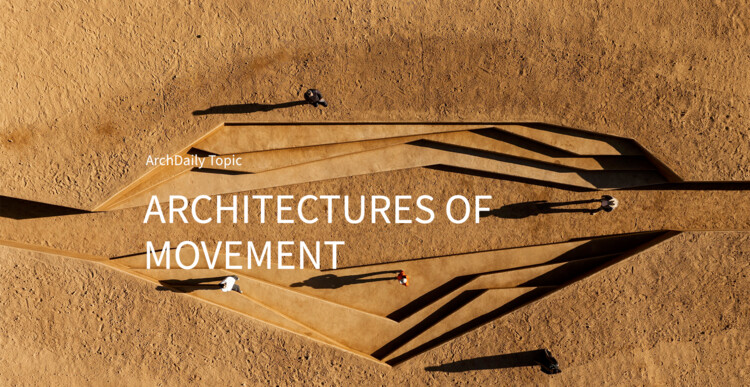
This month, ArchDaily explores Architectures of Movement: Land, Borders, and the Politics of Belonging, a theme that examines how mobility reshapes architecture's relationship to territory, ownership, and identity. The topic does not treat movement as a crisis to be managed, but as a fundamental lens through which to reconsider what buildings, cities, and borders actually do: who they accommodate, who they exclude, and what they make permanent.

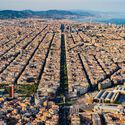
Barcelona is the first city in the history of the UIA World Congress of Architects to host the event twice. The 1996 edition, Present and Futures: Architecture in Cities, arrived at a charged moment, when the post-Olympic city was consolidating an urban model that would become one of the most studied and contested in contemporary urbanism, and when architecture was learning to think through the large metropolis as its primary site of inquiry. Thirty years later, the same city reopens the question under a different condition: one in which the built environment can no longer be understood as a self-contained object, but only through the wider ecological, material, and political systems that sustain it. The theme of the 2026 Congress — Becoming. Architectures for a Planet in Transition — does not abandon the urban concerns of 1996; it reopens them from a planetary scale.
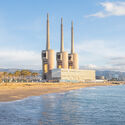
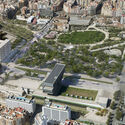
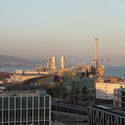
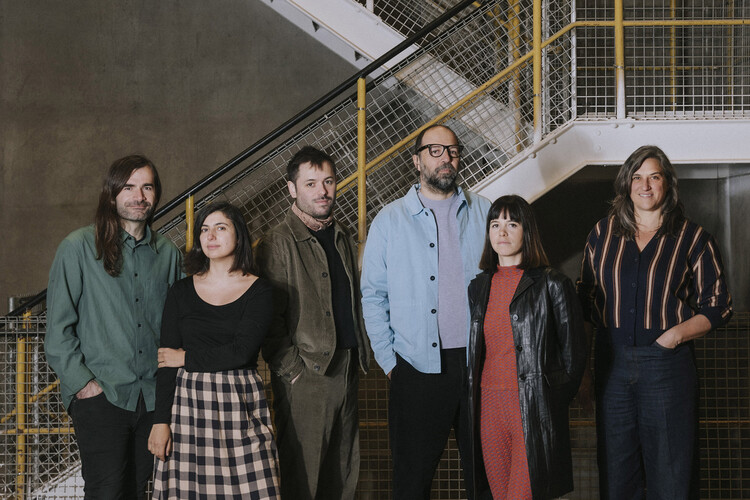
The curatorial team behind this edition, formed by Pau Bajet, Maria Giramé, Mariona Benedito, Tomeu Ramis, Pau Sarquella, and Carmen Torres, approaches architecture as a critical and transformative tool rooted in territory, working across practice, research, and teaching. Their program structures the Congress around six interconnected thematic lines (Becoming More-than-human, Becoming Circular, Becoming Embodied, Becoming Interdependent, Becoming Hyper-Conscious, and Becoming Attuned) and distributes it across three venues of very different characters — Les Tres Xemeneies del Besòs, the Disseny Hub at Glòries, and the CCIB — each chosen for what it represents as much as for what it can hold.

Western philosophical tradition has long placed culture in opposition to nature. This dual thinking has shaped the canon of the sciences and humanities, and architecture was not left aside. Under that logic, everything that is not human exists to be exploited by them and is named "natural resource". This extractivist mindset has shaped the development of many parts of the world in the last centuries, leaving deep—sometimes irreparable—marks on the planet. Nevertheless, other ways of living have always existed. From West-African religious practices based on animism to the herbal sciences of the masters of the Sacred Jurema in Brazil; from indigenous communities in India whose life rhythm mirrors the monsoons, to the Arctic's Inuits who can see dozens of shades of white: humans and nature bear no distinction, what exists is life.
Contemporary authors bring this discussion to the realms of philosophy and, more specifically, architecture. Donna Haraway, Antônio Bispo dos Santos, Achille Mbembe, and Beatriz Colomina are only a few whose work has helped expand the narrow Western perspective, shedding light on alternative ways of living together—with other humans and more-than-humans—on this planet.