RCR Arquitectes | Building Landscapes | Lisbon and Porto Lecture Series
“Construyendo Paisajes” is the title of the lecture series organized by Espaço de Arquitetura, taking place on September 23 and 24 at 9:00 PM in Lisbon and Porto, featuring the 2017 Pritzker Architecture Prize winners, RCR Arquitectes, as the guest studio.
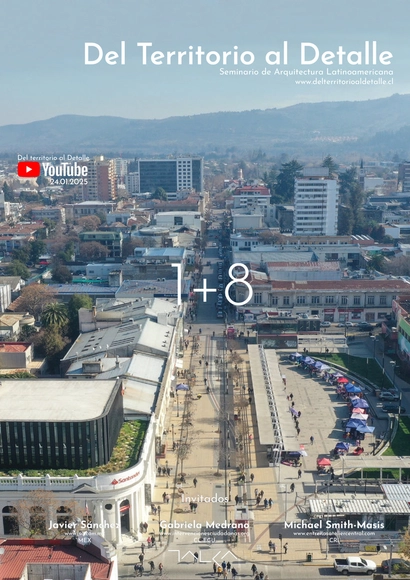
The 18th edition of the international architecture seminar "From Territory to Detail" serves as a space for dialogue and reflection, bringing together students, academics, and professionals in the field alongside renowned Latin American architects. These architects share a common trait: they balance teaching with professional practice across diverse areas, ranging from editorial work to artistic experimentation.
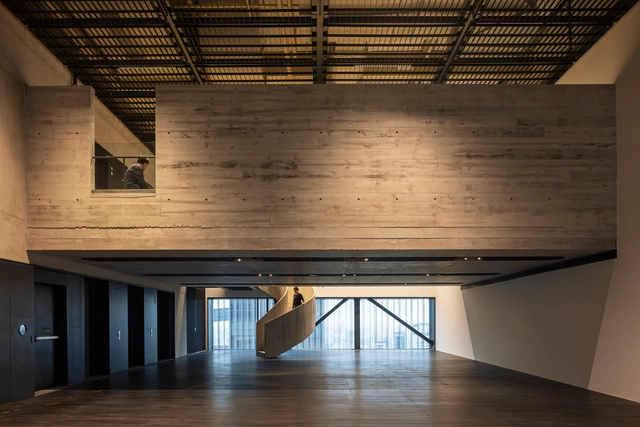
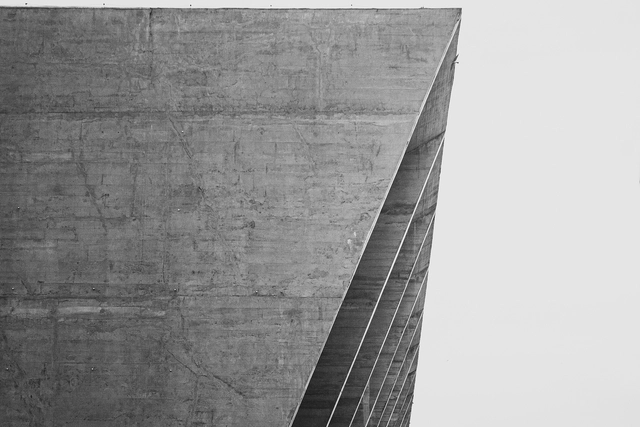
FAUUSP will host the book launch of Königsberger Vannucchi [et al.] in a session that brings together architecture and debate. The event will take place during an undergraduate class and proposes a conversation on the role of contemporary architecture in shaping the urbanity and landscape of the city of São Paulo.
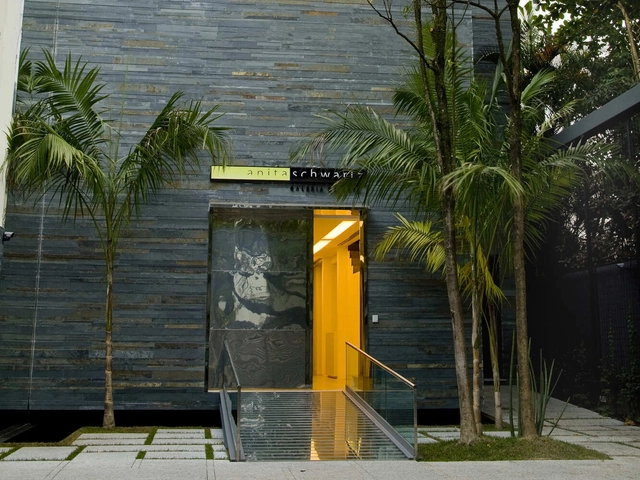
“It Is in Our Nature” and “When You See a Centaur, Believe Your Eyes” will occupy the gallery's two floors with painting and photography, starting April 9.
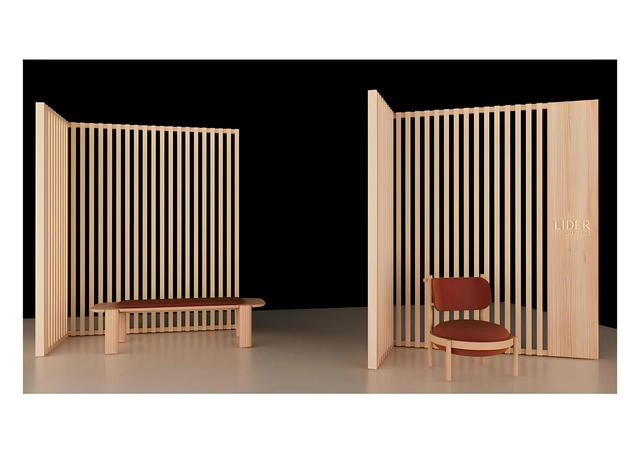
The environments offer an immersion into Lider's history, from its founding to its role as a benchmark in Brazilian signature design.
In 2025, Lider celebrates 80 years of history, establishing itself as a benchmark in furniture that blends artisanal craftsmanship with contemporary design. To mark this special occasion, the brand is presenting an unprecedented exhibition at its flagship store on Alameda Gabriel Monteiro da Silva during DW! São Paulo Design Weekend, from March 10 to 16.
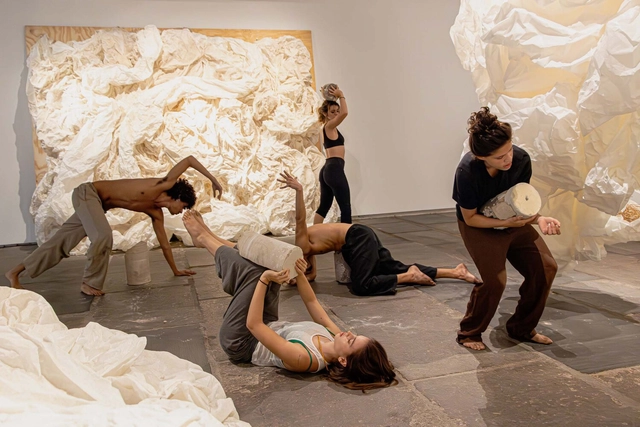
Laboratório 60 at the exhibition Fazer o ar, by Iole de Freitas, at Paço Imperial. Photo by Helena Markun
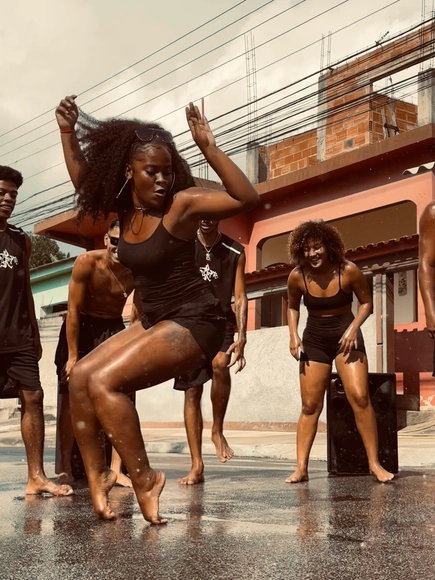
The contemporary dance group Laboratório 60 will perform this Saturday, April 5, 2025, at 4:30 PM, at the exhibition "Fazer o ar" by artist Iole de Freitas at the Paço Imperial. Composed of Bea Aragão, Bento Dias, Cecília Carvalhosa, Gil Duarte, and Ísis Lua, the group will present a new, free performance within the exhibition space, interacting with the artist's works.
UniLeão Veterinary Teaching Hospital | Juazeiro do Norte, CE | Lins Arquitetos Associados | Photo: Joana França
The 1st Seminar on Contemporary Architectures in Brazil [arq.con.br] will take place in Fortaleza, Ceará, at SEBRAE Ceará, from April 1 to 4, 2025, under the main theme HYBRID FRONTIERS. The event is organized by the Laboratory of Criticism in Architecture, Urbanism, and Urbanization [LoCAU], affiliated with the Graduate Program in Architecture, Urbanism, and Design [PPGAU+D] at the Institute of Architecture, Urbanism, and Design [IAUD] of the Federal University of Ceará [UFC], and is coordinated by professors Ricardo Paiva and Bruno Braga from the UFC Architecture and Urbanism program.
Pietro Maria Bardi Building. Photograph: Leonardo Finotti
Using fog as a metaphor, this lecture explores the increasingly immaterial and diffuse nature of our world—manifest in the translucent facades of our cities, immersive artworks, the digital clouds storing our data, the smoke from wildfires, invisible surveillance mechanisms, and the opaque operations of financial capital. The event also marks the launch of a curated course track by Guilherme Wisnik, featuring four programs focused on architecture and art. Attendees will receive a 30% discount on registration for courses within this thematic track.
Gru.a is an architecture office based in Rio de Janeiro, founded in 2013 by Caio Calafate and Pedro Varella. Their practice sits at the intersection of architecture and art, exploring how spaces, structures, and material gestures can acquire new readings beyond their function. Their architectural work, art installations, and exhibition designs are assertive assemblages where the tectonic and the conceptual find a precise balance.
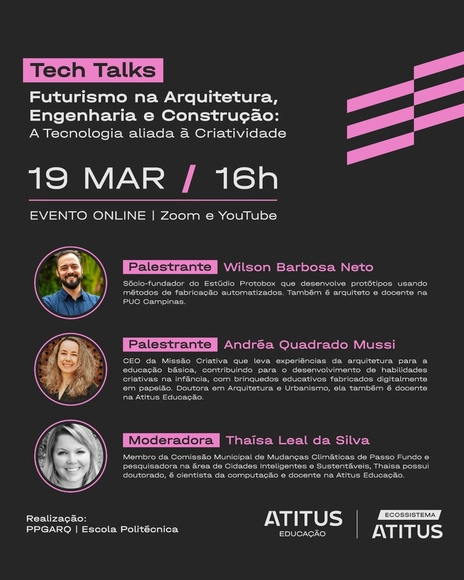
Tech Talks – Futurism in Architecture, Engineering, and Construction: Technology Allied with Creativity
On March 19 at 4:00 PM, the next edition of Tech Talks will take place, an event promoting discussions on innovation within the architecture, engineering, and construction (AEC) sector. Hosted by the Polytechnic School of ATITUS Educação, the gathering will bring together experts to explore how technology drives new creative and design possibilities.
19TH NATIONAL CONGRESS OF ARCHITECTS TO BE HELD IN LIMA FROM OCTOBER 22 TO 25 More than 800 participants from across the country are expected to attend.
The Latin American Meeting of Architecture Students (ELEA) is a space for academic, cultural, and professional exchange that brings together architecture students from across Latin America. The 37th edition will be held in Cuenca, Ecuador, as part of the 40th-anniversary commemoration of the Latin American Coordinator of Architecture Students (CLEA) and will be co-organized with ONEA Ecuador, the country's National Organization of Architecture Students. Through workshops, lectures, debates, and collaborative activities, ELEA promotes meaningful learning based on experimentation, creativity, and critical analysis, with an emphasis on sustainability, innovation, and Latin American cultural identity.
The program’s third edition will be led by DJ GrandMaster Raphael, a pioneer of funk parties, joined by MC Cidinho, MC Mascote, MC Cacau, and Duda do Borel.

![Book launch of Königsberger Vannucchi [et al.] at FAUUSP - Featured Image](https://snoopy.archdaily.com/images/archdaily/media/images/68a7/145e/5ee9/5700/013f/6e2e/slideshow/21G_1112__2___1_.jpg?1755780255&format=webp&width=640&height=580)
![1st Seminar on Contemporary Architectures in Brazil [arq.con.br] - Featured Image](https://snoopy.archdaily.com/images/archdaily/media/images/67e5/9df1/910c/d100/0174/31a8/slideshow/logo_arq.con.br_REDES_SOCIAIS.jpg?1743101448&format=webp&width=640&height=580)