For the 5th Anniversary Edition of the "Monaco Smart & Sustainable Marina Rendezvous", M3 Monaco unveils the new theme of its annual international architecture competition. Students, young architects, and professionals are challenged to imagine a new vision or rethink the development of Certosa Island's infrastructure in Venice, creating a unique dialogue that incorporates regenerative tourism, the maritime journey, the UNESCO World Heritage listing, and the context of "La Serenissima."
On the occasion of Milan Design Week, scheduled from 7th to 13th April, Brera Design District reaches its 16th edition embracing the theme of “Connected Worlds” proposed this year by Fuorisalone. The theme truly reflects the multi-faceted spirit of a district in the city which has become not only a unique brand of its kind but also an international point of reference thanks to its commercial offering and its identity, in a mix of craftmanship, art, culture, lifestyle, food and wine and hospitality. The same intertwining of interpretations and points of view, but also of colours, shades, materials and graphic signs can also be found in the project named “Horizons”: the new installation of Brera Design Apartment (via Palermo 1), curated by the Zanellato/Bortotto Studio. A design manifesto reflecting the spirit of Brera District and that develops through experiments in colours and textures applied to products and surfaces manufactured by genuine craftmanship.
For this edition, the foundation will grant two fellowships of up to €75,000 each and invites prospective fellows from around the world to apply in partnership with a host institution. The proposed courses should preferably begin in 2026 (or shortly thereafter) and revolve around the 2025 OBEL Award theme: Ready Made. The aim is to foster deeper exploration, development, and dissemination of knowledge on this key topic within the built environment.
SCIENCE AND INDUSTRY MUSEUM ANNOUNCES PLANS TO EXTEND TRANSFORMATION As the museum’s first phase of repair and improvement nears completion including the re-opening of the Power Hall in summer 2025, the Science and Industry Museum announces plans for new permanent galleries and improvements to its globally significant site. • A new Wonderlab gallery is being planned to inspire children to imagine, experiment and play like an inventor. • Feasibility work will begin this year on a new free Technicians interactive gallery for 11-16-year-olds to inspire tomorrow’s technicians. • Following extensive external repairs, feasibility work will also begin this year on a new gallery and static rail experience for the historic 1830 station (the world’s first inter-urban passenger railway and world’s oldest surviving passenger railway station) set to re-open ahead of the Liverpool-Manchester railway bicentenary in 2030. • Feasibility work will also commence in the near future on landscaping and improving access in and around the museum’s Lower Yard to enable a landmark science playground and open the museum site to connect to Manchester and Salford via Water Street and through to Aviva Studios, Liverpool Road and Castlefield. By the end of 2025, 50% of the Science and Industry Museum’s globally significant industrial heritage site will have been significantly repaired and renewed over the last five years thanks to over £40 million investment secured from national government, charitable trusts and foundations and philanthropists. A new, award-winning Special Exhibitions Gallery is originating and hosting some of the UK’s best science experiences and the Grade I listed Station Agent’s House has been restored and opened as a new holiday property for Manchester with the Landmark Trust. The Grade II listed Power Hall and public realm in the upper half of the site are set to open later this year following significant repair and improvements. Meanwhile, the historic roofs of the listed New Warehouse and 1830 Station together with the museum’s Gantry have been repaired and future proofed for the next century and beyond, along with significant work to decarbonise the site. The museum is now planning its next projects to continue to create compelling galleries that tell the story of the world’s first industrial city, open-up and celebrate its historic site with fundraising currently underway. A new Wonderlab gallery is in the planning to be one of the most spectacular, interactive science galleries of its kind. Inspiring children to think, experiment and play like inventors, it will pay homage to Manchester’s rich history of science and invention and the museum site which explores ideas that change the world. Planned to open late 2027, the museum is now seeking an architect and lead designer. An open competition to design Wonderlab opened on 21 February, with architectural and exhibition design practices invited to submit first stage tender returns by 24 March on the Science Museum Group’s Tenders website. The successful designer will be able to draw on the architectural features and history of the museum’s site, reflect the creativity and innovation synonymous with Manchester and enhance the feeling of wonder and awe for the museum’s target audiences of ages 4-10 (plus access for early years) to enjoy. Science and Industry Museum Director Sally MacDonald OBE says “Ahead of the Power Hall re-opening this summer and the completion of a mammoth amount of repair work to our wonderful historic buildings, we can now look forward to future compelling galleries that will help us tell the stories of the world’s first industrial city and ideas that change the world. It’s our mission to open the potential of the whole of this globally significant industrial heritage site - to bring all of it back into use and to celebrate it through a journey that allows visitors to explore and understand how the buildings and structures that the museum cares for connect to the collections and stories they contain. We want to create more access through the site and make the most of the museum’s outdoor spaces for everyone who lives in and visits Manchester and provide more opportunities to inspire the next generation of innovators, thinkers, creators, technicians and scientists whose ideas will continue to change the world.”
As the construction industry intensifies its efforts towards sustainability, architects and developers are actively seeking innovative solutions to reduce the environmental footprint of buildings. Trimo, a global leader in architectural façade and roofing solutions, is at the forefront of this transformation with its NEXT product range—Qbiss One NEXT and Trimoterm NEXT—which are setting new standards in sustainability. Designed to support the global shift to net-zero carbon construction, these products embody cutting-edge technology, lower carbon emissions, and high recyclability, all while delivering superior performance and aesthetics.
Leonardo.ai. AI-generated image by ZIGURAT Institute of Technology. Image :Courtesy of ZIGURAT
"We stand on the brink of a revolution in construction. The introduction of Artificial Intelligence is set to inevitably transform a sector that has, until now, been traditional and scarcely digitalized. Soon, we will witness a paradigm shift in how we approach every stage of the construction process, and industry professionals must lead the change," warns Lilian Ho, BIM & Digital Leader in AEC industry.
In a world facing resource scarcity, rapid digital transformation, and evolving societal demands, the need for dynamic dialogue between architects, designers, product developers, and manufacturers has never been more crucial. In 2025, the ICONIC AWARDS will take things further with an expanded and refreshed platform that unites architecture, interior design, and product innovation—spanning from buildings to furniture—all under one roof. The German Design Council is merging the former "Innovative Architecture" and "Interior Products" awards to create a powerful new stage for visionary ideas and groundbreaking solutions.
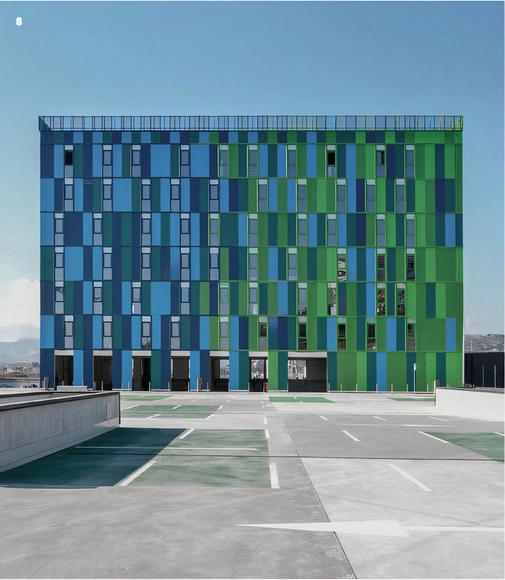
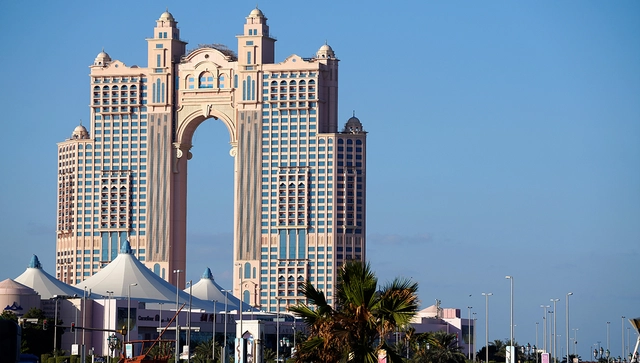
The Rixos Marina project demonstrates the perfect harmony between luxury and style using Terraco’s Terracoat Suede. Image Courtesy of Terraco
The façade of any building is more than just its exterior; it serves as a canvas that not only enhances the structure's appearance but also reflects its inner essence and character. The exterior façades category encompasses a broad variety of finishes and systems, including renders, and decorative coatings, designed to protect buildings while adding aesthetic value, blending functionality with visual appeal in perfect harmony. These finishes are crucial in defining the architectural character and energy efficiency of residential, commercial, and industrial structures.
The global exterior façade finishes and coatings industry is witnessing significant growth, driven by: increasing construction activities related to rapid urbanization and development; accelerated renovation projects; the adoption of energy-efficient building and sustainable construction practices; and the rising demand for aesthetically pleasing and durable building exteriors. It is projected to grow with a strong CAGR of 9% between 2023-2030, as per the Exterior Architectural Coating Market 2024 report by 360iResearch.
Models-Off Site Exhibition will be open for 2 days only from March 7th-8th
The ½” =1’-0” scale model has been an integral part of our design process since we started our practice 8 years ago. The scale of the model allows us to look “into” the model rather than “over” it. Looking in is like finding and the act of finding is important for design. Our primary goal of model-making is not to generate form, but to generate space. The ½” =1’-0” scale model allows us to test multiple spatial qualities: layout and section, material palette, assembly, details, and light. Testing the relationship of how these elements come together in the model allows us to make decisions. Sometimes things go well together, sometimes we see different elements require more tension. The models in Models Off-Site are a mix of in-progress models from our office, models returned from exhibitions, and models from completed projects that have been in storage. We see this two-day exhibition as an opportunity to bring models from the last 8 years of our practice together, unboxed, and in one space.
Each month, Friends of Residential Treasures Los Angeles (FORT: LA) curates a new self-guided trail, inviting Angelenos to explore the city’s rich architectural heritage. These immersive experiences highlight significant homes, hidden gems, and the designers who have shaped Los Angeles' built environment.
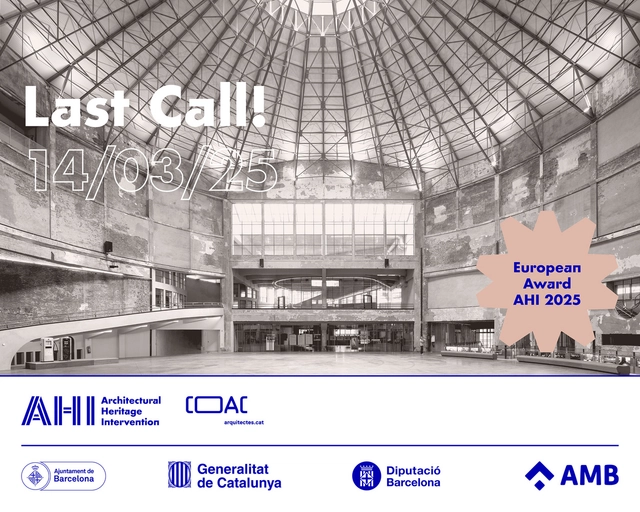
The call for the seventh edition of the European Award AHI is now open, an event that has become a benchmark for architectural heritage intervention, as evidenced by the large number of works submitted in each edition, which help shed light on the direction in which Europe is heading in this field.
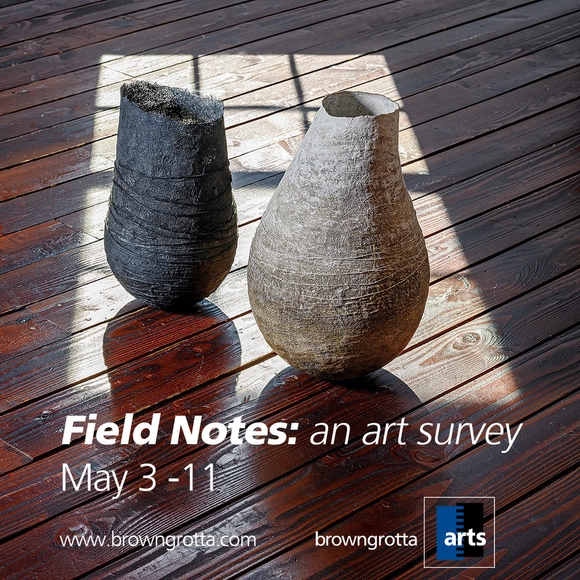
Periodically, browngrotta arts takes a look at what's happening in the fiber medium. For Field Notes: an art invitational, Spring 2025, we are checking in with artists whose work we represent, to see what's on their minds, on their looms and in their studios. We have also reached out to a few other artists who have caught our attention and asked them to submit a possible work for Field Notes. And, we'll be including rarely seen works by art textile pioneers, including Kay Sekimachi and Mariette Rousseau-Vermette, who are receiving renewed, and well-deserved, attention. Mark your calendars – May 3 - May 11 — to see Field Notes, our state-of-play survey of fiber art.
Design District is the leading annual trade event for interior design in the Netherlands. From May 21st to 23rd, the iconic Van Nelle Factory in Rotterdam is the place where professionals from the interior design industry gather to discover the latest developments in the sector, make connections, and get inspired. For 3 days, the exhibition floor is filled with presentations from the 200 most beautiful in- and outdoor brands. Design District also features exhibitions by design academies and young designers, captivating talks and provides plenty of space to catch up with colleagues. So don't miss out: Get inspirered at a meeting place for future friendships and business opportunities. #DesignDistrictNL
Often admired for its simplicity and ability to clearly communicate via scribbles on an espresso martini-stained napkin, the napkin sketch is perhaps one of the most recognized forms of creative leadership in the industry. Not only is it iconic, but this type of early-stage, iterative sketch helps to set project direction in a fast, easy, and effective way. However, the work that follows to translate that sketch into design (and ultimately win work) often robs firms of a profitable early-stage design phase.