All Things Urban London Meetup @ Google will bring together some of the coolest people in town to share their passion for urban innovation. Whether you’re an urban planner or a software engineer, a circular designer or a blockchain economist, join us at this multidisciplinary event to brainstorm the future of cities and urban professions.
BE – The Journal of The Built Environment Trust. Issue 2 ‘Wellbeing’, 148 pages, £15 PRESS RELEASE “Anyone with a taste for traditional architecture must agree that the Japanese toilet is perfection, ” writes Jun’ichiro Tanazaki in an extract from In Praise of Shadows in the new issue of BE. The second issue of BE – The Journal of The Built Environment Trust takes readers on a walk across the landscape of ‘Wellbeing’ from the aesthetic and physiological delights of the Japanese toilet, to essential texts on ‘Biophilia’ by Judith Heerwagen, and the late Oliver Sacks on the ‘Restorative Commons’, to Sarah Williams Goldhagen examining the relationship between architecture and neuroscience in Louis Kahn’s design of the Salk Institute of Biological Studies in Lo Jolla, California.
Field Office Architecture – Founder Sheng-Yuan Huang is one of the Symposium's speakers
An initiative of State Library of Queensland and Architecture Media, the 2019 Asia Pacific Architecture Forum will return to Brisbane from 13 to 26 March, 2019.
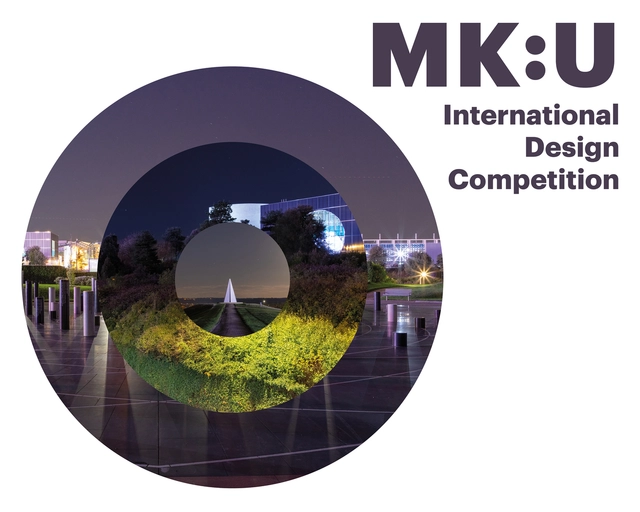
MK:U International Design Competition, images Luke Hayes
The MK:U International Design Competition seeks world-class design teams for a new model university in the Oxford to Cambridge innovation arc.
Beloved by architects as the most original and successful of the mid-twentieth century’s wave of ‘New Towns’, and famously ‘different by design’, Milton Keynes (MK) has successfully reinvented itself as a ‘Smart City’ and is a key contributor to the United Kingdom’s knowledge economy.
Description via Amazon. Aimed at architecture students and professionals, Bawa Staircases offers the reader a primer of how staircases are often the most dynamic and theatrical spatial elements of a building or landscape. It is a compelling addition to the literature on Sri Lanka's preeminent architect, Geoffrey Bawa and showcases his numerous and varied architectural and landscape designs for residential, public works, gardens and hotel architecture, with particular reference to the staircases he created. Throughout, lush photography by Sebastian Posingis and insightful texts by David Robson are accompanied by contextual shots, plans and illustrations, all illustrating this absorbing island and the work of an architectural master.
Videos
High-rise building at the railway station Friedrichstraße, Berlin-Mitte Perspective view 1921 Charcoal on tracing paper 109,9 x 77,5 cm
With this exhibition of drawings by Hans Poelzig, the Museum for Architectural Drawing in cooperation with the Architecture Museum of the Technical University Berlin present the work of an architect who, with Walter Gropius, Bruno Taut, Mies van der Rohe and Peter Behrens, was undoubtedly one of the most important German architects of the first half of the 20th century. His oeuvre was diverse as his personality was colourful: in parallel with his architecture, he painted and created stage designs and film sets. He was director of the School of Art and Design in Breslau and later taught at the Technical High School of Charlottenburg, Berlin.
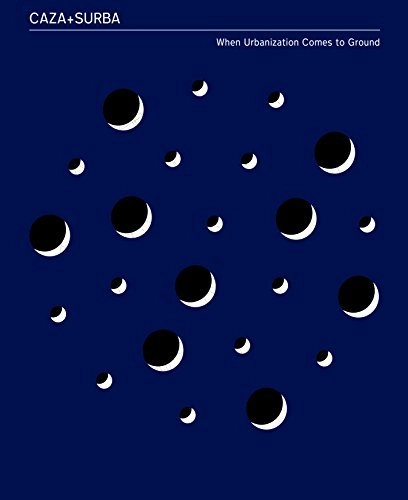
Description via Amazon. When Urbanization Comes To Ground is a collaborative research project between the Brooklyn-based architecture studio, CAZA, and think tank, SURBA, an urban research collective spearheaded by Carlos Arnaiz and Peter Rowe. Drawing upon case studies including projects in China, Colombia, and the Philippines, this book works across place, time, and culture to offer an allegorical journey into urbanization at large. When Urbanization Comes To Ground is a loosely congregated collection of essays that reflect an aggregation of encounters with urban circumstances – physical and immaterial, and structural and affective. From Robots, Utilidors, and a Brave New World to A Third Way Towards Metropolitanism and Tagging Thingness and Scale, this publication questions the role of architecture and its related disciplines in the wake of the master plan. It searches for a field guide to everyday urban life by offering palpable views into the network of relations that characterize this evolving social ecosystem. Through their collective global research projects CAZA and SURBA frame, abstract, poeticize, and render the city as a historical process, a future destination, a production cycle, and a layered landscape of overlapping phenomena. When Urbanization Comes To Ground does not attempt to cast the city in any one particular ideology, nor does it aim to essentialize or distill urban experience. Instead, this book oscillates from one rendering of urbanization to another, alternating scales and media in order to present the topic of the city and its encapsulated processes through the same phenomena that inform it.
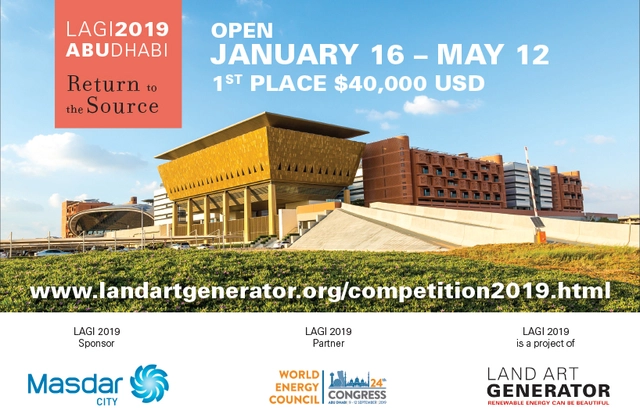
The LAGI 2019 design site is a landmark public park are within the Masdar City masterplan.
LAGI 2019—Return to the Source—invites you to create an iconic work of art for a landmark site within Masdar City, Abu Dhabi. Your artwork will use renewable energy technology as a medium of creative expression and will provide on-site energy production consistent with the master plan of the city.
Nominations are now open for the 2020 World Monuments Watch—a program that uses cultural heritage conservation to empower communities and improve the sustainability of their cherished sites. Every two years, with support of founding sponsor American Express, as well as our 2020 Watch supporters, Stavros Niarchos Foundation and the Ford Foundation, we partner with citizens, activists, and experts in the field to recognize and take action at 25 significant sites in need around the world. The result? More resilient communities, enhanced social inclusion, and new skills in the conservation field and beyond.
What does community architecture look like? Making It Happen tells the stories behind four very different examples of new or reimagined public areas. This immersive exhibition charts and celebrates the coming together of communities and architects to craft and create spaces that work for all.
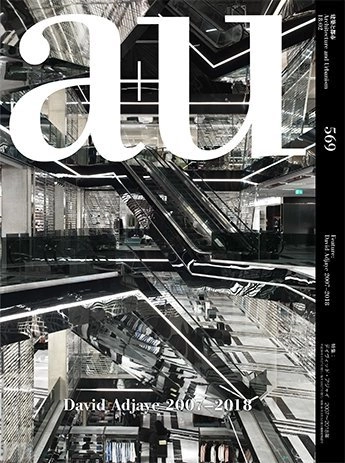
This issue follows the previous a+u monograph of Sir David Adjaye OBE (published November 2007), featuring Adjaye Associates' projects completed after 2007. You will see that the works of this London-based practice have expanded globally. The issue includes an essay by the architect himself on his approach to light and density.
Dimensions of Citizenship: Architecture and Belonging from the Body to the Cosmos, the official US entry at the recently-concluded 16th International Architecture Exhibition of the Venice Biennale, will be on view for the first time in the United States at Wrightwood 659, a new art space located at 659 W. Wrightwood Avenue in Chicago, from February 15 through April 27, 2019. Devoted to exploring the notion of citizenship today and the potential role of architecture and design in creating spaces for it, Dimensions of Citizenship comprises seven unique installations, each created by a transdisciplinary team of architects and designers.
Description via Amazon. This architectural guide brings together 100 of the most original structures built in New York City since 1999. Vladimir Belogolovsky pairs them with such nicknames as Guillotine, Peacock, Shark’s Fin, Turtle Shell, and Woodpecker. The New York-based author’s selection covers buildings realized by the world’s most renowned architects in a period when their creations were celebrated as art, and personal styles were encouraged by the media, critics, and clients. The featured time span begins with the rise of the starchitect in the late 1990s, and ends in the present day. But the mission of the book is not only to document; it is also to celebrate New York’s transformative energy. Many of the buildings were designed either by foreign architects or those who settled in the city and now call it home. Through witty, incisive commentary, catchy nicknames, and quotes from the author’s interviews with the architects, this singular guide allows readers to see many of New York’s contemporary icons in a new way.