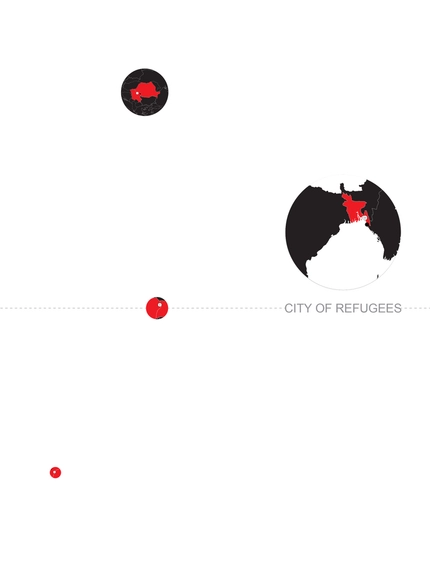
Of the 7.8 billion people on the planet, more than 70 million are now refugees and asylum seekers. With few countries willing to receive these displaced people, many refugees are restrained in tents, or makeshift cities. These temporary solutions often become permanent, which come with significant challenges. City of Refugees – a three-year research by the University of Houston College of Architecture + Design under the direction of the studio professors, Peter Jay Zweig and Gail Peter Borden – offers a provocative approach to the discussion of new solutions: Four imaginary cities on four continents were designed as prototypes for the accommodation of migrants providing facilities to meet their immediate needs and long-term opportunities for their self-empowerment. The projects not only give insights into the diverse aspects of these utopias, but also chronicles the plight and journeys of refugees in contemporary society.
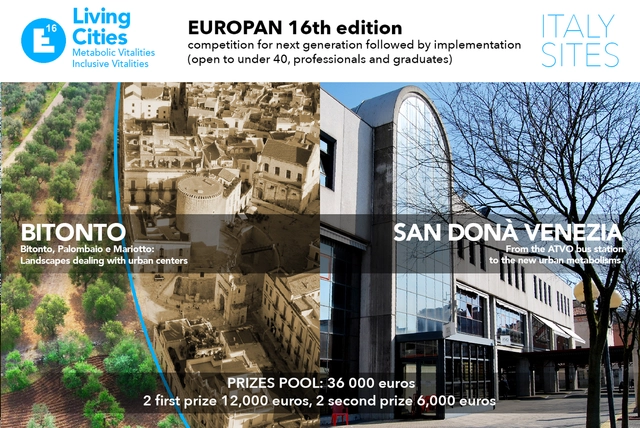
The Europan 16 topic focuses on living cities as a new paradigm, in which new kinds of synergies can be considered between the environmental, biological, social, economic, cultural and political dimensions. This paradigm leads us to think in terms of co-evolution and interactions, and to work with regenerative project dynamics, combining metabolic and inclusive vitalities. The italian cities of Bitonto and San Donà Venezia are looking for ideas to implement a strategic urban revitalization project and intend to start a process of implementation with the awarded teams.
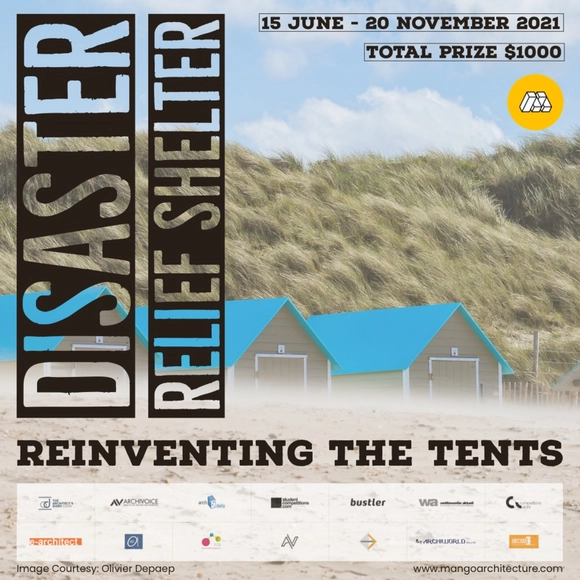
India is vulnerable, in varying degrees, to a large number of disasters. Most of us will remember the year 2020 for the coronavirus pandemic. However, while the pandemic brought our human lives to a standstill, nature could not be reigned in. Amidst the raging pandemic, India survived cyclones, floods, rains, biblical plagues, industrial disasters, locust attacks, and whatnot.
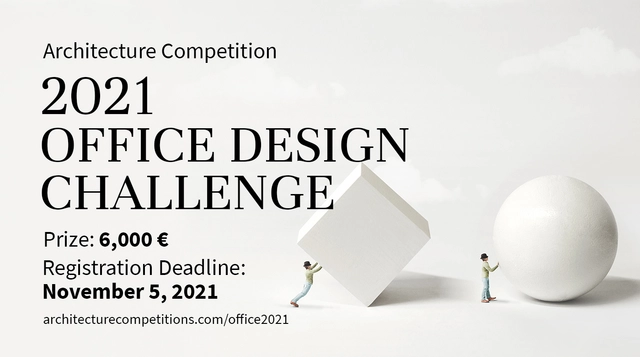
Enter the Office 2021 Design Challenge Architecture Competition now! 6,000 € in prize money! Closing date for registration: NOVEMBER 5, 2021
The modern workplace has evolved a lot over the past few decades, and the introduction of new technologies and the impact of the Coronavirus pandemic is set to completely change how we work even more in the future.
Overview: The Architerrax portfolio competition 2021 aims to provide an international platform for architecture students to showcase their designs. A portfolio is essentially a tool used to present and demonstrate one's skills. This competition identifies outstanding students who balance academic excellence with a versatility and it helps them gain recognition amongst architecture firms globally.
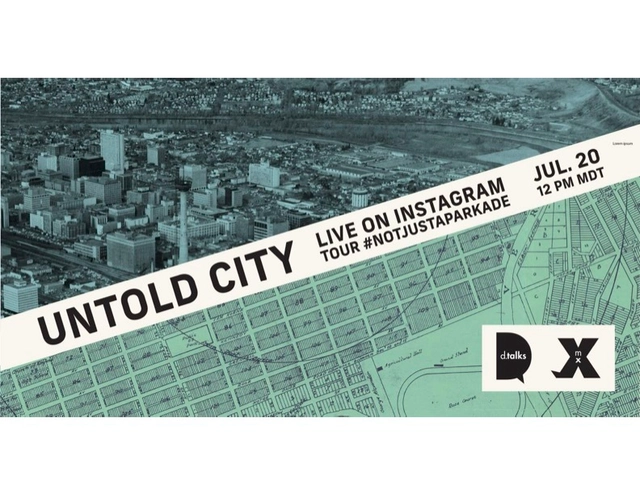
How can we design to meet today’s demand for parking in our city, while designing in enough flexibility to adapt to how we might get around in five- or ten-years’ time? We invite you to tour an innovative new building in East Village: a parkade that is designed to adapt to different uses over time.
Avani Annual Research Symposium 2021 Advisor: Ar. Bijoy Ramachandran Convenors: Ar. Meenakshi Dubey, Ar. Sebastian Joseph, Dr. Soumini R, and Ar. Thushara K
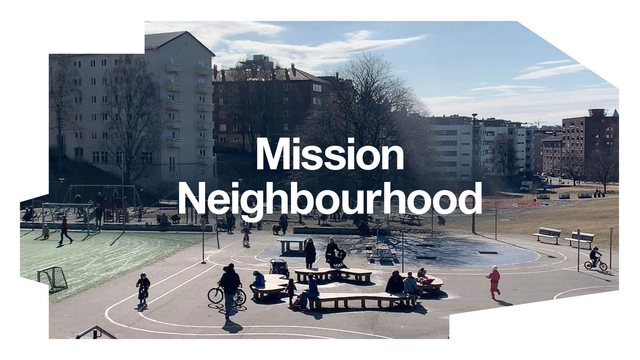
The Nordic Neighbourhood Thinking Camp is a Nordic arena to share experiences, reflections and ideas about neighborhood development and strategic urbanism.
Combining presentations from acclaimed Nordic urban practitioners and thinkers, focused workshops, symposiums and social gatherings, the camp goes beyond the celebratory pitches. The ambition is to help foster ideas and bring forward practices that make a difference in terms of social and environmental sustainability.
Future Airports re-examines the relationship between the growth of capital and the history of New York City real estate by speculating that airports play a role in the city’s financial success. What is the typology of a successful airport for the 21st Century? What role does the airport play in the context of rapid globalization and ever-expanding International logistics networks? Can the Airport become a regional economic catalyst while also creating an inspiring and novel experience for passengers? The Future Airport becomes an important infrastructural space intricately weaving New York City’s desire to maintain its leadership in global financial markets with the imminent need of improved air infrastructure and the emergence of the logistics hub as an important and growing building typology.
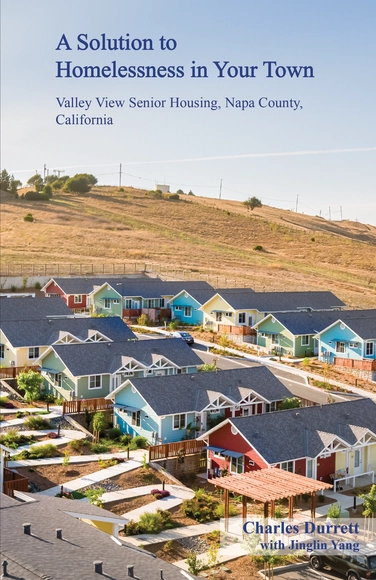
Homelessness is one of the monsters that haunts our society. Thousands of people are trying to address the challenge but fail to come up with a solution. Valley View Senior Housing, built in 2019 in Napa County, CA, is a VERY affordable community of 70 cottages. This groundbreaking homeless project was organized by American Canyon’s city government, for older homeless people and homeless veterans of the area. This solution-oriented book shares the inspiring story of a compassionate & humane project. Imagine if every city could do one community like this and we can begin to make headway to solve the homeless problem. Every city can do this! And from this we can grow to do even more.
The pedagogical experiments of the Bauhaus, imported by Gropius, Mies, Hilberseimer and others to the US system, challenged traditional Beaux-Arts thinking and played a crucial role in shaping modern architectural education. Historically, the German architectural training has been different from the Franco-Italian model. New interdisciplinary and technology-focused modes of teaching architecture and design had a long-lasting impact, however, are now again transformed by German-trained educators currently active in reshaping curricula. The conversations reveal the critical and independent thinking of this group of educators, and how they make a meaningful contribution to the discourse of architectural education appropriate to the 21st century. The book provides insight into the ways in which these German-born educators influence architectural and design education in the United States to this day.
The book focusses initially on the philosophical, artistic, and scientific forces that impacted on the humanist of the late Medieval and Renaissance period, profuse in the exchange of ideas and discovery. Behind much of which was the impact of Dante’s Divine Comedy with a message which continues to reverberate through the centuries. What has also persisted is the perpetual tension between science, religion, and design because of their perceived contradictions. The book explores how we might gain inspiration and motivation to embrace a consistent artistry and sense of exploration in the face of an ever-expanding knowledge-based frontier.
For the fourth time, the Lisbon Architecture Triennale presents the Début Award to an architect or a practice in order to celebrate their achievements and stimulate their career.
Our Voices II: the DE-colonial Project will showcase decolonizing projects which work to destable and disquiet colonial built environments. The land, towns, and cities on which we live have always been Indigenous places yet, for the most part our Indigenous value sets and identities have been disregarded or appropriated. Indigenous people continue to be gentrified out of the places to which they belong and neo‐liberal systems work to continuously subjugate Indigenous involvement in decision‐making processes in subtle, but potent ways. However, we are not, and have never been cultural dopes. Rather, we have, and continue to subvert the colonial value sets that overlay our places in important ways.
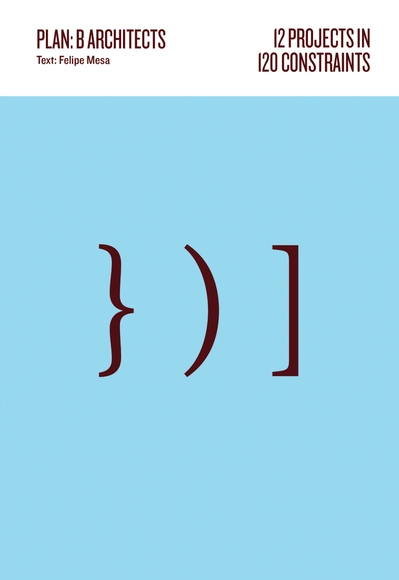
12 Projects in 120 Constraints reviews a set of Plan: b projects in Colombia through the environmental, social, and voluntary constraints the projects faced, and the interim agreements built around them. The book details a reconstruction of these buildings' central facts through an "inverse" exercise — explaining each project based on contextual constraints rather than singular architectural ideas. As a prelude to the projects, the book examines other authors' work and how they understand the limitations and difficulties that are part of their creative activity. This revision generates a broad reflective base to approach the architectural projects and the predominant role that restrictions have played in them.