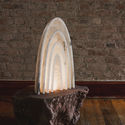
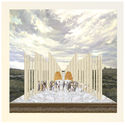
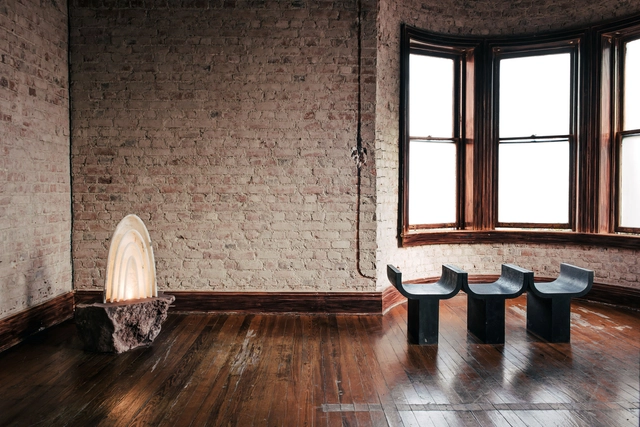
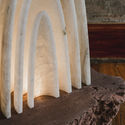
The Mexico City-based design studio, founded in 2017 by Manu Bañó, Age Salajõe, and Héctor Esrawe, has launched its new piece titled “Aura,” a lighting fixture that continues the studio's exploration of religious elements, objects, and places of worship in Mexican culture. Following this approach, the piece emerges as an aura built from four geometric, half-moon shapes that evoke the arches of colonial-era altars and churches.
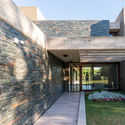
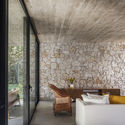
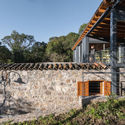
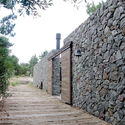
Historically, stone materials have offered ancient cultures the ability to build robust structures by interlocking stones of various shapes and sizes. The simplicity of the technique and its ability to deliver efficient, durable results have sustained the transmission of this construction method over time, enabling multiple contemporary architectural variations and reinterpretations.
In the daily routine of our conventional workday, we are influenced by many distractions that affect productivity, which have already become routine. However, now that we no longer lose time commuting and are restricted to activities we can do at home, we manage our time with more holistic priorities.
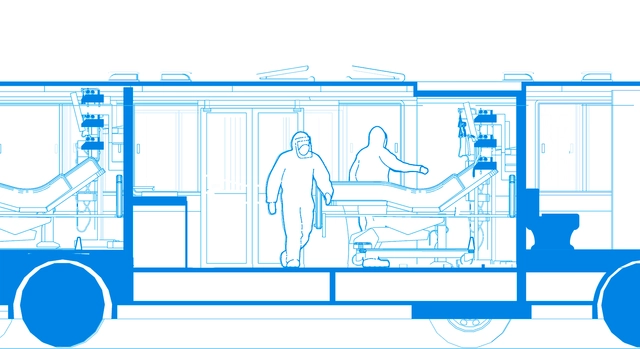
The Bogotá-based firm 57Uno focuses its practice on sustainability and has now channeled its creativity toward resilience and adaptability through Arquitectura en Tránsito (Architecture in Transit). This proposal aims to address the health emergency caused by COVID-19 by repurposing decommissioned buses from one of the primary contributors to poor air quality in the Colombian capital.
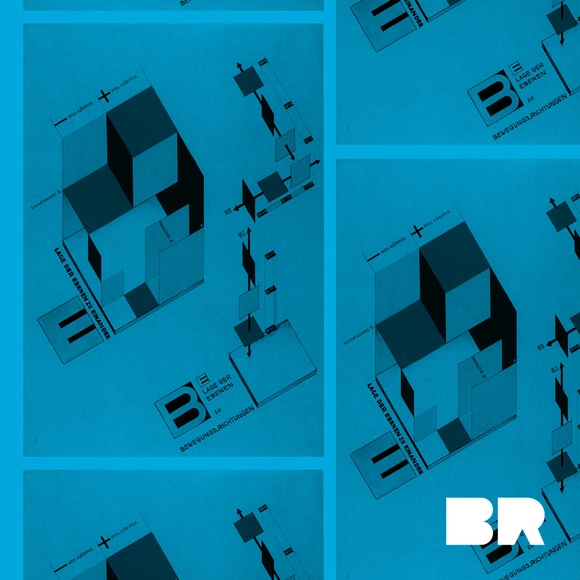
Beginning this April 30, a series of talks, workshops, forums, exhibitions, conferences, and other events will explore the legendary Bauhaus school and, in particular, its impact on Latin America. Due to current circumstances, several of these sessions have been redesigned to take place online.
When choosing the structural system for a house, several priority factors dictate the decision, with time and money being two of the most critical. While steel structures may not always be the most economical option, their prefabrication significantly accelerates construction times and, consequently, optimizes the overall budget. Moreover, they contribute to the project's aesthetic, providing lightness and a contemporary character.
This article is a contribution from the Medellín-based firm El Taller de Arquitectos, who share their experience in structuring their practice by understanding and approaching architecture competitions as commissioned projects. Read on to explore their insights.
https://www.archdaily.com/1123680/el-taller-de-arquitectos-how-to-approach-architecture-competitions-as-commissions-in-colombiaEl Taller de Arquitectos
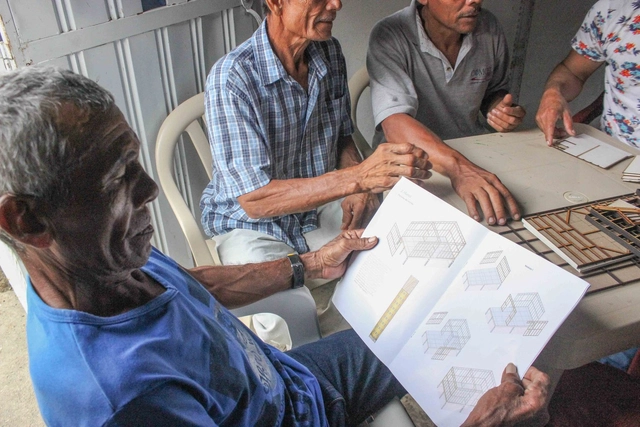
Social housing is one of the most compelling topics for our readers, representing a systemic challenge across most of Latin America. In Colombia, this challenge is even greater when it comes to rural social housing (known as VISR in Spanish), as inadequate infrastructure hinders dignified coverage throughout the country.
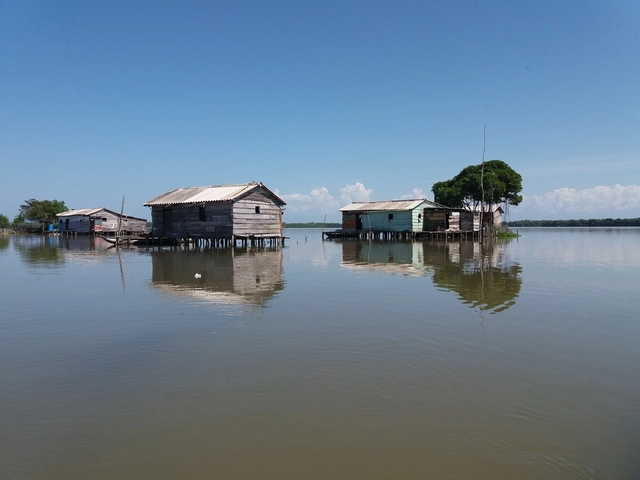
Stilt settlements have existed throughout the world wherever populations sustain their lives through constant interaction with water. In Colombia, the settlements of the Ciénaga Grande de Santa Marta, in the department of Magdalena, are a local benchmark that has endured since pre-Hispanic times. Today, these are informal dwellings, unrecognized in the official land registry. The Pontificia Universidad Javeriana and AGRA have shared their research, compiled in a book that supports the documented formalization of these dwellings using architectural representation standards, specifically by identifying the typologies of Nueva Venecia.
"Las Tres Esperanzas [The Three Hopes] are three constructive actions that make up the educational space where not only children and adolescents were and are shaped, but where we also formed ourselves as architects." These engaging opening words already reveal a journey which, as the result of a sequence, demonstrates that the threads of events are too complex to weave and understand from a single point of view.
For this reason, the sequence of diverse perspectives organized in this new book presented by Al Borde is so significant. It highlights not only a process—and a series of parallel events—but the singularity of a construction. It stands as testament to both the complexity, timeline, and unforeseen events, and the collaborative efforts, learning, and lessons that come with creating a work of architecture.
The following article proposes rethinking architecture in social housing in Colombia. Natalia Carrero Rojas and Pablo González delve into the subject as educators and through their practice 57Uno, where they constantly balance high-quality housing with real estate viability.
https://www.archdaily.com/1123726/57uno-strategies-for-the-design-of-sustainable-social-housing-in-colombiaNatalia Carrero Rojas y Pablo González
Students from the Barcelona School of Architecture are organizing a live-streamed architecture lecture series, featuring both local and international guests, to reflect on quarantine, confinement, freedom, repression, and viruses.
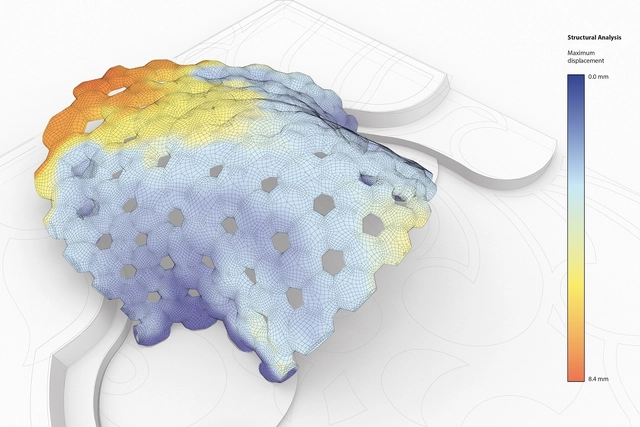
Structural analysis. Image Courtesy of Oliver Krieg
When we think of architectural visualization, sketches, drawings, and 3D renderings usually come to mind. This association is natural, as "visualization" is typically equated with imagining a project before it is built—whether to validate aesthetic and functional decisions or to communicate concepts to clients unfamiliar with technical drawings. However, beyond superficial elements like materials, layouts, textures, and colors, architects must also address highly technical, invisible factors that directly impact a building's performance.
We may still have a long way to go when it comes to addressing the diversity of flora and fauna in urban habitats, yet it is incredible how fast, easy—and even fun—the architecture that makes this possible can be.
In practice, how are we promoting spaces for animals and plants in our cities?
The state of Puebla is located in the central highlands of Mexico, bordering the states of Tlaxcala, Hidalgo, Veracruz, Oaxaca, Guerrero, Morelos, and the State of Mexico. Covering an area of 34,251 km², it is one of the country's most densely populated states. Its capital is Puebla de Zaragoza, and it is one of the leading landlocked states for tourism, featuring 9 "Pueblos Mágicos" (Magical Towns) and 3 UNESCO World Heritage Sites.
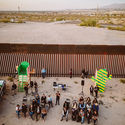
Located on the Mexican border as the southern gateway to the United States, Ciudad Juárez encompasses a territory that blends multiculturalism, migration, and resilience. Together, these elements form a phenomenon of hybrid roots that, over decades, has shaped “border culture.”
Climate Care – A Curriculum for Urban Practice was a 10-day public program curated by Gilly Karjevsky and Rosario Talevi for the Floating University in Berlin. Climate Care explored the correlations between the environment, urban practices, and education, constructively addressing not only environmental climate challenges but also scrutinizing the complex social, political, and economic climates that surround us today.
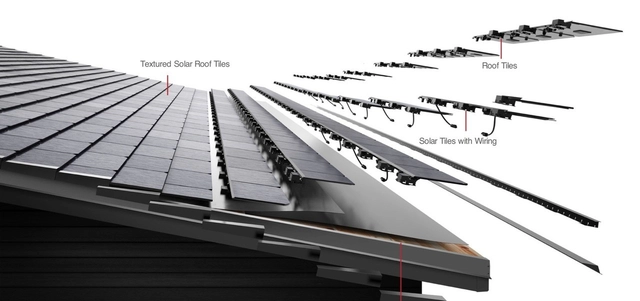
Solar tiles work on the same principle as the photovoltaic panels widely used in architecture. The main difference lies in their installation: while photovoltaic panels are mounted on top of an existing roof, solar tiles are integrated into the roof structure from the very beginning, replacing conventional roof tiles.
These tiles are composed of photovoltaic cells. When they absorb sunlight, they generate an electric field that provides electricity to the building's interior. Each tile is connected by cables to a power distribution board.
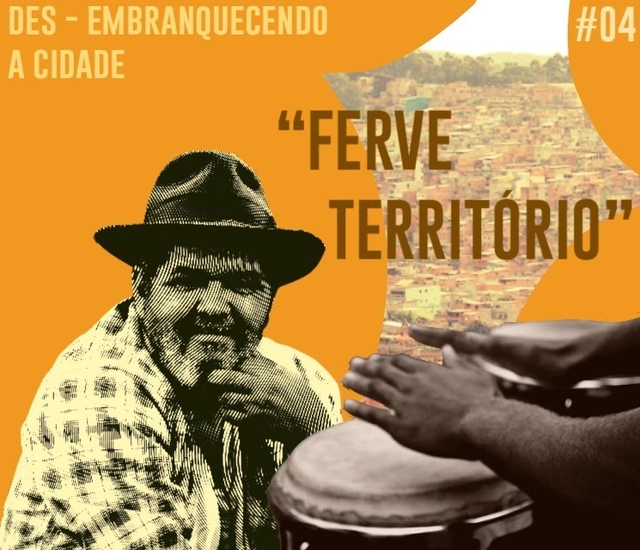
The Terra Preta Cidade collective is a space created from the desire of five Black women living in Salvador, São Paulo, Rio de Janeiro, and Belo Horizonte to bypass geographical distance in order to promote and celebrate coming together. Emmily Leandro, Gabriela Gaia, Luciana Mayrink, Malu de Barros, and Natalia Alves give shape and voice to this exercise of creating a shared virtual territory—which is as much a political statement as an aesthetic one—through the podcast Des-embranquecendo a Cidade, which reaches its fourth episode with the theme: "Boiling Territory — Permanent Steadfastness."
https://www.archdaily.com/1123679/de-whitening-the-city-number-4-territory-boils-permanent-steadfastnessTerra Preta Cidade
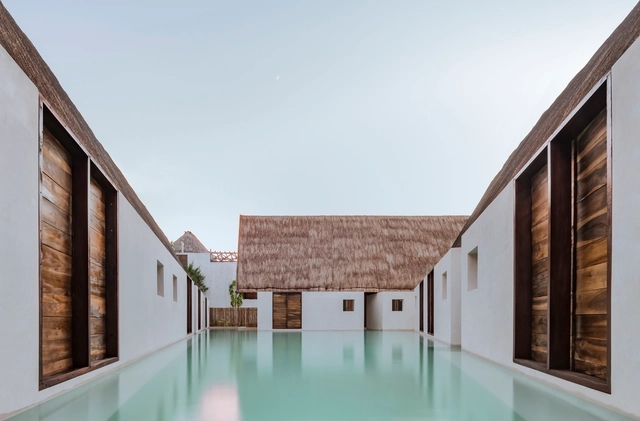
One of the most important factors in design is the site's specific climate. This can pose a challenge in extreme weather, where insulating materials are required to adapt to changing conditions. However, in the case of Mexico and its privileged climate, this factor works to the architects' advantage, allowing them to create microclimates and spaces that blur the transition between indoors and outdoors.
Throughout the history of architecture, representation has always played a vital role; it is the very birthplace of a project. Over time, prominent architects have stood out precisely because of their style of representation. Examples include Viollet-Le-Duc, whose drawing style brought to light the restoration of several historic buildings in Europe, and Le Corbusier, whose famous sketches were anything but beautiful yet managed to convey the essence of his projects.
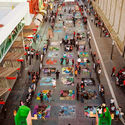
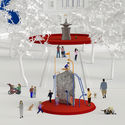
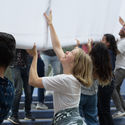
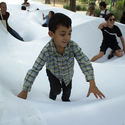
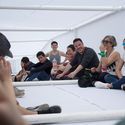
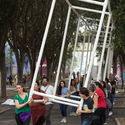
Horizontal Monuments is a participatory intervention carried out at Plaza Juárez in Guadalajara, Mexico. The project began with the construction of a 1:1 scale replica of the obelisk located in the plaza, placed on the ground and shifting its materiality, turning this monument into a malleable and accessible object. This shift sparked a central question: what should be done with it? This question triggered a series of discussions that transformed into actions; students and local community members gathered to give voice and form to the ideas emerging from the transformation of the object. The work was conceived as an educational project to imagine alternative models of monuments capable of addressing the demands and possibilities of specific sites. Its development led to a series of collective actions described below.
https://www.archdaily.com/1123752/horizontal-monuments-a-participatory-intervention-in-guadalajara-mexicoArchDaily Team
Originally published as "Caminando hacia la descolonización urbano-arquitectónica" in the third edition of Revista CLEA—an annual publication of the Coordinadora Latinoamericana de Estudiantes de Arquitectura (CLEA)—this article presents an introduction to the decolonization of spaces as a political, social, and methodological critique of the territorial, urban, and architectural praxis that has become established in our cities.
This article is part of a collaboration with the website coolhuntermx. It was originally published on February 2, 2020, under the title "Un parque moderno para Guadalajara" and written by David Lozano Díaz.
In 1971, architect Fernando González Gortázar, at 29 years of age, was commissioned to build González Gallo Park. This commission served a dual purpose: to commemorate the late former governor José de Jesús González Gallo and to provide a substantial new public space for the developing neighborhoods in eastern Guadalajara.
Photo by Fernando Stankuns on Visualhunt / CC BY-NC-SA
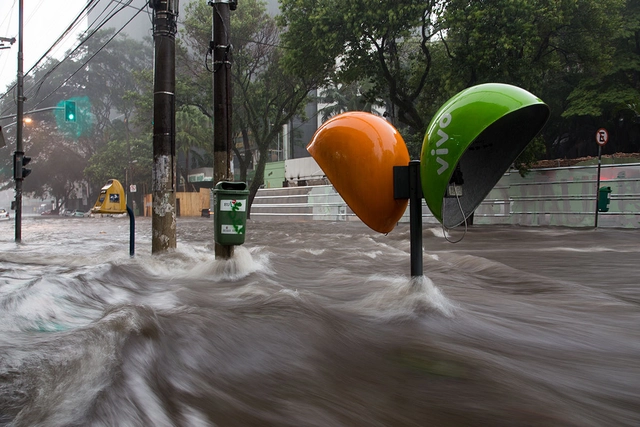
Recent floods in Belo Horizonte and other cities in Minas Gerais have alarmed residents. Videos showing the force of the torrents dragging cars and toppling structures shocked the entire country. This state of emergency was not confined to Minas Gerais. Much of the Southeast faced heavy rains, causing widespread disruption. In Espírito Santo, for instance, more than 5,000 people were forced to leave their homes, while São Paulo was placed on high alert for flooding. Meanwhile, in Rio de Janeiro, an algae bloom in water sources led to the opposite extreme: a water crisis triggered by the poor quality of the water reaching people's taps.
https://www.archdaily.com/1123688/natural-infrastructure-can-prevent-disasters-like-the-floods-in-minas-gerais-and-sao-pauloWRI Brasil
.jpg?1592952477 "© Pilar de Ario")