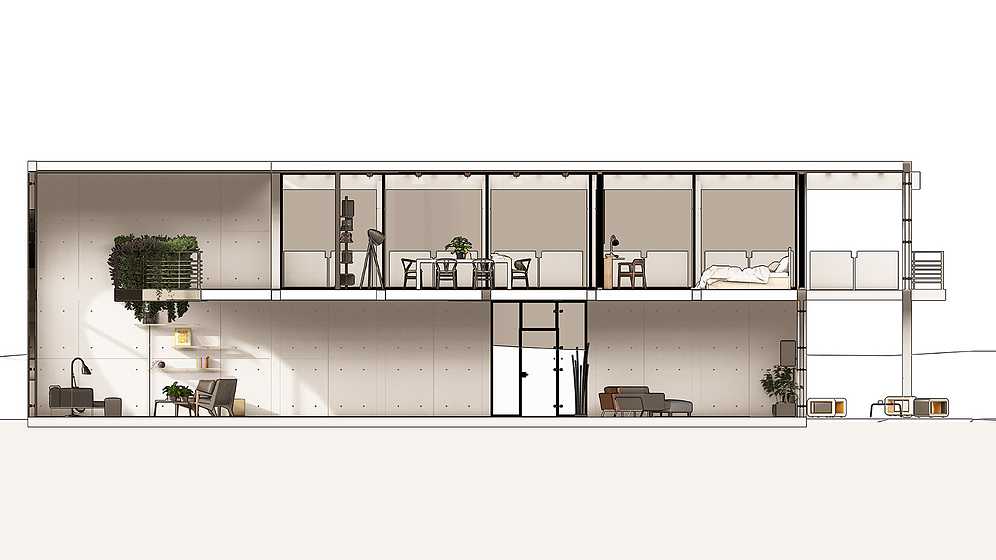
Produce personalized presentation boards that distill complex concepts into simple visual representations with a few helpful tools and effects.


Produce personalized presentation boards that distill complex concepts into simple visual representations with a few helpful tools and effects.

Debate continues on the design for the Glasgow School of Art by Steven Holl Architects in collaboration with Glasgow based JM Architects. Last month William J.R. Curtis shared his critical thoughts on the new extension, referencing the diagrams by Holl as ‘cartoonlike’, the surface choices of glass ‘monotonous’, and the external volumes as ‘clumsy’. As we all know architecture is subjective and debate should be welcomed, hopefully resulting in a smart discussion focused on providing the best design solutions for a project. A critique of an extension to a building with such importance as Charles Rennie Mackintosh’s Glasgow School of Art, a design that masterfully manipulates light into spaces and skillfully the nature of different materials, is expected. However, this review almost seemed personal and a bit uninformed. Curtis, during his critical rant even asks “where was the client during these intervening months?” referring to the initial announcement and presentation of Holl’s winning design and then later released drawings.
Continuing, “The unsatisfactory state of Holl’s proposal perhaps reveals what may happen when a star architect drops in from another planet and blinds a building committee with the “smoke and mirrors” of popularized phenomenology. Some good old Scottish common sense would have been in order to insist on greater rigor and a more appropriate response to the context.”
Holl took time to respond to Curtis’ article stating, “We welcome criticism as long as it’s based on an accurate understanding of our design. Unfortunately William Curtis’ article is not knowledgeable about our design,” and Holl also shares specifics about both the design material choices for the new extension (his full response following the break).

The Academy of Art University, the nation’s largest private accredited art and design university, has announced the addition of the School of Landscape Architecture.

Columbia University Graduate School of Architecture, Planning and Preservation (GSAPP) will launch Studio-X Rio this week with Dean Mark Wigley in attendance. Studio-X Rio is GSAPP’s global network of advanced research laboratories for exploring the future of cities. With locations in Amman, Beijing, Moscow, Mumbai, New York, and now Rio de Janeiro, it is the first truly global network for real-time exchange of projects, people, and ideas between regional leadership cities in which the best minds from Columbia University can think together with the best minds in Latin America, the Middle East, Africa, Eastern Europe, and Asia.

The master plan for the 2014 Youth Olympic Games in Nanjing, China has been awarded to Populous, whose designs of special event include Olympic Games, World Cups and Super Bowls.
The winning master plan for the international competition will see over 3 million square meters (320 million square feet) of built space added to the city of Nanjing including Olympic sports venues, exhibition centers and athlete’s accommodations. The Populous plan includes public buildings that will be illuminated like lanterns for the Youth Games.
More images and complete press release after the break.

Ivan Filipivoc has shared with us this preliminary project for a crafts center in Zagreb, Croatia. Deriving its inspiration from one of the oldest crafts – blacksmithing, the architecture bears a strong symbolism to this act of making.
More on the project after the break.

Already mobilizing teams in Tokyo, Osaka and Kyoto, Architecture for Humanity has begun to initiate an immediate response to the Sendai earthquake and tsunami. Currently AFH is searching for individuals to join a coalition to update foreign nationals in Japan with the latest information regarding unfolding events (currently being done via twitter #honyaquake).
The Green Building, designed by (fer) studio, reached a LEED Platinum status through a series of innovative processes. As the first LEED adaptive re-use project in the state of Kentucky they reclaimed much of the building. This video post details the process of re-milling the original building’s structural wood into finished flooring and furniture.

BHDP Architecture, lead by Giancarlo Del Vita, Design Leader in the firm with offices in Columbus, Cincinnati, and Raleigh-Durham, and included Mike Schulte, and Chris Wiethe, was commissioned to design a foot-bridge in Lucca, Italy. The bridge was intended to solve pedestrian and vehicular access to the proposed mixed-use development of an abandoned industrial site, the Ex-OfficineLenzi.
More on this project after the break.

In the Spring 2010 academic semester, Wiel Arets and Robert McCarter co-taught “A Wonderful World,” an advanced architectural design studio at Washington University in St. Louis. The students were asked to consider the following:
To understand the world we are living in at this moment, we have to redefine the “Map of the World,” a mental construct which at least since 1492 has undergone many reinterpretations. We could read the world anno 2020 as a collective living space for all of us, in which all the continents are in reach within 288 minutes, and the maximum travel distance at each continent will be 72 minutes, the time in which every city on each continent will be able to be reached. During the studio research, the world will be our territory, the continents are our daily living space, and the metropolitan three-dimensional city our home, surrounded by an untouched green/blue environment. The basic question we should put forward is: How will the city develop within our extremely exciting, complex, but “shrinking” world?
Washington University in St. Louis shared with us work from the studio. Follow the break for a description and drawings.
Students Featured: Andrew Buck, Shaun Dodson, Stephen Kim, Meredith Klein, Wai Yu Man, James Morgan, Aaron Plewke Images: Courtesy of Washington University in St. Louis
We also suggest you look at how students responded to the same questions proposed by Wiel Arets at the Berlage Institute Postgraduate Research Laboratory “A Wonderful World” class.
Our friends at goodweather are working on a documentary and an exhibition about the Vancouver-based architect Daniel Evan White. His work will be featured in a major retrospective upcoming at the Museum of Vancouver on February 2012. There’s a trailer for the documentary now that we want to share with you. See more about Dan White right here.

Producing an image between the real and the virtual, the Emile Rassam Building, by architect Paul Kaloustian, becomes a statement of identity in Dekwaneh, Beirut, Lebanon. Through its materiality, a sense of disappearance is generated by the envelope which becomes an active instrument that reflects the changes in weather and light conditions. More images and architect’s description after the break.

Foster + Partners’ City Park proposal has recently been selected for the 40-hectare masterplan for West Kowloon Cultural District. Since this past August, we have been sharing the three competing shortlisted projects – OMA’s Three Villages, Rocco Design Architects’ Cultural Connect, and Foster’s City Park – and your comments have sparked great discussion concerning the advantages and disadvantages of each. The selection process for the cultural district was quite unique as the three projects, that were selected from 12 proposals, then entered a public consultation exercise. For three months, the people of the West Kowloon district had the opportunity to review and comment on the projects, which then had a strong impact on the panel’s final decision.

“From the point of view of Physycs, right now we don’t know what energy really is. We have no evidence that energy comes in small quantities, like drops. What we do know is that all matter is energy in repose and that energy is manifested in lots of forms that are interrelated by numerous mechanisms of conservation.”
Richard P. Feynman, Feynman lectures on physics
We are all concerned about energy. But when trying to understand all the implications of the energy in our daily life, we rarely go beyond our spending on electricity bills. If you are an architect or engineer it is possible that you pay special attention to this subject while adapting your projects to current standards.
Imagine a vibrant, connected and green Kansas City region. Highlighting local communities, Imagine KC discuses how members of the community are working together to provide a more sustainable and vibrant place to live, work and play. Episode 2: Energy Efficiency and Conservation aired in January and is the latest of the 12 part series from Kansas City Public Television.
Tune in March 24th at 7:30 p.m. for Episode Three: Quality Places and Vibrant Centers. More information about Imagine KC following the break.

Four amazing kindergartens from Europe and one from South America. Check our sixth selection of previously featured kindergartens after the break.
Monthey Kindergarden / Bonnard Woeffray Architectes Monthey’s new kindergarten is located in the town’s Cinquantoux Park and replaces the former villa that had become obsolete. Conceived as a large house for children, the venue assumes an almost organic shape that merges with the wooded park and offers a range of interior spaces. Following the same logic is its composition of volumes topped by a roof composed of gently slanting sections (read more…)
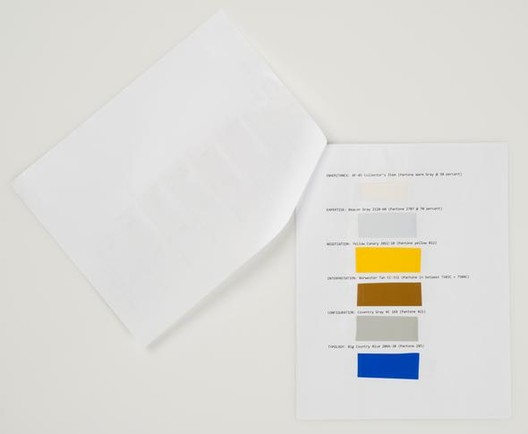
The CCA is launching new curatorial opportunities: the Young Curators Program and the Power Corporation of Canada Curatorial Internships Program.

Here is a submission for the Spiretec 2011 Competition in Greater Noida, Delhi, India by young architect, Adham Selim and his team. Spiretec is a 62,750 square meter mixed use area that is part of an IT office complex, spread across approx 85,000 square meters of land; with a built potential of approx 1,75,000 square meters. The project is in Greater Noida in Delhi, India.
More on this project after the break.

The Lighthouse Christian School (LCS) was a beacon of goodwill even after a deluge washed away its pre-school in May 2010. Although few had lost more than the school community, LCS leaders hung a banner amid the ruins that read, “Southeast Nashville Recovery. How can we help?”
“At their time of greatest need, the LCS community was helping other flood victims rebuild their homes, so it was an easy decision, an honor actually, for us to give them a hand,” says architect John Abernathy, founding partner at DA|AD of Nashville. Abernathy and his firm were recruited to design and oversee the pre-school building’s resurrection, featured on the popular US TV show “Extreme Makeover: Home Edition.”
We are sharing this with you in response to the Japan earthquake earlier today. Building earthquake resistant structures is an ongoing challenge and Japan is continually designing for and sensitive to its earthquake prone location. Their research includes the E-Defense Shake Table in Japan which is one of the most prominent shaking tables associated with earthquake engineering research.

For more information on the workshop, you can contact Eyad Jumaa at i.abdaljawad@ajman.ac.ae. You can check some of the projects we’ve featured by Eric Owen Moss right here, and don’t miss the great interview he gave us in his office!

The Canadian Centre for Architecture (CCA) is hosting an exhibition of Palladio’s drawings, giving new insight into the use of drawings as a tool to record, develop and disseminate his ideas. Curated by Guido Beltramini, in collaboration with Charles Hind, Palladio at Work will be on view in the museum’s Octogonal Gallery from March 3 to May 22, 2011.
More on the exihibition and on Andrea Palladio after the break.

Where does your State rank among the USGBC’s Top 10? Comparing LEED-certified commercial and institutional green buildings per capita within the United States the District of Columbia turned in the highest per capita/per person ratio of 25.15 square feet. Commercial office type and for-profit organization owner type where the most common, as was Chicago and Washington DC for the most represented cities on the list.

Designed as collaboration between Oyler Wu Collaborative and Michael Kalish, this traveling installation is built as a tribute to the life and cultural significance of Muhammad Ali. The project is aimed at exposing a new generation to this larger than life character by building an appreciation for the nuanced emotional, aesthetic, and technical principles that collectively form experience – a concept that holds true as much for human persona as it does for architecture.
Conceived of as an experiential 2-D image, the core of the project is a seemingly random field of 1300 boxing speed bags that, when viewed from a single vantage point, form a pixilated image of the face of Muhammad Ali. The structure is designed with the intention of simultaneously supporting the clarity and focus from that vantage point, while enriching the experience of the piece from all others, through a combination of dense structural bundles, material effects, and geometrical repetition.
Oyler Wu Collaborative Project Team: Dwayne Oyler, Jenny Wu, Mike Piscitello, Jacques Lesec, Vincent Yeh, Paul Cambon, Huy Le, Nathan Meyers, Han Zhang, Scott Starr, Jake Henry, Vincent Yeh, Ehab Ghali, Sanjay Sukie, Chris Eskew, and Matt Evans Michael Kalish Project Team: Michael Kalish, Robert Lepiz Engineering: Buro Happold Engineers Photography: Dwayne Oyler
Follow the break for further description and images.

We’re over 42,000 photos in our Flickr Pool now, so if you haven’t seen it in a while, you have a lot to catch up! As always, remember you can submit your own photo here, and don’t forget to follow us through Twitter and our Facebook Fan Page to find many more features.
The photo above was taken by naoyafujii in Tokyo, Japan. Check the other four after the break.
But you can browse the last one: 417