‘Trimo Urban Crash’ has announced its winners from this year’s installation competition which challenged students to design a public architectural installation for Nove Fužine, a specific residential neighborhood in Ljubljana, Slovenia using Trimo materials. The theme for this year is: The Life Stand – an architectural intervention which is more than a tribune for watching games or events. It is a point of interaction and inspiration for inhabitants and visitors of all ages, interests and social standing, and simultaneously offering an answer to complex architectural and social questions common to many European urban residential areas with its original and well-thought out approach.
The paradigmatic Praça de Lisboa, at the core of Porto Historical Centre, seems to be of greater relevance to launch a first debate about interventions in public space, promoting, simultaneously, a global reflection about the process of city’s rehabilitation and about our participation as citizens in that process. Launching an Ideas Competition to Praça de Lisboa, under the name NO RULES, GREAT SPOT: WANTED, IDEAS FOR PRAÇA DE LISBOA (No rules, great spot, is a sentence written on a wall of this space) seems, in this sense, a fundamental action, able to provoke an in-tensive and ex-tensive debate around urban rehabilitation as a shared and informed, participated and discussed city project.
The Sino-Danish Centre for Education and Research (SDC), designed by Henning Larsen Architects in Copenhagen, is devoted to Chinese-Danish collaboration. Otherwise known as the Swan Building, the new SDC reflects a vision to develop Danish presence in China. The Swan Building is a distinct landmark with a unique Danish identity on the new GUCAS campus as it combines Denmark’s national bird and self-perception and the Chinese perception of the swan as a symbol of ambition.
The Compostela Architecture Summer Program 2011 will integrate students in the historical context of the city of Santiago de Compostela, to experience walking, travelling, and living among architectural masterpieces.
Ed Mazria, founder of Mazria Inc. and Architecture 2030 as well as developer of the 2030 Challenge, will lecture at The Cooper Union’s Great Hall this coming Wednesday, April 20th from 6:30pm-8:oopm. His lecture, Architecture: on the Brink, explores how the built environment is the major driving force behind current global events tied to energy, climate change, and the economy and visually illustrates its transformation, which is currently underway. He will discuss the significance of this transformation and what is being done to accelerate it.
Located in Maribor, Slovenia, the Ring Stadium covers a variety of public programs other than the soccer field. This update video, courtesy of OFIS arhitekti, showcases the work, which is already in use.
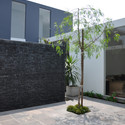
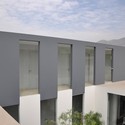
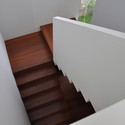
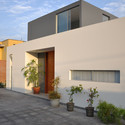
The KH+DH Houses designed by Vladimir Kalinowski aim to accomodate two elderly couples. Conceptualized around the idea of a centrally located courtyard, the homes are connected both visual and programmatically by the garden. The relationship between inside and outside also became a crucial aspect of the quality of space.
Architects: Vladimir Kalinowski Location: Lima, Peru Contractor: Mario Mejia Project Area: 500 sqm Project Year: 2008-2010 Photographs: Vladimir Kalinowski
The V&A Exhibition Road design by Amanda Levete Architects in London, England strives to break down the boundary that exists between the V&A Museum and the street by taking the museum onto Exhibition Road and bringing Exhibition Road into the museum. It unlocks a the potential to bring new audiences into the museum by exposing it to passersby.
Brazil will be the first South American country to host the Summer Olympics which will be held in 2016, but first the country set their sites on building the world’s tallest LEGO tower, a record previously held by Chile. The community of Sao Paulo constructed their 500,000 piece LEGO tower last weekend which rose to a height of 102 feet-three inches. School groups, families both kids and adults, joined in the team effort assembling the independent LEGO bricks that were stacked on top of each other eventually using a crane.
The eme3 guideline, a festival that questions and confronts differents points of view on architecture and its relationship to society, will be maintained this year wanting to provide concrete answers to global solutions presented and discussed in the last edition 2010. Thus, among other topics, the questionings will revolve around the contradictions between sustainable development and “greenwashing”, around the appropriateness of the use of technology resources compared to “low cost”, aroud the urban impasses in cities, or the micro -urban policies that affect citizens in their daily lives.
Currently under development, OKRA’s Xiang’he Garden City, consisting of a masterplan for the Park of the Floating Gardens, defines challenging ambitions, turning the former clay pits into a water park. A new garden city of approximately 700 hectares will arise close to the future 7th ring of Beijing, China. The ambitions for the park are high and should create the perfect setting for the first housing development. The park should be a place for recreation, for running, for barbequing, for celebrations and more. It should also contribute to a sustainable environment, combining green design and water. More images and architects’ description after the break.
The Committee on the Environment (COTE) has announced the Top Ten Green Projects for 2011. Receiving this honor at the upcoming AIA 2011 National Convention and Design Exposition in New Orleans, the following projects are examples of sustainable architecture and green design solutions that protect and enhance the environment.
Celebrating its 15th year, the COTE Top Ten Green Projects program is one of the profession’s highest recognitions for sustainable design excellence.
The jury assembled for the 2011 COTE Top Ten Green Projects includes: Joshua W. Aidlin, AIA, Aidlin Darling Design; Mary Guzowski, University of Minnesota School of Architecture; Kevin Kampschroer, General Services Administration, Office of Federal High-Performance Green Buildings; Mary Ann Lazarus, AIA LEED AP, HOK; Jennifer Sanguinetti, P.E. LEED AP, Smart Buildings & Energy Management, BC Housing; and Lauren Yarmuth, LEED AP, YRG New York.
The COTE 2011 Top Ten Green Projects following the break.
Last year we featured many great museums. Like Alberto Campo Baeza’s Museum of Memory in Andalucia. Or Tampa’s Museum of Art designed by Stanley Saitowitz. Check five amazing museums from 2010 after the break.
Tampa Museum of Art / Stanley Saitowitz | Natoma Architects Museums began in ancient times as Temples, dedicated to the muses, where the privileged went to be amused, to witness beauty, and to learn. After the Renaissance museums went public with palatial structures where the idea of the gallery arose, a space to display paintings and sculpture (read more…)
The Intergrain Timber Vision Awards are back in 2011, inviting architects, landscapers and designers nationwide to showcase their visionary use of timber in residential and commercial design projects. With the chance to showcase your work in front of a prestigious industry audience, the awards now cover five categories including: Residential Interior, Residential Exterior, Commercial Interior, Commercial Exterior and Young Architects (under 30 years of age).
Gustafson Guthrie Nichol (GGN) announced the beginning of construction of the CityCenterDC development by Hines|Archstone in downtown Washington, DC. A new mixed-use development located on the 10-acre site of the former convention center, CityCenterDC is one of the largest downtown development projects currently underway in any U.S. city. Gustafson Guthrie Nichol participated in developing the master plan for the site with lead architect Foster + Partners, and acted as lead landscape architect, working with DC-based Lee and Associates. Additional members of the design team include DC-based Shalom Baranes Associates, serving as associate master plan architect, project Architect of Record, and lead designer of the residential rental buildings.
Construction commenced on March 23, 2011, and is expected to reach completion by the fourth quarter of 2013. The project includes the development of Northwest Park, a lively addition to downtown DC, the creation of a Central Plaza, as well as dramatic terraces with green roofs and gardens incorporated into all the buildings. More images and description after the break.
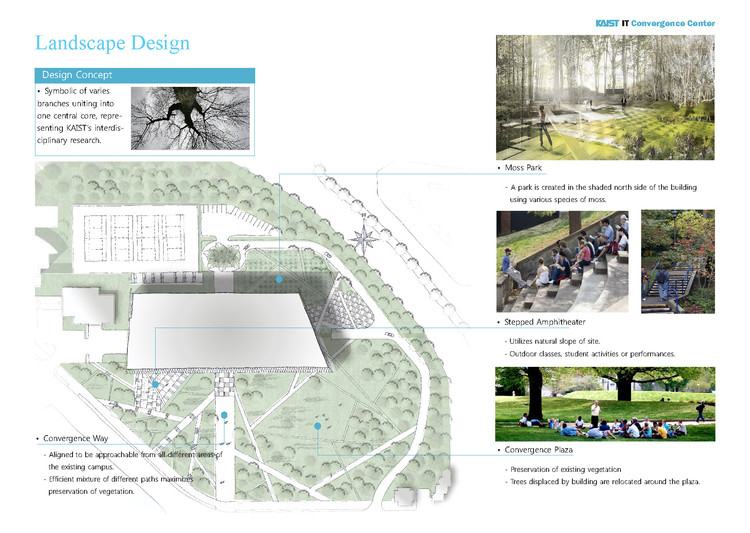
Open Paradox, MANIFESTO and ILKUN‘s proposal for the IT Convergence Center for KAIST (Korea Advanced Institute of Science and Technology), aims to provide a truly multi-disciplinary research and educational environment for the institute. Located on the sloped East Campus Plaza of KAIST, the building allows free-flowing interaction between students and faculty of multiple academic disciplines as well as with the remaining school population and the public, fostering an atmosphere of creativity and openness.
This proposal received 3rd Prize at the Design Competition and was the recipient of a 2010 AIA NY Design Award.
Architects: MANIFESTO Architecture P.C. (Design Architect) and ILKUN Architects & Engineers Ltd. (Local Architect) Location: Daejeon, Korea Consultants: Yoshinori Nito Engineering & Design P.C. Renderings: Courtesy of MANIFESTO. Design Team: Jeeyong An, Sang Hwa lee, Gi Young Park, JiYoon Oh, Sorae Yoo, Eunchung Na, Ulyong Moon, Sieun Lee (Manifesto) Ilin Hwang, Sung Jung Chough, Hyejin Choi, Hyunhee An, Byunghoon Kim, Yongik Won (Ilkun).
Croatian architects 3LHD shared with us their project Green Pavilion Restaurant, for which they received first prize in an invited competition during last year. More images and architect’s description after the break.
As this Church befits its central role in the community, this project also acts as a landmark and point of congregation for all in the area of Piacenza, Italy. The aim of Kuadra Studio is to keep the religious function of the building to the forefront while incorporating the necessary space and facilities for other, everyday activities. The concept for the design came from the idea of leaves: emphasizing the natural attachment to the earth and at the same time the spiritual detachment from it, creating a dynamic floating form to inspire worshipers with a material recreation of an ideal of the Church connecting earth and heaven. More images and architects’ description after the break.
The CAM FRAMIS Museum of the Vila Casas Foundation is part of a full redevelopment of the industrial neighborhood in the 22@ District of Barcelona. Architectural photographer Pedro Kok shared with us this video of the Museum designed by Jordi Badia of the BAAS studio.
This week I’d like to introduce you to some books I’ve come across while traveling the city. This first one is CLIP STAMP FOLD, an encyclopedic compendium of radical little architecture mags from the sixties and seventies. More than just clip stamp fold these were also draw cut paste scribble slash ink. This brick of a book is a portable archive and you don’t have to wear latex gloves to handle. These small, independent publications curated the contemporary and collected what may have been the disposable present. The challenged the orthodox historicism of architecture with a hippy slant. I would have stolen some images for you, but alas it was wrapped in protective hygienic cellophane.
To mark the bicentenary of the death of Giuseppe Piermarini, (Foligno, 18th July 1734 – 18 February 1808), Kuadra Studio has organized a workshop to honor the work of the architect and was assigned area 8 with one of Piermarini’s follies, a design for a stylized coffee house; a circular building of which only a few plans still exist. A long standing exhibition in the Centro Arte Contemporanea in Foligno and a catalogue are the results of the workshop. More images and architects’ description after the break.