AllesWirdGut, together with the German climate engineering experts Transsolar and the Dutch-born urban planning avant-gardist Ton Matton, recently developed their concept for the BIO Campus. The project consists of a huge site just outside Istanbul that is becoming one of the world’s leading scientific research centers which has had a holistic approach from the very start. The main idea behind the architectural and environmental project is to create a self-sufficient and self-supporting accumulation of living spaces for work, scientific research, everyday life and recreational activities. More images and architects’ description after the break.
Designed for the 8th China Flower expo, which will be held in 2014, the design for the information center by Lab Architecture Studio aims to create a very subtle expression. By blending it into nature, the project is able to unite itself with the land and environment. Both the lively architectural form and the flexible spatial structures activate the whole expo park. More images and architects’ description after the break.
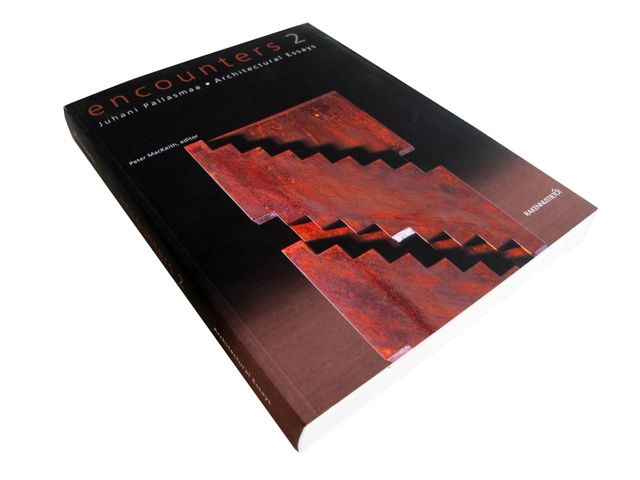
Architecture is fundamentally existential in its very essence, and it arises from existential experience and wisdom rather than intellectualized and formalized theories. We can only prepare ourselves for our work in architecture by developing a distinct sensitivity and awareness for architectural phenomena.” With these declarative words, Finnish architect, educator and critic Juhani Pallasmaa resounds the call of his 2005 volume, Encounters: Architectural Essays, in this second volume of essays, Encounters 2.
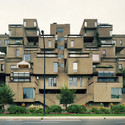
Since 1851, World Fairs have offered glimpses into specific moments in time - giving us insight into what was once innovative, high-tech, and down-right radical. But the structures, the icons of each Fair, don't always stand the test of time - no matter their architectural pedigree. In Flushing Meadows Park, New York, for example, Modernist icon Philip Johnson's 1964 New York State Pavilion now stands neglected, overgrown in ivy. Mies van der Rohe's German Pavilion for the 1929 Barcelona Expo was promptly demolished (although eventually reconstructed).
On the other hand, the Eiffel Tower, although considered "vulgar" in its day (1889), was maintained because its height made it well-suited for emitting radio signals; it's now Paris' most important tourist attraction.
The fate of World Fair Structures is the theme of New York-based photographer, Jade Doskow, who has already shot 19 former World’s Fair sites. Take a peek at Doskow's images and find out how World Fair structures have fared, some better than others, after the break...
OFIS Arhitekti shared with us a video they put together for their project, Alpine Hut. Situated in a small Alpine village, part of Triglav national park with very strict rules of construction and architectural design, the client bought the site together with existing construction permit for the generic project. Basically, the main task was to give the hut a new look, create a new veranda around the house and position the openings towards the views and increasing its sustainability.
Situated in the new green heart of Helsinki, the ‘Light Forest’ proposal for the Helsinki Central Library intends to replace the existing green that the architects will subtract to the park in a perfectly controlled indoor environment. Occupying 4500m² of the site, MenoMenoPiu Architects decided to conceive the building as a tree forest enclosed in a climatic box, in which the structure represents the causality of the wood. More images and architects’ description after the break.
As a follow up to a previous post we recently published regarding the positive look on the Architecture Billings Index (ABI), forward-looking indicators for building and construction activity have been turning increasingly positive over recent months, which is the good news. Current market conditions for architecture and the near-term outlook for the construction industry in the US is a two-sided story, with forward-looking indicators showing steady improvement but serious concerns arising out of an impending ‘fiscal cliff’. To be sure, the good news is not evenly spread across sectors and regions. Buoyed by lower interest rates, growing demand for rental accommodation and the progressive subsiding of the mortgage crisis, the residential building sector (57.3) is improving quickly whereas activity in commercial and industrial building remains flat. More information after the break.
High profile architects BIG (Bjarke Ingels) and OMA (Rem Koolhaas) are in a close battle to win the redevelopment competition for the design of the Miami Beach Convention Center. Recently put on hold by a corruption probe and procedural concerns, Miami Beach’s ambitious plans to create a 52-acre convention center district are again progressing toward a crucial vote by elected officials. The committee’s recommendations will be reviewed by interim City Manager Kathie Brooks, who will issue her own recommendation to city commissioners. Commissioners could vote on the project and development teams Dec. 12. More information after the break.
Previously limited to particular locations, Naver App was delivered all around the nation using a ‘kit-box’ concept. With the addition of a ‘kinetic’ element to the existing over-sized delivery box concept, the new Naver App Square, designed and constructed by URBANTAINER has evolved into a giant moving gift box. More images and architects’ description after the break.
Building on a previous piece entitled “Suspension Bridge, the passage”, Olivier Grossetête’s ‘Pont de Singe’ in the UK is a model of floating bridge attached to helium balloons, thus taking literally the term “suspension bridge “. The object aims to connect two mobile spaces, questioning its usefulness. This bridge becomes a floating symbol of all relationships, and embodies the space surrounding its slight movements caused by our air movement. More images and architects’ description after the break.
Proposed by Talmon Biran Architecture Studio, the Yad Le’Banim building is located within an existing grove at the local council of Ramat Yishay, Israel, which provides a unique opportunity to integrate landscape with the architectural design. This setting doesn’t only add a visual values for the building, but also adds and symbolic aspect – the trees which are seen from all the building’s façades create an image that expresses the relation between life and death, between growth and loss. This relation is inherent in the definition of the Yad Le’Banim buildings as cultural and educational centers on the one hand, and as a memorials on the other hand. More images and architects’ description after the break.
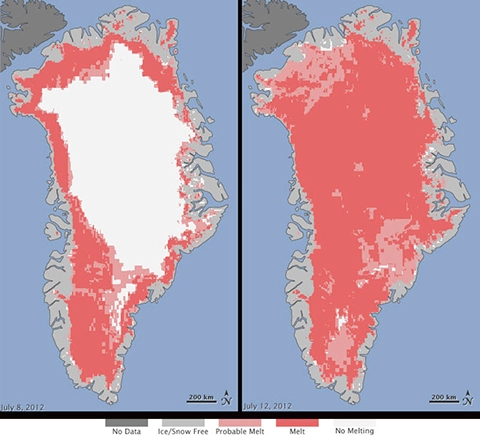
Last week I asked how architecture can ramp up its efforts to do all it can to help limit climate change. Sandy is a turning point. It will take action on the part of the profession and its members to make this turning point meaningful. Turning points are easily forgotten after the panels have been convened and the articles written. The vicarious thrill of crisis abates and everyone returns to business as usual, feeling better for having contributed to the discussion. If we listen to the scientists, we must not lose that sense of crisis and we must do more.
Toshiko Horiuchi MacAdam is known for her massive, colorful architectural sculptures/playgrounds. The most famous example of her work is the expansive net-structure inside the "Woods of Net" Pavilion at the Hakone Open Air Museum in Japan - which Horiuchi MacAdam knitted, entirely by hand, over the span of a year.
We took a moment to speak with Ms. Horiuchi MacAdam about the Pavilion and her other works, how they bridge the worlds of art and architecture, and how they irresistibly invite the world to play. You can read our interview, and see more images of her fascinating work, after the break...
With locally grown and organic food becoming more popular in the Czech Republic, EDIT! was asked to design a market stall for a new concept of Green Markets. Through a reconfiguration of the typical retailing method, the architects create a unique response to the importance of enabling a personal interaction between the farmers and market visitors. From this, the farmer can relate to the visitors through their produce, and the relationships formed may contribute to the character of the market as a whole. More images and architects’ description after the break.
Kohn Pedersen Fox Associates were recently selected to design a giant office building the landlord hopes to build next to Grand Central Terminal. Selected by SL Green Realty Corp., the architects’ design would be one of the largest Midtown towers on the East Side in a generation. While building in New York is a challenge, SL Green is moving ahead full steam with planning. The company is in discussions with the Metropolitan Transportation Authority to obtain additional development rights by building pedestrian improvements including underground connectors to Grand Central, according to executives informed of the planning. More information after the break.
This week’s film isn’t actually a movie in itself, but rather a lot of little films merged into one: “Paris, I Love You”. Twenty shorts, each representing the 20 arrondissements – districts – of Paris were filmed to show the French capital in its multiple identities (in the end, only eighteen made the cut). The work is an interesting attempt to use film to represent the many facets of a metropolitan urban area; it is also an exploration of the different ways we can see a city, depending on our perceptions and experiences within it.
Have you ever walked through Parisian streets? Does “Paris I Love You” capture your experiences of Paris’ districts? Let us know in the comments below.
Located in Nikola Lenivets Park in Kaluga, Russia, this proposal for the Artist Residence, which was shortlisted in the design competition, suggests the typology of a campus, a condensed layout providing the facilities for all of the artist residence community– living, learning and creating. Designed by Talmon Biran Architecture Studio, in collaboration with architect Ana Leschinsky, the proposed scheme is open ended, allowing flexibility and future growth while integrating the buildings within the landscape. More images and architects’ description after the break.
For the exhibition, “FLUXUS – Art for Everyone!” at Museum Ostwall in the Dortmunder U, modulorbeat was commissioned to develop an exhibition architecture. Their ‘Fluxus Module’ project uses 300 items from the years 1958 to 2007 that critically address the events of their times to offer a new and playful look at the everyday. The exhibition architecture works with a modular plywood element that was especially developed for this Fluxus exhibition. More images and architects’ description after the break.
Recognizing one exceptional artist every two years whose work transverses the boundaries between art and architecture, Andrea Zittel came out as this year’s winner for the prestigious Frederick Kiesler Prize. Accepting the award just this month at the New Museum of New York, one criterion for the award is that the artist be under-recognized. While fun and playful in nature, Zittel’s works are also illuminating studies of how we attribute significance to things, including the structure we live in and what we actually need in order to exist in comfort without being surrounded by accumulated belongings. Her ‘Indy-Island’ and ‘A-Z Wagon Stations’ projects can be seen in the images after the break.