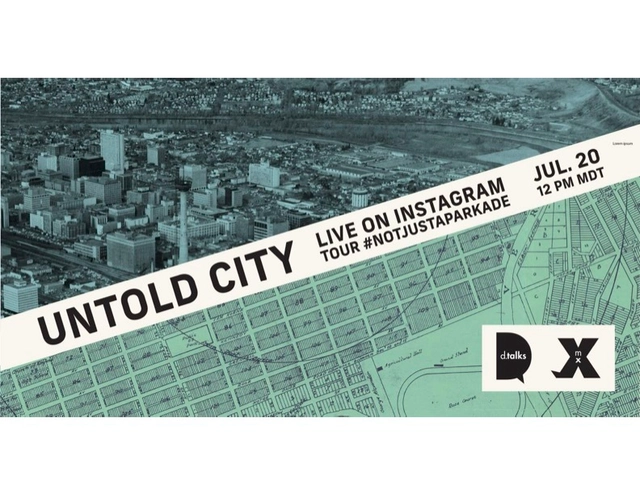
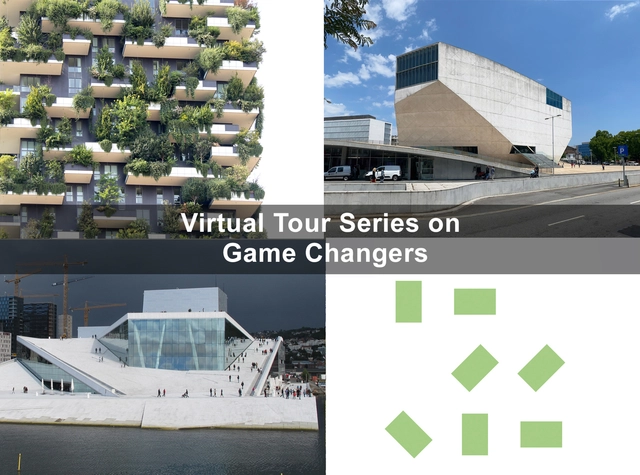
How can we design to meet today’s demand for parking in our city, while designing in enough flexibility to adapt to how we might get around in five- or ten-years’ time? We invite you to tour an innovative new building in East Village: a parkade that is designed to adapt to different uses over time.
Avani Annual Research Symposium 2021 Advisor: Ar. Bijoy Ramachandran Convenors: Ar. Meenakshi Dubey, Ar. Sebastian Joseph, Dr. Soumini R, and Ar. Thushara K
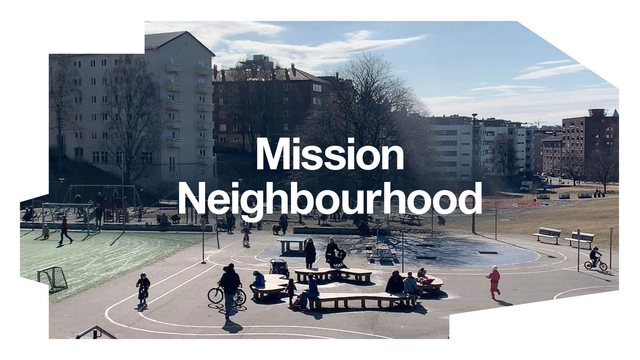
The Nordic Neighbourhood Thinking Camp is a Nordic arena to share experiences, reflections and ideas about neighborhood development and strategic urbanism.
Combining presentations from acclaimed Nordic urban practitioners and thinkers, focused workshops, symposiums and social gatherings, the camp goes beyond the celebratory pitches. The ambition is to help foster ideas and bring forward practices that make a difference in terms of social and environmental sustainability.
At the dawn of photography the city could only be recorded as a virtually empty stage by a camera lens too slow to fix for posterity the vitality of urban life. Even before the new art of photography – literally writing with light – was announced in 1839 in Paris, the City of Light, Daguerre had pioneered street photography by capturing a view of the Boulevard du Temple through the double aperture of his window and his camera lens. This first urban daguerreotype. captured perfectly the city’s architecture, but this man soon to be famous for portraiture left us scarcely a trace of the bustling traffic of that spring 1838 morning, all human presence was vanquished, save a blurry pair of men, a shoe shiner and a customer, who remained still long enough to be captured as a smudge on the otherwise pristine scene. By the end of the century the camera was able to capture motion even below the threshold of human perception, making it a tool for the scientific study of human and animal locomotion.
https://www.archdaily.com/964563/limia-erieta-attalis-latest-photograph-exhibitionAlessio Assonitis & Barry Bergdoll
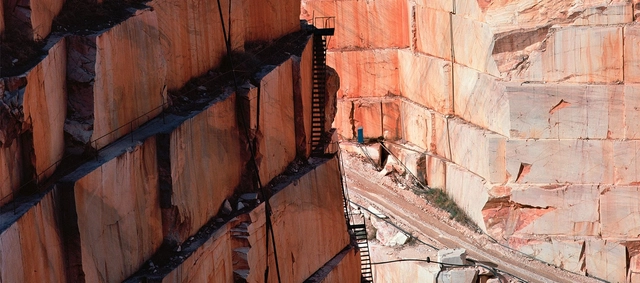
Terra. It’s the 6th edition of the Triennale for 2022. It will take place between October and December 2022, chief-curated by Cristina Veríssimo and Diogo Burnay. “Terra explores how new paradigms are changing our ways of place-making in a globalised Planet. Terra addresses how climate cha(lle)nges, pressure on resources and socioeconomic and environmental inequities are profoundly intertwined”.
Installation 1:1 The Charcoal Cabin designed by Aulets. Photo by Laura Stamer
The exhibition With Love from Spain in Aalborg, Denmark, is a collaboration between Utzon Center and the Aarhus School of Architecture. It is based on the research project “Escandinavia - Architectural dialogues between Denmark and Spain”, which investigates the fortunate parallelisms, influences and translations between Nordic and Spanish architectural cultures. The origin of this long-term affinity is to be found in the significant interest that Spanish architects had in Nordic architecture, extensively focused on its Modern Masters: Alvar Aalto, Erik Gunnar Asplund, Sigurd Lewerentz, Sverre Fehn, Arne Jacobsen, and Jørn Utzon.
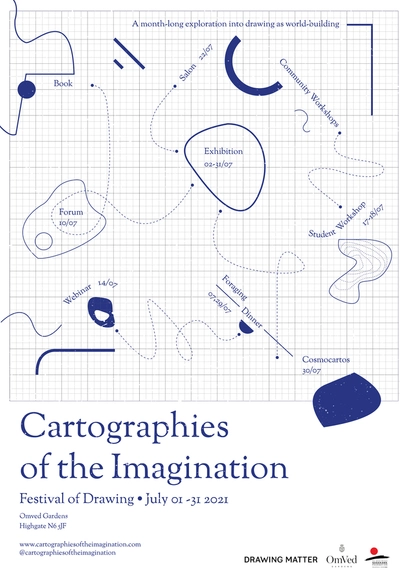
Cartographies of the Imagination is a month-long experimental drawing festival held in the RIBA award-winning Omved Gardens and Glasshouse in Highgate. The otherworldly setting forms the inspiration for a series of conversations, workshops, feasts and a growing exhibition exploring the world of drawing between the real and the imagined.
Head to https://linktr.ee/nusmarchgradshow to access the online exhibition and RSVP for the respective online dialogues!
The NUS M.Arch Show 2021 showcases the thesis projects of the graduating Master of Architecture students from the National University of Singapore; a collection of bold questions and propositions displaying the expertise obtained in architectural education. A year-long undertaking, the thesis is an arduous yet joyful journey, where conversations, critiques and references gently nudge students towards certain contemporary and relevant trajectories, organically converging into communities of practice where the works collectively resonate with one another. Convergence occurs along five discursive threads, which form the five clusters of the show: “Critical Architecture”, “History & Heritage”, “Sociopolitics & Geopolitics”, “Technologies” and “Urbanism & Environments”. Each cluster is uniquely positioned to probe the limits of the discipline, and to respond to the demands of wider society.
Christina Kruse, Lunapark, 2021, courtesy of Helwaser Gallery
Helwaser Gallery is pleased to present the second solo exhibition of new works by artist Christina Kruse (b. 1976, Germany). "Christina Kruse: Plasterheads" will be on view through July 30th, 2021 at the gallery’s Madison Avenue space, and will introduce the artist’s latest sculpture works. Over the last decade, the artist has developed a distinct visual language within her practice. Often resembling abstracted human figures, her sculptures are defined by a combination of organic, rounded shapes offset by strong rectilinear forms.
For this exhibition, Kruse has developed a large-scale installation which will be displayed in the first room of the gallery. Displayed on a collapsible table, the installation is likened to a miniature world, where multiple figure-like maquettes are scattered across various miniature architectural elements. Rendered in different positions and poses, the maquettes resemble human figures caught in various acts: climbing in and out of the structure, looking up or down, in search for something. Yet, the figurines don’t interact with each other. Described as a metaphorical playground of the inner psyches, Lunapark (2021) attests to the artist’s interest in the deeper psychological states that motivate and shape the world that their human counterparts inhabit. For Kruse, each of the elements within the entire installation, including its materials, serve as a deeper metaphor that expresses the structure of the world that we inhabit. By choosing to use plaster and soapstone as primary materials to construct the maquettes, both of which are easily shaped, Kruse highlights the very malleability of human nature itself. Set against the infinite expanse of the table construction, these maquettes seemingly capture the endless permutations of behavior that result when they are connected by space and time.
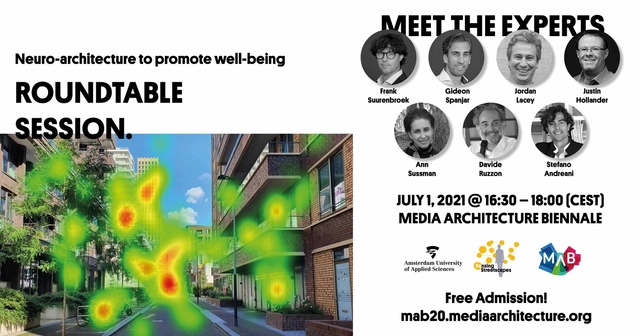
Neuro-architecture transmits knowledge and technologies from the field of neuroscience into the professions of spatial design, aimed to get better informed design solutions to promote human and non-human well-being in our public spaces. We kick off with the key-findings of our 2-year research project Sensing Streetscapes, followed by a roundtable exploration with the global pioneers from Neuro-architecture. What is the state of affairs and what is the potential of this approach to push improved sustainable well-being, especially in the newly built high density urban settings?
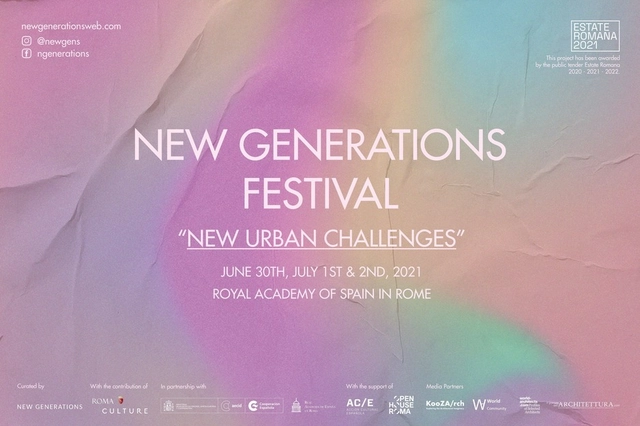
New Urban Challenges Festival Poster. Image Courtesy of New Generations.
BACKGROUND The New Generations Festival is an annual event that brings together emerging architecture practices and professionals from various fields, creating a space for the contemplation and analysis of the architecture profession. Titled “New Urban Challenges”, the festival will take place this June 30th, July 1st & 2nd at the Royal Academy of Spain in Rome, in a hybrid format with a combination of virtual and public events.
2021 UK Passivhaus Awards Ceremony | 30 June | 15:00 - 17:30
The Oscars for building performance once again return! Much has changed since the previous UK Passivhaus Awards ceremony in 2018 – notably the declaration of a Climate Emergency and a sharpened awareness of the complexity, scale, and speed at which we need to act.
The Hong Kong Designers Association (HKDA) officially announced the kickoff of its Global Design Awards (GDA) 2021 through the public call for entries at the Press Conference cum Seminar held earlier. In order to encourage local and overseas designers to participate, the Awards will organize a series of Call for Entries Seminars (Hong Kong / Macau / Guangzhou) where a number of past winners will be invited to share!
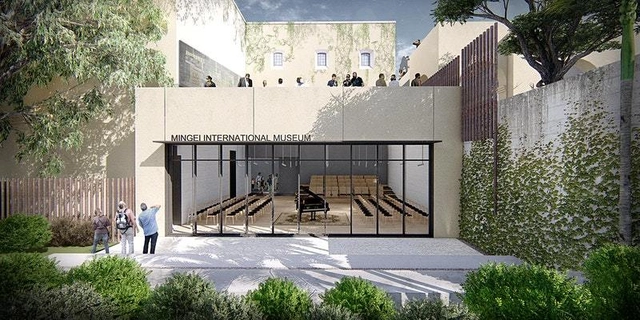
Museums face challenges regarding relevance, transparency, and engagement with their communities. Central to the process is a re-examination of its architectural asset. Nationally acclaimed architect Jennifer Luce presents her latest work — the $55M re-imagination of Mingei International Museum, offering solutions to issues facing architects of cultural projects.