Last week, thanks to the courtesy of ACME Studios, we gave you the chance to win a pen and card case based on Le Corbusier’s 1947 Modulor theory.


Last week, thanks to the courtesy of ACME Studios, we gave you the chance to win a pen and card case based on Le Corbusier’s 1947 Modulor theory.

A few days before the wrath of Sandy, Skidmore, Owings & Merrill (SOM) broke ground on what will be the first net zero energy school in New York City and the Northeast U.S. Located on a 3.5-acre site on Staten Island, at the intersection of Crabtree Avenue and Bloomingdale Road, P.S.62 Richmond will serve 444 pre-kindergarten through fifth grade students. When completed in Fall of 2015, the cutting-edge primary school will harvest as much energy from renewable on-site sources as it uses on an annual basis.
Learn more after the break…

Wave Dilfert: Wave (moves in wave-form oscillations) + Dilfert (geek-like intelligence, absorbs information like a sponge).
Wave Dilfert is a new kind of space that reads the changes in light and shadow occurring within it, catalogs and calculates them, then pulses, contracts or expands in reaction. The installation was inspired by the work of Ushahidi; a non-profit, crowdsourcing disaster relief, tech innovator. Much how Ushahidi de-mystifies the complexities of war-torn or disaster ridden locales, The Principals developed a system that could de-mystify the complexities of space through sourcing the information of its users and making it accessible through interaction.


Taking place October 26-December 2, the White Mountain Chilean Contemporary Architecture exhibition is composed of a selection of relevant works. Put on by Aedes Berlin, the event highlights the richness of the recent projects is originated and developed within its landscape. The atmospheric design of the exhibition demonstrates this significant creative moment of the Chilean buildings, often described as the continent’s most interesting today. For more information, please visit here.

For the Venice Biennale, a group of 20 Peruvian architects (with no state support) presented a reflection on one of the most interesting territorial projects in South America. After 80 years in construction, a 20km tunnel connecting the Amazon to the dry region of the Pacific Andes has been completed, a tremendous infrastructure project that will turn this region into a new fertile land.
The “Olmos Transandino Project” will be ready in early 2013, and will attract more than 250,000 people with agriculture jobs (you can see more at Build it Bigger). However, despite this incumbent massive migration, there is no urban planning project on the country’s agenda, leaving one big question still to be answered: what should this territory, with its new urban quality, be like? That’s what a group of 20 architects from different backgrounds and ages set out to present at the “Yucun or Inhabitat the Desert” exhibit at the Biennale.

Each office worked on a 25ha site for three months, coordinating with their “neighbours” to create a unified urban fabric, which is represented with 1:1000 models.
The most important part of the firms’ research was their historical investigation into the region’s ancient Moche culture, a civilization that built astonishing abobe cities, as well as the first irrigation systems, 2,000 years ago. Inspired by Moche traditions, the firms generated a plan that would provide a sustainable future to this new territory.
More from the curator of the exhibit after the break:

RIBA Competitions recently announced their two-stage design ideas competition for the Great Fen Visitor Centre in Cambridgeshire. Great Fen is an internationally acclaimed vision, one of sweeping scale and ambition. Over the next 50-100 years, more than 3,000ha of largely arable land will be transformed into a mosaic of habitat: open water, lakes, ponds and ditches; reedbed; fen, bog and marsh; wet grassland; dry grassland; woodland and scrub. The competition seeks to to create around and between a restored fenland landscape which provides a living landscape for wildlife and people. Registrations will close on December 19. The deadline for Stage 1 design submissions is 2pm on January 10. To register, and for more information, please visit here.

MONU – magazine on urbanism is a unique bi-annual international forum for artists, writers and designers that are working on topics of urban culture, development and politics.
This new issue of MONU is dedicated entirely to the topic of “Next Urbanism” – meaning the urbanism of the cities of the so-called “Next Eleven” or “N-11″, which include eleven countries: Bangladesh, Egypt, Indonesia, Iran, Mexico, Nigeria, Pakistan, the Philippines, Turkey, South Korea, and Vietnam. These countries have been identified as growing into, along with the BRICs – Brazil, Russia, India, and China – the world’s largest economies in the 21st century. Next to interviews with Saskia Sassen and with the Nigerian-born architect Kunlé Adeyemi, and a series of contributions that discuss Next Urbanism in general, we feature eleven articles that focus specifically on the cities of each of the Next Eleven countries.
You can see more about the articles on their official website. Also, you can browse the entire issue break.

Despite strong opposition from preservationists and architects world-wide, Chicago Mayor Rahm Emanuel has announced his decision to support the demolition of Bertrand Goldberg’s Prentice Women’s Hospital. In a op-ed piece released by the Chicago Tribune, Emanuel supported his stance by arguing that Northwestern’s new biomedical research facility would “bring 2,000 jobs and hundreds of millions of dollars in investment” to Chicago. Emanuel believes Goldberg’s “vision is alive in Chicago beyond one building” and allowing Northwestern to build the new medical center is crucial in keeping Chicago at the forefront of scientific innovation.

The redevelopment of Sydney’s an inner-city waterfront precinct of Barangaroo is making progress, as the Barangaroo Delivery Authority (BDA) has announced the five teams shortlisted for the master planning services for Barangaroo Central. The project will complete the long term vision for Barangaroo, which was masterplanned by Rogers Stirk Harbour & Partners, by forming the “heart of the site” that will be the transition along the waterfront walk from the southern urban and commercial spaces to the natural form six hectare of the Headland Park.
The full shortlist includes:

Tadao Ando and the Japan Sport Council (JSC) have announced the eleven finalists who will compete in the final round of the international competition for the New National Stadium Japan. With the reconstruction, the National Stadium hopes to attract world-class events with the world’s largest spectator capacity and the world’s finest hospitality. The new stadium is already committed to hosting the 2019 Rugby World Cup and is slated for competition in 2018.
Tadao Ando describes: “Our wish is to see a stadium designed by someone who shares this earth, with wisdom and technology that looks to the future of out planet.”
The finalists after the break…

This week we propose a much lighter film but that still linked with our profession since it shows most of the domestic issues of an architect’s life. Deadlines, unexpected changes of schedule, and overnight work become a routine on the main character’s work. In the comedy, this lack of hours for sharing with the family and rest of social life is beaten through a new device able to control time.
Does this issue of time sound familiar to any of you? Let us know your comments about how you deal with time and architecture.

Loisos + Ubbelohde just received the highest award at the 2012 Architecture at Zero competition for their proposal, ‘Silver Streak’. The contest, sponsored by PG&E and AIA San Francisco, was conceived as a response to the lofty zero net energy targets set out by the California Public Utility Commission. As the recipient of one of two honor awards, their design for the University of California, Merced campus features an administration building that acts as both a threshold to campus and an energy field in the large plane of the agricultural valley. More images and architects’ description after the break.

Focused on ‘Cambodian Sustainable Housing’, the new Building Trust International Open International Design Competition looks into designing affordable, flood resistant housing in the South-east Asian country. In partnership with Karuna Cambodia, Habitat for Humanity & the Cambodian Society of Architects (CSA), proposals will have to keep below a budget of $2000 and deal with the yearly flooding that effects most residential areas. The winning design will be built by Habitat for Humanity Cambodia and will influence the way they build housing in the region. This competition is a real chance to make a difference to a large group of working Cambodians lives. Submissions are due January 15. To register, and for more information, please visit here.

Designed by PAR (Platform for Architecture + Research) and SES (Sériès et Sériès), their stage two finalist entry for the Keelung Harbor competition adopts a form that resists easy classification to free-associate with successive symbols of the utilitarian, the industrial, the poetic. Becoming a landmark in the harbor city, it combines maximum artistry with maximum efficiency. The new harbor project is only one piece in a larger green network that links public open space with waterfront amenities throughout the city. More images and architects’ description after the break.

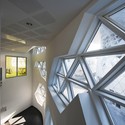
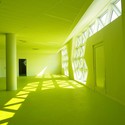
Architects: Massimiliano and Doriana Fuksas Location: 401, rue le Titien 34000 Montpellier, France Year: 2007-2012: competition 2007, won competition April 2007, building site January 2010, Inauguration September 2012 Project Team: Damon Belusco (project leader), Michele D’Arcangelo, Nicola Cabiati (model), Ana Gugic (interiors) Client: Région Languedoc-Roussillon Contractors: GFC – structure, SMAC – façades, BARSALOU – frames Consultants: ALTIA – Acoustics, NEVEUX-ROUYER – Landscape Architects, ALMA Consulting – Kitchen design Net surface: 23,600 sq.m. Gross surface: 25,736.80 sq.m. Area surface:16,500 sq.m.

Urban planning is delicately intertwined with government. As much as architects and designers try to avoid the overwrought laws and codes and prescriptive government policies that guide the construction and development of the urban landscape, they are very much a shaping force in cities such as New York. Ask any architect working in a such as NYC and they will likely describe the bureaucratic hassles of working with outdated zoning regulations and restrictive building codes. In this NPR segment Leonard Lopate interviews New York Magazine’s architecture critic Justin Davidson to discusses the impact of Mayor Michael Bloomberg’s planning policies on New York City’s urban development.
Join us after the break for the link.