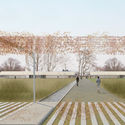
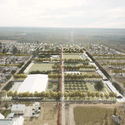
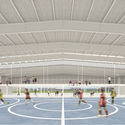
The winners of the National Ideas and Preliminary Projects Competition for the “San Patricio del Chañar Sports and Cultural Park” (PDC.SPDC, Neuquén, Argentina) have been announced. Promoted by the Municipality of San Patricio del Chañar, sponsored by the Argentine Federation of Architects' Associations (FADEA), and organized by Region 1 of the College of Architects of Neuquén Province (CAN), the competition invited architects across Argentina to submit proposals for a new urban green space that will serve as the city's Sports and Cultural Park. By offering high-quality amenities for public use, the initiative aimed to promote the benefits of sports, culture, and outdoor life, fostering social interaction, community living, civic activity, and collective belonging.
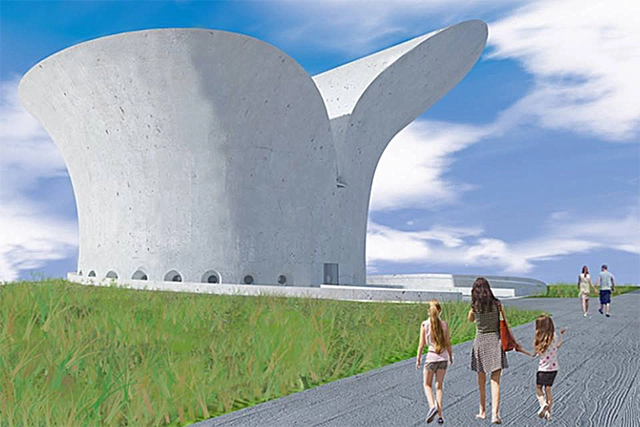
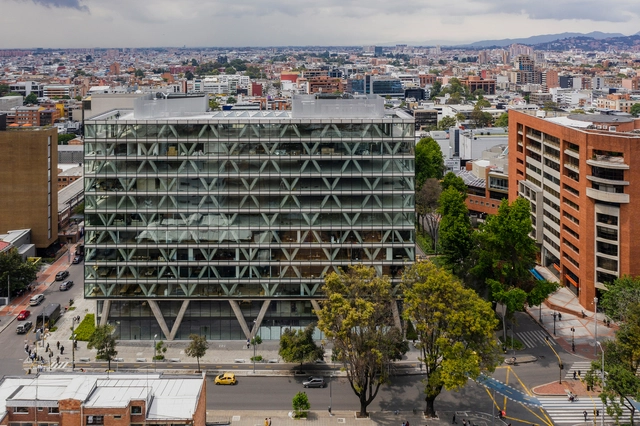
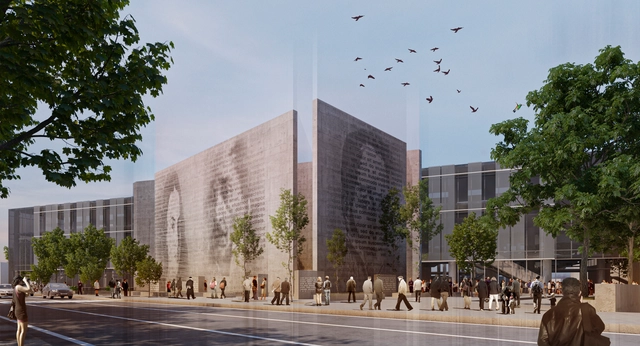
Bogotá's urban landscape will undoubtedly be transformed by the arrival of the metro. One of the structures that will be affected is the Monument to the Heroes, currently located at Carrera Caracas and Avenida Calle 80. In response to this urban icon, the Colombian Society of Architects organized a public competition for the architectural schematic design of the new Monument to the Heroes.
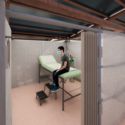
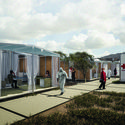
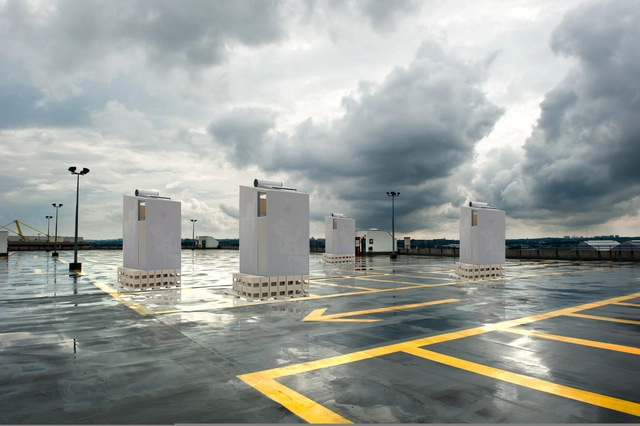
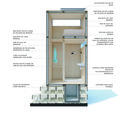
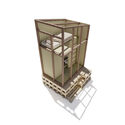
As part of an initiative led by the Mexican architecture firm REVOLUTION Arquitectura and the Mexican Red Cross, the Temporary Housing Pavilion for Healthcare Workers was developed to protect and shelter healthcare sector workers in Mexico.
https://www.archdaily.com/1123918/temporary-housing-pavilion-for-healthcare-workers-in-mexico-during-covid-19-by-revolution-arquitecturaArchDaily Team
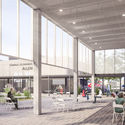
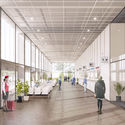
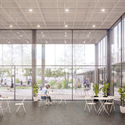
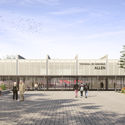
The winners of the Allen Bus Terminal Preliminary Project Competition (TOA) have been announced. This regional call was promoted by the Municipality of the City of Allen (General Roca, Río Negro, Argentina), organized by Section 2 and Section 4 of the Colegio de Arquitectos de la Provincia de Río Negro (CARN), and sponsored by the Argentine Federation of Architects' Associations (FADEA). The competition invited architects to submit proposals for a new passenger transport terminal, boosting architectural creativity and intervening at an urban scale.
Minhocão. Photograph: Gonzalo Ibáñez / CC BY (https://creativecommons.org/licenses/by/2.0) via Wikimedia Commons
Inaugurated in 1971, the João Goulart elevated highway, popularly known as the Minhocão, has been a subject of criticism, study, and a landmark in the city of São Paulo. In 2014, its future was determined when the Strategic Master Plan introduced a specific law for its progressive decommissioning for cars, scheduled for completion by 2029. However, its ultimate fate remains uncertain: what will become of it when this happens? Will it be transformed into a park or demolished?
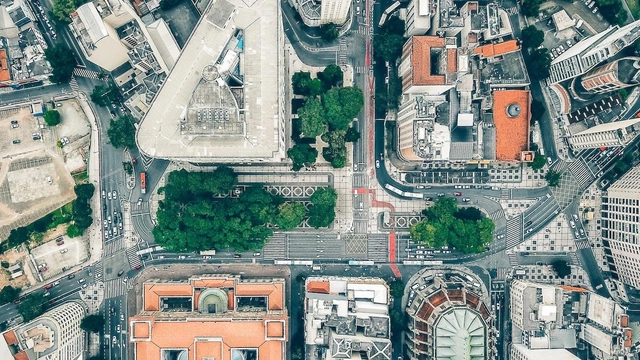
Aerial view of part of downtown São Paulo. Photo by Sergio Souza, via Unsplash
The City of São Paulo has just released 3D cartography for the entire city on the GeoSampa Portal. The new tool allows users to visualize buildings, trees, infrastructure, and other geometries in 3D directly on the map. The data is also available for download.
Proyecto Taller is a documentary series that aims to debate, reflect on, and examine architectural teaching and learning methods, seeking to define their points of contact and overlap with professional practice. Within this ambiguity between making and teaching how to make architecture, many architects have managed to integrate their careers as designers with their work as educators in academic environments, where they teach students how to design.
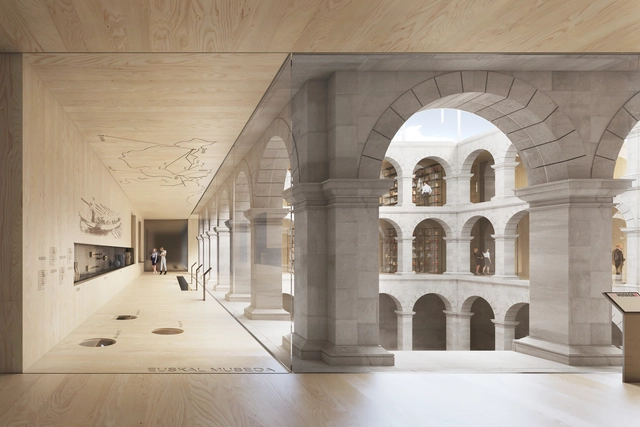
The winners of the design competition for the architectural and exhibition intervention of the Basque Museum of Bilbao (in Basque, the “Bilboko Euskal Museoa”) have been announced. This international competition invited participants to develop proposals for the comprehensive renovation of the building, which aims to inaugurate its new spaces in time for its centennial celebration in 2023.
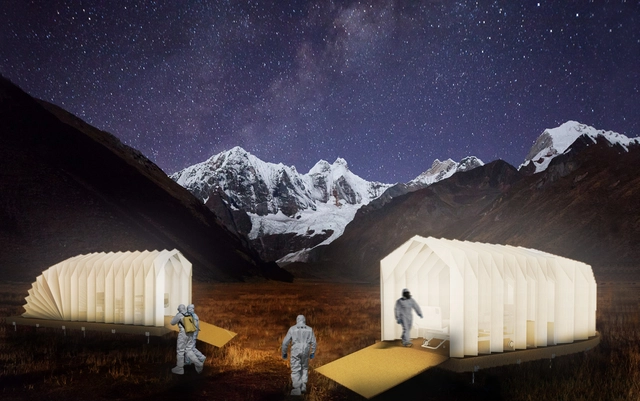
1° Premio (Argentina) Sofia Martinelli, Antonella Rodriguez Robustelli, Nadia Lucía Faccipieri, Sofía Piñel, Camila Laitán. Image Cortesía de TaDU / OPEA / Colectivo Más Ciudad
The winning projects of the Emergency Health Prototypes ideas competition have been announced, an open-call initiative aimed at Latin American students of architecture, landscape architecture, urban planning, design, and related fields. Jointly organized by the Taller de Desarrollo Urbano (Venezuela), the Organización Peruana de Estudiantes de Arquitectura (Peru), and Colectivo Más Ciudad (Peru), and sponsored by Revista Envolvente, Revista Entre Rayas, Instituto Científico del Pacífico, Arquitectura Venezuela, Dilab, and Imagina 3D, the competition was conceived as an opportunity to generate innovative architectural responses to potential collapses in healthcare systems under the threat of COVID-19.
Videos
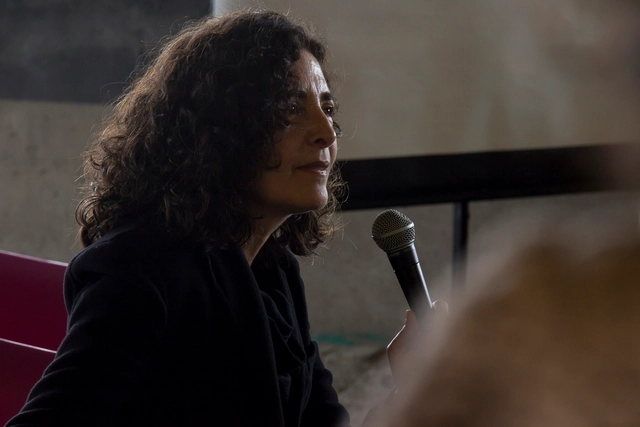
Cecilia Puga exponiendo en la XX Bienal de Arquitectura de Chile en 2017. Image Cortesía de XX Bienal de Arquitectura de Chile
Chilean architect Cecilia Puga will take over as director of the Chilean Museum of Pre-Columbian Art, one of the most visited in Santiago. The news was announced by her predecessor, anthropologist Carlos Aldunate del Solar, in a recent interview with Chilean magazine Sábado, where he announced his resignation after four decades at the helm of the institution. "Obviously, a younger person with more energy should take over," Aldunate commented in the interview.
Huoshenshan Hospital, built in one week to treat 1,000 patients in the city of Wuhan Xiao Yijiu/Xinhua/Handout
Today, the Brazilian Hospital Services Company (Ebserh) published a call for applications to create a reserve pool of up to 6,000 professionals to work temporarily in the fight against COVID-19 across the Ebserh Network. In addition to healthcare professionals, the call is also open to architects and engineers for 40-hour work weeks and a salary of R$ 10,350.45.
The Court of Justice of the Federal District and Territories (TJDFT) has denied an injunction request to suspend the Bible Museum project. The petition, filed by the Brazilian Association of Atheists and Agnostics (ATEA) against the Government of the Federal District (GDF), was dismissed by Judge Paulo Afonso Cavichioli Carmona of the 7th Court of Public Treasury of Brasília.
Flores & Prats, in collaboration with Ouest Architecture, have won first place in the competition to renovate the Ancien Théâtre des Variétés in Brussels, Belgium. The project addresses the transformation of the former theater into an international laboratory for artistic creation, conceived as an open and inclusive public space.
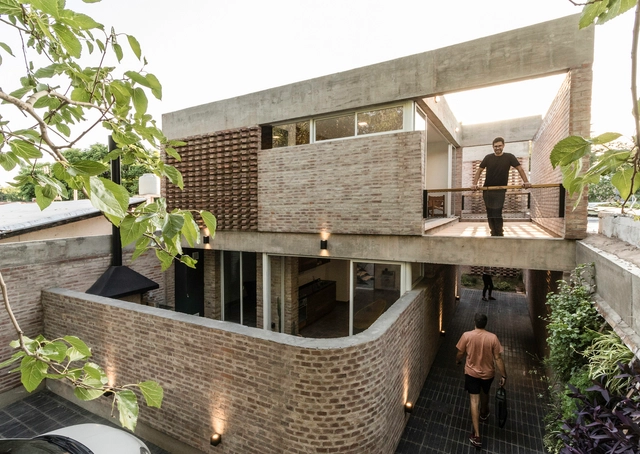
The winners of the first edition of the National Brick Architecture Award have been announced. Jointly organized by the Central Society of Architects (SCA) and the Chamber of the Red Ceramic Industry (CICER), the competition sought to highlight Argentina's architectural production based on the use of ceramic masonry units and to promote the widespread use of this material as a sustainable, long-term element in both urban and rural environments.
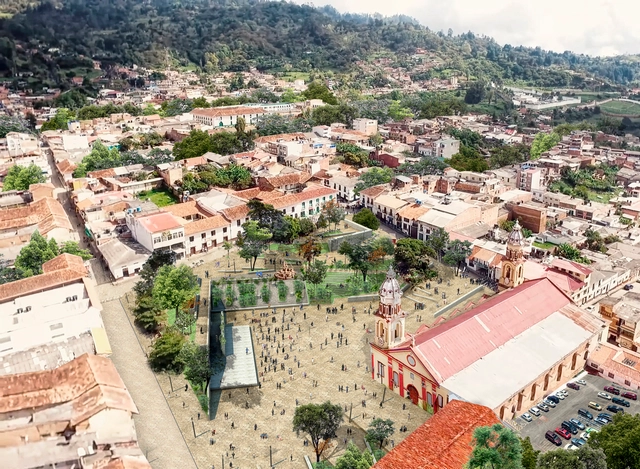
The picturesque municipality of Vélez, located in the southern region of the department of Santander, is set to receive a renovated main square. Known for its famous bocadillos (guava paste) and its unique "transverse" church (iglesia atravesada), the town will also see the revitalization of the facades of the traditional buildings surrounding the square.
Videos
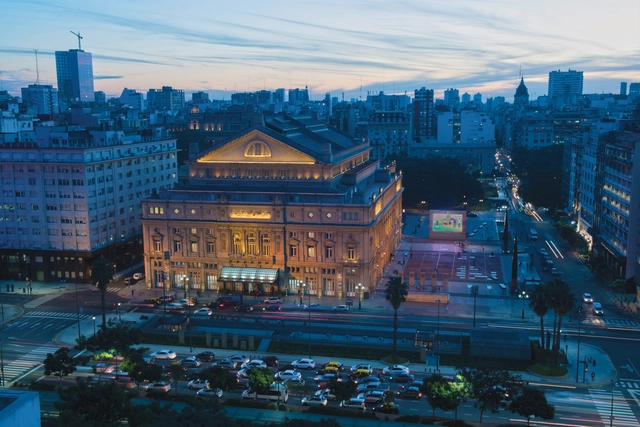
Teatro Colón - Aerial exterior view. Image via [buenosaires.gob.ar] under Creative Commons Attribution 2.5 Argentina license
The Ministry of Culture of the City of Buenos Aires, in collaboration with the Tourism Board, invites the public to explore local architecture and culture through “Turismo Cultural BA”. This virtual series, stemming from the Cultura en Casa initiative, offers weekly online tours of some of the most iconic buildings in Buenos Aires, showcasing art exhibitions and spaces associated with the city's history and culture. This virtual format allows people worldwide to access Buenos Aires' architectural and cultural heritage from home, in compliance with the isolation measures implemented by the country to combat COVID-19.
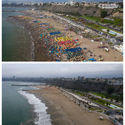
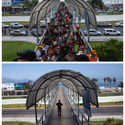
On March 16, in an effort to protect public health and reduce the transmission of COVID-19 in Peru, the country declared a mandatory quarantine. Under this exceptional measure, all residents must remain in their homes until—for the time being—April 26, refraining from going to work and limiting their movement in public spaces. The restructuring of urban life is already striking: streets and public gathering spaces like plazas, parks, and beaches that were once overflowing with people are now completely empty.






.jpg?1601405409&format=webp&width=640&height=580)