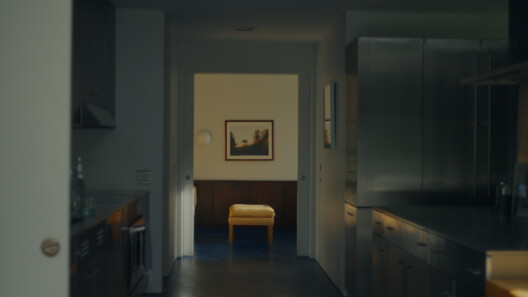
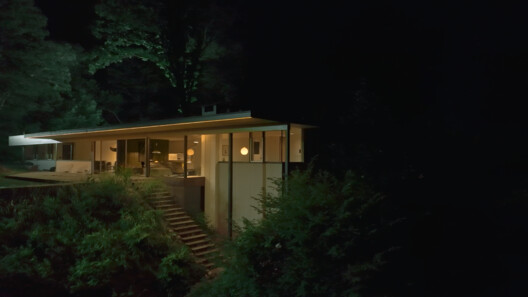
About an hour's drive from New York, the Corwin House sits in hilly woodland high above the Saugatuck River. Completed by Richard Neutra in 1956, it is one of only three houses the architect built in Connecticut. Architectural designer Aziz Osko has updated the house, revisiting details from Neutra's original design that were never built.
The commission began when Betty and Henry Corwin asked Neutra whether he could recommend an East Coast architect working in a similar style. Neutra was so taken with the wooded site above the river that he took on the commission himself.
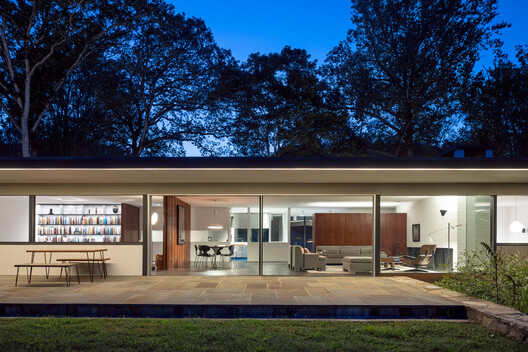
Henry and Betty Corwin spent the rest of their lives in the house. When Betty died in 2019, her children sold it. Architectural designer Aziz Osko and his partner Laurent Claquin were immediately drawn to the house. "We wrote a very emotional letter about how we felt when we first entered the house, what home means to us," Osko recalls. Its relationship with the river and the adjacent rock was part of that appeal: "You get in the house, and the first thing that strikes you is a beautiful river on the left, and right next to it, on the right, beautiful stone."
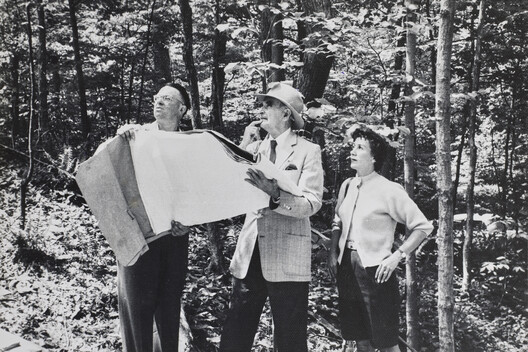
Respecting nature was one of Neutra's declared aims. Born in 1892, the Austrian-American architect became known for buildings whose large expanses of glass blur the boundary between inside and outside. Neutra was convinced that architecture has a direct effect on human well-being, a conviction he called biorealism. "I don't think he tried to teach people how to live. He listened to them, and he tried to improve their life," says Osko.
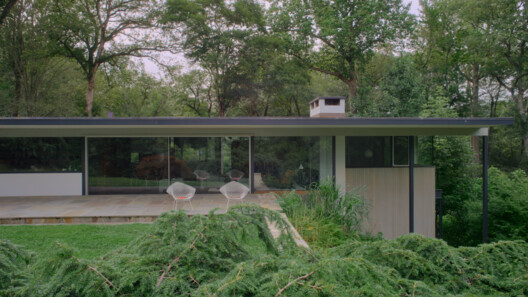
Before the architectural designer modernized the house, he spent a year studying how daylight moves through the rooms over the seasons. He also immersed himself in the original drawings, which the Corwin family had left in the house along with other project documents. With the help of the Neutra Foundation, Osko obtained access to the original specification book held in the archive at UCLA. Among details that had been drawn but never built for budget reasons, he discovered a line of light along the overhang. Osko realized this detail using LEDs. He also reopened a kitchen window that Neutra had wanted to keep open and the Corwins had eventually closed. "It just feels like a labour of love. It just makes me feel more part of the Neutra office process. I'm trying to finish some of their work that they started."
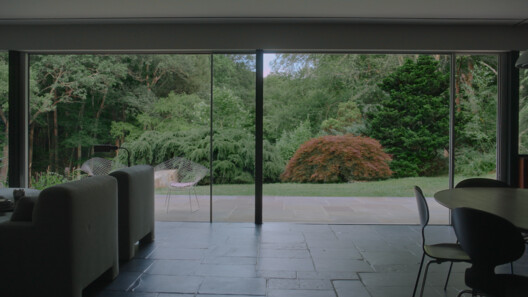
The house's original glazing had also undergone changes over the years. Because the single-pane glass made it difficult to keep the interior comfortable in both winter and summer, the Corwins replaced the large expanse of glass with smaller windows in the 1980s. To restore the original configuration, Osko chose Sky-Frame Classic. The sliding glazing system was selected to improve thermal performance while maintaining open views of the surroundings. "We kind of consider ourselves more as the guardian of the house. Not just having the key. We feel like it's a pleasure to be part of this chapter, the next chapter of the house," says Aziz Osko.
Text written by Valerie Präkelt.