The buildings and construction sector accounts for around 39% of global CO₂ emissions and nearly 50 per cent of global material extraction. Operational carbon emissions which are associated with the energy consumed to run the buildings also rose by 1% to 9.9 billion tonnes of CO₂ in 2024, even as building energy use intensity (EUI) has improved. These figures point to persistent gaps in the way buildings are designed, constructed and upgraded. One important area for closing those gaps is the building envelope insulation, which remains central to controlling energy demand, improving thermal resilience and reducing carbon emissions.
Yet Exterior Insulation Finishing Systems (EIFS) are still frequently reduced to insulation thermal conductivity, thickness, external envelope U-values and regulatory compliance. These measures are fundamental, but they do not capture the full brief facing architects, consultants and developers today. Buildings are expected to use energy more efficiently, control heat flow, enhance fire safety, perform reliably across junctions, generate fewer CO₂ emissions, provide better indoor comfort, withstand environmental stresses and still allow architecture to express identity and character.
Increasingly, the construction industry needs insulation systems that bring these requirements together. A system that delivers thermal performance but restricts design expression offers only part of the answer. Equally, an attractive façade cannot be considered successful if its material choices, detailing or installed performance undermine the wider sustainability objectives of the project.
The brief has changed
A modern insulation system therefore needs to be considered as a complete assembly, not an insulation board in isolation with a certain external wall U-value. The thermal performance of the external wall depends on insulation continuity, compatible components, detailing and how effectively the designed system is translated into the completed envelope.
This matters in both renovation/retrofit and new construction. Exterior insulation can improve an existing building without reducing internal floor area, while simultaneously renewing an ageing façade. In new construction, continuous exterior insulation is automatically designed around the structure from the outset, helping to eliminate thermal bridges.
A Building Energy Modelling study by Greenplan Consultants illustrates the potential. In a modelled 437 m² air-conditioned villa in Abu Dhabi, retrofitting external walls with Terraco EIFS Perma was estimated to reduce annual energy use by 31% with 50 mm mineral wool insulation board and 34% with 100 mm mineral wool insulation board.
A separate Dubai study compared two Building Code-compliant external wall constructions and estimated 5 to 6% lower annual energy use with continuous Terraco EIFS Perma than with an AAC infill solution and an uninsulated reinforced-concrete frame, principally because of reduced thermal bridging. These results relate to the specific modelled buildings and conditions rather than representing universal savings.
Modern codes remain an essential baseline. The studies show, however, why whole-wall performance, continuity and detailing deserve equal attention.
In Energy Efficient Building Envelope design, U-value compliance remains fundamental, but it is only the starting point. What ultimately matters is how insulation continuity, detailing and compatible system components work together across the complete envelope to deliver the performance intended at design stage. - John Carey, Group Technical Director, Terraco Group
Sustainability across the building lifecycle
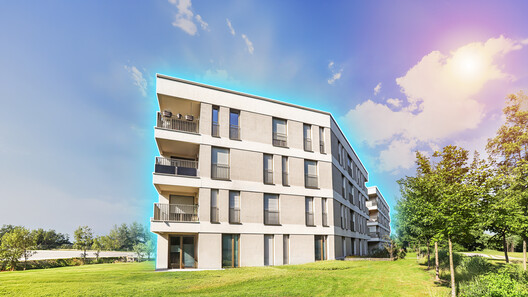
A high-performing building envelope should do more than achieve a lower U-value. A sustainable building should consume less energy, generate fewer associated CO₂ emissions and maintain more comfortable, stable indoor conditions for its occupants. Effective continuous insulation contributes to each of these outcomes by reducing unwanted heat transfer and lowering the energy demand for heating or cooling.
This brings two related, but distinct, dimensions of carbon into the discussion. Operational carbon accounts for approximately 28% of global carbon emissions associated with the buildings and construction sector. The Greenplan studies address this dimension by demonstrating how improvements to the building envelope can reduce energy demand and the resulting operational carbon emissions.
Embodied carbon, on the other hand, is associated with the materials and processes used to construct the building and accounts for the remaining 11% of global carbon emissions from buildings and construction. This impact begins with raw-material extraction and continues through manufacturing and construction, before the building enters its operational life.
The two therefore demand complementary responses: improving envelope performance to reduce energy consumption throughout the building's life, while also examining the environmental impact of the materials used to achieve that performance.
Terraco's EcoLife sustainability label brings this material dimension into greater focus. It encourages greater transparency through product-specific environmental information, including zero-VOC or low-VOC products, Life Cycle Assessments (LCAs), Environmental Product Declarations (EPDs) and recycled packaging where available. It also includes afforestation initiatives intended to help compensate for a calculated portion of residual embodied carbon associated with specified Terraco EIFS materials.
In this way, the sustainability discussion extends beyond thermal efficiency alone. The envelope becomes a functional contributor to lower energy demand, reduced carbon impact, occupant comfort and better long-term building performance.
From sustainability to architectural expression
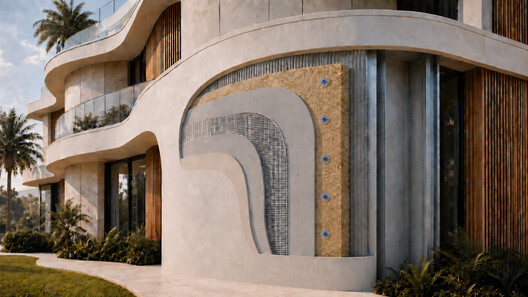
But a more sustainable building envelope should not narrow the architect's creative possibilities. A high-performing exterior insulation system still forms part of the façade, the public face of the building and an important expression of its identity. Architects increasingly expect exterior insulation finishing systems to accommodate colour, texture, curvature, architectural detailing and varied surface expressions without separating architectural intent from the technical build-up.
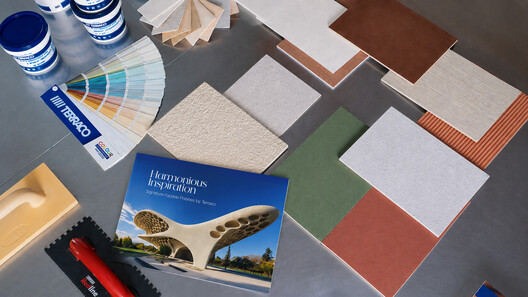
This thinking is already reflected in Terraco's exterior coatings focused message "Design Your World", which positions the façade as a canvas for creativity and architectural expression rather than simply a protective surface. The Harmonious Inspiration collection of Signature Façade Finishes by Terraco develops that idea further through curated finishes informed by global architectural and colour trends, including growing interest in natural influences, curvature, organic forms, contrasting materials and textured surfaces.
Exterior insulation systems naturally extend this philosophy because they ultimately form part of the finished façade. Terraco brings an exceptionally broad range of textures and finishes across Terracoat textured coatings, Terralite stone coatings and Terol mineral renders, allowing the decorative surface to remain integrated with the exterior insulation finishing system and enabling performance, sustainability and architectural expression to be considered together rather than as separate decisions.
The opportunity therefore is to design building-envelope systems in which each strengthens the other, allowing the façade to perform technically while remaining an integral part of the architect's creative intent.
The building envelope can no longer be viewed simply as a thermal barrier. It is a living system that influences how efficiently a building performs, how comfortably people experience it and how Insulation Is No Longer a Commodity | 4 architecture expresses itself. The opportunity for our industry is to bring these outcomes together rather than address them separately. - Eric Widstrom, Chief Executive Officer, Terraco Group
The Art of Insulation
Terraco considers the building envelope as an integrated system, one that can enhance indoor comfort, thermal efficiency, fire safety and façade durability while connecting performance, sustainability and design within one proposition: The Art of Insulation.
For architects and designers, the art lies in creating without treating exterior insulation as a constraint on form or finish. For consultants and specifiers, it means bringing certified systems, technical evidence and whole-envelope thinking into the same decision. For developers and building owners, it means connecting energy efficiency, comfort, fire safety, durability and architectural identity more closely together.
This idea also builds on Terraco's long-standing presence in the category. Terraco has pioneered the development and production of EIFS since the 1980s, with more than 45 years of experience and numerous international system certifications across different markets and building requirements.
Its exterior insulation portfolio includes EIFS Alpha (EPS/Graphite EPS Insulation), EIFS Perma (Mineral Wool Insulation) and EIFS Nova (Phenolic Foam Insulation) alongside Direct Applied Exterior Finishing Systems (DEFS), XFS Beta (Acrylic basecoat) and XFS Delta (Cementitious basecoat), providing solutions for conventional on-site construction as well as off-site construction for both traditional and steel-frame structures. Rather than positioning one product as the answer to every project, the proposition is to bring system selection, compatible components, technical support and architectural finishing into a coordinated response.
The Art of Insulation is about changing the way the category is considered. Performance, Sustainability and Design Flexibility should not be separate choices made at different stages of a project. Bringing them together within a complete system gives architects and consultants greater freedom to design, with the technical confidence to support that vision. - Avinash Pai, Group Marketing Manager, Terraco Group
A new direction for the building envelope
U-values code compliance remains fundamental, but just achieving targets is no longer the whole brief. New-build and renovation/retrofit projects increasingly require complete systems that perform across the wall, address operational and embodied carbon, support occupant comfort and preserve design flexibility.
The Art of Insulation expresses that direction, placing the building envelope at the intersection of engineering, sustainability and design, reflecting Terraco's role as a complete insulation systems partner.
The question, therefore, for architects, consultants and developers is no longer simply how much insulation a wall contains. The more relevant question is what the complete insulation system enables the building to achieve.