
Naturally associated with characteristics such as simplicity and clarity, but also expressiveness, vibrancy, and energy, the three primary colors—which give rise to other colors—offer a wide range of application possibilities in architecture. As crucial elements in the compositions of the leading exponents of the De Stijl movement, such as Piet Mondrian, Theo van Doesburg, and Gerrit Rietveld, yellow, blue, and red, when used together, became icons in design and architecture, and for many professionals in the field, an obsession.
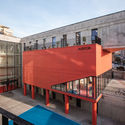
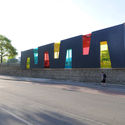
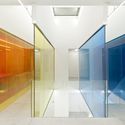
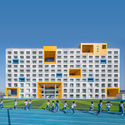

Beyond classic reproductions of primary colors paired with black grids and geometric shapes, the use of yellow, blue, and red can be found in architecture in various ways—from furniture to structural elements—and across different typologies. They are frequently used, for instance, in schools and educational or child-centric spaces, whether to emphasize the building's educational character or to stimulate the users' learning and creativity.


