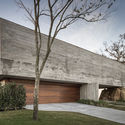
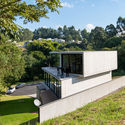
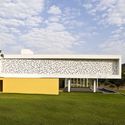
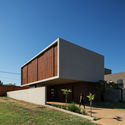
Blind walls, or facades without openings, are rarely the primary design concept in homes, but rather the result of a need for privacy in certain spaces, especially when the setback from neighboring buildings is minimal or nonexistent. However, blind walls can take center stage in a building's overall composition—whether through the contrast between solids and voids, the enhancement of the wall in other ways (such as the application of paint, texture, vertical gardens, etc.), or, finally, by positioning the blind wall on the front facade. This creates a "role reversal" between the side facades, usually resigned to a lack of openings, and the front and/or rear facades, which normally feature them.
We are more accustomed to seeing blind walls in high-rise buildings in cities, where urban density and the proximity between structures lead architects to adopt solutions like windowless facades to avoid a loss of privacy. The themes of voyeurism and the discomfort of being watched from the outside, famously explored in Alfred Hitchcock's suspense film Rear Window (1954), are situations we prefer to avoid in residential architecture. Consequently, blind walls can also be found in residential designs outside urban contexts, where houses are more isolated from neighboring structures but still require clear boundaries between the public and private realms.
We have gathered 20 houses from our archives that feature blind walls. Check them out below: