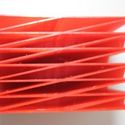
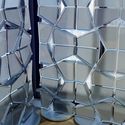
The concept of “resilience” is widely applied across many disciplines. In scientific terms, resilience is the capacity of a material or object to recover its shape after undergoing some form of trauma. In other words, it is quite different from resistance, as it fundamentally concerns the ability to adapt and recover. In ecology, resilience refers to an ecosystem's capacity to respond to disturbances, resist damage, and recover quickly. In architecture, however, integrating resilience into design can yield a wide range of solutions. Resilient design is inherently site-specific, making it essential to anticipate potential building use scenarios, and even disasters that could threaten the structure and its occupants. Beyond this, there is a growing focus on using adaptive structures and materials that can continuously learn from and modify themselves in response to the environment. If we already have software and algorithms that learn from their surroundings, why not apply the same approach to the building process?
We have selected 10 adaptive materials and design solutions developed under the concept of architectural and construction resilience—innovations that may one day become mainstream, or perhaps remain temporary experiments.