Portland State University’s School of Architecture launches Center for Public Interest Design

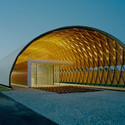
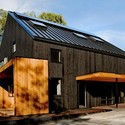
Portland State University’s School of Architecture has announced the launch of its new Center for Public Interest Design, a research center that aims to investigate and utilize the power of design to make social, economic and environmental change in disadvantaged communities worldwide. The Center is the first of its kind in the nation.
Make Your Summer Count with Global Architecture Brigades
While other architecture students spend their summers strolling the streets, seeing the sights, and contently sketching, you could be getting your hands dirty, turning your designs into reality, and making a difference in a community that needs you.
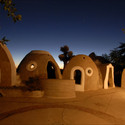
Every summer, Global Architecture Brigades (GAB) activates student volunteers to work with a community in Honduras, helping them alleviate needs in health and education. The program isn’t a lesson in a charity; it’s a hands-on experience of the community-entrenched work of a designer of the 21st century.
Read more about Global Architecture Brigade’s work in Honduras, and how you can get involved, after the break…
SEEDoc: Nyanza Maternity Hospital / MASS Design Group
Since June, we’ve been reporting on the Design Corps and SEED (Social Economic Environmental Design)‘s, SEEDocs, a series of mini-documentaries that highlight the stories of award-winning public interest design projects. As each mini-doc has been an excellent, inspiring exploration of the challenges and benefits of community-oriented design, we are pleased (and not a little sad!) to announce that the final seed-doc has just been released.
This month’s mini-doc, probably the series’ best, focuses on the Nyanza Maternity Hospital, designed by MASS Design Group. MASS of course garnered much attention for their Butaro Hospital, also in Rwanda (for an interesting inside-look at the construction of Butaro, read this excellent article by MASS co-founder Marika Shiori-Clark). Should this hospital be funded and realized, it will no doubt make more headlines for the innovative public-interest design firm.
Read more about MASS Design Group’s lastest project in Rwanda, after the break…
Where Did All the Patrons Go?

At the close of the 19th century, the funding of architecture was enriched by a new paradigm: that of the wealthy patron and philanthropist, who financed buildings through a sense of moral and social duty. This resulted in a number of grand public buildings, spanning cultural, educational and political institutions: the Museum of Modern Art, Carnegie Music Hall, a huge number of Carnegie Libraries and even the UN Headquarters would not have been possible without the generosity of these men.
Where are gifts like these today? Are there modern versions of people like Carnegie and Rockefeller? In the 21st century, an age of encroaching corporatism and “the one percent”, it might be easy to believe that this form of construction funding is dead. This interpretation, however, does not reflect the reality at all. In fact, the recent history of the ‘wealthy patron of architecture’ is more interesting than you might think, and is rooted in the lessons learned from the pioneers of the past century.
Discover more about the fate of the architecture patron after the break.
SEED Evaluator 3.0 to Launch During PID Week

Design Corps – a partner of Public Interest Design Week – has announced that Version 3.0 of the Social Economic Environmental Design (SEED) Evaluator, an evolving web-based tool, will officially launch next Saturday, March 23, during the Structures for Inclusion (SFI) conference at the University of Minnesota’s Minneapolis Campus. SFI participants will receive the first peek at this new, collaborative design tool. Thereafter, it will be available free of charge, online at SEEDNetwork.org.
Based on SEED’s bottom-up approach to design problem-solving that truly activates community concerns, the SEED Evaluator 3.0 not only advocates, but also requires an inclusive and participatory process for achieving successful design projects with involvement from community stakeholders as well as designers and project planners. The tool offers specific steps for creating a collaborative approach to public interest design and for identifying and measuring the success of like-minded project goals focused on the triple-bottom line of social justice, economic development, and environmental conservation.
SEED Evaluator 3.0 breaks down the design process into three phases (application, details, and results) with review and evaluation required at the end of each phase. The tool helps to ensure that an effective process is followed, adequate participation is included and results are transparent. Projects completed with the Evaluator become SEED Certified, providing project accountability and proof that a project successfully addresses social, economic and environmental needs.
Click here to register to attend Structures for Inclusion and other Public Interest Design Week events, online atEventBrite.com, or click here to learn more about the SEED Network and Evaluator tool, online atSEEDNetwork.org.

How to Balance Local Traditions and New Solutions in Public-Interest Design

Marika Shioiri-Clark is an architect who uses design to empower global change and battle inequality. While attending Harvard for her Masters in Architecture, she co-founded the non-profit MASS Design Group and began working on what would become the the Butaro Hospital in Rwanda. In this article, which originally appeared on GOOD as “Building a Rwandan Wall”, she explains the process by which the hospital was built and defends claims that the project, led by a group of Western architects, was somehow colonialist in nature.
As she puts it: “In a place like Rwanda, it’s not neo-colonialist to work on high-quality design projects as long as you’re deeply and authentically engaged with the community. In today’s world, it’s more neo-colonialist to assume that African people don’t want well-designed buildings and spaces.”
Read about Ms. Shiori-Clark’s experiences, and the delicate balance that must be struck between local knowledge and innovative techniques, after the break…
Infographic: The Make It Right Foundation
Since Hurricane Katrina swept through New Orleans, leaving devastation in its wake, the Make It Right Foundation has been working to redevelop the Lower 9th Ward by recruiting world-renowned architects (from Frank Gehry to Shigeru Ban) to the cause. The foundation, the brain-child of actor Brad Pitt, aims to design houses that aren’t just temporary solutions, but rather parts of an on-going process of sustainable, community development.
Learn more about the Make It Right Foundation‘s goals and progress, and check out some of the starchitect-deisgned prototypes that will eventually make up a 150-house neighborhood, in our ArchDaily original infographic, after the break.
13th Annual Structures for Inclusion Conference

The thirteenth annual Structures for Inclusion conference (SFI-13) will be held March 23-24 at the University of Minnesota’s Minneapolis Campus. The conference is preceded by the Public Interest Design Institute, a training program sponsored by the American Institute of Architects, that will be held at the same location on March 21-22. These are two major events that help compose the inaugural Public Interest Design Week, March 19-24.
Non-Design: Architecture’s (Counter-Intuitive) Future

Global architecture underwent a seismic shift in the 20th Century. Governments, keen to mitigate the impoverishing effects of rapid urbanization and two world wars embarked on ambitious social housing programs, pairing with modernists who promised that design could be the solution to social inequality and poverty. Today, the problems inherent in these mid-century tower blocks are well documented and well known, and these modernist solutions to poverty are often seen as ill-conceived failures.
If the 20th century was all about designing to solve social problems, then the 21st century has been about the exact opposite – not designing to solve social problems. These days, it is much more common to see architects praising the social order and even aesthetic of illegal slums, which in many cases provide their residents with a stronger community and higher quality of life than did many formal social housing projects of the past. The task of architects (both today’s and tomorrow’s) is to develop this construction logic: to use design and, rather counter-intuitively, non-design to lift these urban residents out of their impoverished conditions.
More on the social potential of non-design after the break…
SEEDoc: Maria Auxiliadora School
On August 15th, 2007 a powerful earthquake hit the region of Ica, Perú, destroying the small Maria Auxiliadora School. The first responders left after a matter of months, but the damage remained. Resources were shuffled to the big cities, and the small school waited, for years, for the authorities to take on the reconstruction. They never did.
And so, with help from Architecture for Humanity Design Fellow, Diego Collazo, and with funding from the Happy Hearts Fund and the SURA Group, the community decided to take the school’s – and their children’s – future into their own hands. This SEEDoc, the latest installment of inspirational mini-documentaries from the Design Corps and SEED (Social Economic Environmental Design), tells their story.
More after the break…
Curry Stone Prize Winners’ Inspiring Videos
Each of this year’s winners of the Curry Stone Design Prize are incredible examples of the powerful, and truly varied reach, of Public-Interest Design – which is why we’re sharing these short films, by Room 5 Films, on each of the winning projects. From the Butaro Hospital in Rwanda designed by MASS Design Group to the “Liter by Light” project (that recycles plastic bottles to bring a safe source of light to the slums of the Phillippines), each of these films are inspiring snapshots into the work and worlds of each of these winners.
More videos on Curry Stone Prize Winners, after the break…
6 Extraordinary Public-Interest Design Projects Honored with SEED Awards

Out of 65 submissions from 21 countries, six public-interest design projects have just been announced as this year’s winners of the International SEED Awards. The SEED Network and Design Corps have singled out these projects as those which best incorporated social consciousness, community outreach, and sustainability into their designs.
The 6 projects represent the diffusiveness of public-interest design today, and how, by looking through the lens of design, many diverse (and yet often re-occurring) social problems can be addressed.
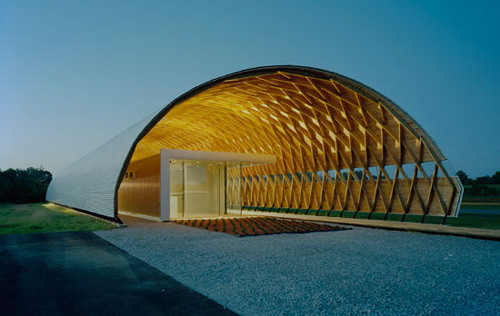
The Winning Projects, which you can see on display at the 13th annual Structures for Inclusion conference at the University of Minnesota College of Design March 22-23, 2013, are: SAGE: Affordable Green Modular Classrooms, Gervais, Oregon; Puyallup Tribal Longhouse, Tacoma, Washington (Puyallup Tribal Reservation); Rosa F. Keller Building, New Orleans, Louisiana; Firm Foundation, Banjarmasin, Kalimantan, Indonesia; Sudan Jalle School, Jalle Payam, Jonglei State, South Sudan; Maa-Bara: Catalyzing Economic Change & Food Security, Lenya (Bondo District), Nyanza, Kenya.
More info on these extraordinary public-interest designs, after the break…
Bancroft Project Breaks Ground

When we introduced you to the Bancroft School in September, the topic of one of the SEED Network’s awesome mini-documentaries, or SEEDocs, the revitalization project was still in development. However, this Saturday’s ground-breaking ceremony means that this innovative community complex will soon be a reality.
The building, which was an elementary school from 1904 until it fell into disrepair and closed in 1999, is located in one of Kansas City’s most neglected, lower income neighborhoods: Manheim Park. However, thanks to the joint-efforts of the Make It Right Foundation, BNIM Architects (the AIA’s 2011 Firm of the Year), and the Historic Manheim Park Neighborhood Association, the once asbestos-ridden school will soon be the center of a revitalization project to transform the urban landscape.
More on the Bancroft Project, after the break…
The Latest SEEDoc: Escuela Ecológica in Lima, Peru
SEEDocs: Escuela Ecologica from Design Corps on Vimeo.
The latest installment of SEEDocs, the series of fascinating mini-documentaries on award-winning public interest design projects was revealed today. While the first spotlighted an incredible community garden in New Orleans, designed/built with help from the Tulane City Center, and the last on the revitalization of an abandoned, abestos-ridden school in Kansas City, this month’s doc takes us out of the U.S., to a school in a poor neighborhood in the desert city of Lima, Peru.
More info on this incredible project, after the break…
2012 Curry Stone Design Prize Winners Announced!

The Winners for this year’s coveted Curry Stone Design Prize, which awards talented designers who “harness their ingenuity and craft for social good,” have just been announced!
In honor of the fifth anniversary of the Prize, this year the five winners will share the $25,000 award equally. An awards ceremony will take place on November 15, 2012, at Harvard Graduate School of Design, followed the next day with a forum of presentations by the 2012 winners and panel discussions. The awards ceremony and daylong forum are free and open to the public.
A big congratulations go out to The Center for Urban Pedagogy, Jeanne van Heeswijk, Liter of Light, MASS Design, and the Riwaq Centre for Architectural Conservation! More info on these incredible organizations, after the break…
Happy World Architecture Day!

World Architecture Day, celebrated on the first Monday of every October, was set up by the Union International des Architects (UIA) back in 2005 to “remind the world of its collective responsibility for the future of the human habitat” (not coincidentally, today’s also the United Nations’ World Habitat Day).
To mark this occasion, take a moment to consider the potential of architecture – and, indeed, socially-conscious architects – to transform the lives of human beings across the globe. If you need some inspiration, look back on the amazing Public Interest Design (PID) projects we’ve featured over the years – including dozens of Architecture for Humanity projects – as well as our PID infographic and editorial on the Inevitable Rise of Public Interest Design.
It may be easy to forget in the daily grind, but take today to appreciate the great work you do, and the potential it has to better our world. Architects of the world – Enjoy your Day!
SEEDocs: Bancroft School Revitalization
Design Corps and SEED (Social Economic Environmental Design) have released the latest installment of SEEDocs, their series of awesome, mini-documentaries that highlight inspirational stories of award-winning public interest design projects.
While June’s doc featured an incredible community garden in New Orleans, designed/built with help from the Tulane School of Architecture’s Tulane City Center, this month focuses on the revitalization of an abandoned, abestos-ridden school in Manheim Park, a low-income, neglected neighborhood in Kansas City, Missouri.
The New SEED Field Guide – Call for Projects
The Social Economic Environmental Design® (SEED) Network, which just announced its 3rd annual Awards for Excellence in Public Interest Design, is offering yet another exciting opportunity for Public Interest Designers.
SEED is looking for design projects (whether Architecture, Communication Design, Industrial Design, Landscape Architecture, Urban Planning, or interdisciplinary) for possible inclusion in their upcoming SEED Field Manual, a manual which will feature “the best practices of public interest design from all design disciplines that further social, economic and environmental justice.”
Deadline for project submissions is October 1, 2012. Qualifying projects from the last five years or still in progress will be considered. To apply, visit the SEED Network’s Submit A Project Page.
3rd Annual SEED Awards for Excellence in Public Interest Design – Call for Submissions
Design Corps, the Social Economic Environmental Design® (SEED) Network, and their 2013 partner, the University of Minnesota College of Design, are pleased to announce the Third Annual SEED Awards for Excellence in Public Interest Design.
The Awards seek out projects of “exceptional social, economic, and environmental impact” that “represent the forces needed to create truly sustainable projects and positive change in the world.” Last year’s winners, featured in the SEEDocs series of design documentaries at www.SEEDocs.org, include: the Bancroft School Revitalization in Kansas City and the Grow Dat Youth Farm in New Orleans, featured on ArchDaily.
The six winning projects will receive a $1,000 honorarium; an all-expense-paid trip for one team representative to present at the annual Structures for Inclusion (SFI 13) conference in Minneapolis; will be featured in a forthcoming publication, The SEED Field Manual; and will be profiled online.
Schedule
Deadline for applications: Monday, October 1, 2012
Announcement of winners: Monday, November 12, 2012
Presentation of awards at the Structures for Inclusion conference, March 24, 2013
Eligibility
Three broad categories of projects that have been designed or redesigned for the public good will be considered:
- Products;
- Places, such as buildings, landscapes, and other environments
- Processes, such as services, systems, business practices, or public policies
Projects in progress or completed in the past three years are eligible. Submissions that communicate the voices of actual clients or users are strongly encouraged.
Student, professional, and DIY projects will be considered, including work undertaken by individuals, nonprofit entities, private firms, and universities. Work may be undertaken anywhere in the world.
Criteria
Participation: How and to what extent have community members and stakeholders been involved in the design and planning processes?
Effectiveness: How and to what extent does the project address the community’s critical needs and challenges?
Excellence: How and to what extent does the project achieve the highest possible design quality, relate with its context, and dignify the experiences of those it touches?
Inclusiveness: How and to what extent does the project promote social equity as well as reflect a diversity of social identities and values.
Impact: How and to what extent are the social, economic, and environmental impacts of the project known and being measured?
Systemic: How and to what extent might the project or process be scaled up to have a broader impact?
For more application details and guidelines, go to www.designcorps.org/awards.
The Grow Dat Youth Farm & SEEDocs: Mini-Documentaries on the Power of Public-Interest Design
If you read our infographic, then you know that Public-Interest Design is one of the few growing sectors of the architecture industry. From the prevalence of Design-Build curriculums in Architecture Schools to the rise of the 1% program and non-profits like Architecture for Humanity, Public-Interest Design (PID) is hitting its stride.
Which is why we’re so excited that two of PID’s biggest players, Design Corps and SEED (Social Economic Environmental Design), have teamed up to create SEEDocs, a monthly series of mini-documentaries that highlight the inspirational stories of six award-winning public interest design projects.
The latest SEEDoc follows the story of the Grow Dat Youth Farm - a brilliant example of what we call “Urban Agri-puncture” (a strategy that uses design & Urban Agriculture to target a city’s most deprived, unhealthy neighborhoods) that is changing the lives of New Orleans youth.
More on this inspiring story, after the break…
Infographic: Public Interest Design
Public Interest Design is the next frontier of the sustainability movement. Taking a triple bottom line approach, it positions design to more tconsider economic, environmental, and social factors - creating better places, products, and systems for people to live their best lives. Inherently human-centered and participatory, public interest design seeks to improve the quality of life for all people, regardless of their socio-economic background.