-
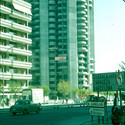
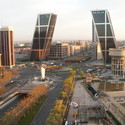
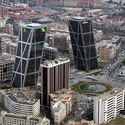
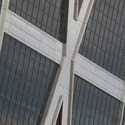
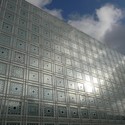
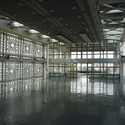
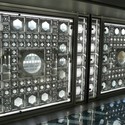
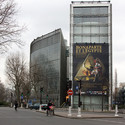
Architects: Architecture-Studio, Ateliers Jean Nouvel: Jean Nouvel, Architecture-Studio, Pierre Soria and Gilbert Lezenes
- Year: 1987
-
Manufacturers: Goppion




Back in late 2009 Arch Group shared with us their proposal for an urban relaxation pod – SLEEPBOX. Their concept has been realized, with production of the modular 2.5×1.6m x 2.5-3m high unit high moving ahead.
This snapshot of a new documentary about mid-century modern architecture in Arkansas illuminates classic post-war designs. Simple, clean lines were often the elements that delineated the aesthetics of these buildings. While many lay in disrepair, they still exude an aura of a time when optimism was reflected in the country’s desire to build a new future. Some of the architectural icons that are featured include the University of Arkansas’s Fine Arts Center by state native Edward Durell Stone, the Tower Building in Little Rock, the Fulbright Library in Fayetteville, and the abandoned Hotel Mountainaire. Check out the short clip of what will air in November on AETN. Also, see the highlights of the current affairs and award winning architecture that is taking place within the state of Arkansas here.
Two young artists Ryan and Trevor Oakes have introduced a unique way for drawing using a 3D drawing machine that assists in re-presenting the view in front of one’s eyes. The machine was developed as an exploration of the nature of vision with a goal to recreate realism in the correct proportions and perspective. The artists explain how the machine works; by limiting vision of the scene to one eye and the other to plot the image on concave paper, an illusion occurs where the paper becomes transparent, rendering an effect that you are simply tracing the scene in front of you. It is an interesting take on creating artwork with amazingly accurate results. Check out the video for their presentation.


Melbourne’s Prahran neighborhood will soon be home to a five-story apartment block with David Bowie’s alter ego Ziggy Stardust emblazoned across the façade. The image will span across four of the levels on the new $10 million Tatu building. Utilizing a perforated metal screen system, the eyes and lips of the facial image will be adjustable when residents shift the screens on their balconies.

A Kickstarter campaign started by Birch Books Conservation owner Birch Cooper will see the library collection of Philip Johnson’s Glass House collated in a new book – The Library of Philip Johnson: Selections from the Glass House. Conceived as a resource for architects, architecture aficionados, and the general public, the book will illuminate many of the philosophies and ideologies that Johnson contributed to American modernism. Featured under the cover will be 100 selections that have been photographed and researched with a brief synopsis by the authors, in addition to the inventory list of all the books contained within the Library Studio of Philip Johnson. With an anticipated publishing date later this fall, it will be Birch Books Conservation’s first publication. Containing over 350 photographic illustrations, the 250 page volume is sure to be an excellent addition to any architecture collection.

Frank Lloyd Wright’s Historic Park Inn Hotel in Mason City, Iowa, has recently undergone an extensive $18 million restoration. The hotel, designed in 1910 for two lawyers features 42 hotel rooms, two-story banking room, basements shops below and office space above. It was the last hotel designed by FLW in the world, thus the group of preservationists who have undertaken the task of bringing it back to its original vision are very excited. Some of the distinctive elements that the renovation restored include the exterior brick and terra cotta façade and the art glass windows. This Prairie School building is now open to the public and taking reservations.

Glazing has always been employed in architecture to convey and complement aesthetics. Its use exemplifies spaces, transitions between indoor and outdoor volumes, and modulates the amount of light penetration. With this in mind, glazing manufacturers are continually innovating new products to resolve the ever increasing demands imposed by designers. Whether it is curvilinear, textured, colored, laminated, etc., the increasing variety available is growing at an increasing rate.
Hong Kong based architect Ted Givens of 10 Design has recently unveiled designs for tornado proof and hurricane proof housing. With the recent earthquake and hurricane events that have hit the eastern seaboard of the United States, it seems a fitting proposal for urban clustering on a residential scale.

On August 22, 2011 a live map that charts members of interior design, architecture, and related consultants on Twitter was released into the wild. In only three days it had already surpassed 8000 views, and added 120 professionals to the map.

What would the world’s landscape look like if it were concentrated into one megalopolis? This graphic analysis illustrates the amount of land required to accommodate all 6.9 billion people based on the densities of cities across the globe. The differences illuminate the adverse affects of suburban sprawl.

The U.S. Department of Education has recently launched its Green Ribbon Schools initiative. The program is aimed at fostering the growth of sustainable indoor and outdoor environments in addition to promoting the integration of environmental curricula into the education stream.

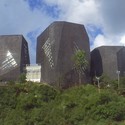
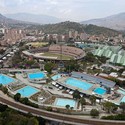
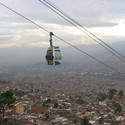
A renaissance through architecture has been unfolding throughout the past several years in Colombia’s second largest city – Medellin. Home to 3.5 million inhabitants it was plagued by violence in the 1980’s and 1990’s. However, through an ambitious plan headed by former mayor Sergio Fajardo, the cityscape has undergone a dramatic shift since his election in 2003. One of the defining principles of this initiative that invested millions into civic architecture and public infrastructure was to build in some of the roughest districts of the city. More details after the break.

The Y.S Sun Green Building Research Center at National Kung University in Taiwan has recently been awarded top honors by the USGBC, in addition to receiving the Taiwan Ecology, Waste Reduction and Health Diamond Certification from the Ministry of Interior. The three-story 4800 square meter building utilizes 13 different sustainable building techniques in order to achieve a 65% energy savings and a 50% water savings over typical office buildings.

Herman Miller has recently unveiled their new Envelop Desk. Aimed at the individual who is constantly working in front of a computer screen, it addresses ergonomics in a clean and modern aesthetic. Designed by Bill Stumpf and Jeff Weber, it features a molded urethane surface that tilts up to 7 degrees in order to maintain sightline with a computer monitor or laptop. A flat surface at the rear provides ample horizontal space. The desk can be complemented with the matching Embody Chair, also designed by Stumpf and Weber.