1. ArchDaily
  2. Zenith Lighting

Zenith Lighting: The Latest Architecture and News

Light from Above: Measuring and Designing Daylight Under Sloped Roofs

 | In Collaboration

If we ask a child to draw a house, a triangular silhouette will almost certainly appear, with two sloped planes meeting at a ridge. Few architectural forms are as universally recognizable as the pitched-roof house. From a semiotic perspective, this elemental image functions as a condensed sign of shelter that, in just a few traces, synthesizes protection, interiority, and belonging. What we now read as a universal symbol, however, emerged from a concrete necessity. From Alpine chalets shedding snow to Mediterranean roof tiles mitigating summer heat, the slope responded to climate and construction challenges long before it became an aesthetic code.

Although modern architecture has favored horizontal planes and orthogonal plans, the pitched roof requires a project to be conceived in section. Its angle allows for efficient use of the volume beneath the roof and introduces variations in height, spatial compression, and expansion. When openings are incorporated into this plane, the condition intensifies. Unlike vertical windows, which capture lateral light, roof apertures receive a larger portion of the visible sky and significantly higher luminance than the horizon, offering up to three times more light than vertical glazing on overcast days.

When Light Meets Energy in Glass Ceilings

 | Sponsored Content

From the large industrial roofs and galleries of the 19th century to the contemporary atriums of museums and public buildings, glass has been a recurring material in shaping large and monumental interior spaces. More than a technological or engineering solution, these horizontal glazed planes introduce a distinct luminous quality: light that comes from above. Unlike lateral daylight entering through façades, zenithal light is more evenly distributed, reduces harsh shadows, and lends spaces a sense of continuity and openness that is difficult to achieve otherwise.

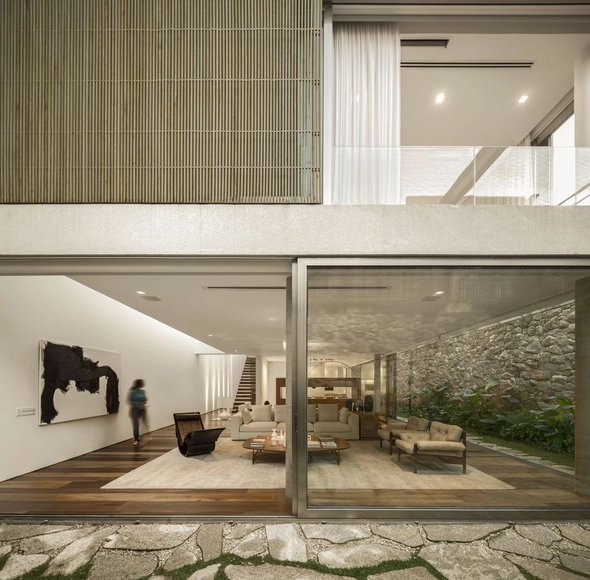
C House / Studio Arthur Casas

C House / Studio Arthur Casas - Interior Photography, House InteriorsC House / Studio Arthur Casas - Interior Photography, House InteriorsC House / Studio Arthur Casas - Exterior Photography, House Interiors, GardenC House / Studio Arthur Casas - Interior Photography, House Interiors, Table, ChairC House / Studio Arthur Casas - More Images+ 24

  • Area Area of this architecture project Area:  425
  • Year Completion year of this architecture project Year:  2013
  • Manufacturers Brands with products used in this architecture project
    Manufacturers:  Valcucine, Aricanduva Caixilhos, Arthur Decor, Asia Pedras, Deca, +11

Systems to Incorporate Natural Lighting in Your Projects

Subscriber Access | 

There is nothing more rational than taking advantage of natural lighting as a guarantee to improve the spatial quality of buildings, as well as saving energy. The awareness of the finitude of natural resources and the demands for reducing energy consumption has increasingly diminished the prominence of artificial lighting systems, forcing architects to seek more efficient design solutions. With this goal in mind, different operations have been adopted to capture natural light.

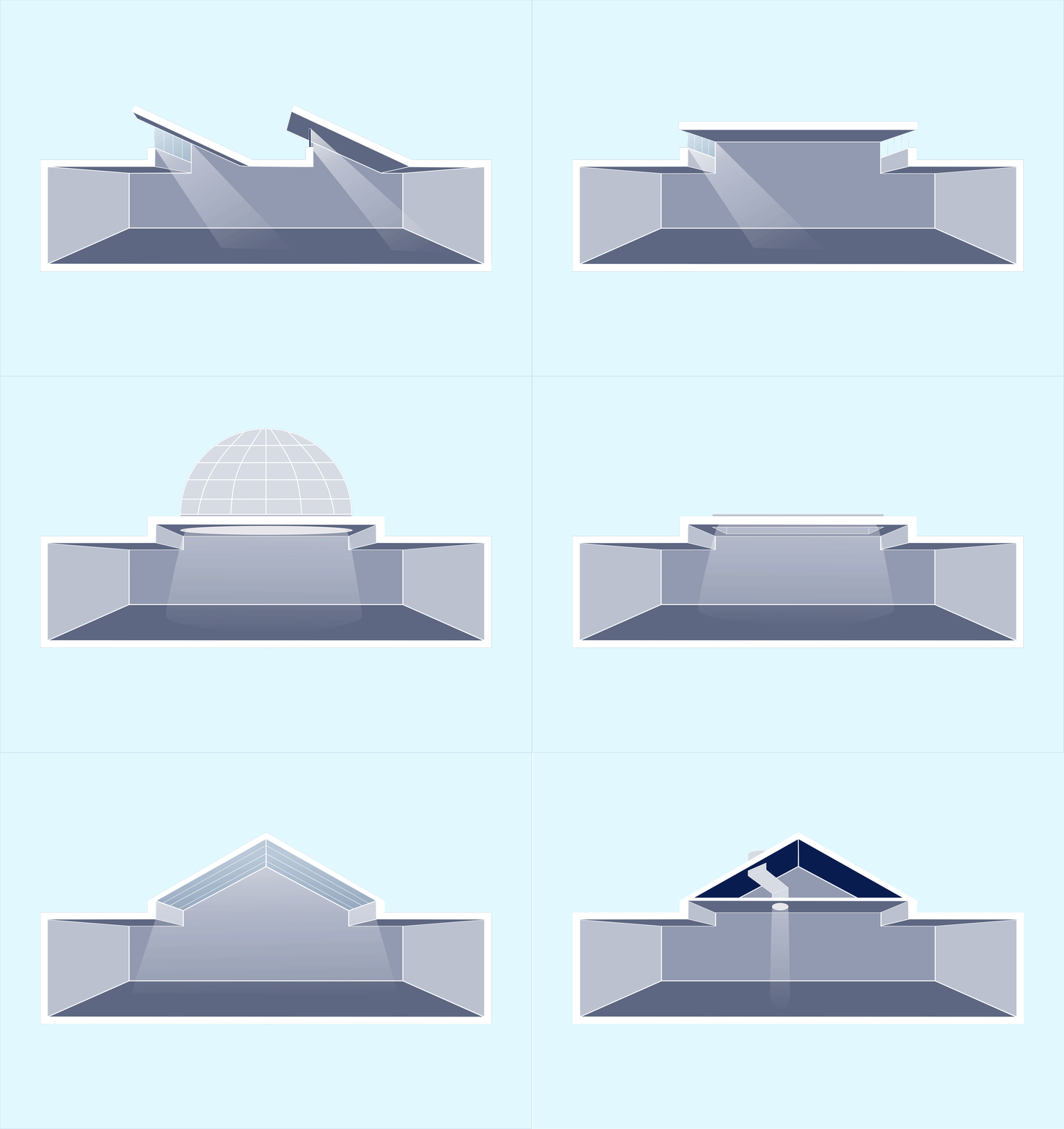
These systems can also guarantee excellent spatial properties if projected correctly. Below we have gathered five essential systems for zenithal lighting.