A jury of internationally recognized design professionals and Seattle civic leaders has declared a winner among three semi-finalists in Urban Intervention: The Howard S. Wright Design Ideas Competition for Public Space. The winner is ABF, of Paris, France, for its design, In-Closure, which envisions an interactive wall around a forested landscape that is both flexible and dynamic, embracing social life in the city at multiple scales.
The ABF team consists of Etienne Feher, architect; Paul Azzopardi, urban engineer; and Noé Basch, climate engineer. Continue reading after the break for more details.
Tomorrow, Amazon representatives are scheduled to present their design for a three-block proposal that will introduce three new towers to the Seattle skyline and add 3.3 million square feet of office space to the downtown area. Quite possibly the largest development ever proposed downtown, the complex will consume five acres in the Denny Triangle Urban Village that is currently being used for parking, the Sixth Avenue Inn and the King Cat Theater.
Continue reading for more information on the Denny Triangle project.
The public space proposal for the Urban Intervention competition creates a new way of creating a dialog between the park and the city. Designed by PRAUD, each solid and void creates its own topography, and thus the topography of the solid provides different experiences for pedestrians and joggers, while topography of the voids provide different types of functions and landscape fields. More images and architects’ description after the break.
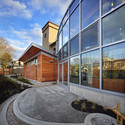
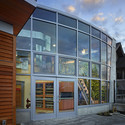
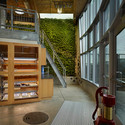
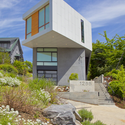
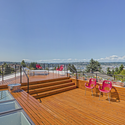
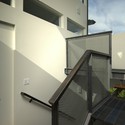
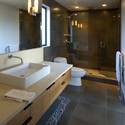
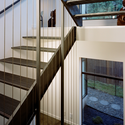
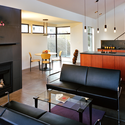
The upcoming Tour of Architects in the Puget Sound region of Washington State sponsored by AIA Seattle will take place from March 17-25. Four separate tours will take place over the two weekends, with architects on site to meet with tour guests in addition to conducting tours. The projects featured on the tour are primarily residential, encompassing a wide variety of styles ranging from modern, universally design urban lofts, to remodeled min-century ramblers. Some of the other typologies featured include a memorial project dedicated to the memory of Japanese Americans interned during WWII, an equestrian facility and an award winning Fire Station.
The tickets are priced at $20 per tour, $35 for a weekend pass, and $50 for both weekends.Visit the official site for more information here. See more photos of some of the featured projects after the break.
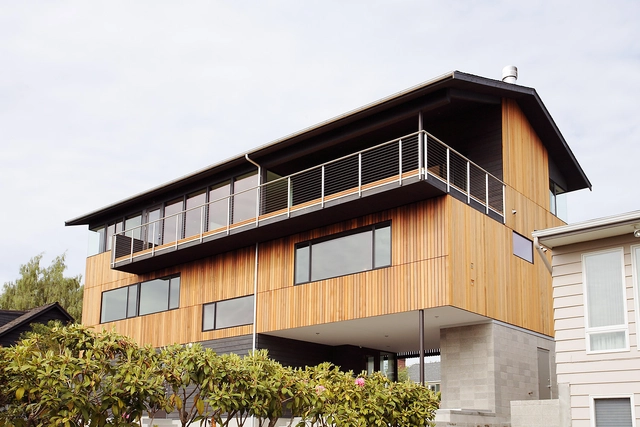
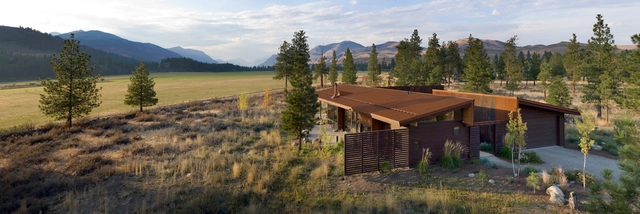
In this interview published by Seattle Met, Lawrence W. Cheek speaks with Tom Kundig, principal at Olson Kundig Architects. Kundig has defined his career for designing homes that are flexible and considerate in their materials, functions, response to site and the way that the human body interacts with the space and mechanics of the environment. This interview is excellent at revealing Kundig’s inspiration and priorities when it comes to designing homes and he mentions some great examples and strategies that he has taken over the years.
Here is just a list of the variety, but consistency, representative of Kundig’s work:
On January 25th at 6pm, Tom Kundig will be speaking with Mark Rozzo at the New York Public Library about Tom Kundig: Houses 2. More information on that event coming soon.
Follow us after the break for the full interview, courtesy of SeattleMET, ”Q&A with Architect Tom Kundig” by Lawrence W. Cheek.
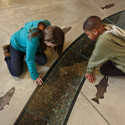
Olson Kundig Architects is an experimental work place for their community collaborations, pro‐bono design work, philanthropic and volunteer work, and for design research and the development of design ideas. Since its inception this summer, has served as an artist’s working studio, a dancer’s stage, a non‐profit’s arts education on workshop and outreach hub, a design festival’s pop‐up space, and more. Record Store is the latest and current iteration of . More images and architects’ description after the break.
USA Today has put together a list of city neighborhoods which are satiated with activity, areas which offer a “great slice of urban life.” These districts trend from the urban vicinity to its very core, each in itself exemplifying the revitalization of the American city. The list includes regions which have been influenced by deliberate urban revitalization projects, such as High Line Park in Chelsea; while other neighborhoods have experienced an influx of a younger populace which has contributed to its growth, such as Lawrenceville in Pittsburgh.
See the 10 Up and Coming Urban Neighborhoods after the break.





![Record Store Installation at [storefront] / Olson Kundig Architects - Image 20 of 4](https://images.adsttc.com/media/images/55f7/27d6/203e/c81e/3000/0026/medium_jpg/009_storefront-oka_record-store_ji.jpg?1442260943)