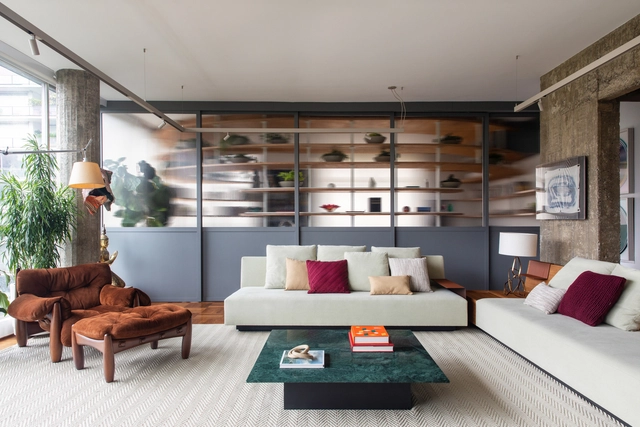
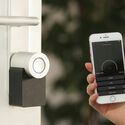
Smart homes leverage technology to provide residents with increased convenience, savings, comfort, and security. With automated environments, household routines are streamlined. What once seemed like a distant future is now within reach as smart devices have become more accessible. They enable a new level of interaction between the home and its inhabitants through Wi-Fi and Bluetooth connections.
https://www.archdaily.com/1010597/how-to-create-a-smart-home-a-complete-guide-for-beginners-in-home-automationArchDaily Team
IKEA’s research and design lab SPACE10 has published The Healthy Home report, the second release in its Future Home report series. The report explores three main themes concerning domestic environments: how our homes protect us from harm, restore our bodies and minds, and enable us to grow through life’s stages. The research aims to evaluate the ways in which homes can positively contribute to and support the rhythms and flows of life. It was developed in collaboration with Morph to develop the visuals supporting the findings.
In medieval cities, walls played a crucial function, acting both as a defense against external threats and as a symbol of power and control, while also regulating local trade. The access to the interior of these cities was strictly controlled by guarded gates, drawbridges, and portcullises, ensuring the free flow of local residents and simultaneously obstructing travelers and potential invaders. While fortified towers and armed guards are now primarily associated with prisons, creating access conditions that promote security, reliability, and practicality remains a challenge for architects and designers, especially in complex infrastructure projects such as airports, hospitals, and educational centers.
Gender is an undeniable layer of inequality in cities, which distinctly and effectively marks the experience and daily life of men and women in urban environments. Public lighting is crucial to ensure more inclusive and equal spaces, and often it is not planned from a gender perspective.
Poorly lit public spaces reinforce feelings of fear in these environments and must be rethought to promote safer cities, especially for women. With more than half of the world's population living in urban areas – a scenario expected to increase – how can we make public spaces safer and more comfortable so that they can be fully enjoyed and accessed by everyone?
Envision your ideal neighborhood. Maybe it’s on a cul-de-sac in the suburbs, where every neighbor has a well-manicured lawn, a two-car garage, and everyone gives each other a friendly wave on their way to work. Or maybe you live in a high-rise building in a dense urban center, where you take public transit to the office five days a week and say hello to your doorman on your way out. Whatever your neighborhood might look like, there’s always a sense of wanting to know the people who live around your- or at least an unspoken reliance on one another to ensure that your surroundings are safe. What happens when technology brings you and your neighbors together to report on local happenings? Is it a good thing, or does it create a vigilante situation gone awry?
As a response to global challenges such as climate change, discrimination, and physical vulnerability, designers and engineers from across the world have developed innovative construction materials that put the human wellbeing first in urban, architecture, and interior projects.
Multifamily housing in urban environments provides social, economic, and environmental benefits to both individual residents and cities as a whole. Kicked into overdrive after the 2008 financial crisis, demand for multifamily housing has since continued to rise and remains strong today. Generations Y and Z are the youngest urbanized group of adults and these young professionals are fueling much of the demand for compact living in city centers. Though the younger generations are the ones driving the changes, the result is expected to be more secure, convenient living for everyone.
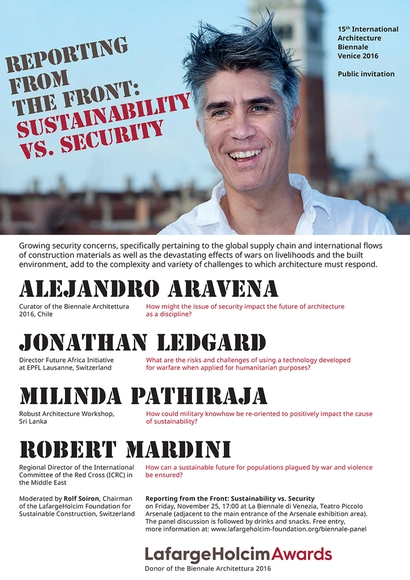
Based on his experience in curating the 15th International Architecture Exhibition of La Biennale di Venezia 2016 in Venice, the Chilean architect Alejandro Aravena inspired the LafargeHolcim Foundation for Sustainable Construction to organize a debate on sustainability and security. Framed as one of this year Architecture Biennale’s discussions, the event will foreground topics that were raised in the context of the exhibition “Reporting from the Front” and expose them to “real life reports” from the forefront of architecture and related disciplines.
The bank architect’s goal is to create a secure edifice. The bank robber’s? To subvert the edifice. And yet consider their commonality: their interaction with space. Both analyze plans and consider inefficiencies, both inhabit the space much differently than your average spectator. In fact, the Robber’s relationship with space is far more physical, urgent…nuanced. As Mehruss Ahi, a recent graduate from Woodbury University, puts it in his senior thesis: “The Architect is the Bank Robber…and the Bank Robber is the Architect.”
Ahi suggests a Robber-like “spatial hack” of the bank: an identification of its inefficiencies/vulnerabilities/paths of circulation. He also notes the necessity of giving priority to large storage space for goods rather than money (due to “the migration of banking services to the Web”). This new perspective, Ahi argues, will allow architects to design a smarter, more secure bank. The bank of the future.
Ahi’s assertion about the need for physical storage space (as banks turn to the Web), got me thinking. Our world depends less and less on physical storage, and more and more on the bits of information flying through the wires and cables of the internet. Ahi’s theory, while an interesting insight into bank design, is even more powerful when applied to the bank’s modern day equivalent: the Data Center.