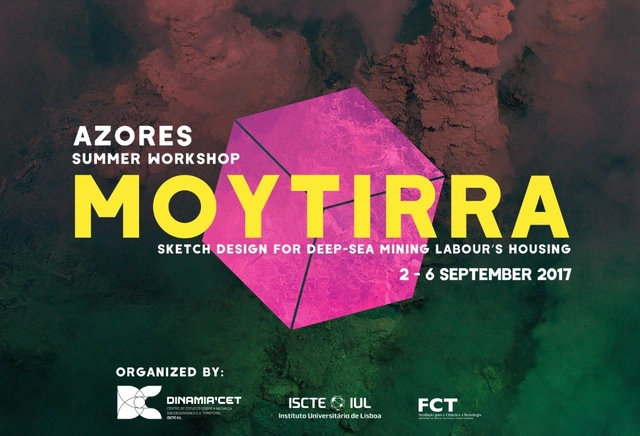
DINÂMIA’CET-IUL is delighted to announce the 1st Summer School on the Island of São Miguel in Azores.
“Moytirra 2017, Sketch design for deep-sea mining labour’s housing” includes Master-Classes, studio sessions and field trips, led by lecturers and researchers from ISCTE-IUL and University of Azores (Portugal), Northeastern and Dartmouth College (USA), Kuwait University (Kuwait) and University of Waterloo (Canada), with the support of local architectural offices. On 5th day, the final results of the workshop will be presented and discussed with the local community.
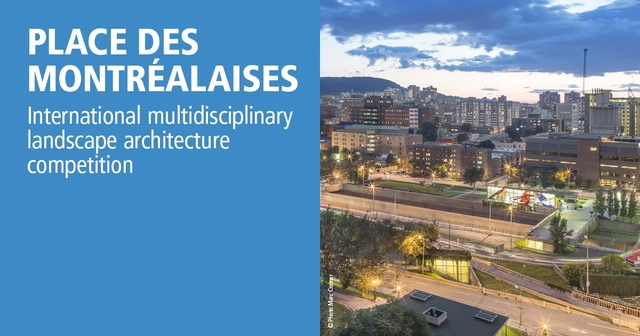
International Multidisciplinary Landscape Architecture Competition - Photo credit: Marc Cramer
The Ville de Montréal (city of Montreal) wishes to source the most innovative and creative ideas for the permanent construction of Place des Montréalaises, a new public space adjacent to Champ-de-Mars métro station, including a pedestrian overpass.
“Less is only more where more is no good.” — Frank Lloyd Wright, American architect.
Not everyone aspires to live in a big house — some aspire to do quite the opposite. With a new generation entering the workforce with higher debts and lower wage expectations and another generation retiring on limited incomes with little savings, many people are seeking alternative living arrangements beyond the basements of family members. Micro houses are becoming a new national infatuation as housing costs continue to rise and people scramble to find more affordable housing. Popular shows on cable television also extol the virtues of living in a limited space.
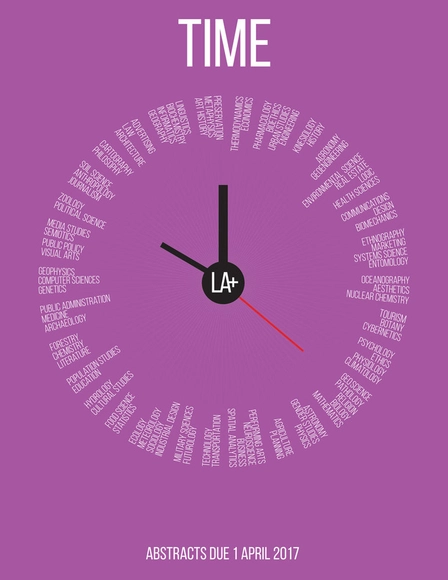
Time is ticking. That’s what it does. Or at least that’s how we represent what we don’t understand. For physics, time is a byproduct of so called space-time, elastic goo created at the very moment that something came from nothing; the moment eternity stopped and the universe began. For geology, time is 4.5 billion years of compression and catastrophe. For biology time is 3.5 billion years of diversification and now the urgency of the sixth extinction. For anthropology time is 150 thousand years since mitochondrial Eve walked out of the rift valley in Ethiopia. For historians, time begins with Herodotus (484 BC) and ends, or rather doesn’t, with Fukuyama’s The End of History. For architecture time is ruination. For landscape architecture time is ephemerality, entropy, and growth. For all of us time is running out. In this issue of LA+ we invite speculations on the question of time from all relevant disciplines.
2017 SEGD Global Design Awards Now Open for Entries
The 2017 SEGD Global Design Awards, the only international awards program focused on user experiences in the built environment, is now open for entries. Since 1987, the SEGD Global Design Awards have set the standard of excellence for environmental graphic design and experiential graphic design, honoring design work that connects people to place by providing direction, content and compelling experiences in public spaces.
Have you ever imagined living in a house surrounded by the forest? Here is a competition to realize your dreams. The competition will be started very soon and seeks to explore the fantastic ides of architectural design, as well as landscape design and site planning. The aim of this competition is to promote our ideas of protecting the forest and its environment. We also encourage the creation of new living style which is not only limited for houses, but also can be like pavilions, structures, or landscape.
Mrs. Jane Jacobs, chairman of the Comm. to save the West Village holds up documentary evidence at press conference at Lions Head Restaurant at Hudson & Charles Sts. (1961). Public Domain
My introduction to Jane Jacobs was completely ordinary. Like many, many architecture students since its publication in 1962, I read The Death and Life of Great American Cities for an introductory course in urbanism. Jacobs was a joy to read, whip-crack smart and caustically funny, and she wrote in impeccable, old-school sentences that convinced you with their unimpeded flow. She explained her ideas in utterly clear and simple language. Planners are “pavement pounding” or “Olympian.” There are “foot people and car people.”
Why were we reading her? I expect it was to encourage us to look harder at the city, and to imbibe some of her spirited advocacy for experience over expertise. It was a captivating message and delivered at the right time. Today it seems as though everybody interested in cities has read at least part of Death and Life and found personal affirmation in it. Michael Kimmelman wrote, “It said what I knew instinctively to be true.” For David Crombie, “she made it clear that the ideas that mattered were the ones which we understood intimately.”
This quality was important, and one of the reasons that Jacobs endures in our culture is the facility with which we can identify with her. She is one of “us,” whoever that is—not an expert, more like an aunt than a professor. Her speciality was the induction of rules from patterns discovered by individual observation, like a 19th-century gentleman scientist. Her work gave seriousness to reactions that might otherwise be dismissed as taste, ignorance or prejudice.
Skidmore, Owings & Merrill (SOM) has released plans for a new mixed-use urban district for Philadelphia’s 30th Street Station Precinct. In response to projections showing significant increases in transit activity in the coming decades, the project calls for a transformation of the existing Beaux Arts train station and surrounding neighborhood of University City. The design will improve transportation throughout the city, and will activate the area with new shops, restaurants and public plazas.
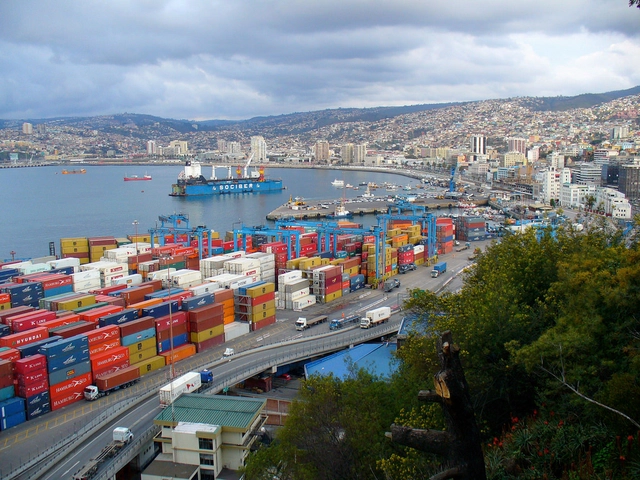
Restricted. Vast. Harsh. The image of a port calls to mind many words, but pedestrian-friendly and aesthetically-pleasing are rarely among them. With their precarious stacks of shipping containers and large pieces of machinery, ports are places that people tend to want to avoid. Yet for logistic and historical reasons, ports are often located near the heart of cities, taking away valuable urban space and desirable waterfront land from residents. This does not need to be the case.
A new report released by The Worldwide Network of Port Cities titled “Plan the City with the Port: Guide of Good Practices” offers strategies for cities to optimize the effectiveness of their harbors while reclaiming as much of the land as possible for the people. The guide uses case studies from urban designs in various stages of completeness to illustrate different techniques available to improve the environment of a port within its city. Although these approaches are designed with a specific program in mind, many architectural and urbanistic ideals can be derived from them to be used in variety of circumstances. Read on for our summary of the report’s recommendations.