1. ArchDaily
  2. Pink stone

Pink stone: The Latest Architecture and News

Ground Truth: How the BCIE Headquarters in Honduras Spoke Through Local Stone

Subscriber Access | 
Audio available

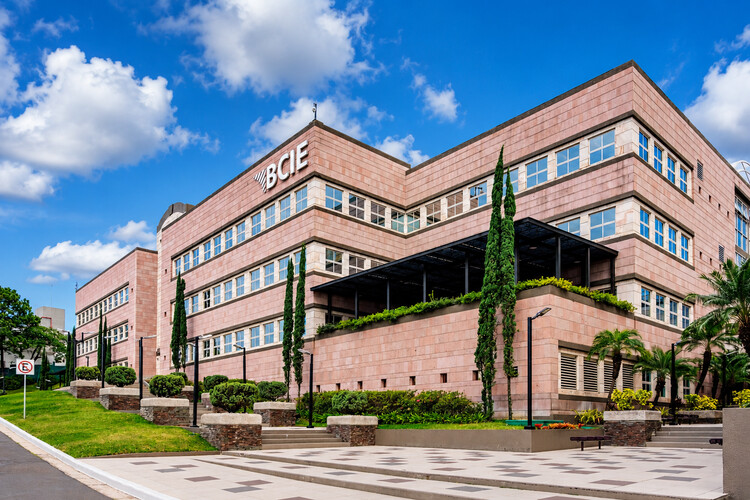
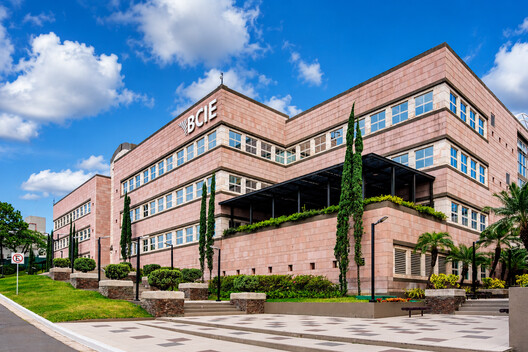
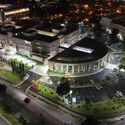
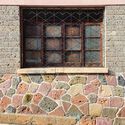
Central America's nations occupy a narrow land bridge between Mexico and Colombia, but they were not born as separate countries. They emerged from a single entity: the Federal Republic of Central America in 1823. That federation collapsed, yet the ideal of a unified region never fully died. In 1951, the governments signed the Charter of San Salvador, creating ODECA, the Organization of Central American States. Four decades later, the 1991 Protocol of Tegucigalpa replaced it with SICA, the Central American Integration System, the framework guiding regional cooperation today. Within this integration process, the Central American Bank for Economic Integration (BCIE) was founded in 1960 by Guatemala, El Salvador, Honduras, and Nicaragua, establishing its headquarters in Tegucigalpa. On the surface, it is a conventional late-20th-century office complex, but look closer at its façade, and the building becomes an argument about identity. One written in pink quarry stone from the very hills that surround the Honduran capital.
Ground Truth: How the BCIE Headquarters in Honduras Spoke Through Local Stone - Image 1 of 4Ground Truth: How the BCIE Headquarters in Honduras Spoke Through Local Stone - Image 2 of 4Ground Truth: How the BCIE Headquarters in Honduras Spoke Through Local Stone - Image 3 of 4Ground Truth: How the BCIE Headquarters in Honduras Spoke Through Local Stone - Image 4 of 4Ground Truth: How the BCIE Headquarters in Honduras Spoke Through Local Stone - More Images+ 7

A Modernist Church Set in Stone: The Story Behind the Temppeliaukio Kirkko in Helsinki, Finland

Subscriber Access | 

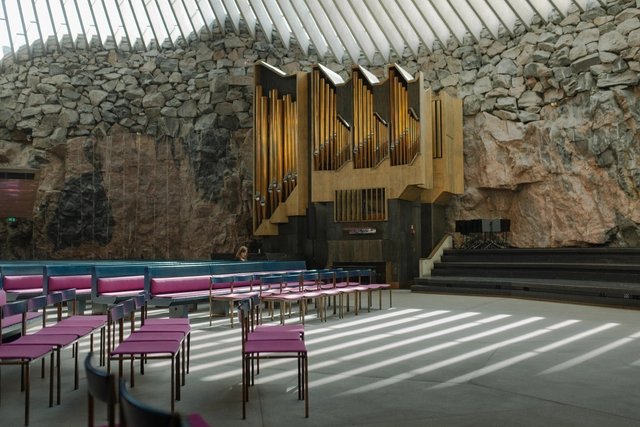
Near the center of Helsinki, Finland, in the Töölö neighborhood, one can find the Temppeliaukio Church, an unusual-looking Lutheran church nestled between granite rocks. Approaching the square from Fredrikinkatu street, the church appears subtly, a flat dome barely rising above its surrounding landscape. An unassuming entrance, flanked by concrete walls, leads visitors through a dark hallway, and into the light-filled sanctuary carved directly into the bedrock. The exposed rock walls earned it the alternative name “The Church of the Rock.” To contrast the heaviness of the materials, skylights surrounding the dome create a play of light and shadows and a feeling of airiness.

The church is the result of an architectural competition won by the architect brothers Timo and Tuomo Suomalainen in 1961. Their original solution was recognized not only for its creativity but also for the respect it showed to the competition’s goal: “to include the organization plan for the whole Temppeliaukio Square, taking into attention that as great part as possible of the rock outcrop of the square to be preserved.” The winning proposal achieves this by embedding the church inside the rock and placing parish facilities on the edges of the hillock. This article explores the story behind the Temppeliaukio Church both narratively and visually, through the lens of Aleksandra Kostadinovska, a professional photographer from Skopje.

A Modernist Church Set in Stone: The Story Behind the Temppeliaukio Kirkko in Helsinki, Finland - Image 1 of 4A Modernist Church Set in Stone: The Story Behind the Temppeliaukio Kirkko in Helsinki, Finland - Image 2 of 4A Modernist Church Set in Stone: The Story Behind the Temppeliaukio Kirkko in Helsinki, Finland - Image 3 of 4A Modernist Church Set in Stone: The Story Behind the Temppeliaukio Kirkko in Helsinki, Finland - Image 4 of 4A Modernist Church Set in Stone: The Story Behind the Temppeliaukio Kirkko in Helsinki, Finland - More Images+ 29

Grafton Architects, Anupama Kundoo and More to Design Interventions Alongside Artisans in Chile

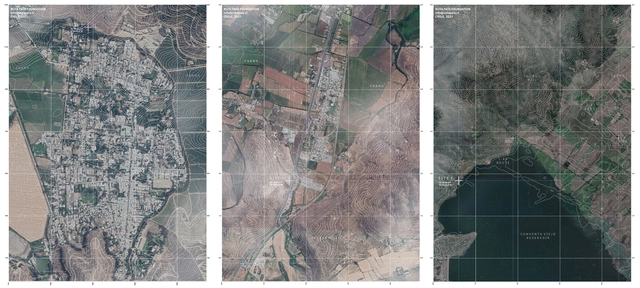
The Chilean organization Ruta Pais Foundation has invited international architects and local artisans to design a series of architectural interventions in order to create 3 artisan routes in the Chilean Central Valley: Wicker Route in Chimbarongo, Clay Route in Pomaire, and Stone Route in Pelequén.