
New York: The Latest Architecture and News
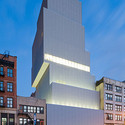
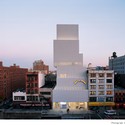
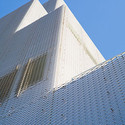
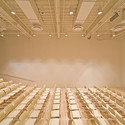

232 Bedford Ave / Loadingdock5 Architecture



-
Architects: Loadingdock5 Architecture
- Year: 2010
https://www.archdaily.com/70043/232-bedford-ave-loadingdock5-architectureNico Saieh
New Buildings New York: Alice Tully Hall and the Redesigned Public Spaces at Lincoln Center

New Buildings New York, a program of the Center for Architecture Foundation, is a series of tours that provide a behind-the-scenes look at new building in the New York metropolitan area and are led by their architects, engineers and designers. All proceeds benefit youth and family programs at the Center for Architecture.
https://www.archdaily.com/69658/new-buildings-new-york-alice-tully-hall-and-the-redesigned-public-spaces-at-lincoln-centerSebastian Jordana
100% Content / Cheungvogl

During the post-WWII era, the surge in the housing market often resulted in “faceless” suburban communities that sprang up to relieve the immediate need for housing. The cities maintained their cultural identity and rather than the suburbs infusing their new communities with commercial or cultural entities, the suburbs constantly relied on the city’s proximity for such things. As this old model is highly unsustainable and car dependent, Christoph Vogl from Cheungvogl has studied Long Island’s suburbs, in particular Hempstead, that did not grow as independent communities. He has outlined a master plan of what can be done to give Long Island the social, cultural and economic context it needs.
“Very much representing these observations, the so-thought town centres of Long Island’s communities, placed around the major traffic intersections are not occupied by cultural, commercial and social institutions, as expected from the ratio of communal identity and urban context, but by parking lots. Not some, but hectares of paring lots. Not complaining about the non-existence of urban context and real community, these vacant areas around Long Island’s “Cross roads” offer the unique chance for master planning based reconsideration of the meaning of community,” added Vogl.
Check out the steps of the master plan after the break.
https://www.archdaily.com/69430/100-context-cheungvoglKaren Cilento
The High Line Frenzy

It is easy to take for granted the things you grow accustomed to, but ever since the initial idea of revitalizing the High Line began sprouting up, New Yorkers have been taking full advantage of the project and loving every second spent strolling, relaxing and gazing at the West Side’s newest addition. The project has truly piqued locals and tourists’ interests as the elevated promenade is enjoyed as much today as it was on opening day over a year ago.
With such success, it is no surprise, as Kate Taylor reported for the New York Times, that the small office of the Friends of the High Line has received countless calls asking how their cities can also enjoy the High Line effect.
https://www.archdaily.com/69227/high-line-frenzyKaren Cilento
1st Annual ENYA Merit Award

Beginning February 2009, The AIA New York Chapter and its Emerging New York Architects committee (ENYA) launched a pilot Boot Camp Review program to get intern architects in shape for the Architect Registration Examination (ARE). In the summer 2009, AIANY added graphic vignette workshops to its class offerings, established an ARE Resource Library and several other classes and events to promote and encourage emerging architects to stay focused on the licensure track. The revenue from these programs was used to expand the existing programs and create new support programs for local ARE candidates.
https://www.archdaily.com/68063/1st-annual-enya-merit-awardSebastian Jordana
Update: Pole Dance Video / Yellow Line Pictures
Check out this video we found by Yellow Line Pictures and the 2010 MoMA/MoMA PS1 Young Architects Program. We’ve been documenting SO-IL’s Pole Dance quite extensively and we feel that this video is a good addition to our coverage. We hope the film’s fun take on demonstrating how to use the project will make you even more excited to visit the PS1 schoolyard if you find yourself in the New York area. What do you think of the noise making poles? And, how about the fact that the project can be affected by an iPhone app ?
https://www.archdaily.com/67849/update-pole-dance-video-yellow-line-picturesKaren Cilento
GSAPP Summer Lecture Series 2010 – July Events

The Graduate School of Architecture, Planning and Preservations (GSAPP) at Columbia University have announced its Summer Lecture Series 2010. Here are July events:
https://www.archdaily.com/67431/gsapp-summer-lecture-series-2010-%25e2%2580%2593-july-eventsSebastian Jordana
Urbancanvas Design Competition

The urbancanvas Design Competition is a unique opportunity to challenge professional artists and designers to create printed artworks for temporary protective structures at construction sites that will beautify New York City’s streetscape and promote maintenance of these structures. The competition seeks complementary designs for different types of temporary protective structures located on City-owned property: construction fences, sidewalk sheds, supported scaffolds and cocoon systems.
https://www.archdaily.com/67207/urbancanvas-design-competitionSebastian Jordana
Our Cities Ourselves Exhibition

Our Cities Ourselves: The Future of Transportation in Urban Life has just kicked off its worldwide tour starting in New York at the Center for Architecture. The exhibit shows the visions of ten of the world’s developing cities from ten of the world’s leading architects. Over the next 20 years, these places will experience urban growth on a grand scale and the urban planning efforts will create successful cities through better transportation.
More about the exhibit after the break.
https://www.archdaily.com/66647/our-cities-ourselves-exhibitionKaren Cilento
Flattened Field / Konyk Architecture

We are loving the fact that as Field Operations and DS+R’s High Line keeps developing, new residential and commercial entities are following suite, popping up adjacent to the tracks, over the tracks, and even under the tracks. And now, Konyk Architecture will join in the urban renewal which is unfolding in the Meat-Packing District with their new event space that will rest underneath the High Line adjacent to Neil Denari’s HL23 Condominium (previously featured on AD).
More about the winning event space after the break.
https://www.archdaily.com/66530/flattened-field-konyk-architectureKaren Cilento
Update: Pole Dance / SO-IL, by Iwan Baan

We are sure that SO-IL‘s PS1 installation, Pole Dance, will be a hit this summer. On Friday we had a preview by Alan R Tansey and today, we found at Iwan Baan’s website another view on the installation. We hope you’ll be able to visit the project in person sometime.
Complete photoset at Iwan’s website, some photos after the break:
https://www.archdaily.com/66288/pole-dance-update-so-ilKaren Cilento
One World Trade Center gets to 260 feet

One World Trade Center has reached a construction milestone by rising 260 ft above street level. Upon its completion in 2013, it will become the tallest office building in the United States reaching 104 stories.
https://www.archdaily.com/66002/one-world-trade-center-gets-to-260-feetSebastian Jordana
More on Phase Two / Field Operations + DS+R

A few days ago, we shared some information about the second segment of Field Operations and DS+R’s High Line, including construction shots to show the progress being made. Today, we share renderings from the firms which illustrate some of the cool features we can look forward to seeing. The second phase will include a “spur” – a framed space recalling the historical billboards that once attached to the railway, a “floating platform” which rests above the exposed girders, “Chelsea Thicket” – a dense stretch of trees and shrubs, a “flyover” where the walkway rises into the canopy of sumac trees, and of course, a grand lawn for lounging.
Take a look at the renderings after the break, and we’ve also included a video of the whole project to see how the pieces will come together.
https://www.archdaily.com/66005/more-on-phase-two-field-operations-dsrKaren Cilento
Phase 2 of the High Line

Field Operations and DS+R’s High Line has been enjoyed by many ever since its opening, but we’ve been waiting patiently for the next segment to be finished. And, thanks to Curbed.com, we’re able to share some recent construction shots of the progress being made.
Check out more photos and more about the second phase after the break.
https://www.archdaily.com/65157/phase-2-of-the-high-lineKaren Cilento
Ground Zero's Newest Restaurant

As workers labor over the newest development at Ground Zero, moving, bolting and welding the 46,074 tons of steel can be tiresome and, well, make a person hungry. With an allotted 30-minute lunch break, workers wait anxiously for the hoist that descends dozens of stories, making their 30 minutes often times extend to 60. The solution – bring the lunch to the workers. The new sandwich shop, built by DCM Erectors (the same company that is putting up the steel girders and beams), is a movable pod made of stacked cargo containers which sit on either side of two tower cranes.
More images and more about the new restaurant after the break.
https://www.archdaily.com/65151/ground-zeros-newest-restaurantKaren Cilento
Satellite Whitney Museum / Renzo Piano

In his article about Renzo Piano’s revised vision for the Whitney, Nicolai Ouroussoff explains that the neighborhood’s criticism and the museum board’s indecisiveness have continually provided stumbling blocks for the museum during its attempts to expand. Upon agreeing to realize Piano’s design for a satellite museum in the Meatpacking district, hope were high that finally, after 25 years, the museum would complete its much needed expansion.
Yet, it seems that Piano is in the midst of a new struggle resulting from the global economic downturn. While construction costs have dropped, allowing the cost of the project to slide under $200 million (persuading the board to commit to breaking ground), the museum is still struggling to contain costs and begin building before prices rise.
https://www.archdaily.com/64726/satellite-whitney-museum-renzo-pianoKaren Cilento

House in the Woods / Parque Humano
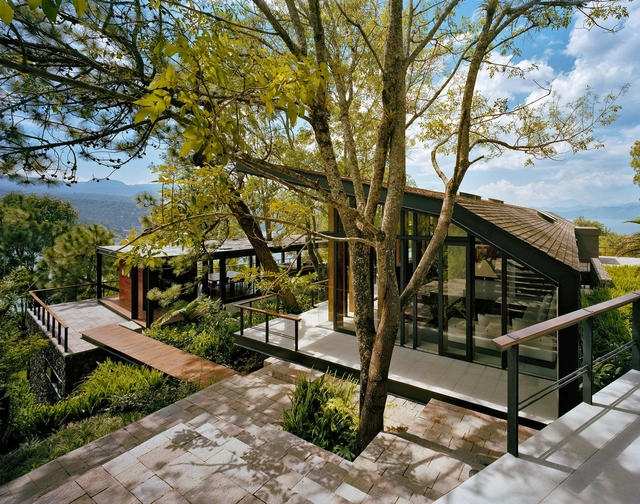
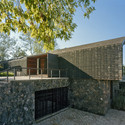
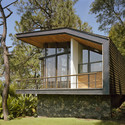

-
Architects: Parque Humano
- Area: 650 m²
- Year: 2009
-
Manufacturers: Grupo Arca, MICMAC Valle de Bravo, Maestro Picaso, OH Internacional
-
Professionals: Constructora Tuca, Islas Ingeniería, Parque Humano
https://www.archdaily.com/63069/house-in-the-woods-parque-humanoIgor Fracalossi