Baby Boomers, Gen X, Millennials, and Gen Z have long dominated the conversation around how different generations influence architecture and the built environment. From views around city planning and zoning efforts to the great debate about whether workplaces should be completely open or office-intensive, each generation has had its strong opinions about how spaces we inhabit are designed- largely shaped by the socio-economic, political, and technological influences that have shaped our lives in different ways. Looking ahead, what can we expect next? Enter Generation Alpha, the first generation born entirely within the 21st century.
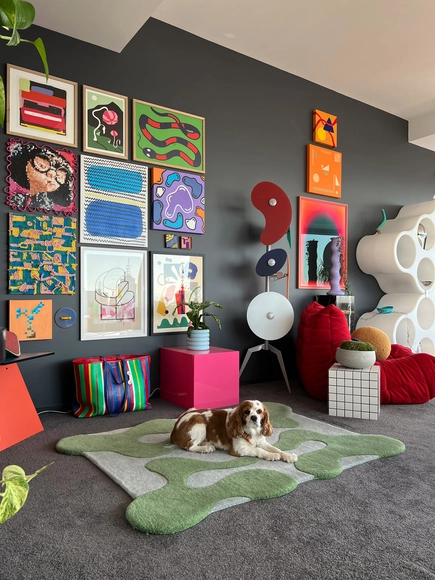
Josh and Matt's apartment embodies their "curated maximalism" style. Image Courtesy of Josh and Matt Design
With the onset of the 2020s, Gen Z is noticeably claiming their place in the world with bold perspectives and even bolder aesthetics. Gen Z proudly experiments with their identities, having grown up on an opinionated internet and through confusing lockdowns. They're bringing in a culture shift with organic shapes, colorful elements, and clashing patterns dominating art, media, fashion, and interior design. The trend is pushing away once-reigning minimalism, shouting Venturi's Less is a Bore.
Have you heard of architect Michael Riscica? Radical blogger, podcast host, and educator, Riscica empowers architects-in-the-making. You may have met him on one of his speaking tours where he visited over 50 cities to speak on topics like entrepreneurship and the architect exam. We even featured him as an ARE prep expert here at ArchDaily. Now, Riscica onto his latest groundbreaking venture: The Young Architect Conference.
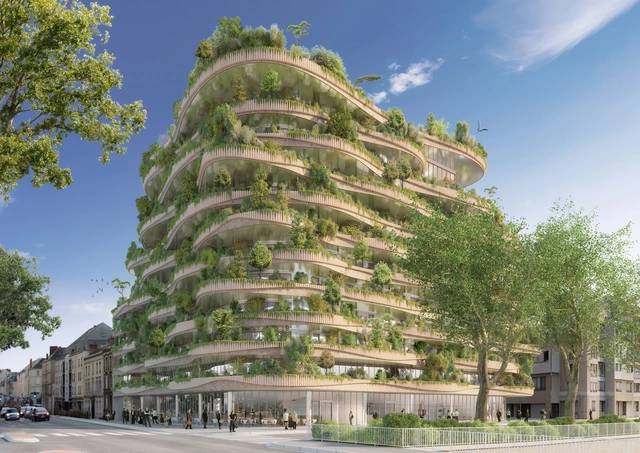
For the "Imagine Angers"international design competition, Vincent Callebaut Architectures worked in collaboration with Bouygues Immobilier group to submit a proposal for the French city at the intersection of social and technological innovation, with a focus on ecology and hospitality. Named Arboricole, meaning “tree” and “cultivation,” this live-work-play environment gives back as much to the environment as it does its users. Although WY-TO prevailed in the competition, the Callebaut scheme succeeded in winning the public vote.
What do a lot of recent architecture college grads have in common besides their degree? Student loans and disillusionment (see point 1 in Megan Fowler’s 11 Things You Learn at Your First “Real” Architecture Job to understand what we mean by "disillusionment"). But with the emergence of the digital age and “side-hustle economy,” millennials are learning how to monetize their passions, and now 1 in 4 Americans are making money digitally. Side-hustling has become so popular that there is even a school for it. The difference between a side-hustle and a second job is that side-hustles aren’t just about giving yourself a raise. Your side-hustle is something you truly love to do, and would probably do anyway, but now you get to share it with the world and make a little extra cash in the process. So what side-hustle is right for you? Here is a list of side-hustles which suit the skillset of architects and designers.
Following a successful pilot launch in Boston and $1 million in venture backing, a startup company called Getaway has recently launched their service to New Yorkers. The company allows customers to rent out a collection of designer “tiny houses” placed in secluded rural settings north of the city; beginning at $99 per night, the service is hoping to offer respite for overstimulated city folk seeking to unplug and “find themselves.” The company was founded by business student Jon Staff and law student Pete Davis, both from Harvard University, out of discussions with other students about the issues with housing and the need for new ideas to house a new generation. From that came the idea of introducing the experience of Tiny House living to urbanites through weekend rentals.
Inspired by the notion of micro-housing and the powerful rhetoric of the Tiny House movement, initiatives like Getaway are part of a slew of architectural proposals that have emerged in recent years. Downsizing has been cited by its adopters as both a solution to the unaffordability of housing and a source of freedom from the insidious capitalist enslavement of “accumulating stuff.” Highly developed and urbanized cities such as New York seem to be leading the way for downsizing: just last year, Carmel Place, a special micro-housing project designed by nARCHITECTS, was finally completed in Manhattan to provide studio apartments much smaller than the city’s current minimum regulation of 400 square feet (37 square meters). Many, including Jesse Connuck, fail to see how micro-housing can be a solution to urban inequality, yet if we are to judge from the early success of startups like Getaway, micro-architecture holds widespread public appeal. Isn’t user satisfaction the ultimate goal of architecture? In that case, it’s important to investigate the ingenuity behind these undersized yet often overpriced spaces.




.jpg?1468436746&format=webp&width=640&height=580)



.jpg?1468436746)