1. ArchDaily
  2. Mayan Civilization

Mayan Civilization: The Latest Architecture and News

Anatomy of a Maya City: The Urban Structure of Copán in Honduras

Subscriber Access | 

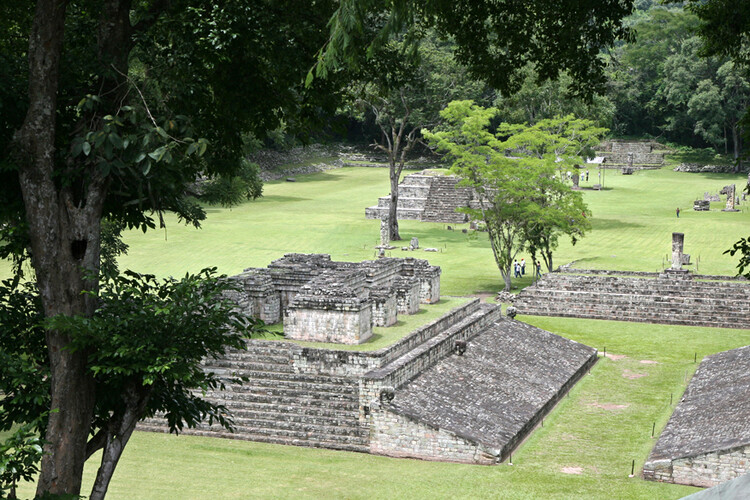
Deep in western Honduras, within a valley near the Guatemalan border, lies the ancient Maya city of Copán. Flourishing during the Classic period between the fifth and ninth centuries CE, the city developed as a regional epicenter through trade networks, dynastic politics, and monumental architecture. Today, the site is designated a UNESCO World Heritage Site due to its extensive architectural remains, including stepped pyramids, sculpted stelae, and ceremonial core. Over a century of systematic archaeological research has documented its urban morphology, revealing distinct residential districts, civic spaces, and systems of movement and visibility.

This analysis examines the spatial organization of Copán through the framework of urban theorist Kevin Lynch and "The Image of the City". By applying Lynch's five structural elements — edges, districts, paths, nodes, and landmarks — it is possible to analyze how Copán functioned not only as a ritual center but as a legible urban landscape designed to reinforce political hierarchy and regulate collective movement. Historical data for this analysis was taken from books and articles linked throughout the text, and was possible thanks to the collaboration of historian Arnulfo Ramirez de la Costa, professor and coordinator of the History program in the Department of History at the National Autonomous University of Honduras (UNAH) in Tegucigalpa.
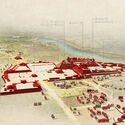
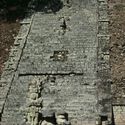
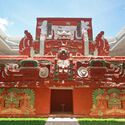
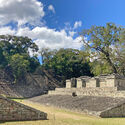
Anatomy of a Maya City: The Urban Structure of Copán in Honduras - Image 1 of 4Anatomy of a Maya City: The Urban Structure of Copán in Honduras - Image 2 of 4Anatomy of a Maya City: The Urban Structure of Copán in Honduras - Image 3 of 4Anatomy of a Maya City: The Urban Structure of Copán in Honduras - Image 4 of 4Anatomy of a Maya City: The Urban Structure of Copán in Honduras - More Images+ 8

Exploring the Home of Eduardo Neira, Roth, Deep into the Mayan Jungle, in New Nowness Film

NOWNESS relaunches its interior design series ‘IN RESIDENCE’ with new episodes featuring Brigette Romanek and Eduardo Neira, Roth. Exploring the homes of various artists, architects, and designers, Mexican director Fernando Cattori delves deep into the Mayan jungle to visit the Tulum home of environmentalist and architect Eduardo Neira, Roth.

Nestled in the heart of the jungle, in the village of Francisco Uh May resides the AZULIK residence, within the same compound as the AZULIK UH MAY, a cultural center for the arts. Heavily influenced by the natural forms of nature itself, Roth’s home takes a biomorphic approach to design, challenging architectural conventions and presenting a harmonious relationship with nature.

Exploring the Home of Eduardo Neira, Roth, Deep into the Mayan Jungle, in New Nowness Film - Image 1 of 4Exploring the Home of Eduardo Neira, Roth, Deep into the Mayan Jungle, in New Nowness Film - Image 2 of 4Exploring the Home of Eduardo Neira, Roth, Deep into the Mayan Jungle, in New Nowness Film - Image 3 of 4Exploring the Home of Eduardo Neira, Roth, Deep into the Mayan Jungle, in New Nowness Film - Image 4 of 4Exploring the Home of Eduardo Neira, Roth, Deep into the Mayan Jungle, in New Nowness Film - More Images+ 1

Art Deco: How Discovery, Invention and Fashion Created a Movement

Subscriber Access | 

Art Deco or Arts Décoratifs originated in the 1920's, following the Exposition Internationale des Arts Décoratifs et Industriels Modernes held in Paris (1925). However, it wasn’t until the 1930’s that the movement gained momentum across both Europe and the US, broadening Art Deco to cover all elements of decorative art including furniture, interior design, jewelry and architecture. Its popularity stems from its unique origins. Rather than a design movement driven by political or philosophical forces, it was created for the desire of glamorous and alluring change, a reflection of the golden age in Hollywood and a widespread economic boom.

Characterized by its decadence, rich application of color, and geometrical shapes, the movement is dramatically influenced by the discovery of the artifacts of ancient civilizations, and the introduction and admiration of the automobile. A movement heavily influenced by aspects in vogue it sought to create a form of luxury modernism, a step away from a more traditional architecture. It put an emphasis on handcrafted and individually designed elements, rarely to be mass produced.

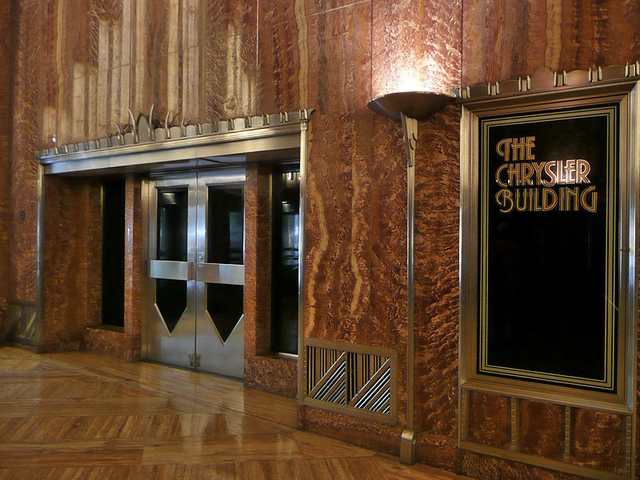
Art Deco: How Discovery, Invention and Fashion Created a Movement - Image 1 of 4Art Deco: How Discovery, Invention and Fashion Created a Movement - Image 2 of 4Art Deco: How Discovery, Invention and Fashion Created a Movement - Image 3 of 4Art Deco: How Discovery, Invention and Fashion Created a Movement - Image 6 of 4Art Deco: How Discovery, Invention and Fashion Created a Movement - More Images+ 7

Laser Technology Uncovers the Surprising Size and Density of Hidden Mayan Cities

A new National Geographic documentary is set to reveal a newly discovered Mayan "Megalopolis" in what is being called a “major breakthrough” in Mayan history. Over 60,000 homes, infrastructure systems, and man-made features that were once hidden underneath the dense jungles of Guatemala are now being revealed to the world, painting a picture of ancient cities that were both much larger and much denser than previously thought.