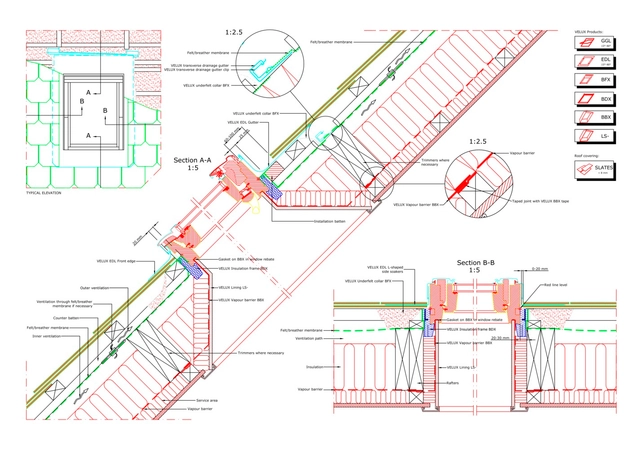
In the spirit of supporting our readers’ design work, the company Velux has shared a series of .DWG files with us of their different roofing windows models. The files can be downloaded directly from this article and include great amounts of detail and information.
https://www.archdaily.com/802109/16-cad-files-of-skylights-and-light-tubes-available-for-your-next-projectArchDaily Team
CI (Continuous Insulation System) is an insulated facade system for walls and ventilated slabs that works through the superposition of 5 skins: fixation, insulation, waterproofing (open to the diffusion of the vapor and resistant to impact), and an outer cladding layer.
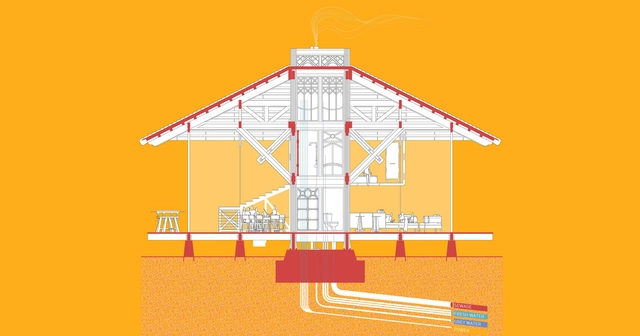
Solutions from the past can often provide practical answers for the problems of the future; as the London-based design and research firm, Space Popular demonstrate with their "Timber Hearth" concept. It is a building system that uses prefabrication to help DIY home-builders construct their own dwellings without needing to rely on professional or specialized labor. Presented as part of the ongoing 2018 Venice Biennale exhibition “Plots Prints Projections,” the concept takes inspiration from the ancient "hearth" tradition to explain how a system designed around a factory-built core can create new opportunities for the future of home construction.
Carefully designed or relegated to its mere functionality, lighting can be a determining factor in the quality of a space, influencing the way it is perceived and inhabited by the user.
Waterside Buddist Shrine / ARCHSTUDIO. Image Cortesia de ARCHSTUDIO
There is nothing more rational than taking advantage of natural lighting as a guarantee to improve the spatial quality of buildings, as well as saving energy. The awareness of the finitude of natural resources and the demands for reducing energy consumption has increasingly diminished the prominence of artificial lighting systems, forcing architects to seek more efficient design solutions. With this goal in mind, different operations have been adopted to capture natural light.
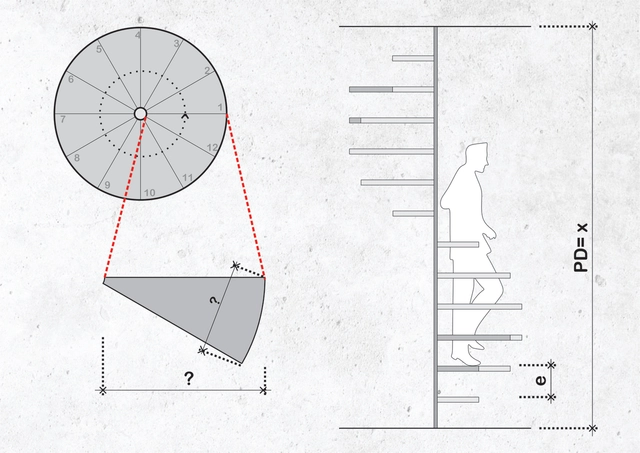
Spiral staircases save valuable square meters because they occupy a much smaller area than a conventional staircase. With daring shapes and diverse configurations, they can also be iconic objects in projects. However, the design of these staircases requires careful attention so that you can prevent an uncomfortable or dangerous outcome. Although BIM software simplifies this process, it's always important to understand the restrictions and the underlying concepts.
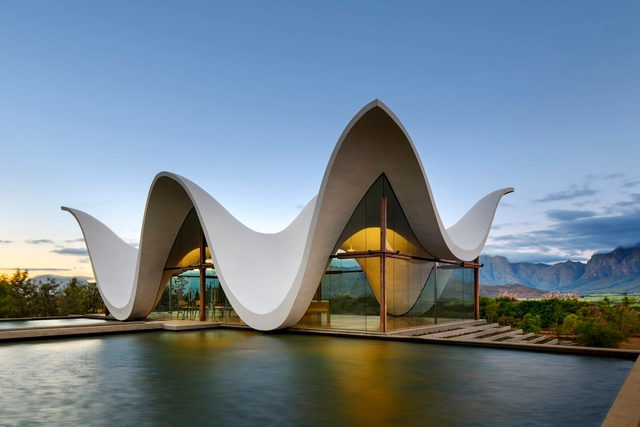
Let's think of a paper sheet. If we tried to stiffen it from its primary state, it couldn't support its own weight. However, if we bend it, the sheet achieves a new structural quality. The shells act in the same way. "You can't imagine a form that doesn't need a structure or a structure that doesn't have a form. Every form has a structure, and every structure has a form. Thus, you can't conceive a form without automatically conceiving a structure and vice versa". [1] The importance of the structural thought that culminates in the constructed object is then, taken by the relationship between form and structure. The shells arise from the association between concrete and steel and are structures whose continuous curved surfaces have a minimal thickness; thus they are widely used in roofs of large spans without intermediate supports.
We already know that the ramp, aside from its different design possibilities, allows—without forgetting the notion of promenade architecturale—its users to overcome physical barriers in the urban and architectural context.
Colors and their perceptions are responsible for a series of conscious and subconscious stimuli in our psycho-spatial relationship. Despite its presence and its variations, it is present in all places. Have you ever wondered what its role is in architecture?
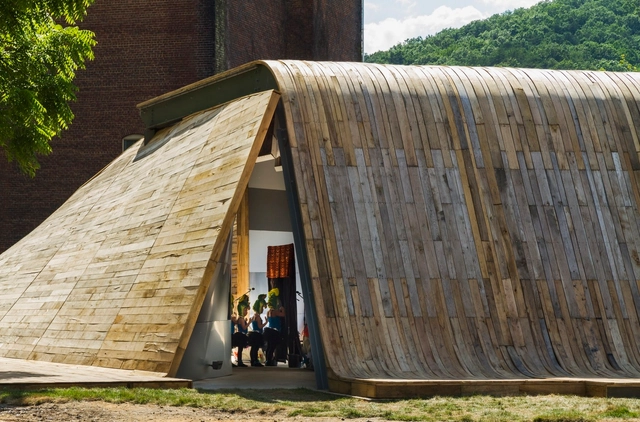
Even as technology advances—leaving many of the old ways of building obsolete—certain traditional crafts and building techniques continue to captivate our imaginations with their simple ingenuity and unimpeachable effectiveness. Although used for millennia, the process of temporarily turning rigid members of wood into pliable, twistable, bendable noodles of lumber remains a favorite woodworker’s trick, capable of producing whimsical transformations and otherworldly forms from the most natural of materials.
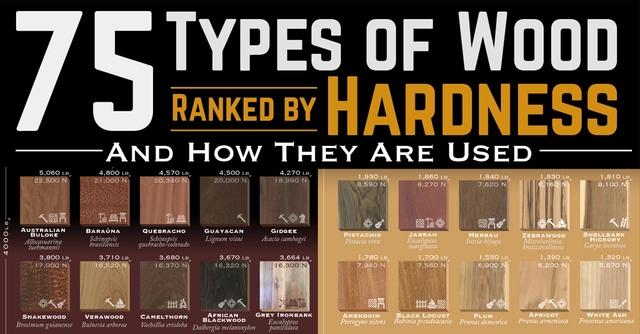
Ever wondered about the hardest and softest woods in the world? As architects, we're all pretty familiar with the softest: Balsa. Its material qualities are what make it so attractive to make models. But what about the the strongest wood in the world? Ever pondered just how many pounds or kilos of force they can withstand?
https://www.archdaily.com/895767/75-types-of-wood-ranked-by-hardnessAD Editorial Team
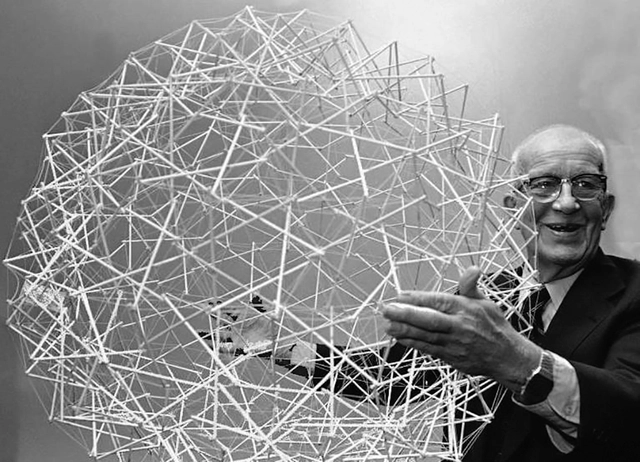
Through his extensive research, inventions and structural experiments, Buckminster Fuller created the term tensegrity to describe "self-tensioning structures composed of rigid structures and cables, with forces of traction and compression, which form an integrated whole" [1]. In other words, tensegrity is the property demonstrated by a system that employs cables (traction) and rigidity of other elements (usually steel, wood or bamboo) capable of acting under the intrinsic stresses (traction and compression) together and simultaneously, giving greater resistance and formal stability. It creates an interconnected structure that works biologically like muscles and bones, where one element strengthens the other.
Introduction - the birth of space Space is a logic, or by subjective intervention in the change of time, this becomes the core of our discussion in the office everyday thinking. In this project, we tried to directly generate the core structure and logic of the space. This year, we've got an opportunity to explore another way of renovation: how to talk with time.
https://www.archdaily.com/895054/the-renovation-of-crrc-1897-center-project罗靖琳 - Jinglin Luo
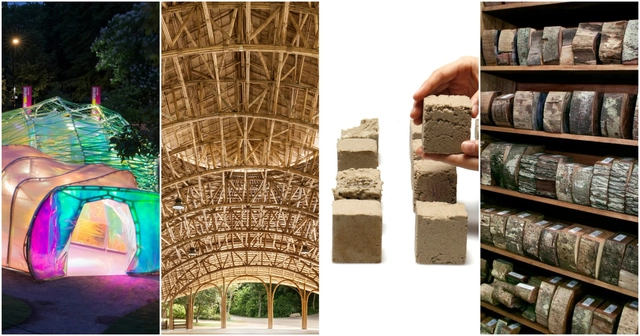
Neri Oxman and MIT have developed programmable water-based biocomposites for digital design and fabrication. Named Aguahoja, the project has exhibited both a pavilion and a series of artifacts constructed from molecular components found in tree branches, insect exoskeletons, and our own bones. It uses natural ecosystems as inspiration for a material production process that produces no waste. “Derived from organic matter, printed by a robot, and shaped by water, this work points toward a future where the grown and the made unite.”
A few weeks ago we published an article on a recent sustainability crisis that often goes unnoticed. The construction industry has been consuming an exorbitant amount of sand, and it's gradually depleting. When used for manufacturing concrete, glass, and other materials, it is a matter that should concern us. Construction is one of the largest producers of solid waste in the world. For instance, Brazil represents about 50% to 70% of the total solid waste produced. But how can we change this situation if most of the materials we use are not renewable, and therefore, finite?
Polished concrete is a versatile material that is easily customizable in its appearance, using stunning aggregates, quartz, and colors to create a sense of industrial sophistication in both homes and commercial buildings. Its reflective surface creates an evocative quality under light, which can be suitable for a variety of programs.
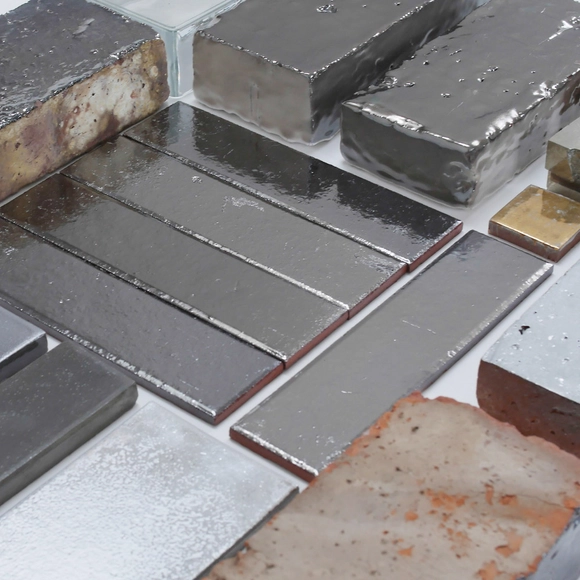
French designer, Nathanaël Abeille's metalized pieces in 'Proyecto Reflexión' shows how a building could reflect sunlight and share it with another building in some of the narrow spaces of Villa 21 de Barracas, Buenos Aires. These "metal bricks" came about as a combined team effort with architects Francisco Ribero and journalist Cecilia Fortunato.
In architecture we are so caught up in creating something new, we often forget about what happens at the end of a building’s life cycle—the unfortunate, inevitable demolition. We may want our buildings to be timeless and live on forever, but the harsh reality is that they do not, so where is all the waste expected to go?