From ceramic tiles and metal sheets for roofs to wooden decks and floating cement tiles for roofing, roofing materials not only contribute to the drainage and protect the lower layers from solar radiation and wear, but also have an important aesthetic function.
This question can be basic and you may know the answer, but it's always good to remember some elementary calculations that help us to streamline the design process.
Sand is the most-consumed natural resource in the world after water and air. Modern cities are built out of it. In the construction industry alone, it is estimated that 25 billion tons of sand and gravel are used every year. That may sound a lot, but it’s not a surprising figure when you consider how everything you’re surrounded with is probably made of the stuff.
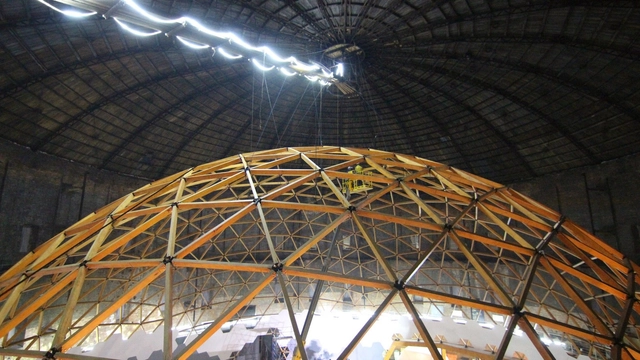
The project inscribed inside a gasholder in St. Petersburg, aims to transform an industrial area into an educational and scientific center with a large projection screen. The fun part? It is located in a large geodesic dome.
https://www.archdaily.com/891857/geodesic-dome-with-worlds-largest-planetarium-insideAD Editorial Team
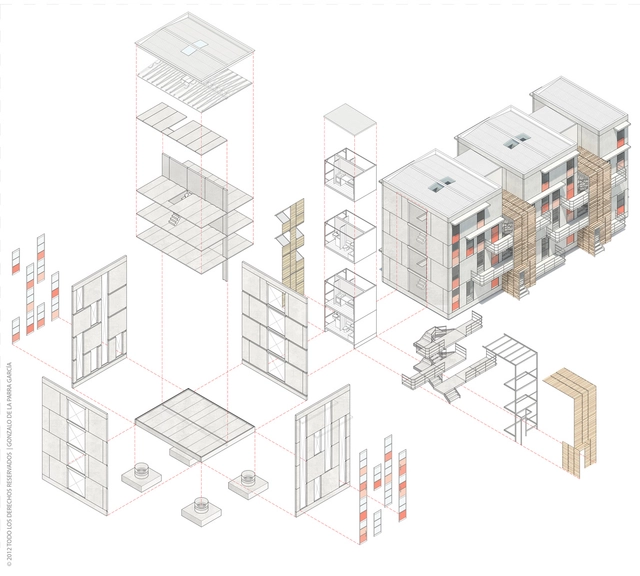
You have to consider many factors when designing an architectural project in order to ensure quality and value. The construction technique is in most cases the first item to be evaluated, because it is the one factor that properly materializes the proposed design and determines the efficiency of the project in terms of time, costs, labor, finishes and final quality.
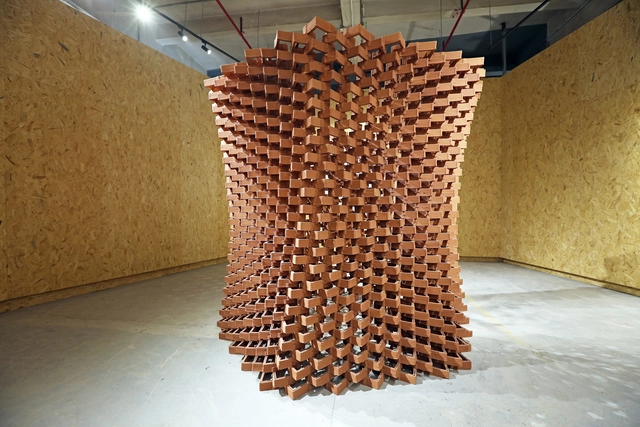
Uniting the material intelligence of vernacular crafts with the precision and flexibility provided by the new digital design and manufacturing technologies, the Robotic Fabrication LAB of The Faculty of Architecture of HKU has developed the CeramicINformation Pavilion, with the objective of finding suitable levels of automation to be used for emerging and transitioning economies.
In buildings where openness, brightness, and outward views are highly valued by the users of our projects, glass predominates as an exterior cladding in cities all around the world. This forces us to look for options that can manage the excess of solar radiation and maintain thermal comfort in all seasons, without obstructing the views or darkening the interior spaces.
Tiny houses have become popular in recent years as housing prices continue to soar. Whether as an off-the-grid retreat or a way to live more simply and economically, tiny homes offer a more flexible way to live. They are even being used by charity organizations such as the Tiny Homes Foundation in Australia as a way to tackle the issue of homelessness in cities and the need for social housing. As the popularity and need for tiny homes become ever more prevalent, knowing the necessary skills to design a tiny house for yourself or a client is a useful skill to have.
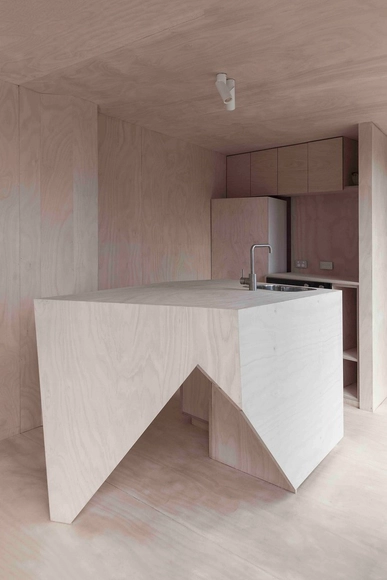
Small spaces often need to accommodate essential functions. How can you incorporate a kitchen into your design in the best possible way when floor space is limited? We've carefully reviewed our published projects to select seven houses where architects have effectively addressed this challenge through intelligent and innovative configurations.
These kitchens manage to appear larger than they actually are by being connected to adjacent spaces such as living rooms or dining rooms. They occupy very small areas themselves, taking a different approach from the traditional kitchen, which usually occupies a separate and exclusive room.
As the profession becomes more aware of the variety of users who will use their architectural creations it is necessary to consider certain basic rules. In the end, the idea is that a building or space can be used comfortably, effectively and (if necessary) quickly by all users. Today the use of BIM technology encourages the incorporation of pre-modeled products in projects, which facilitates the processes. However, if pre-modeled products are not inclusively designed, there is an increased possibility of overlooking these accessible considerations–especially when their architects have no experience or are unaware of accessible design guidelines.
Often as architects we neglect how the buildings we design will develop once we hand them over to the elements. We spend so much time understanding how people will use the building that we may forget how it will be used and battered by the weather. It is an inevitable and uncertain process that raises the question of when is a building actually complete; when the final piece of furniture is moved in, when the final roof tile is placed or when it has spent years out in the open letting nature take its course?
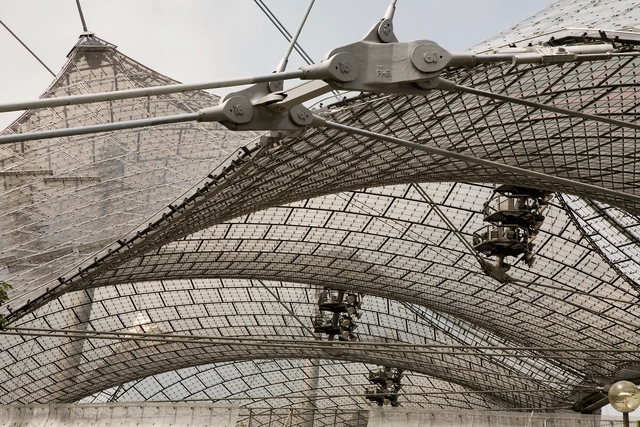
Historically inspired by some of the first man-made shelters—such as the black tents first developed using camel leather by the nomads of the Sahara Desert, Saudi Arabia, and Iran, as well as the structures used by Native American tribes—tensile structures offer a range of positive benefits compared to other structural models.
BIM (Building Information Modeling) is a methodology that allows architects to create digital design simulations to manage all the information associated with an architectural project.
ARCHITECT magazine is now accepting entries for its 12th Annual R+D Awards! We would be grateful if you could share the competition details below with your network. The winners will published in ARCHITECT’s July 2018 issue and on our website. As with previous years, full-time students and faculty are eligible for a reduced registration fee!
With the array of digital, fabrication, collaboration, and analysis tools available, everyone in the built environment has the potential to produce groundbreaking, industry-changing work. To celebrate the state of the art, and the efforts that go behind them, ARCHITECT invites design firms, manufacturers, researchers,
Architecture students of the American University of Beirut used an ephemeral design to approach the lack of awareness of marine biodiversity and responsible use of the coast of Tyre. The proposal consists of a lightweight and deployable structure constituting a programmatic point of meeting and information on the sand.
https://www.archdaily.com/889286/how-a-lightweight-deployable-structure-of-wood-and-metal-can-have-a-large-social-impactAD Editorial Team
Carbon fiber's light weight and unique properties make it an exciting potential building material, say researchers at Autodesk BUILD Space. Image Courtesy of University of Stuttgart
Wood is one of the oldest materials that man has used to build their homes and take refuge from the weather. Wood does not only fulfill a structural function -being highly resistant to earthquakes-, but it also provides interior thermal comfort, as well as adding a warm look and feel to a building, while easily adapting to natural environments.
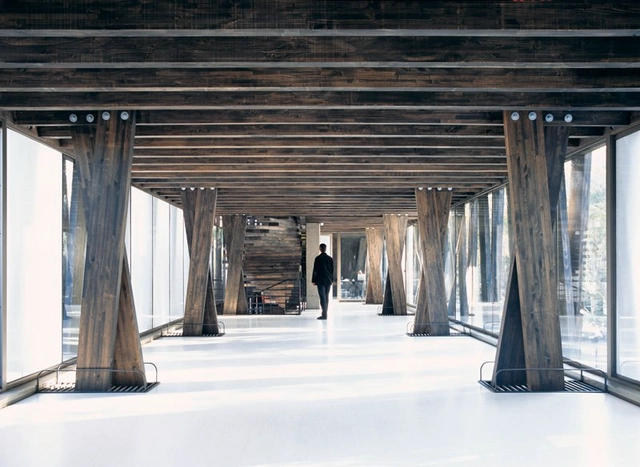
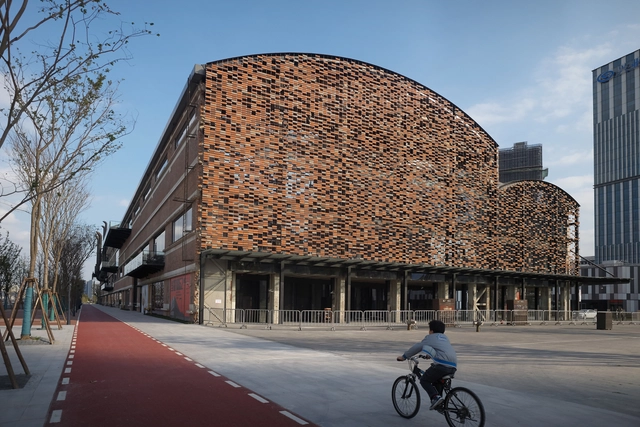
In the Lujiazui financial district in Pudong, Shanghai, Kengo Kuma has reimagined a 1972 shipyard into a new 9,000-square-meter multi-use complex, named Shipyard 1862. Behind original, rugged brick walls, the old shipyard was once defined by a 12 by 30-meter grid, which allowed for massive interior spaces to hold ships. In this industrial-styleadaptive reuse project, Kuma was careful to preserve the building’s structural and material integrity. These photographs provided by Julien Lanoo show how the industrial shell has been transformed by the refurbishment project.