Noises –especially those we can’t control– greatly affect both physical and mental health. Whether coming from the street, upstairs neighbors or the room next door, research suggests that these can raise stress, reduce productivity, interfere with communications and contribute to developing issues such as high blood pressure. Ultimately, sound quality defines user experience and (literally) sets the tone for the rest of the interior. The bad news is that most conventional building materials used today in modern architecture –concrete, glass, masonry– have extremely hard surfaces and limited acoustic properties, reverberating sound several times over and forcing users to raise their voices to be understood. Coupled with growing urban density and projects adopting a mixed-use layout, all of this results in increasingly noisy, uncomfortable and distracting living and working environments.
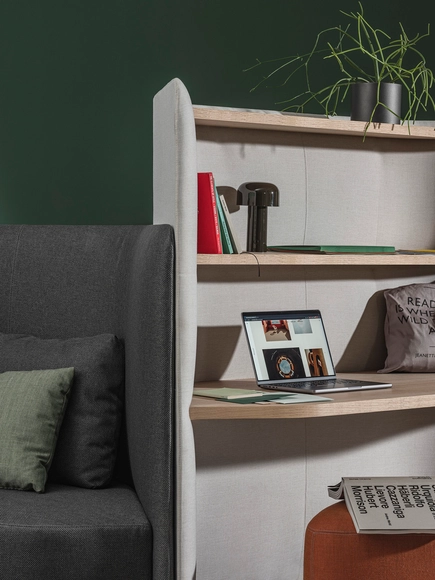
In Out Office / Alfredo Häberli. Image Courtesy of Andreu World
Interior architects and designers have often claimed that a well-designed office space will translate into greater productivity, creativity and worker satisfaction –yet the impact is greater than most tend to imagine. Recent studies suggest that good design positively impacts company culture, fosters a sense of community and creates a healthy, happy and motivating environment. In fact, it directly influences the recruitment and retention of talent: “workplace design significantly increases the attractiveness of employers to potential candidates.” Proper lighting, a flexible layout and biophilic features are all important factors to consider during the planning stage. But to fully address user comfort and well-being, these must be combined with excellent furniture design. After all, integrating high-quality ergonomic pieces is a simple way to boost mood and enhance functionality and aesthetics when creating or redecorating the workspace.
Whether you blame Covid lockdowns, recipe box subscriptions, or the latest high-tech kitchen appliances, everyone’s spending more time in the kitchen. Meanwhile, popular open-plan spaces remove the option of simply shutting the door on the catastrophic mess of a big meal, before settling in for a relaxing evening.
The search for the fundamental particle has been driving curious minds for much longer than we imagine. Leucippus and Democritus, Greek philosophers from the 5th century B.C., were the first to propose that the entire universe was made up of particles called atoms, indivisible and colliding against each other in an infinite void. Since then much has been studied about how dynamics actually take place at the atomic level (neutrons, protons and electrons), and there is still much to be discovered. Understanding the Higgs boson, for example, may even lead to a new understanding of the origin of the universe and life, since it can explain how elementary particles have mass. Moving from atomic abstraction to the world as we know it is a fascinating thing. It was this plunge into the particle –the smallest known part of the universe– which inspired the new collection by the Italian company Fiandre Architectural Surfaces, which produces ceramic pieces for spaces.
There was a time when buildings wanted to be mountains, roofs wanted to be forests, and pillars wanted to be trees. As the world began to go into a state of alert with the melting of glaciers and the consequent rise of Earth’s temperature, architecture – from a general perspective – was concerned with imitating the shapes of nature. Something close to human-made “ecosystems”, seen by many as allegoric and decorative, in service of marketable images of “sustainable development”.
Expanded polystyrene (EPS) was discovered in 1839 in Berlin and became a widely used material in airplanes manufactured for World War II due to its extremely low density. It is this characteristic that makes it a suitable material for thermal and acoustic insulation, often specified in buildings, but also widely used in packaging. A rigid cellular plastic, it is the result of polymerizing styrene in water, whose end product are expandable beads that have a diameter of up to 3 millimeters. Unfortunately though, this material takes more than 500 years to decompose and, in the process, leaches harmful chemicals into the environment. Recycling is possible, but it is complex and costly. This means that most of the Styrofoam produced to date still remains on the planet, taking up valuable space in landfills, or worse, broken into tiny pieces and interfering with ocean life. "Decomposition Farm: Stairway" is a temporary installation that offers a possible solution to the environmental issues related to construction waste in the architectural field.
Uline Arena. Image Courtesy of Terrazzo & Marble, Photo by Brycen Fischer
When designing an architecture project, defining the flooring is a key element in achieving the comfort, style and functionality imagined by the design team. Depending on the type of use and its requirements, architects can choose the most suitable materials, textures and finishes for each project. Terrazzo & Marble offers a sustainable option to traditional materials like wood, carpet and ceramic with Terroxy Resin Systems, which are known for their sustainability, design flexibility, durability and low maintenance.
Considering the time, energy, and environmental impact of a construction process, architecture must explore different methodologies that work with the existing built environment. For example: how to give life to a forgotten building? Adaptive reuse gives new opportunities to abandoned buildings, following the idea that good architecture must be durable, innovative and recyclable.
Reflecting on what the materials of the future will be like, we will talk about a material that is booming in Barcelona and which perhaps leads us to respond by suggesting that, as always, everything comes back.
When developing a project, an architect needs to deal with numerous decisions: Does the building correspond with the client's requirements? Can the contractors build it without problems? Are the costs what were initially expected? Does the project have a good relationship with its surroundings? How will it age? To figure all of this out, the professional must take into account several issues that will both influence each other and directly affect the final product. Among these, the chosen materials and constructive techniques play an essential role, as these elements are what give shape to the designer's vision and can influence factors such as the accessibility or the environmental impact of a building.
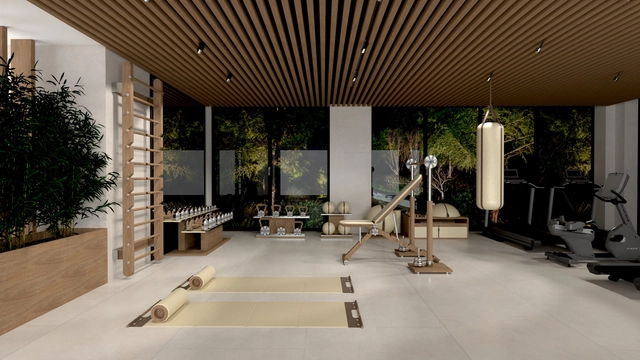
The World Health Organization defines health as “a state of complete physical, mental and social well-being.” If one or more of these aspects are compromised, quality of life and happiness can be severely affected. In recent years, and particularly during the COVID-19 pandemic, this has proved to be especially challenging. Commuting restrictions forced many to stay indoors and businesses to pause in-person operations, aiming to prevent the virus from spreading but inevitably sacrificing psychological, emotional, and even physical health in the process. As a result, people’s lifestyles shifted to find new ways to address their well-being, including adapting their living spaces accordingly. Home gyms, for example, became a popular initiative.
Windows and doors dictate the relationship between interiors and exteriors in buildings, helping to either integrate or separate them. They are also important components in architecture that can add to a façade's composition, balance and rhythm, while fulfilling its main function: to protect the interiors and serve as a barrier to the weather. While the first windows were composed of reduced spans and small glass panes with heavy frames, today there are almost invisible options that easily adapt to any type of project. It is up to the designers to choose among the various possibilities of materials, operations, colors and finishes.
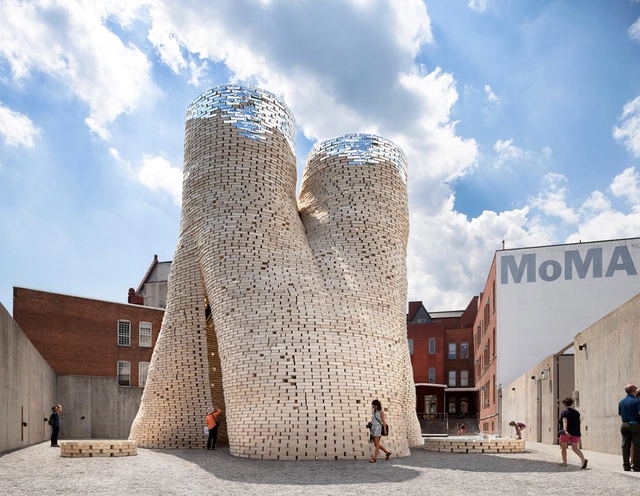
Mycelium-Grown Bio-Bricks / Evocative Design & The Living. Image Courtesy of The Living
The building industry is one of the biggest generators of carbon emissions, with some estimates suggesting that 38% percent of all CO2 emissions are linked to this field. As a response to the current crisis, architects, designers, and researchers are taking measures to reduce their carbon footprint during and after construction. Many initiatives and research teams are looking at building materials to find low-carbon solutions and reduce the impact of building materials during production.
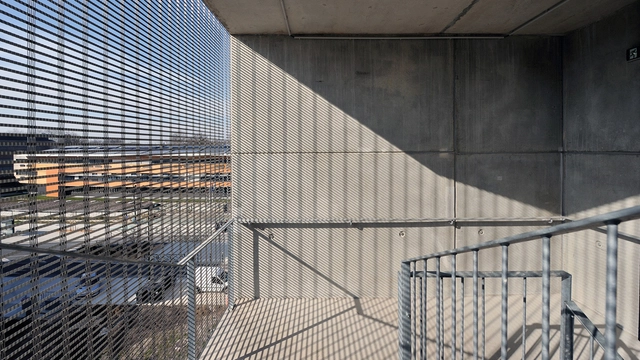
Versatility is the main characteristic of wire mesh. They can be used indoors, as ceilings and walls, but also outdoors, covering railings or wrapping entire buildings. In addition to its many possible uses, versatility is intrinsic to the material: Depending on the choice of warp and weft wires and the type of weave, the result is an individual mesh with a specific look and light effect, that can be further expanded with different materials or colored mesh surfaces. Another notable quality of the material is the safety it provides, either in guard rails on walkways, vehicle bridges with sidewalks, central atriums, elevated playgrounds, multi-storey parking lots, or internal or external stairways.
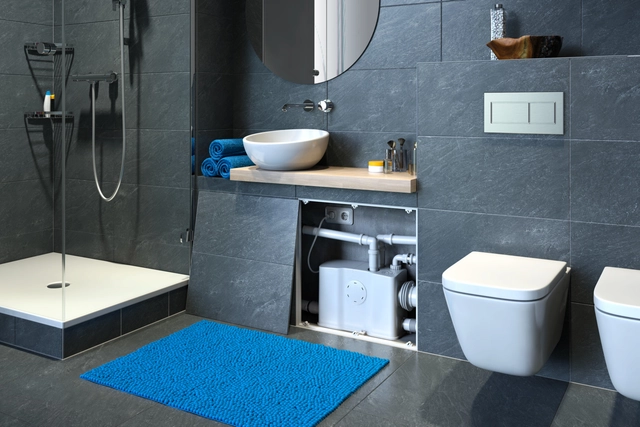
We have written a lot about the adaptive reuse of buildings and how this should become an even more important activity for architects in the future. Focusing on interiors, it consists of adapting spaces to new demands, promoting quality and comfort, and often incorporating new technologies into a space. Whether adding a new bedroom, organizing a home office, or transforming a historical building into an office, the architects' creativity allows them to create interesting environments without the need for demolishing. But one thing that tends to make designers scratch their heads in concern is how to include bathrooms and all the complication that it entails. This is because adding a simple toilet usually requires breaking slabs, walls, and floors, working with thick plumbing, and, above all, spending a lot of money and time. There is, however, the possibility of using a macerating pump system - a straightforward, affordable solution for creating a complete or half bathroom practically anywhere.
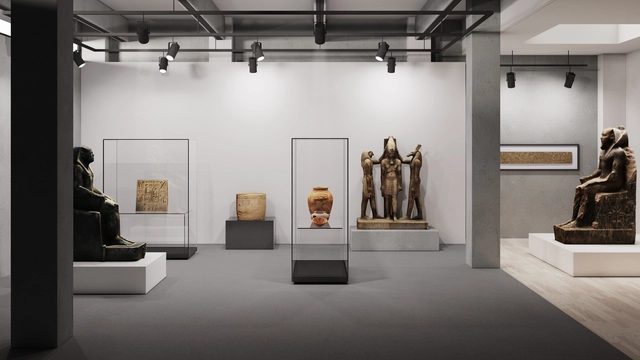
Museums play a critical role in preserving local cultures, promoting a better understanding of our collective heritage, and fostering dialogue, curiosity and self-reflection. In recent years –and largely driven by the Covid-19 pandemic– technological advances have enabled users from all over the world to visit exhibitions virtually, at any time and from the comfort of their own home. However, although online tours are a good way of increasing accessibility, there is something about the in-person museum experience that will never get old: the ability to witness, embrace and closely admire artefacts, paintings and sculptures in their true form, as well as the chance to experience the unique ambiance and essence of a traditional museum setting. Viewing the Mona Lisa virtually will never live up to appreciating it face-to-face at The Louvre, for instance.
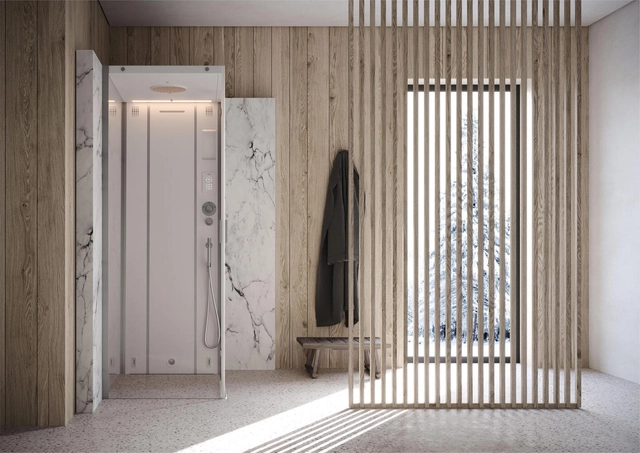
These days, wellness is a commonly-used word in design and other areas, but what does it truly mean? According to the National Wellness Institute, the concept is defined as "an active process through which people become aware of, and make choices toward, a more successful existence." It can be viewed from different perspectives, such as environmental, intellectual, spiritual and physical factors. Although these elements can be integrated separately into one’s life, they can also complement each other and work together. For example, exercise does not only provide physical benefits; it contributes to emotional wellness as well.
The façade is the only part of the building that can be seen from the outside and has the function of communicating a message derived from its design. It therefore deserves special attention in every detail. A façade that is well proportioned in terms of colours and materials, which facilitates the connection between the interior and the exterior, will generate an initial attraction for pedestrians, inviting them to enter.